
Choosing the right knitting blocking mat depends on your yarn’s moisture needs, the tension required for your project, and your preferred blocking method. Interlocking foam mats are highly resilient, water-resistant, and ideal for heavy wet blocking of robust animal fibres, whereas cork mats provide a firm, high-grip surface that excels at holding precise tension for delicate lace and steam-blocked plant or synthetic fibres. By evaluating how these materials interact with different fibres and moisture levels, you can select the surface that ensures your hand-knit items dry evenly and hold their intended shape.
Understanding the Physical Traits of Foam and Cork Mats
To make an informed decision, you must first understand how the physical properties of interlocking foam and cork affect your daily knitting workflow. These materials behave differently under tension, handle moisture in distinct ways, and react uniquely to heat.
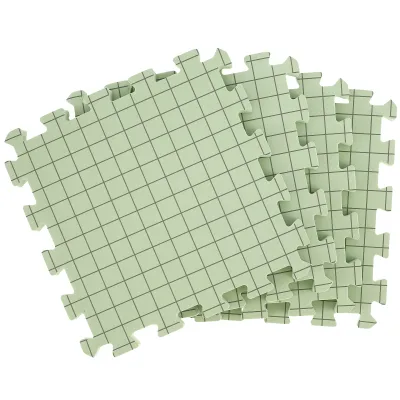
Surface texture and pin grip are critical when you are stretching a garment to its final dimensions. Interlocking foam mats, typically made from ethylene-vinyl acetate (EVA), offer a slightly textured, yielding surface. When you insert a T-pin or blocking fork, the foam compresses around the pin, holding it in place through friction. However, under extreme tension, the flexible nature of foam can allow pins to lean or slip slightly.
Products mentioned in this guide
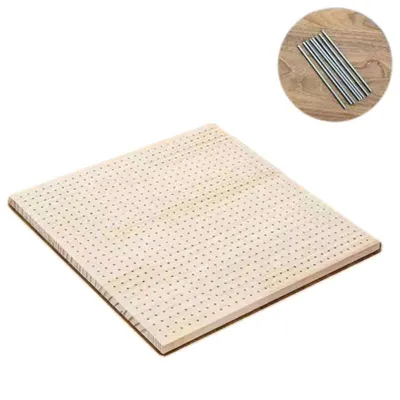
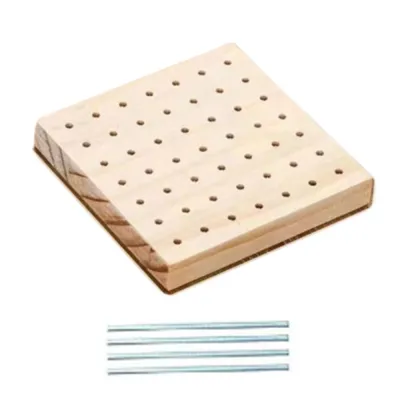
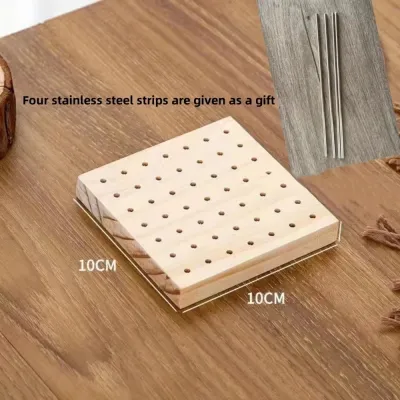
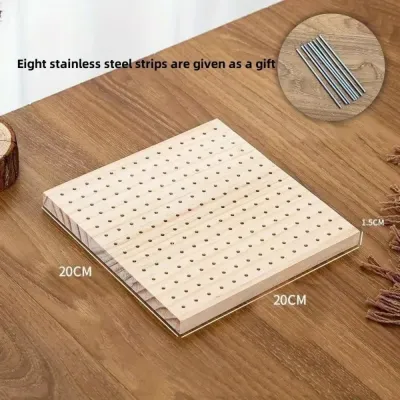
Prices are valid at publication and may change. Please refer to the product page for the latest price.
Cork mats present a much denser, self-healing surface. The natural cellular structure of cork grips pins tightly, preventing them from shifting even when holding highly elastic or heavy fabrics under significant tension. This firm grip makes cork highly reliable for projects that require straight, crisp edges and precise geometric shapes.
Thickness and cushioning directly determine how deeply you can insert your blocking pins. Foam mats are commonly available in thicknesses ranging from 1 to 2 centimetres, allowing you to push pins straight down without them striking the table underneath. Cork mats are often thinner, sometimes requiring you to insert pins at an angle to secure the fabric without passing completely through the mat.
Moisture handling is another area where these two materials diverge significantly. Foam is entirely non-porous and water-resistant, meaning it does not absorb water from your wet-blocked garments. This quality keeps the moisture concentrated within the yarn, which can prolong drying times in humid environments like Singapore, but it also prevents the mat itself from warping or degrading.
Cork is naturally water-resistant due to suberin, a waxy substance in the wood, but it remains a semi-porous organic material. It can absorb tiny amounts of residual moisture, which sometimes helps the underside of your knitwear dry slightly faster. However, prolonged exposure to excessive water can cause cork to swell, warp, or develop mould if not dried thoroughly.
Heat tolerance is a vital safety and performance factor if you frequently use steam to set your stitches. You must verify the heat limits on the manufacturer’s label before applying steam to any mat. High temperatures can cause some synthetic foam mats to soften, warp, or release unpleasant chemical odours, while natural cork generally tolerates moderate steam heat much better without losing its structural integrity.
Matching the Mat to Your Yarn Fibres
Different yarn fibres react uniquely to moisture, heat, and tension during the blocking process. Choosing a mat that complements the natural characteristics of your chosen fibre prevents damage and ensures a professional finish.

Animal fibres, such as wool, alpaca, and cashmere, possess natural elasticity and require thorough wet blocking to relax the stitches and bloom the halo. Because wet wool garments hold a substantial amount of water, they need a sturdy, non-absorbent surface that can support their weight without degrading. Interlocking foam mats are highly suitable here, as they do not absorb the water squeezed from the wool, allowing the garment to dry gradually while pinned securely.
Plant fibres like cotton, linen, and bamboo are inelastic and tend to stretch permanently if subjected to uneven tension. These fibres require a firm, stable surface that holds pins exactly where they are placed. Cork mats provide the necessary resistance and grip to keep inelastic plant fibres taut and straight, preventing the sagging or scalloping that can occur on softer surfaces.
Delicate fibres, including silk, mohair, and fine lace-weight blends, require gentle handling to avoid snagging. You must inspect the surface smoothness of your blocking mat before pinning down these sensitive materials. While high-quality foam mats are smooth, cheaper options may have rough textures or ridges from the manufacturing process that can catch fine silk threads.
Moisture control is also critical for delicate fibres to prevent water spots or uneven drying. Silk can be sensitive to prolonged dampness, making the slightly breathable surface of a high-quality cork mat advantageous. The cork can help draw away excess moisture, reducing the risk of water staining on pale or sensitive dyes.
Synthetic and blended yarns, such as acrylic, nylon, and polyester, do not respond well to traditional wet blocking because the synthetic fibres do not absorb water in the same way natural fibres do. Instead, these yarns usually require steam blocking to “kill” or permanently set the acrylic fibres. Before steam blocking synthetics on a foam mat, check the product specifications to ensure the material can withstand the temperature of your iron or steamer without melting or transferring colour to your yarn.
Aligning the Mat with Your Project and Blocking Method
The scale of your knitting projects and your preferred blocking technique should heavily influence your choice of mat material. A mat that works perfectly for a small pair of socks might prove frustrating when blocking a large lace shawl.
Large garments, such as sweaters, cardigans, and heavy blankets, require a vast surface area that can be customized to the project’s dimensions. Interlocking foam mats excel in this scenario because they are designed as puzzle pieces that you can assemble into various shapes, such as long rectangles for scarves or wide squares for blankets. You must, however, check the stability of the interlocking edges; low-quality foam tiles may pull apart under the heavy tension of a stretched garment.
Cork mats are often sold as solid, single-piece boards or smaller tiles that do not interlock as securely as foam. If you work on large, heavy items, a cork surface may limit your layout options or require you to push multiple boards together, which can shift under heavy tension. For smaller accessories like mittens, socks, and hats, a compact cork board offers a neat, sturdy, and space-saving solution.
Intricate lace projects demand high pin density to open up the yarn-overs and define the delicate picots or scalloped edges. When inserting dozens of pins close together, the self-healing property of the mat is crucial. Cork handles dense pinning exceptionally well, as the natural material closes up after the pins are removed, maintaining its grip over years of use.
Wet blocking involves soaking the garment in water, gently squeezing out the excess, and pinning it flat until dry. Because this method introduces a large volume of water to the blocking surface, a water-resistant foam mat is the most practical choice. It prevents water from seeping through to your table or floor and is easily wiped dry with a towel after use.
Steam blocking uses a hot iron or garment steamer held slightly above the pinned fabric to relax the fibres with heat and moisture. If steam blocking is your primary method, a cork mat is generally the safer and more durable option. Cork’s natural heat resistance ensures it will not warp or degrade under the hot steam, whereas foam mats require careful monitoring to avoid heat damage.
Evaluating Durability, Storage, and Maintenance
Investing in blocking mats means looking at how well they will perform over several years of regular use. Both foam and cork require specific care to prevent degradation and maintain their physical properties.
Over time, interlocking foam mats can suffer from material degradation, especially if exposed to direct sunlight or stored in hot areas. The foam may become brittle, start to crumble, or lose its elasticity, which reduces its ability to grip pins securely. You can inspect your foam mats periodically by bending them slightly; if they feel stiff or show surface cracks, they may need replacing.
Cork mats are highly durable but can dry out and crack if kept in extremely dry environments, or crumble if subjected to constant bending. Unlike flexible foam, cork is rigid and must be handled carefully to avoid snapping the edges. Inspect your cork mats for any signs of flaking or deep cracks along the surface, which can catch on your yarn during pinning.
Storage conditions are particularly important in humid climates to prevent the growth of mould and mildew. You must ensure that both foam and cork mats are completely dry before storing them away in cupboards or bags. Storing a damp cork mat in a closed space is a recipe for mould, which can ruin both the mat and any future knitting projects pinned to it.
To prevent warping or permanent bending, store your mats flat or in a well-supported vertical position. Foam tiles can be stacked neatly in their original storage bag, while cork boards should be kept flat on a shelf to prevent them from bowing over time under their own weight.
Cleaning your blocking mats should always be done in accordance with the manufacturer’s instructions. For foam mats, a simple wipe down with a damp cloth and mild soap is usually sufficient to remove any dust or wool fibres. Cork mats should be cleaned with minimal water; a lightly damp cloth can be used to wipe the surface, but you must allow the cork to air dry completely in a well-ventilated area before using or storing it.
Final Decision: Which Knitting Blocking Mat Fits Your Needs?
To choose the right blocking mat, evaluate your typical knitting projects, the fibres you use most frequently, and your preferred blocking method.
Choose interlocking foam mats if you:
- Primarily work on large garments, heavy sweaters, or blankets that require a customizable, large layout.
- Frequently use the wet blocking method, which introduces significant amounts of water to the mat surface.
- Need deep pin penetration and prefer a lightweight, budget-friendly, and easily packable storage solution.
Choose cork mats if you:
- Work mostly on intricate lace, small accessories, or projects requiring precise tension and high pin density.
- Prefer steam blocking and need a material with natural heat resistance that will not warp or melt.
- Value a firm, self-healing, and environmentally friendly surface that holds pins securely without slipping.
Before making your final purchase, always verify the product specifications for exact heat limits, interlocking stability, and surface finish. Checking these details ensures your new blocking mats will safely support your knitting projects for years to come.
Frequently Asked Questions (FAQ)
Can I use a cork blocking mat for heavy wet blocking?
Yes, you can use a cork blocking mat for wet blocking, but you must take extra precautions. Because cork is a semi-porous natural material, it can absorb water if a soaking-wet garment is pinned to it for an extended period. To prevent warping, water staining, or mould growth, ensure you squeeze out as much excess water as possible from your knitwear before pinning, and check the manufacturer’s water resistance specifications. Always allow the cork mat to dry completely in a well-ventilated area after use.
Do interlocking foam mats leave marks on delicate yarns?
Some interlocking foam mats with deep textured grids or ribbed surfaces can leave temporary impressions on delicate, smooth yarns like silk or fine merino. To prevent this, inspect the surface smoothness of your foam mats before use. If your mats have a pronounced texture, you can place a clean, dry, lint-free towel or a sheet of blocking paper between the mat and your knitwear as a protective barrier, or look for foam mats specifically designed with a smooth, flat finish.
How do I store blocking mats in a humid climate?
In humid climates, preventing mould and warping is the main priority when storing your blocking mats. Never pack your mats away while they are still damp from a blocking session; let them air dry completely in a breezy room. Store foam tiles flat in a breathable bag or box, and keep cork boards flat on a shelf rather than leaning them against a wall, which can cause them to bow or warp over time due to moisture in the air.

Community discussion
Share your experience or ask a question. Comments are reviewed before publication.