
When a valued colleague prepares to move on to their next professional chapter, a standard greeting card rarely suffices. For teams of 15 or more people, the limited writing space of a conventional card quickly leads to cramped, illegible scribbles, or worse, colleagues running out of room entirely. Finding the perfect large farewell card requires balancing physical dimensions, paper quality, and design layout to ensure every team member can leave a meaningful, legible message. By focusing on key specifications like paper weight, surface finish, and structural format, you can select a card that serves as a durable, professional keepsake for your departing coworker.
Sizing and Layout: Matching Card Dimensions to Your Team Size
Selecting the right card format is the first step in planning a successful group signing. Flat cards, which consist of a single heavy sheet of cardstock, offer a modern, poster-like aesthetic. They are easy to display on an easel during a farewell lunch, but they lack privacy and offer only two writing surfaces. Bi-fold cards, the traditional greeting card format, double the available writing area and keep messages private until the card is opened. For exceptionally large teams or multi-department sign-offs, tri-fold cards provide three distinct panels. This format allows you to segment messages logically, perhaps dedicating one panel to the immediate team, another to cross-functional collaborators, and the third to humorous anecdotes or future wishes.
To determine the minimum dimensions your team requires, you must calculate the average space needed per personal message. A standard, thoughtful farewell message consisting of two to three sentences typically occupies a space of about 15 to 20 square centimeters. If you have 15 colleagues signing, you will need a minimum of 225 to 300 square centimeters of blank writing space. For a larger department of 30 people, this requirement expands to 600 square centimeters. A standard A4 card folded (which opens to an A3 size of 29.7 by 42 centimeters) provides approximately 1,247 square centimeters of total surface area. Once you account for the front cover, back cover, and decorative borders, a folded A4 card yields roughly 600 square centimeters of usable interior space, making it the ideal baseline size for teams of 15 to 30 people. For teams exceeding 30 signers, upgrading to a folded A3 card (which opens to an A2 size of 42 by 59.4 centimeters) is highly recommended to prevent overcrowding.
Products mentioned in this guide
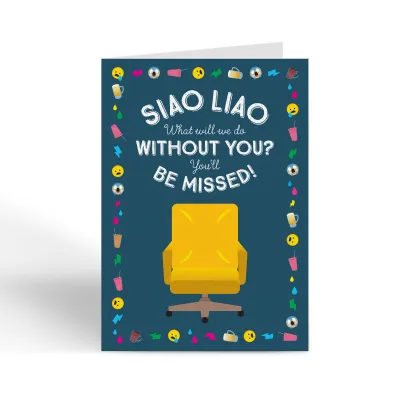

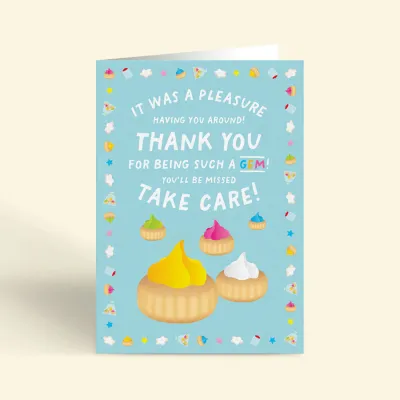



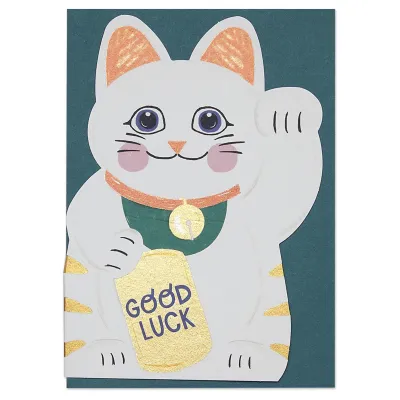
Prices are valid at publication and may change. Please refer to the product page for the latest price.
When browsing product listings, it is critical to verify the exact physical measurements rather than relying on subjective marketing terms. Retailers frequently label their products with descriptors like “jumbo,” “giant,” “mega,” or “colossal.” However, these terms are entirely non-standardized. A “jumbo” card from one manufacturer might only measure slightly larger than a standard letter sheet, while another brand’s “giant” card might be the size of a small poster. Always look for the technical dimensions listed in millimeters or centimeters. Be sure to check both the folded dimensions—which dictate how the card will be stored, transported, and presented—and the unfolded dimensions, which represent the actual canvas your team will have for writing.
Paper Weight and Ink Compatibility: Preventing Smudges and Bleed-Through
The weight and density of the paper play a pivotal role in how well the card survives the signing process. Paper weight is measured in grams per square meter (gsm). Standard office printer paper typically ranges from 80 to 100 gsm, which is far too thin for a group card; ink will easily bleed through to the other side, and the paper will warp under the moisture of multiple pens. Standard retail greeting cards are usually printed on 200 to 250 gsm cardstock. For a large-format card that will be handled by dozens of hands, passed from desk to desk, and heavily saturated with ink, you should target a paper weight of 300 gsm to 350 gsm. This thickness provides the necessary structural rigidity to prevent creasing, dog-eared corners, and structural sagging when the card is stood upright for display.

Beyond weight, the surface finish of the card’s interior is the single most important factor in preventing smudges. While a high-gloss or UV-coated finish looks vibrant and premium on the front cover, it is highly impractical for the interior writing surface. Glossy coatings prevent ink from absorbing into the paper fibers, causing gel pens, fine-liners, and rollerballs to pool on the surface. This leads to immediate smudging when a writer’s hand or another page brushes against the wet ink. For the interior, always choose a matte, uncoated, or lightly textured finish. Matte paper acts like a sponge, drawing the ink deep into the fibers and drying almost instantly. This ensures that even fast-paced writers and left-handed colleagues can sign the card without leaving unsightly streaks or transferring wet ink onto the opposite page when the card is folded closed.
Because you cannot control which pens your colleagues will bring to the signing, performing a quick ink test is an essential quality-control step. Before passing the card around, find a small, inconspicuous area—such as the very bottom edge of the back cover or a scrap piece of the same cardstock if provided by the manufacturer. Test a variety of common office pens, including a standard ballpoint, a gel pen, and a fine-liner marker. Write a few words, wait five seconds, and then firmly run your finger across the writing. Observe how quickly each ink dries and check the reverse side of the paper for any signs of ghosting or bleed-through. This simple trial will help you determine if you need to restrict the signing to specific pen types to preserve the card’s appearance.
Choosing the Right Design for Your Office Culture
The visual design of a farewell card sets the tone for the entire send-off. It is important to align this design with your office culture and the departing colleague’s personality. In highly formal corporate environments or when bidding farewell to a senior executive, a minimalist, elegant design featuring clean typography, classic color palettes, or subtle metallic foil accents is generally the safest and most professional choice. Conversely, for close-knit, creative, or casual teams, a card with a humorous theme, colorful illustrations, or a playful concept can break the ice and encourage more lighthearted, personal messages. The key is to ensure that any humor remains universally appropriate for a workplace setting and does not inadvertently cause discomfort.
Another design consideration is the choice between a completely blank interior and a structured layout. A blank interior offers maximum creative freedom, allowing colleagues to write at various angles, draw small illustrations, or paste printed photos and stickers. However, blank space can be intimidating, often resulting in the first few signers writing massive messages that monopolize the space, leaving late signers with tiny corners. Structured layouts—which feature pre-printed signing boxes, light grid lines, or creative prompts like “What I will miss most…” or “My favorite memory…”—help democratize the space. These structures guide writers to keep their messages concise and evenly distributed, ensuring the final card looks balanced and visually organized.
If standard commercial designs do not fit your team’s dynamic, minimalist or customizable cards offer an excellent alternative. A minimalist card with a simple, understated cover message like “Thank You” or “Wishing You the Best” allows the collective handwriting and personal messages inside to become the primary design element. Alternatively, customizable templates allow you to upload a team photo, print the company logo, or include a personalized message on the front cover. This extra step transforms a simple piece of stationery into a highly personalized memento that the departing colleague is far more likely to cherish and keep long after they leave the company.
Where to Source Large Cards and How to Verify Specifications
Sourcing a high-quality, oversized card in Singapore requires a strategic approach to ensure you receive a product that matches your expectations. For immediate needs or when you want to verify the paper quality firsthand, visiting local stationery shops, specialty paper boutiques, or major bookstores is highly effective. Locations such as Bras Basah Complex house several established paper merchants and art supply stores where you can physically handle different cardstocks, inspect the exact dimensions of A3 and A2 sheets, and verify that the interior finish is truly matte and ink-friendly. Physical retail shopping eliminates the risk of buying a card that is too flimsy or has an unexpectedly glossy interior.
If you prefer the convenience of online shopping, navigating e-commerce platforms requires careful filtering. Avoid searching with vague terms like “big card” and instead use highly specific search queries such as “A3 folded farewell card,” “300gsm giant greeting card,” or “oversized group signing card.” When reviewing product listings on online marketplaces, scrutinize the technical specifications section for exact measurements and paper weight metrics. Read through customer reviews specifically to look for feedback regarding how the seller packages the item. Large cards are highly vulnerable to bending, creasing, and corner damage during transit. Look for reviews that confirm the seller ships the card flat between rigid sheets of protective cardboard rather than rolling it or folding it into a standard shipping bag.
Finally, when ordering custom-printed or personalized large cards online, pay close attention to seller ratings, processing times, and shipping schedules. Because farewell events are tied to strict, unmovable deadlines, you must factor in adequate buffer time for production and delivery. Verify the seller’s location and shipping methods to estimate the arrival date accurately. Additionally, check the seller’s return and replacement policies. A reliable merchant should offer clear recourse if the card arrives damaged or with printing defects, but having a safety margin of at least three to five working days before the scheduled farewell event is the best way to avoid last-minute panic.
Practical Tips for Organizing a Smooth Office Card Signing
Managing the logistics of a group card signing is just as important as choosing the right card. To prevent the card from getting lost, damaged, or stuck on a single desk for days, appoint a dedicated organizer to oversee the process. This person should create a confidential list of everyone who needs to sign, map out an efficient routing path, and establish a firm deadline that is at least two days before the farewell event. Instead of leaving the card in a high-traffic common area where the recipient might easily spot it, the organizer should discreetly pass the card directly to each colleague or set up a temporary signing station in a private meeting room or empty office.
To maintain visual consistency and prevent accidental damage, the organizer should provide a curated selection of pens alongside the card. Do not leave the choice of writing instrument to chance, as someone will inevitably use a thick permanent marker that bleeds through the paper or a slow-drying gel pen that smudges. Supply a small pouch containing quick-drying, pigment-based fine-liners with a tip size between 0.5mm and 0.8mm, or high-quality retractable ballpoint pens. These pens provide clean, dark lines that are highly legible and dry almost instantly. If your team includes left-handed writers, quick-drying ink is absolutely essential to prevent their hands from dragging and smearing their messages across the page.
Protecting the physical integrity of the card during its journey around the office is paramount. Keep the card stored flat inside its original envelope, a rigid plastic sleeve, or a heavy-duty document folder whenever it is not actively being signed. This shield protects the cardstock from accidental coffee spills, water rings, dust, and natural finger oils that can degrade the paper surface over time. If you are coordinating a signing across a hybrid team where some members work remotely, consider using a rigid cardboard mailer to transport the card safely between different office locations, or arrange a specific day for remote workers to sign when they are scheduled to be in the office.
Frequently Asked Questions (FAQ)
How far in advance should I start passing around a large farewell card?
For a team of 15 or more, you should initiate the signing process at least five to seven working days before the scheduled farewell presentation. This timeline provides a realistic buffer for hybrid work arrangements, where team members may only be physically present in the office on certain days of the week. It also accounts for colleagues who may be out of the office on annual leave or traveling for business. If you have fully remote team members, you will need to factor in additional time to collect their messages digitally and either print and paste them neatly into the card or have the organizer transcribe them by hand.
What type of pen is best for signing a group farewell card?
The ideal writing instrument for a group card is a quick-drying, pigment-based fine-liner or a high-quality retractable ballpoint pen. Fine-liners with a tip size of 0.5mm to 0.8mm offer a smooth, consistent ink flow that is highly legible and dries almost instantly on matte cardstock, significantly reducing the risk of smudging. Avoid using traditional fountain pens, slow-drying gel pens, or thick permanent markers. Fountain pens and gel pens take too long to dry on cardstock, while permanent markers are highly prone to bleeding through the paper, which can ruin the writing space on the reverse side of the panel.
Can I use a large poster board or memory book instead of a traditional card?
Yes, both options serve as excellent alternatives depending on your team’s size and how the recipient plans to keep the memento. A large poster board (such as an A2 or A1 size) is a fantastic choice if you intend to frame the final piece, transforming the team’s farewell messages into a beautiful piece of wall art that the departing colleague can hang in their new office or home. On the other hand, a memory book or signing journal is highly recommended for exceptionally large departments of 50 or more people, or when colleagues wish to write longer, more detailed letters. A book format provides multiple pages, keeps the messages private, and is easy to store on a standard bookshelf.
Community discussion
Share your experience or ask a question. Comments are reviewed before publication.