
Quick Answer: Which Premium A5 Paper Fits Your Pen and Style?
Choosing between Filofax A5 refills, Midori, and Leuchtturm1917 paper requires matching your writing tools and organizational habits to the correct paper profile. If your daily routine relies on wet fountain pens, highly saturated gel inks, or heavy shading pencils, your paper requirements will differ significantly from someone who primarily uses dry ballpoints or fine-liners. There is no universal winner, as the ideal writing surface depends on how your specific ink formulation interacts with the paper fibers.
The choice also involves a structural trade-off between modularity and continuity. A ring-bound organizer system like the Filofax A5 allows you to rearrange, swap, and archive individual sheets at will, whereas bound notebooks like Midori and Leuchtturm1917 offer a fixed, chronological record of your thoughts. Because paper batches and ink formulas can vary over time, you should always verify compatibility with a quick home test before committing to a bulk purchase of refills or notebooks.
Paper Weight and Texture: Verifying Manufacturer Specifications
When comparing premium paper brands, the first technical specification to analyze is the paper weight, which is measured in grams per square meter (GSM). You can typically locate this rating on the product packaging, the manufacturer’s official specification sheet, or the retail label. While a higher GSM often indicates a thicker, heavier sheet of paper, it is a common misconception that weight alone determines how well a page resists ink penetration or show-through.
Products mentioned in this guide
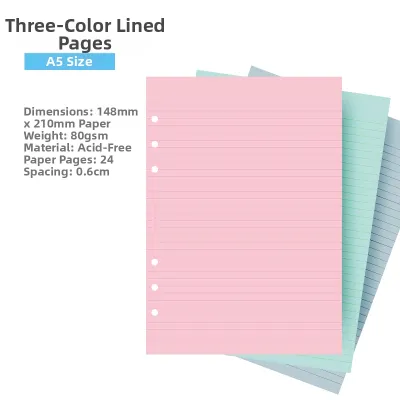
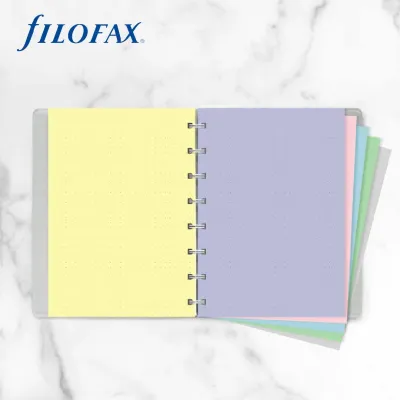

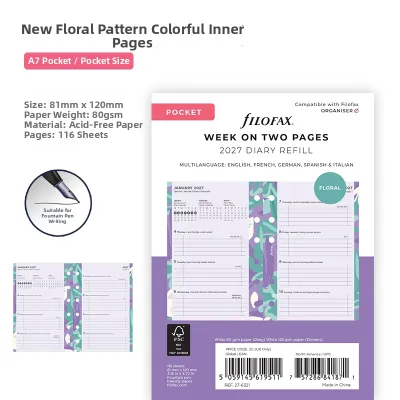
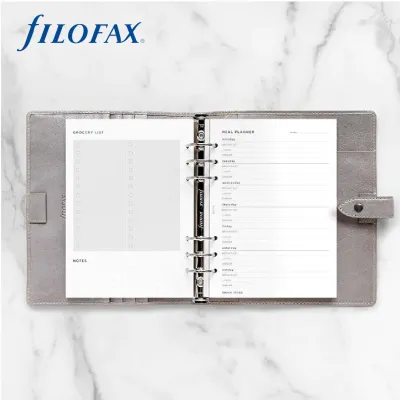
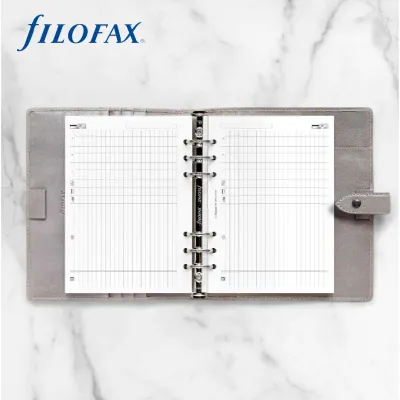
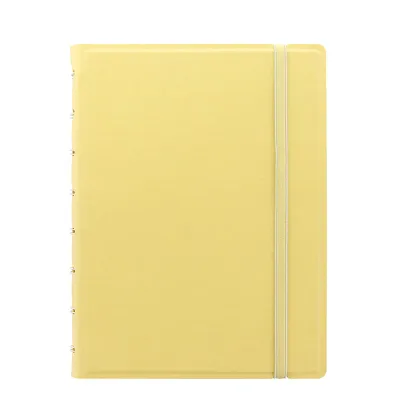
Prices are valid at publication and may change. Please refer to the product page for the latest price.

The surface finish, or texture, of the paper plays an equally critical role in your daily writing experience. Paper texture generally falls along a spectrum from highly smooth (often achieved through calendering or coating) to toothy (uncoated paper with a more tactile, fibrous feel).
- Smooth Surfaces: Highly calendered papers allow pen nibs and gel tips to glide effortlessly across the page with minimal friction. This is excellent for maintaining fine lines and preventing delicate felt-tip pens from wearing down prematurely. However, highly smooth surfaces can sometimes feel slippery, offering less control for pencil users.
- Toothy Surfaces: Uncoated papers with a distinct tooth provide tactile feedback as you write. This resistance is highly favored by pencil users and those who sketch, as it catches graphite efficiently and allows for nuanced shading. Fine-liner users may also appreciate the controlled feedback, though very sharp fountain pen nibs can occasionally catch on the fibers.
It is important to remember that paper thickness does not automatically guarantee opacity. Two different papers can both carry a rating of 80 GSM or 100 GSM, yet one may exhibit significant show-through (ghosting) while the other remains relatively opaque. This variance is caused by differences in fiber density, the types of pulp used, and the presence of internal fillers or coatings. To ensure a paper meets your standards for double-sided writing, you must evaluate its opacity under natural light rather than relying solely on the printed GSM number.
Ink Compatibility and Bleed-Through: Setting Up a Home Test
Because ink performance is highly dependent on the chemical interaction between the paper’s sizing and the specific ink ingredients, conducting a localized home test is the most reliable way to evaluate compatibility. Sizing refers to the chemical treatments applied to paper during manufacturing to control its water absorption. Without adequate sizing, liquid ink will spread rapidly through the fibers, leading to undesirable writing artifacts.
To set up a controlled home test on a new notebook or refill pack, follow these steps:
- Select a Test Area: Choose an inconspicuous page at the very back of the notebook or a single loose-leaf refill sheet.
- Prepare Your Writing Tools: Gather the specific pens you use daily, including wet options (such as fountain pens, rollerballs, or broad gel pens) and dry options (such as ballpoints or fine-liners).
- Apply Standard Writing Samples: Write a few sentences with each pen using your normal writing pressure. Note how the ink behaves immediately upon contact with the surface.
- Create a Saturation Swatch: Draw a small, solid block of color or cross-hatch pattern with your wettest pen to test how the paper handles concentrated pools of ink.
- Allow to Dry Completely: Let the page dry naturally without blotting to observe the true drying time.
Once the ink is dry, inspect the test page under a bright, direct light source to evaluate three key visual indicators:
- Feathering: Look closely at the edges of your written lines. If the ink has spread outward into tiny, spiderweb-like branches, the paper lacks the surface sizing required to hold a sharp line.
- Bleed-Through: Turn the page over to see if any ink has soaked completely through the sheet to the reverse side. True bleed-through makes writing on both sides of the page impossible.
- Show-Through (Ghosting): Observe whether you can see the shadow of your writing through the paper. While ghosting does not damage the reverse side, high levels of show-through can make reading your notes difficult and distracting.
Additionally, pay close attention to drying times. Highly coated, fountain-pen-friendly papers tend to keep ink pooled on the surface longer to preserve color vibrancy and sheen. In humid climates, such as Singapore, this surface pooling can result in exceptionally long drying times. If you are a left-handed writer or need to close your notebook quickly, a paper that absorbs ink slightly faster—even if it offers a bit more feedback—may be more practical for your daily workflow.
System Flexibility: Bound Notebooks vs. Refillable Organizers
The physical structure of your stationery system dictates how you interact with your notes over time. Traditional bound notebooks and modular ring-bound organizers serve entirely different organizational philosophies, and each comes with distinct physical trade-offs.
- Bound Notebooks: Typically utilizing thread-bound or Smyth-sewn bindings, premium bound notebooks are designed to lay flat when open. This flat-lay capability provides an uninterrupted writing surface from margin to margin, making them highly comfortable for long-form journaling or sketching. They are structurally cohesive, lightweight, and easy to slip into a bag for daily carry. However, once a page is written, it cannot be moved, reordered, or removed without damaging the binding.
- Ring-Bound Organizers: Systems like the Filofax A5 rely on a metal ring mechanism to hold loose-leaf paper. This design offers unparalleled modularity; you can insert calendar pages, blank sheets, and colored dividers in any order you choose. You can also remove pages to write on a flat desk surface and then clip them back in. The primary trade-off is physical bulk. The metal rings and the structured cover required to protect them add significant weight and thickness to your daily carry. Furthermore, the central rings can act as a physical barrier, obstructing your hand when writing on the inner margins of the page.
When choosing a ring-bound system, you must also verify refill compatibility. While A5 is a standardized paper size (148mm x 210mm), the hole-punch configurations can vary between brands. Standard A5 organizers typically use a six-hole punch pattern, but you should always measure the spacing between the rings on your specific binder before purchasing third-party refills. If you choose a bound notebook, you are committed to the manufacturer’s proprietary paper for the entire lifespan of that book, whereas a ring-bound cover allows you to experiment with different paper brands over time.
Evaluating Value: Calculating the Cost Per Page
To determine the true long-term cost of your writing system, you should look beyond the initial retail price and calculate the cost per page. This calculation helps you understand whether a system fits your ongoing stationery budget, especially if you write multiple pages every day.
To calculate the cost per page, use the following formula:
$$\text{Cost per Page} = \frac{\text{Retail Price (S\$)}}{\text{Total Usable Pages}}$$
When applying this formula, make sure to count individual pages (sides) rather than physical sheets of paper, as most premium notebooks are designed for double-sided writing.
Beyond the paper itself, you must factor in the structural investment of each system:
- The Bound Notebook Model: Every time you fill a bound notebook, you must purchase a completely new book. This means you are repeatedly paying for the binding, the cover materials, and any built-in features like ribbons, elastic bands, and expandable pockets.
- The Refillable Organizer Model: A high-quality leather or synthetic organizer cover requires a larger upfront investment. However, this cover is designed to last for years. Once you own the binder, your ongoing costs are limited to purchasing loose-leaf paper refills, which are generally less expensive than buying a brand-new bound notebook of equivalent paper quality.
Additionally, consider any hidden costs associated with customization. If you want to use your favorite sketch paper or a specific premium drawing paper inside a ring-bound organizer, you will need to purchase a specialized A5 six-hole punch. While this punch represents an extra upfront cost, it allows you to manufacture your own custom refills from almost any paper stock, potentially lowering your long-term costs and giving you complete control over your writing surface.
Final Decision Framework: Matching Paper to Your Daily Workflow
To make your final selection, match your primary writing tools, portability needs, and organizational style to the characteristics of each system.
Choose a modular ring-bound system like Filofax A5 if:
- You require layout flexibility: You need to mix ruled, dotted, blank, and calendar pages within a single volume.
- You prioritize active organization: You frequently rearrange your notes, discard temporary drafts, or archive completed projects into separate storage binders.
- You write on flat surfaces: You prefer to remove the paper from the binder to write without the obstruction of metal rings, clipping the pages back in once finished.
Choose a bound notebook like Midori if:
- You value tactile feedback: You enjoy a minimalist aesthetic and a paper surface that provides a slight, satisfying drag against your pen or pencil tip.
- You use wet inks: You want a paper designed to showcase the shading, sheen, and true color of fountain pen inks without feathering.
- You prefer a flat-lay writing experience: You want a lightweight, compact book that opens completely flat for uninterrupted writing across the entire spread.
Choose a bound notebook like Leuchtturm1917 if:
- You need structured layouts: You utilize bullet journaling methods that benefit from pre-printed page numbers, a blank table of contents, and dual ribbon markers.
- You use standard daily pens: Your primary writing tools are gel pens, ballpoints, or fine-liners that perform consistently on standard-weight paper.
- You prioritize portability: You need a durable, self-contained book with an elastic closure that can easily survive being tossed into a backpack or tote bag.
Verify first if:
- You live in a high-humidity environment: Be aware that highly coated papers may take significantly longer to dry, making them prone to smudging if closed too quickly.
- You use high-flow broad nibs: Always perform a localized ink test to check for ghosting or bleed-through before filling out important pages.
- You are mixing brands: Double-check the exact hole spacing and page dimensions of any third-party refills to ensure they fit your organizer's ring configuration without binding or hanging over the edges of the cover.
Frequently Asked Questions (FAQ)
Can I use fountain pen ink on all premium A5 notebook papers?
No, fountain pen ink does not perform consistently across all premium papers. The compatibility of fountain pen ink depends heavily on the paper’s surface sizing, which controls how quickly liquid is absorbed into the fibers. Papers with light sizing or highly absorbent fibers can cause wet inks to feather and bleed through to the reverse side. To ensure a smooth writing experience without feathering, look for papers that are explicitly labeled as fountain pen friendly, and perform a small test swatch if you plan to use broad nibs or high-flow inks.
Are A5 refills universally compatible across different ring-bound planners?
While A5 paper dimensions are standardized at 148mm x 210mm, the hole-punch configurations are not universally compatible across all brands. Most standard A5 ring-bound planners utilize a six-ring mechanism with a specific spacing pattern, but some proprietary systems or disc-bound planners use entirely different hole counts and spacing. Always measure the distance between the rings on your binder and compare it to the product specifications of the refills before purchasing. If you want to use non-standard paper, investing in an adjustable A5 six-hole punch is the most reliable way to ensure perfect compatibility.
Community discussion
Share your experience or ask a question. Comments are reviewed before publication.