
Starting Primary 1 in Singapore is a major milestone for both children and parents. As young learners step into a more structured academic environment, having the right tools can ease their transition, build confidence, and foster independent learning. A thoughtfully curated stationery gift pack is an excellent way to celebrate this milestone, provided it contains items that are functional, ergonomic, and compliant with local school guidelines.
To ensure your gift is genuinely helpful rather than a classroom distraction, focus on high-quality basics that support handwriting development and daily organization. The ideal stationery gift pack should prioritize physical comfort and ease of use, helping a six-to-seven-year-old navigate their daily school routine with minimal fuss.
Core Criteria for a Primary 1 Stationery Gift Pack
Selecting items for a Primary 1 student requires a shift in mindset from preschool novelty to primary school utility. At this stage, children are transitioning from play-based activities to formal writing, which demands sustained physical effort and focus. The primary goal of a school-ready stationery gift pack is to support this transition by providing tools that are physically comfortable to use over extended periods.
Products mentioned in this guide
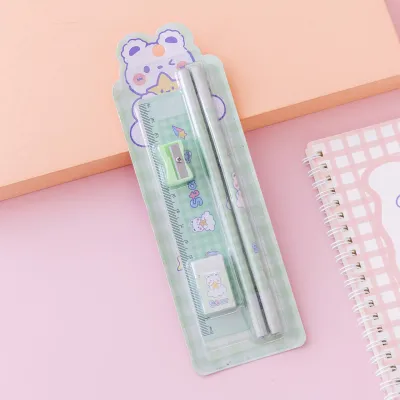
![[Wholesale] 7pcs Stationery set for children kids. Pencil Cartoon Notebook Goodie Bag Birthday party Childrens Day gift](https://img.lazcdn.com/g/p/bde4d5031fdfe28cc59b5a3348ac5db2.jpg_400x400q80.jpg_.webp)
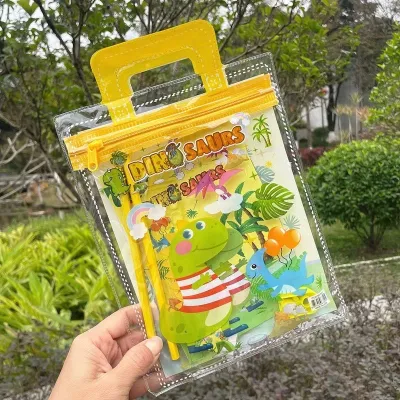
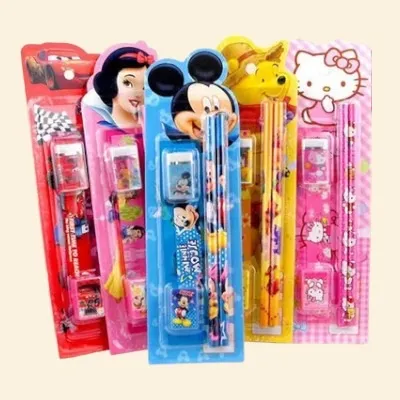
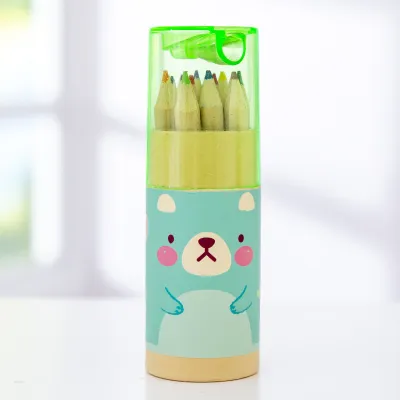
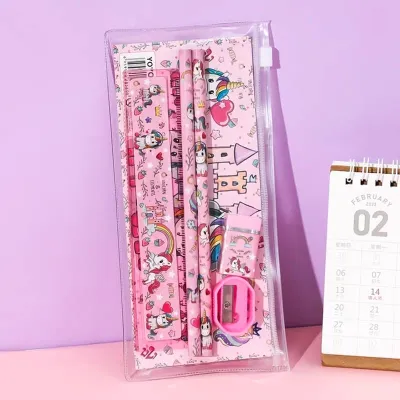
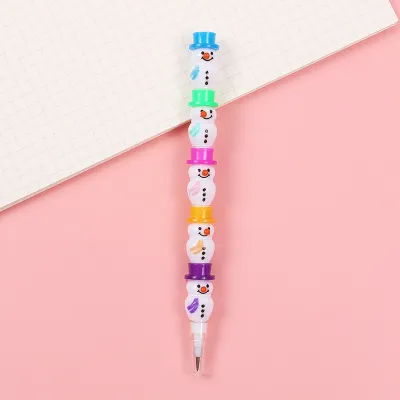
Prices are valid at publication and may change. Please refer to the product page for the latest price.
Ergonomics and functionality must always take precedence over aesthetic novelty. Children at this age are still developing their fine motor skills and hand strength. Writing tools that are too heavy, too thick, or poorly balanced can cause hand fatigue, leading to frustration and poor handwriting habits. Simple, well-designed tools allow the child to focus entirely on learning how to form letters and numbers correctly.
Minimalist designs are highly recommended for maintaining focus in a busy classroom environment. Bright lights, interactive features, and toy-like elements on stationery items can easily distract a young child during lessons. Teachers frequently report that students spend valuable class time playing with complex stationery rather than listening to instructions. Choosing clean, simple, and solid-colored items helps establish a focused learning space on the student’s desk.
Safety is another critical factor when compiling school supplies for young children. Ensure that all items, especially adhesives, crayons, or colored pencils, are labeled as non-toxic and conform to safety standards such as the AP non-toxic seal or the CE mark. Avoid items with small, easily detachable parts that could become choking hazards, and ensure that any scissors included have rounded, blunt tips designed specifically for children’s safety.
Finally, always advise the recipient’s parents to cross-reference the gift pack with their specific school’s official booklist and supply list. While most local primary schools share standard requirements, individual schools or specific teachers may have precise preferences regarding notebook sizes, pencil grades, or color-coding systems for folders. Providing a versatile base of high-quality essentials ensures the child is well-prepared regardless of minor institutional variations.
Essential Writing Tools for Developing Handwriting
Developing a comfortable and legible handwriting style is one of the primary academic focuses in the lower primary years. The tools you include in the gift pack should actively assist the child in mastering pencil grip and control, making the physical act of writing as smooth and effortless as possible.

Pencils and Ergonomic Grips
For beginners, standard wooden pencils remain the absolute gold standard for handwriting practice. Look for pencils with high-quality graphite, specifically in grades HB or 2B. In Singapore, 2B pencils are highly favored by primary school teachers because the softer lead deposits a darker, clearer line with less downward pressure. This is highly beneficial for young children who are still building hand strength and tend to write too lightly with harder HB leads.
Triangular-barreled pencils are highly recommended over traditional hexagonal or round designs. The three flat sides of a triangular pencil naturally guide the child’s fingers into the correct tripod grip, which is essential for long-term writing comfort and control. This design prevents the pencil from rolling off slanted school desks, reducing classroom disruptions and lost items.
For children who struggle with finger placement or tend to grip their pencils with excessive force, including a few soft, ergonomic silicone pencil grips in the pack can be incredibly helpful. These slip-on grips provide a cushioned, contoured surface that guides the thumb and index finger into the correct position. They prevent hand strain and blisters, allowing the child to practice writing for longer periods without discomfort.
When assembling the gift pack, it is best to include unsharpened or lightly capped pencils rather than fully sharpened ones. Pre-sharpened pencil tips are highly fragile and frequently snap during transit inside a school bag, rendering them useless until sharpened again. Including a small box of high-quality, unsharpened triangular pencils ensures they arrive in perfect condition, ready to be prepared at home.
Erasers and Manual Sharpeners
An effective eraser is just as important as a good pencil. Look for soft, high-quality, non-dust or dust-free polymer erasers. These erasers are formulated to roll up cleanly into single strands rather than scattering fine crumbs across the desk. They should lift graphite marks completely with minimal friction, preventing the child from tearing or wrinkling the delicate paper of their school exercise books.
To verify the quality of an eraser before gifting, perform a simple paper-compatibility check. Draw a medium-pressure line using a 2B pencil on a standard sheet of 80 GSM paper, then erase it with a single, firm stroke. A high-quality eraser will leave the paper surface smooth and clean, without any grey smudges, ghosting, or thinning of the paper fibers. Avoid cheap, hard rubber erasers, which tend to smear the graphite and abrade the paper.
Include a simple, manual pencil sharpener equipped with a secure, built-in shavings canister. Primary 1 students are expected to keep their workspaces tidy, and a sharpener with a reliable lid prevents wood shavings and graphite dust from spilling inside their pencil cases or onto the classroom floor. Look for a sharpener with a high-quality steel blade that cuts cleanly without splintering the pencil wood.
Avoid including novelty erasers shaped like food, animals, or cartoon characters in the gift pack. While visually appealing, these novelty items are often made of hard, cheap synthetic rubber that smudges paper rather than erasing cleanly. Furthermore, their toy-like appearance makes them a major source of distraction during lessons, often leading to children trading them under the desk instead of focusing on their schoolwork.
Practical Paper Goods and Classroom Organization
Staying organized is a major challenge for many Primary 1 students as they learn to manage multiple subjects, worksheets, and administrative forms. Including practical paper goods and organizational tools in your gift pack helps them build good habits from day one.
Notebooks and Worksheet Folders
Local primary schools in Singapore utilize specific exercise book formats that are standardized across the curriculum. These typically include Broad Line exercise books for early English writing, Single Line books for general subjects, and Medium Square or Big Square books for Mother Tongue languages such as Chinese, Malay, or Tamil. Including a few of these standard-sized books allows the child to practice their writing format at home using the exact layout they will encounter in school.
To keep loose worksheets, homework assignments, and school circulars organized, include a selection of clear L-shaped folders and expandable document wallets. A4-sized plastic L-folders are incredibly useful for keeping daily worksheets flat and dry. Using different colored folders for different subjects (for example, blue for Mathematics and green for Science) helps young children identify and retrieve their materials quickly during class transitions.
When selecting folders, prioritize durability and construction quality. Look for folders made from flexible but sturdy polypropylene with a thickness of at least 0.2mm. The seams and edges should be reinforced or double-welded to prevent splitting under the weight of multiple worksheets. Folders with a simple button or hook-and-loop closure are excellent for securing homework sheets so they do not slide out into the depths of a school bag.
Pencil Cases and Name Labels
For storing daily writing tools, a soft, pouch-style pencil case with a reliable, smooth-gliding zipper is far superior to hard-shell plastic or metal boxes. Soft pouches made of durable canvas or nylon take up minimal space on small classroom desks and can be easily squeezed into a crowded school bag. Crucially, soft pouches do not make a loud, disruptive clattering sound if they accidentally slide off a desk onto the classroom floor.
Choose a pencil case with a single, spacious compartment or a simple interior divider. Avoid complex, multi-tiered cases with hidden compartments, spring-loaded buttons, or built-in games, as these encourage play during class. The zipper should have a large, easy-to-grip pull tab that a six-year-old can operate independently without snagging the fabric.
No Primary 1 stationery gift pack is complete without a high-quality set of personalized name labels. In a classroom of thirty students, identical pencils, rulers, and water bottles are easily mixed up or lost. Including a sheet of waterproof, scratch-resistant sticker labels allows parents to clearly mark every single item before school starts. For fabric items like pencil cases and school uniforms, include a few iron-on name labels to ensure long-lasting identification.
Distracting Items to Exclude from Your Gift Pack
While it can be tempting to fill a gift pack with colorful, trendy, and high-tech stationery items, many of these well-intentioned gifts are highly impractical for a Primary 1 classroom. Understanding what to exclude is just as important as knowing what to include.
- Mechanical Pencils: These are generally discouraged or outright banned for Primary 1 students. The fragile 0.5mm or 0.7mm lead breaks easily under the heavy, uneven writing pressure typical of young learners. This leads to constant interruptions as the child stops to click the pencil or replace the lead, disrupting their writing flow and distracting nearby classmates. Furthermore, mechanical pencils do not help children develop the proper finger pressure control that traditional wooden pencils do.
- Multi-Color Pens: Pens with four or ten ink colors in a single barrel are popular with children but highly unsuitable for early handwriting. The barrels are excessively thick and bulky, making it impossible for small hands to maintain a correct, comfortable grip. Additionally, Primary 1 students rarely require colored ink for their daily work, and the complex clicking mechanisms are a constant source of distraction.
- Toy-Like Pencil Cases: Avoid pencil cases featuring built-in toys, "pop-it" fidget buttons, magnetic closures that snap loudly, or hidden pop-up compartments. These items turn the student's desk into a play area, making it incredibly difficult for them to focus on the teacher's instructions.
- Overly Decorative or Character-Branded Items: While cartoon characters are appealing, some schools have strict guidelines discouraging flashy, branded merchandise to maintain a focused and egalitarian learning environment. Opting for clean, high-quality, solid-colored stationery ensures the items are acceptable in any school setting.
Tips for Assembling and Presenting the Gift Pack
To make your stationery gift pack even more special, consider how you package and present the items. A thoughtful presentation not only makes the gift exciting to receive but also reinforces the practical and organizational habits the stationery is meant to encourage.
Instead of using disposable wrapping paper that immediately gets thrown away, use a functional item from the gift list itself as the outer packaging. A high-quality, clear plastic document wallet or a sturdy canvas tote bag makes an excellent “wrapping” that the child can reuse for school. This approach is environmentally friendly and demonstrates practical utility from the moment the gift is received.
Organize the items logically within the packaging so the child can easily see and appreciate what they have received. Place the writing tools, erasers, and sharpener neatly inside the pencil case, and stack the notebooks and folders together. This organized presentation shows the child how their tools should be kept, encouraging them to maintain a neat and tidy school bag once the academic year begins.
Finally, add a personal touch by including a small, handwritten encouragement card. Entering Primary 1 is a significant step, and a warm, positive note celebrating their milestone can boost the child’s excitement for school. Keep the message simple, encouraging, and easy for a young reader to understand, wishing them a wonderful and fun-filled learning journey ahead.
Frequently Asked Questions (FAQ)
Are mechanical pencils allowed for Primary 1 students?
While policies can vary slightly between individual schools, the vast majority of primary schools in Singapore strongly discourage or outright prohibit the use of mechanical pencils for Primary 1 students. Traditional wooden pencils, particularly in 2B grade, are mandated because they help young learners develop proper handwriting pressure, finger control, and correct stroke formation. The fragile lead of a mechanical pencil snaps too easily under the heavy grip of a beginner, leading to constant classroom distractions.
Should I include a calculator in the stationery gift pack?
No, you should not include a calculator in a gift pack for a Primary 1 student. The lower primary mathematics curriculum in Singapore focuses heavily on building foundational number sense, mental arithmetic, and basic problem-solving skills. Calculators are not permitted in primary school mathematics classes or examinations until students reach Primary 5. Introducing a calculator too early can hinder the child’s development of essential mental calculation skills.
Community discussion
Share your experience or ask a question. Comments are reviewed before publication.