
Selecting a box cutter for school requires balancing functionality with strict injury prevention. While standard hardware utility knives are common, they lack the mechanical safeguards necessary for a classroom environment or a student’s backpack. A student-safe box cutter must incorporate specific design features—such as automatic blade retraction and secure locking—to minimize the risk of accidental cuts during craft projects, cardboard modeling, or general school tasks. By focusing on tools designed specifically with safety mechanisms, parents and educators can ensure that students complete their creative and academic projects without unnecessary physical risk.
Why Standard Box Cutters Are Risky for School Use
Standard utility knives and box cutters found in home toolboxes are engineered for heavy-duty industrial or home improvement tasks, where the user is typically an adult working in a controlled environment. When these same tools enter a school setting, the risk of injury increases significantly.
A primary hazard is the manual locking slider common on basic utility knives. If a student forgets to retract the blade before tossing the tool into a pencil case or backpack, the exposed edge becomes a hidden hazard. The next time the student or a teacher reaches into the bag for a pen or ruler, they risk sustaining a deep puncture or laceration.
Products mentioned in this guide
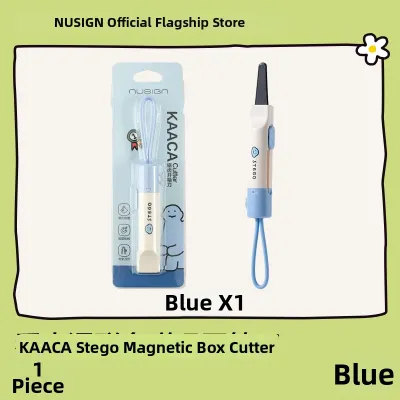
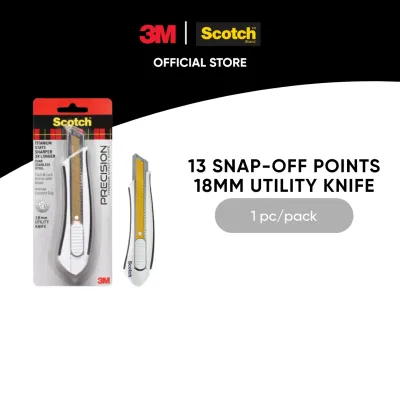
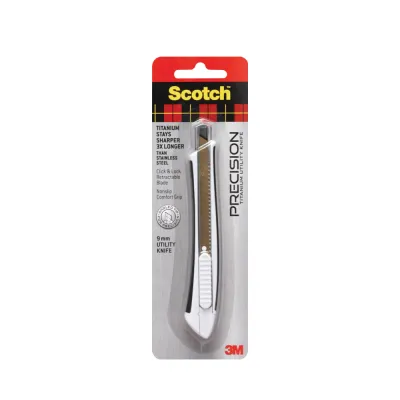
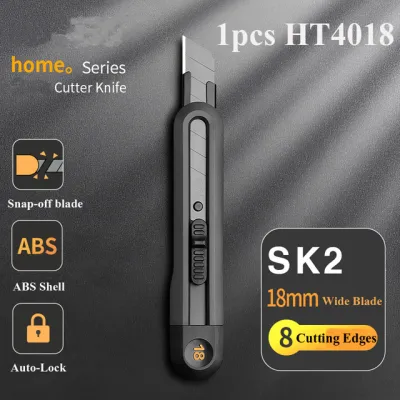
Prices are valid at publication and may change. Please refer to the product page for the latest price.
Furthermore, classroom environments are inherently dynamic and collaborative. Students frequently share tools during group projects, science experiments, or art classes. Passing an open, unsheathed blade from hand to hand is a recipe for accidental contact.
Standard box cutters also lack the specialized ergonomic designs needed for smaller hands. When a student attempts to cut through tough materials like double-walled cardboard or thick mounting board with a basic plastic or metal handle, their hand can easily slip. Without a proper guard or non-slip texture, the hand can slide forward directly onto the exposed blade, especially when applying the heavy downward pressure required by a dull or unsuited tool.
Essential Safety Features for Student Box Cutters
To mitigate these risks, a student-appropriate box cutter must feature specific engineering controls that physically prevent accidents rather than relying solely on the user’s constant vigilance. When evaluating options for school stationery kits, look for the following essential safety features.

Auto-Retracting Blades
An automatic retraction mechanism is perhaps the most critical safety feature for any student cutting tool. Unlike manual sliders that keep the blade locked in an extended position until the user manually pulls it back, auto-retracting knives utilize an internal spring-loaded mechanism.
To use the tool, the student must actively push and hold a slider forward. The moment they release pressure on the slider—whether because they have finished the cut, dropped the tool, or paused to adjust their material—the blade instantly snaps back inside the protective housing. This ensures that the blade is only exposed during the actual cutting motion, virtually eliminating the risk of leaving an open knife on a desk or inside a bag.
Blade Locking Mechanisms
While auto-retraction is ideal for quick, straight cuts, some school projects require sustained cutting where a secure lock is necessary. If a locking mechanism is present, it must be robust and reliable.
Poorly designed locks can fail under pressure, causing the blade to slip backward into the handle unexpectedly, which often leads to a sudden loss of control and a subsequent slip. Conversely, a lock must also prevent the blade from extending on its own when stored. High-quality student cutters feature dual-action locks or smart-locking systems that require a deliberate, multi-step action to engage, ensuring the blade remains exactly where it should be during operation.
Ergonomic and Non-Slip Grips
A secure grip is fundamental to safe cutting. Student hands are smaller and may lack the grip strength of an adult, making tool control more challenging.
Look for box cutters with contoured handles designed to fit comfortably in smaller palms. The handle material should feature a textured, non-slip surface, such as thermoplastic rubber or ribbed plastic. This texture provides essential friction, preventing the hand from slipping even if it becomes sweaty during a long art session. Additionally, an ergonomic design helps distribute the cutting force evenly across the hand, reducing fatigue and the likelihood of sudden, uncontrolled movements.
Rounded or Blunt Tips
Traditional utility blades end in a sharp, pointed tip designed for piercing materials. However, in a school environment, this sharp point is a major source of puncture wounds.
Student-safe box cutters often utilize blades with rounded or blunt tips. These blades are highly effective for slicing through paper, cardstock, and cardboard, but they significantly reduce the risk of accidental skin punctures if the tool slips or is dropped. Some safety cutters also feature a deeply recessed blade design, where the cutting edge is shielded within a plastic guide, allowing material to slide in but keeping fingers completely out of reach.
Age-Appropriate Alternatives and Tool Selection
Not all students require the same level of cutting capability, and safety features should be matched to the student’s age, developmental stage, and specific classroom tasks.
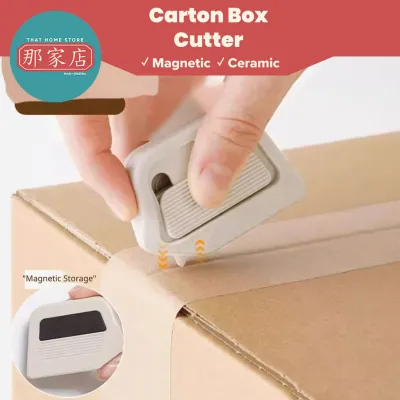
For younger students in primary school, traditional box cutters are generally inappropriate. Instead, parents and educators should look for safety scissors with blunt tips or specialized plastic craft knives. Many modern primary-school craft tools feature fully enclosed blades or micro-ceramic blades that expose only a fraction of a millimeter of the cutting edge. These tools are sufficient for cutting thin paper and school glue strips but are physically incapable of penetrating deep into skin.
As students transition to secondary school and begin working on more complex design and technology or art projects, their material needs change. They may need to cut thicker cardboard, foam board, or balsa wood. For these older students, an auto-retracting utility knife is a suitable choice, provided it is paired with proper safety instruction.
It is also essential to supply a self-healing cutting mat. A proper mat provides a stable, non-slip surface that absorbs the blade’s point, preventing the tool from skidding across a slick desk surface and reducing the force required to make a clean cut.
Before purchasing any cutting tool, always check the manufacturer’s specifications regarding material compatibility. Attempting to cut a material that is too thick or tough for the tool’s design forces the student to apply excessive downward pressure. This extra force is a primary cause of slips and loss of control. Ensure the tool is rated for the specific materials required by the school curriculum.
Safe Handling, Storage, and Blade Disposal
Even the safest tool can cause injury if handled improperly. Establishing clear protocols for use, storage, and maintenance is vital for maintaining a safe classroom or home study environment.
One of the most common times for accidents to occur is when sharing tools. Students must be taught strict passing protocols. The golden rule is to never hand an open box cutter directly to another person. The user must fully retract the blade first.
The safest method is to place the retracted tool flat on a desk or worktable and allow the other student to pick it up. If the tool must be handed over directly, it should always be passed handle-first, with the sender holding the rear of the housing, ensuring the cutting end points away from both individuals.
Storage is another critical safety phase. A box cutter should never be thrown loose into a backpack, pocket, or soft pencil case where it can wear through the fabric or slide open. Instead, students should store their cutting tools in rigid, dedicated cases—such as a hard plastic pencil box or a heavy-duty zippered pouch with a secure closure. This extra layer of containment ensures that even if a blade mechanism somehow fails or extends, it remains safely isolated from hands reaching into the bag.
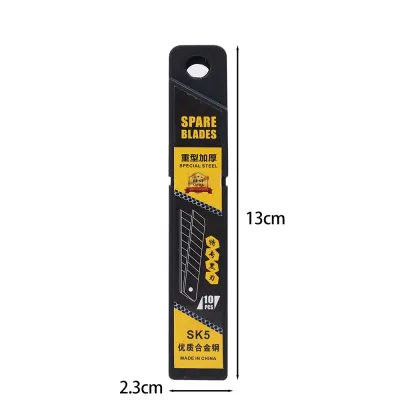
Eventually, blades will wear out and need to be replaced. Dull blades are highly dangerous because they require more force to cut, increasing the risk of slipping. When replacing a blade, safe disposal is paramount.
Dull or snapped blades should never be thrown directly into a standard classroom or household rubbish bin, where they can easily slice through plastic bags and injure waste handlers or cleaning staff. Instead, use a dedicated, puncture-proof blade disposal container. If one is not available, wrap the old blade heavily in several layers of thick duct tape or masking tape, masking the sharp edges entirely, before placing it in the bin.
When to Stop Using or Replace a Box Cutter
A safety feature is only effective if it functions perfectly. Over time, school stationery undergoes significant wear and tear, and a damaged box cutter can quickly become a hazard. Inspect the tool regularly and stop using it immediately if any of the following signs of degradation appear:
- Dullness: If the blade drags, tears the paper instead of cutting it, or requires the student to lean their body weight into the cut, the blade must be replaced or snapped to a fresh segment immediately.
- Mechanical Failure: If the auto-retraction spring becomes sticky, slow, or fails to pull the blade completely inside the housing when released, the tool's primary safety mechanism is compromised.
- Damaged Housing: Cracked plastic handles, loose screws, or a loose blade holder can cause the blade to wobble or the entire tool to break apart under pressure.
- Degraded Grip: If the non-slip rubber grip begins to peel, wear smooth, or become sticky, the student will lose the precise control needed for safe cutting.
If any of these issues occur, do not attempt to tape or temporarily repair the tool. Stop using it immediately and consult the manufacturer’s instructions for proper blade replacement or disposal of the entire unit.
Frequently Asked Questions (FAQ)
Are ceramic safety blades safer than steel blades for students?
Ceramic safety blades offer several distinct advantages for student use, primarily because they can be engineered with a unique cutting edge that is highly effective on paper and cardboard but less likely to cut skin upon accidental contact. They also stay sharp significantly longer than traditional steel blades, reducing the frequency of blade changes and the risk associated with dull blades.
However, ceramic is inherently more brittle than steel. If dropped onto a hard classroom floor or used to pry materials, a ceramic blade can chip or shatter. Before purchasing, always check the manufacturer’s age recommendations and handling instructions to ensure the tool matches the student’s maturity level.
Do schools in Singapore allow students to bring box cutters?
School policies regarding cutting tools vary widely across Singapore. Many primary schools strictly prohibit students from bringing any form of utility knife or box cutter to school, requiring all cutting tasks to be performed with safety scissors under direct teacher supervision.
Secondary schools, particularly those with dedicated Art, Design & Technology (D&T), or Science practical classes, may permit or even require students to bring their own cutting tools. However, these permissions are usually highly regulated. Students are typically required to use safety-specific models featuring auto-retraction and rounded tips. Always consult the specific school’s student handbook or ask the subject teacher before purchasing or sending a box cutter to school with a student.
Community discussion
Share your experience or ask a question. Comments are reviewed before publication.