
Starting your embroidery journey does not require a massive investment in specialized sewing equipment. To make your very first stitch, you only need four fundamental items: a sturdy hoop to hold your fabric taut, a needle designed to accommodate stranded thread, a bundle of embroidery floss, and a piece of non-stretch fabric. By focusing on these core essentials, you can master the basic stitches before deciding whether to invest in advanced accessories.
The Core Essentials: Sewing Equipment for Your First Stitch
An embroidery hoop is critical because it keeps your fabric drum-tight, ensuring your stitches do not pucker or distort the material. For beginners, a hoop with a diameter of 4 to 6 inches (approximately 10 to 15 cm) is highly recommended because it fits comfortably in one hand and accommodates most starter patterns. When selecting a hoop, you will generally choose between wood and plastic. Wooden hoops, particularly those made of smooth beechwood, are lightweight and classic, but you must inspect them to ensure the inner and outer rings fit together tightly without gaps. Plastic hoops often feature a molded lip or groove that grips fabric securely, making them a practical choice if you struggle to maintain consistent tension.
Unlike standard sewing needles, embroidery needles—often referred to as crewel needles—feature a medium-to-long eye designed to hold multiple strands of embroidery floss. The shaft of the needle is sharp and slightly thinner than the eye, which helps the thread pass through the fabric weave without causing friction or tearing. For your first project, look for a multi-size pack containing sizes 5 to 9. This variety allows you to experiment with different thread thicknesses and find the needle size that glides most smoothly through your chosen fabric. Always store your needles in a secure case or needle minder to prevent accidental pricks.
Products mentioned in this guide
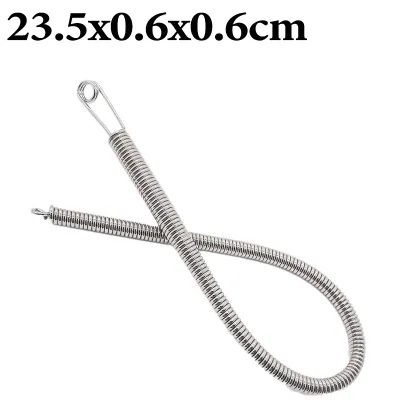
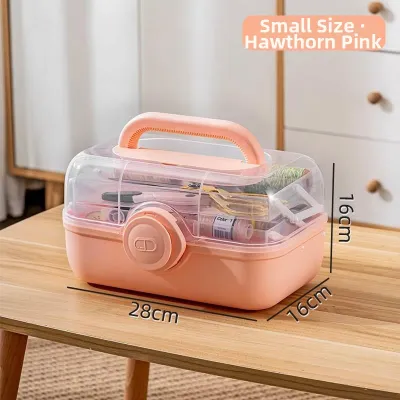
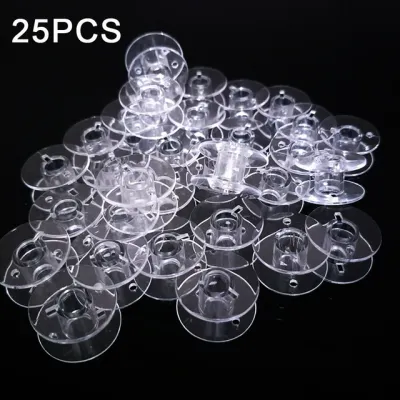
Prices are valid at publication and may change. Please refer to the product page for the latest price.
Standard embroidery floss is made of six individual strands of cotton thread lightly twisted together. You will rarely use all six strands at once; instead, you will separate them based on the desired line weight of your pattern, with two or three strands being the standard for most beginner projects. When choosing fabric, avoid stretchy materials like jersey or polyester knits, which warp easily under tension and ruin your stitch alignment. Opt instead for tightly woven, medium-weight natural fibers such as cotton calico, linen, or even a basic cotton tea towel, which provide a stable foundation for your stitches.
Clean cuts are vital to prevent thread ends from fraying, which makes threading needles incredibly frustrating. You do not need expensive designer shears, but you do need a dedicated pair of small, sharp embroidery scissors with fine tips. Keep these scissors exclusively for thread and fabric, as cutting paper or plastic will quickly dull the blades. For safety, keep your scissors closed and stored in a protective sheath when not in use.
Helpful Additions: When to Upgrade Your Embroidery Tools
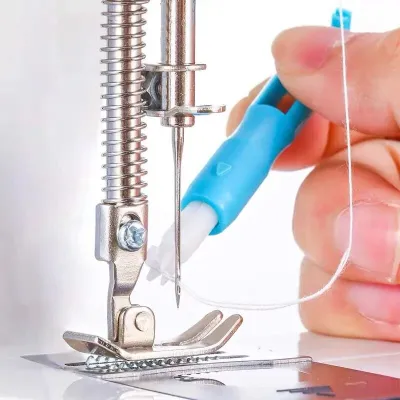
If you find yourself squinting or repeatedly struggling to get thread ends through the needle eye, a simple wire loop needle threader is a highly practical addition. Similarly, if you frequently lose track of your needle when pausing your work, a magnetic needle minder—which clamps onto your fabric using two small magnets—keeps your needle safely parked on your hoop rather than lost in your sofa cushions.

Getting your design onto the fabric is the first step of any project. For simple patterns, you can hold your fabric against a bright window and trace the design with a standard pencil. However, if you are working on dark fabrics or complex designs, water-soluble fabric pens or heat-erasable pens allow you to draw directly on the material and wash or iron the lines away once your stitching is complete. Always test these pens on a scrap piece of your fabric first to verify that the ink disappears completely without leaving a stain.
As your collection of embroidery floss grows, loose skeins can easily tangle into unusable knots. Plastic or cardboard bobbins allow you to wind up excess thread and label them with color codes. You only need to invest in these organizers once you accumulate more than five or six colors, keeping your workspace tidy and your threads clean.
What to Skip: Avoiding Unnecessary Sewing Equipment Purchases
While professional embroiderers use floor stands to keep both hands free, these tools are bulky, expensive, and unnecessary for beginners. A simple handheld hoop allows you to feel the tension of the fabric directly and easily rotate your work to check the back of your stitches.
Beautiful, vintage-style stork scissors are popular on social media, but they do not cut thread any better than a basic pair of sharp, budget-friendly sewing snips. Focus your budget on high-quality needles and smooth hoops rather than decorative cutting tools that offer no functional advantage.
It is tempting to buy a box of 100 different thread colors online, but many of these budget bundles contain low-quality polyester threads that knot easily and bleed color when washed. Instead, purchase individual skeins of high-quality, double-mercerized cotton floss in just three or four colors that match your first planned project to prevent waste and ensure smooth stitching.
Building Your Starter Kit: A Checklist for Beginners
Before heading to a local craft store or ordering online, verify that your selected tools are compatible. Ensure your hoop is slightly larger than the design you plan to stitch so you do not have to reposition it constantly. Check that your needle eye is large enough for at least three strands of your chosen floss, and confirm that your fabric does not stretch when pulled diagonally.
In Singapore, you can easily assemble a high-quality starter kit for under S$15 to S$25. Allocate your budget wisely: spend S$3 to S$5 on a sturdy 6-inch wooden hoop, S$2 to S$4 on a pack of assorted crewel needles, and S$1 to S$2 per skein of reputable cotton floss. A simple fat quarter of plain cotton fabric can be found for less than S$3, leaving you with a complete setup without overspending.
You will know you are ready to expand your toolkit when you can consistently maintain even stitch tension without puckering the fabric. Once you transition from simple line stitches to filled designs, you might consider upgrading to specialized tools like a hoop stand, a wider variety of fabric types, or specialized metallic threads.
Frequently Asked Questions (FAQ)
Can I use regular sewing needles and thread for embroidery?
Standard sewing thread is typically made of polyester or a cotton-polyester blend designed for strength under machine tension, meaning it lacks the lustrous sheen, thickness, and strand-separation capability of dedicated embroidery floss. Additionally, standard hand-sewing needles have very small, narrow eyes that make threading multiple strands of embroidery floss nearly impossible, often tearing the thread or damaging your fabric weave.
Do I need a specific type of fabric to start embroidering?
You do not need to buy expensive, specialized embroidery linen to begin; many suitable options can be found around your home or in basic fabric scrap bundles. The key requirement is that the fabric must be non-stretch and tightly woven enough to support the weight of your stitches without sagging. You can test this by holding the fabric up to the light—if you can see large gaps between the threads, or if the material stretches significantly when pulled, it will likely pucker during stitching.
Community discussion
Share your experience or ask a question. Comments are reviewed before publication.