
Selecting the correct envelope size is essential for presenting professional correspondence, protecting critical documents, and avoiding unnecessary postage costs. The standard international envelope sizes used in Singapore—primarily the C-series and DL formats—are specifically designed to match standard A-series paper dimensions.
To find the perfect fit, you only need to match the size of your document or card to its corresponding envelope counterpart. For example, an unfolded A4 document requires a C4 envelope, while an A4 sheet folded in half fits a C5 envelope. Understanding these pairings ensures your mail arrives in pristine condition without awkward folds or excessive empty space.
Quick Reference: Matching Envelope Sizes to Common Items
When preparing mail, having a direct mapping of standard items to their correct envelope sizes saves time and prevents errors. The table below outlines the most common document formats, how they should be folded, and the standard envelope sizes that accommodate them.
Products mentioned in this guide
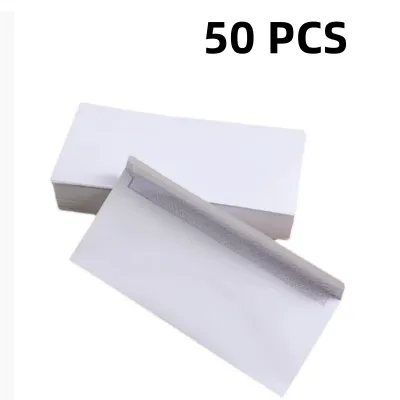
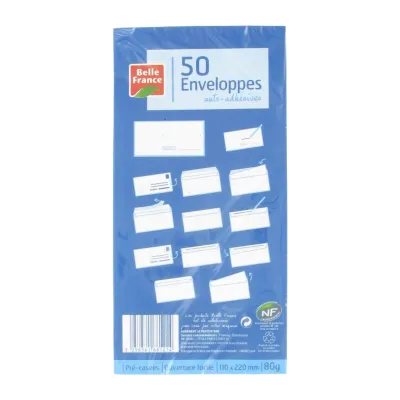
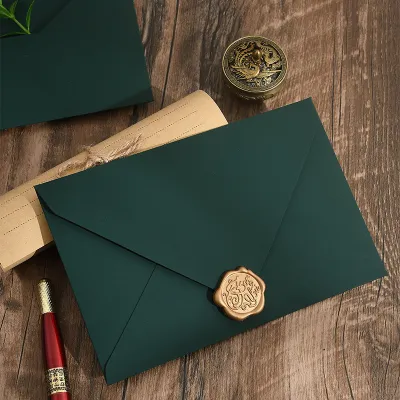
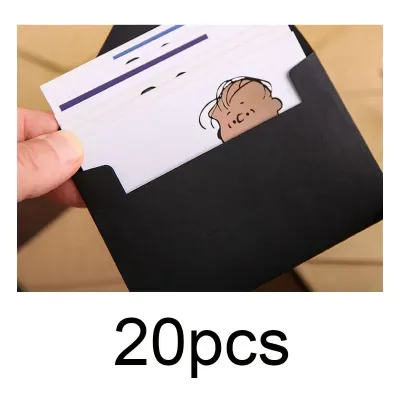
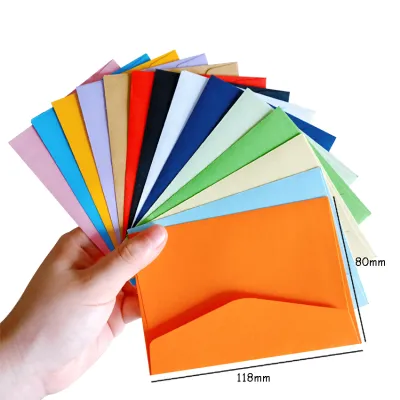
Prices are valid at publication and may change. Please refer to the product page for the latest price.
| Document / Item Type | How to Fold | Ideal Envelope Size | Envelope Dimensions |
|---|---|---|---|
| A4 Document (Unfolded) | Do not fold | C4 | 229 mm x 324 mm |
| A4 Document (Folded in half) | Fold once horizontally | C5 | 162 mm x 229 mm |
| A5 Card / Invitation | Do not fold | C5 | 162 mm x 229 mm |
| A4 Document (Tri-folded) | Fold into three equal sections | DL | 110 mm x 220 mm |
| Standard Business Letter | Fold into three equal sections | DL | 110 mm x 220 mm |
| A4 Document (Folded in quarters) | Fold in half twice | C6 | 114 mm x 162 mm |
| A6 Card / Invitation | Do not fold | C6 | 114 mm x 162 mm |
These standard envelope sizes comply with ISO 216 international standards. Because Singapore and most global postal systems rely on these exact dimensions, using standard C-series and DL envelopes ensures maximum compatibility with local and international automated sorting systems.
Standard Envelope Sizes Explained (C-Series and DL)
The international standard for paper sizes, ISO 216, governs both the A-series paper we use daily and the C-series envelopes designed to hold them. The math behind this system ensures that each envelope size is slightly larger than its corresponding paper size. This geometric relationship guarantees that an A4 sheet will always slide smoothly into a C4 envelope, an A5 sheet into a C5 envelope, and an A6 sheet into a C6 envelope.

Understanding this nesting logic makes selecting stationery straightforward. Whenever you fold a sheet of paper exactly in half, it transitions down to the next A-series number. For instance, folding an A4 sheet in half creates an A5-sized face, which then fits perfectly into a C5 envelope. Folding it in half once more creates an A6-sized face, matching a C6 envelope.
C4, C5, and C6 Envelopes
- C4 Envelopes (229 mm x 324 mm): These envelopes are sized to accommodate flat, unfolded A4 sheets of paper. They are the ideal choice for contracts, legal documents, certificates, and glossy brochures that must remain completely flat. Using a C4 envelope prevents unsightly creases and preserves the professional presentation of your materials.
- C5 Envelopes (162 mm x 229 mm): Designed to hold an A5 sheet of paper or an A4 sheet folded in half once. This size is incredibly versatile, frequently used for mailing multi-page documents, greeting cards, and small booklets. It offers a compact footprint while still providing ample space for thicker inserts.
- C6 Envelopes (114 mm x 162 mm): Sized for A6 paper, which is equivalent to an A4 sheet folded in half twice. C6 envelopes are highly popular for personal correspondence, RSVP cards, and social invitations. They evoke a classic, traditional feel that is well-suited for hand-written notes and greeting cards.
DL (Dimension Length) Envelopes
- DL Envelopes (110 mm x 220 mm): Unlike the C-series, the DL envelope does not share the same aspect ratio as standard A-series paper. Instead, it is specifically designed to hold an A4 sheet that has been folded into three equal horizontal sections, commonly known as a tri-fold or Z-fold.
- Universal Standard: The DL format is the standard for corporate correspondence, utility bills, invoices, and marketing mailers. Because of its slim profile, it is highly compatible with high-speed automated sorting machines used by postal services. This compatibility makes DL envelopes the most cost-effective and efficient choice for high-volume business mailings.
Choosing the Right Envelope for Specific Use Cases
Selecting the perfect envelope involves balancing the physical dimensions of your document with the impression you want to make on the recipient. Different scenarios demand different folding strategies and envelope styles.
Mailing A4 Documents and Certificates
When sending official documents, legal agreements, or academic certificates, preserving the physical integrity of the paper is paramount. For these items, a C4 envelope is highly recommended. Folding a certificate or a signed contract can make it look unprofessional and may even damage embossed seals or heavy cardstock.
For general administrative documents, financial reports, or multi-page letters, folding the paper once and using a C5 envelope is highly practical. It strikes a balance between keeping the document relatively flat and reducing the physical size of the mailpiece. This single-fold approach is also easier to open and read than documents folded multiple times.
Sending Standard Business and Personal Letters
For day-to-day business correspondence, the DL envelope remains the undisputed industry standard. Tri-folding an A4 sheet is quick, clean, and fits neatly into a DL envelope. It presents a clean, organized look when the recipient slides the letter out and unfolds it.
When writing personal letters or sending small, informal notes, stepping down to a C6 envelope is often preferred. The smaller size feels more intimate and deliberate than a standard business envelope. It is also the perfect container for A6-sized postcard inserts, photographs, or hand-written cards.
Sizing for Invitations and Greeting Cards
Mailing invitations for weddings, corporate events, or festive celebrations requires careful measurement to ensure a premium presentation. Standard invitations typically use A5 or A6 cardstock, which align perfectly with C5 and C6 envelopes, respectively.
However, custom invitations often feature unique dimensions or added thickness from embellishments like ribbons, wax seals, or multi-layered cardstock. When dealing with these custom items, always measure the card’s maximum length, width, and thickness. Choose an envelope that offers at least 3 mm to 5 mm of clearance on all sides. This extra space prevents the envelope seams from splitting and allows the recipient to extract the invitation smoothly without damage.
Practical Considerations for Mailing and Storage
Beyond size, several physical properties of envelopes affect how well they protect your documents and how they perform in transit.
- Paper Weight and Thickness (GSM): The weight of envelope paper is measured in grams per square meter (GSM). Standard office envelopes typically range from 80 GSM to 90 GSM, which is sufficient for everyday letters. For important documents, corporate branding, or invitations, opting for 100 GSM to 120 GSM envelopes provides a substantial, premium feel. Heavier paper also offers better opacity, ensuring that confidential contents cannot be read through the paper when held up to the light.
- Closure Types: The way an envelope seals impacts both security and packing efficiency. Gummed envelopes require moisture to activate the adhesive, making them highly compatible with high-volume automated inserting machines. Self-seal (peel and seal) envelopes feature a protective paper strip covering a strong, pressure-sensitive adhesive, which is ideal for manual packing. Clasp envelopes use a reusable metal clasp, making them excellent for internal office routing or filing documents that need to be accessed repeatedly.
- Postage and Handling: In Singapore, postal rates are determined by both the size and weight of the mailpiece. Standard DL and C5 envelopes usually qualify for basic local postage rates, provided they remain under the maximum thickness limit (typically 6 mm) and weight limits. Larger C4 envelopes are generally classified as non-standard mail or packages, which incur higher postage fees because they cannot pass through standard automated sorting slots. Always verify current size and weight thresholds with local postal guidelines to ensure correct postage is applied.
- Writing and Ink Compatibility: When addressing envelopes by hand, the paper's surface texture affects how ink behaves. If you are using fountain pens or gel pens, test the ink on a spare envelope's back flap first. This allows you to verify the ink's drying speed, bleed resistance, and water resistance, preventing smudges and ensuring the delivery address remains perfectly legible during transit.
Frequently Asked Questions (FAQ)
Can I fit an A4 document into a DL envelope without folding?
No, an A4 document is physically too large to fit into a DL envelope without folding. An A4 sheet measures 210 mm by 297 mm, whereas a DL envelope measures 110 mm by 220 mm. To fit an A4 sheet into a DL envelope, you must fold the document horizontally into three equal sections (a tri-fold).
What size envelope do I need for an A5 invitation?
An A5 invitation (148 mm x 210 mm) requires a C5 envelope (162 mm x 229 mm). Because C-series envelopes are designed to be slightly larger than their corresponding A-series paper sizes, a C5 envelope provides the perfect amount of clearance to hold an unfolded A5 card securely without bending the edges.
Community discussion
Share your experience or ask a question. Comments are reviewed before publication.