
As the school term approaches or a new project cycle begins, parents often find themselves scrutinizing school booklists and stationery aisles. Among the standard array of pens, notebooks, and rulers, reusable adhesive putty is a frequent point of confusion. You might wonder if your child actually needs to carry a pack of blu tack in their schoolbag every day, or if it is an unnecessary addition that will simply end up lost, dirty, or used as a classroom distraction.
The direct answer is that blu tack is generally not a mandatory daily stationery item for most students in Singapore. Unlike essential writing tools, its utility is highly situational, typically reserved for specific creative tasks, science presentations, or specialized secondary school subjects. Unless it is explicitly listed on your child’s official class booklist or requested by a subject teacher, you should hold off on purchasing bulk packs. Carrying it daily without a clear purpose often leads to misplaced putty or distraction during lessons rather than academic productivity.
Blu Tack Requirements by Grade Level in Singapore
To determine whether this adhesive putty is a necessary addition to your shopping list, it helps to look at how classroom activities evolve as children grow. The necessity of the material changes significantly between early primary school and secondary education.
Products mentioned in this guide
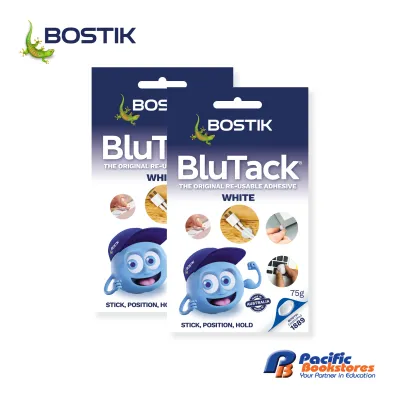
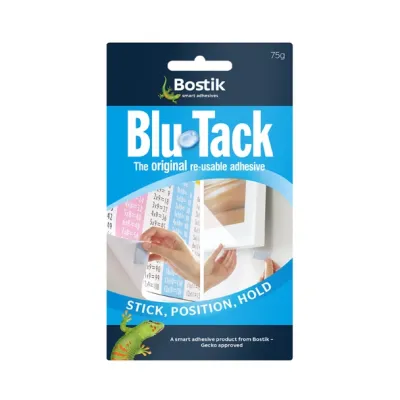
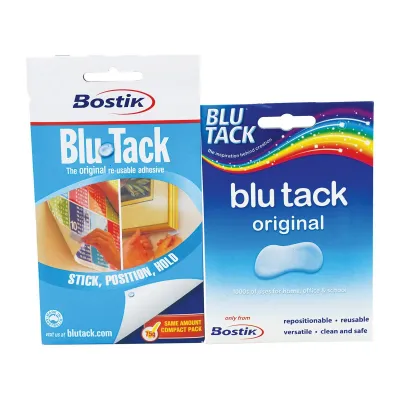
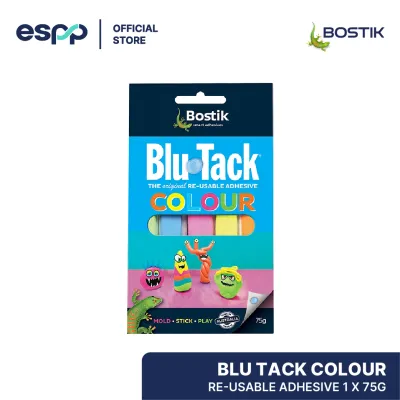
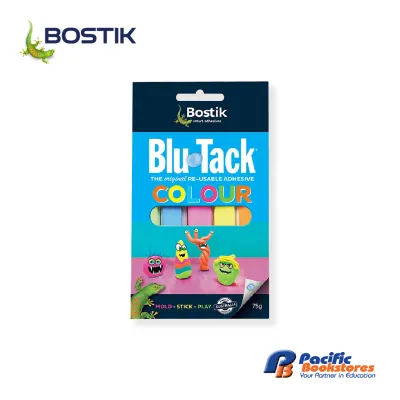
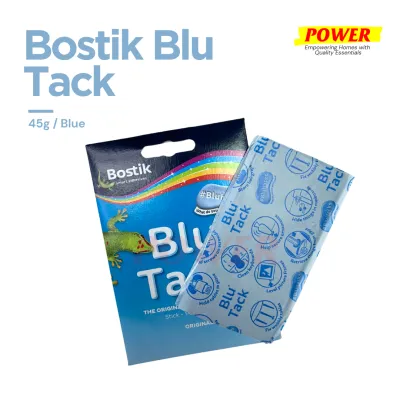
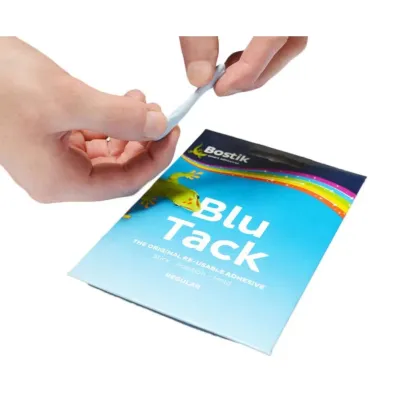
Prices are valid at publication and may change. Please refer to the product page for the latest price.
Lower Primary (Primary 1 to 3)
At the Lower Primary stage, students are adjusting to structured classroom environments and developing their fine motor skills. During these early years, individual students rarely have a legitimate academic need to handle adhesive putty themselves. Instead, teachers are the primary users of reusable adhesives in these classrooms, employing them to mount educational posters, phonics charts, and student artwork on whiteboards or brick walls.
Introducing reusable putty into a young child’s daily pencil case presents several practical challenges. Children between the ages of seven and nine are highly tactile and often treat the pliable substance as a toy or modeling clay rather than a tool. This frequently results in the putty being stretched, dropped on dusty classroom floors, or stuck to school uniforms, hair, and library books. In some cases, younger children might accidentally ingest small pieces or share dirty, germ-laden putty with classmates.
For these reasons, the general recommendation for Primary 1 to Primary 3 students is to leave adhesive putty out of their daily schoolbags. If a specific art project or classroom activity requires the material, the teacher will typically provide it from the school’s shared resources or send a targeted note home requesting a small portion for that specific day. Keeping it out of the daily pencil case minimizes distractions and keeps uniforms clean.
Upper Primary (Primary 4 to 6)
As students transition into Upper Primary, the curriculum shifts toward more collaborative, project-based learning. In subjects like Science and Social Studies, students frequently work in groups to design posters, construct simple models, or present findings to the class. For instance, a Primary 5 Science project on the water cycle or plant reproduction might involve sticking diagrams onto a large cardboard presentation board.
While blu tack is highly useful for temporary mounting during these active presentation sessions, it remains unnecessary for daily written work, mathematics exercises, or language lessons. A student does not need adhesive putty to complete their standard homework booklets or sit for practice papers. Packing a full packet in their schoolbag every day is still highly likely to result in dried-out, dirty putty that loses its adhesive properties over time.
The most practical approach for Upper Primary students is to maintain a designated craft supply drawer at home containing items like scissors, rulers, glue, and a single pack of reusable putty. Your child can use this stash to assemble homework displays or prepare presentation materials at home. They should only pack a small, clean portion of the putty in their schoolbag on specific days when they are scheduled to deliver a presentation or submit a physical project in class.
Secondary School
Upon entering secondary school, the academic landscape becomes more specialized, and student responsibility increases. At this stage, several subjects actively utilize reusable adhesive putty for practical coursework and prototyping. In Design & Technology (D&T), students frequently use putty to temporarily hold mock-ups of wood, acrylic, or cardboard together before committing to permanent joints or adhesives.
Similarly, Art students require reliable, non-destructive adhesives to mount their sketches, reference photos, and final pieces onto presentation boards or portfolio folders without tearing the paper. In Geography, teachers may ask students to use small pieces of putty to attach temporary labels, flags, or indicators to physical maps and topographic models during hands-on practical sessions. Because secondary school students are mature enough to manage their supplies responsibly, the risk of misuse or distraction is minimal.
For secondary students, you should consult the school booklist and individual subject syllabi during the orientation phase. If your child is taking elective Art or is enrolled in a hands-on D&T module, purchasing a standard pack of reusable adhesive putty is highly recommended. To keep the putty clean and functional, instruct your child to keep it in its original protective film and store it inside a dedicated folder or plastic organizer alongside their subject-specific materials, rather than loose in a messy schoolbag.
How to Verify if Your Child Actually Needs Blu Tack
Before spending money on stationery items that might sit unused in a drawer, parents can follow a systematic process to confirm whether adhesive putty is truly necessary. Taking a few deliberate steps prevents unnecessary purchases and ensures your child is equipped with exactly what their teachers expect.

- Review the Official School Booklist: The annual or termly booklist provided by the school is your primary authority. Look closely at both the general stationery section and the subject-specific requirements. If reusable adhesive putty is mandatory, it will typically be listed under "Art Supplies" or "D&T Materials." If it does not appear on the list, the school does not expect your child to bring it, and any necessary adhesives for classroom work will be supplied directly by the school.
- Examine the Teacher's Welcome Letter: At the start of the academic year or semester, many form teachers and subject specialists distribute introductory letters or digital circulars outlining their classroom expectations. These documents often highlight specific materials needed for upcoming topical modules or creative projects. Keep these letters filed digitally or physically so you can refer to them before buying supplementary supplies.
- Utilize Official Parent Communication Channels: If you are still uncertain, avoid relying on student rumors or unofficial chat groups. Instead, use official school communication platforms, such as the Parents Gateway application or the teacher's school email address, to send a brief, polite inquiry. Asking a direct question like, "Does my child require their own adhesive putty for the upcoming Science project?" will yield a clear, authoritative answer.
- Monitor Current Stationery Usage: If your child already has a pack of putty in their pencil case, take a moment to inspect its condition during the weekend. If the putty is covered in pencil shavings, lint, and dirt, or if your child cannot show you any schoolwork where it was applied, it is likely serving as a distraction or a fidget toy. In such cases, remove it from the pencil case and store it at home, explaining that it should only go to school when a teacher specifically asks for it.
Safe Handling and Practical Alternatives for School Projects
While reusable adhesive putty is a versatile tool, using it correctly is essential to prevent damage to school property, textbooks, and home surfaces. Understanding its physical properties and limitations helps your child get the best results while avoiding common mishaps.
Before applying adhesive putty to any valuable surface, it is highly recommended to perform a simple, observable trial. Test a tiny piece of the putty on a hidden area of the surface—such as the inside back cover of a textbook or an inconspicuous corner of a painted wall—and leave it for 24 hours. Check if any oily residue migrates into the material or if the paint shows signs of softening, which will tell you immediately whether the medium is safe for full application.
Standard reusable putty is formulated to be non-toxic and safe for children to handle, but it is not edible and must be kept out of reach of toddlers or pets who might mistake it for food. Additionally, the adhesive properties rely on synthetic oils that can migrate into porous surfaces over time. To prevent permanent damage, advise your child never to apply it to freshly painted walls, highly textured plaster, delicate wallpaper, or untreated wood, as the oils can leave stubborn, translucent grease stains.
When removing putty from a surface, pulling it straight outward can tear thin paper worksheets or pull paint chips off a wall. The correct technique is to gently roll the putty downward across itself, forming a ball that lifts the adhesive cleanly away from the surface. If a small residue remains, dabbing it repeatedly with a larger piece of clean putty will usually lift the leftover fragments without leaving a mark.
Depending on the specific task, other stationery items may be more appropriate and less prone to causing damage. For permanent paper-to-paper bonding, a standard glue stick is cleaner and more secure than putty. For temporary holding or labeling where clean removal is critical, low-tack masking tape or paper painter’s tape is an excellent alternative that does not leave oily residues. Double-sided tape offers a flat, invisible hold for mounting posters, though it is permanent and will damage paper if peeled off. Understanding these trade-offs allows your child to select the right tool for every classroom assignment.
Frequently Asked Questions (FAQ)
Can blu tack damage school textbooks or worksheets?
Yes, reusable adhesive putty can damage paper materials if used incorrectly or left in place for too long. The synthetic oils within the putty can seep into paper fibers over several weeks, leaving permanent, translucent grease marks that make text difficult to read. Furthermore, if the putty is pressed too firmly into thin paper or pulled off rapidly, it can tear the surface fibers of worksheets or textbook pages. To avoid this, always remove the putty as soon as the display or presentation is finished, and use the gentle rolling method to lift it off.
Is white adhesive putty the same as the blue one?
For standard school applications, white and blue adhesive putties function almost identically and can be used interchangeably. Both varieties offer similar levels of tackiness, flexibility, and reusability. The primary difference is aesthetic; white putty is often preferred for mounting light-colored paper or artwork because it is less likely to show through thin sheets, and it carries a slightly lower risk of leaving visible color stains on light walls. Unless your child’s school booklist explicitly specifies a color, either option is perfectly suitable for classroom projects.
Community discussion
Share your experience or ask a question. Comments are reviewed before publication.