
Quick Answer: Is a Tally Counter a Mandatory School Supply?
A tally counter is rarely a mandatory, grade-wide requirement in the standard Singapore primary school curriculum. Unlike essential items such as 2B pencils, rulers, or mathematical compasses, a tally counter is a highly situational tool. Its use is typically confined to specific, temporary modules in mathematics—such as data handling and probability—or hands-on science experiments that require real-time observation.
Because its utility is highly localized to certain topics, parents are strongly advised to hold off on purchasing a tally counter at the start of the academic year. Unless the item is explicitly listed on your child’s official school booklist or requested by the subject teacher for an upcoming project, it is best to wait. This prevents unnecessary spending and keeps your child’s school bag free of unused gadgets.
How to Confirm If Your Child Actually Needs One
Determining whether your child genuinely requires a tally counter involves a few simple, practical verification steps. By checking the right resources, you can avoid buying stationery that might sit unused in a drawer.
Products mentioned in this guide
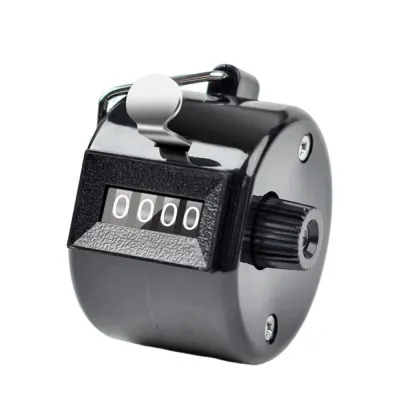

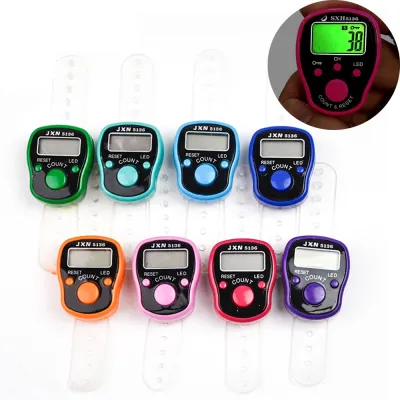
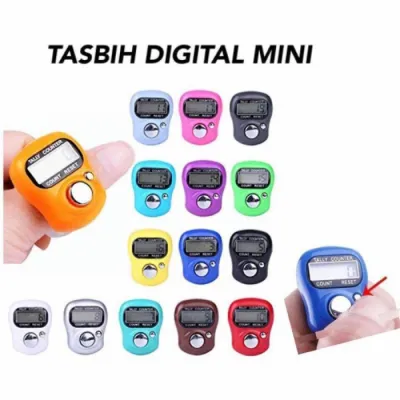
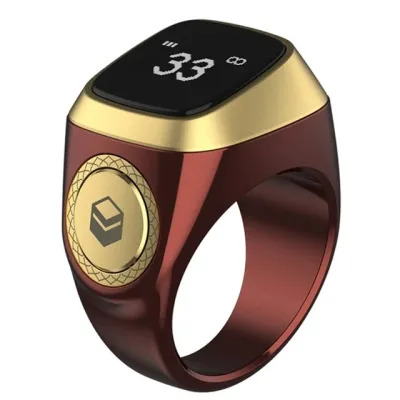
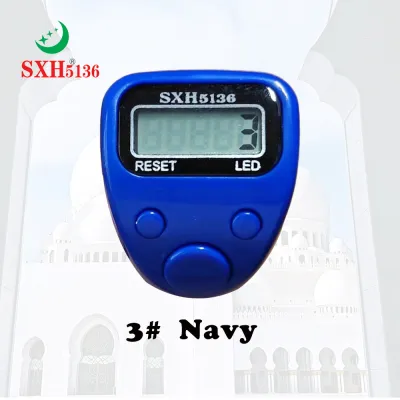
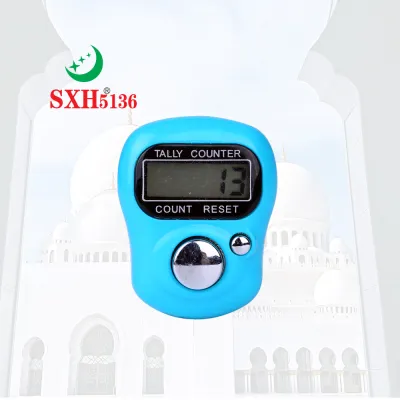
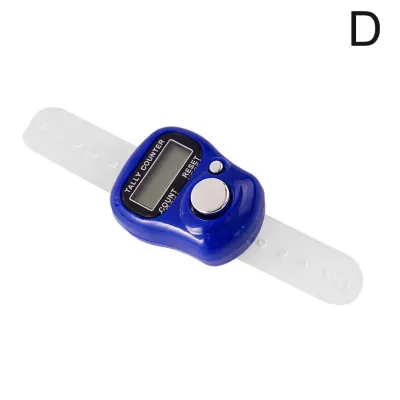
Prices are valid at publication and may change. Please refer to the product page for the latest price.

First, carefully review the official school stationery and booklist distributed before the start of the academic year. These lists are meticulously aligned with the Ministry of Education (MOE) syllabus for each specific primary level. If a tally counter is a compulsory tool for the year’s curriculum, it will be clearly categorized under the required stationery section.
Second, keep an eye on the termly syllabus overviews or welcome letters sent by subject teachers through official school communication portals. These documents outline the specific topics scheduled for the upcoming weeks. Look for mathematics chapters covering data representation, statistics, or probability, as well as science units that involve field observations or tracking physical changes.
Finally, the most reliable approach is to wait for the teacher’s direct instructions during the first week of school or right before a specific topic begins. Teachers understand that specialized tools are only needed temporarily and will typically provide parents with advance notice to source a counter before the relevant practical lessons commence.
Why Teachers Use Tally Counters in Math and Science
When a teacher does request a tally counter, it is because the tool serves a distinct pedagogical purpose in hands-on learning. Understanding how these devices are used can help parents appreciate their educational value.
In mathematics, data collection is a fundamental skill. During statistics or probability modules, students conduct active experiments, such as rolling a die multiple times or spinning a spinner to record outcomes. A tally counter allows students to log each occurrence instantly. This hands-on tracking helps them gather accurate frequency data, which they later use to construct bar graphs, pictograms, or pie charts.
In science, observational accuracy is key to the inquiry process. Students might use clickers during outdoor learning journeys to count specific occurrences, such as tracking the number of insects visiting a garden plot or measuring heartbeats after physical activity. The physical clicker allows students to keep their eyes focused entirely on the subject of observation rather than looking down to write after every single count.
The primary benefit of using a tally counter is cognitive offloading. By automating the mechanical process of keeping count, the device reduces manual counting errors. This allows students to focus their mental energy on analyzing the experiment’s variables, identifying patterns, and understanding the underlying scientific or mathematical concepts.
What to Look for When Buying a Tally Counter for Students
If you have confirmed that your child needs a tally counter, selecting the right model ensures it remains a helpful tool rather than a classroom distraction. Focus on durability, ease of use, and practical design.
The first decision is choosing between mechanical and digital models. Mechanical tally counters, often called clickers, are highly recommended for primary school students. They operate entirely on internal gears, requiring no batteries, which eliminates the risk of the device dying during a graded activity. Digital counters offer modern screens and multi-channel tracking, but they are more susceptible to battery depletion and can be easily damaged if dropped on hard classroom floors.
Size and grip are equally important factors for young learners. The counter should fit comfortably in a child’s hand and feature a secure finger ring or a wrist strap. This ergonomic design ensures the child can hold the device securely and depress the clicker button easily with a single thumb, even during active outdoor science activities.
Lastly, examine the reset mechanism. For mechanical counters, a rotating side knob is standard. Ensure this knob turns smoothly but has enough resistance to prevent accidental resetting mid-count. For digital models, look for a reset button that requires a deliberate, prolonged press rather than a light tap, which helps safeguard the student’s collected data from accidental erasure.
Practical Alternatives to Buying a Physical Counter
If a tally counter is only needed for a single homework assignment or a brief classroom activity, you may not need to purchase a dedicated physical tool. Several practical alternatives can serve the same purpose.
The most straightforward alternative is the traditional paper-and-pencil tally system. Drawing four vertical lines and a diagonal fifth line is a highly effective way to log frequencies. This classic method is not only free but also directly reinforces the visual data-handling skills taught in early primary school mathematics.
For home-based projects or schools that permit personal learning devices, free tally counter applications can be downloaded onto a smartphone or tablet. These apps turn the screen into a large, easy-to-tap virtual clicker. However, parents must verify the school’s prevailing device policy before sending a child to class with a digital device, as many classrooms restrict the use of personal screens to prevent distractions.
Additionally, you can repurpose other basic counting tools already available at home. An abacus or a simple string of beads can help students track counts sequentially while reinforcing place-value concepts. Even a standard calculator can be set up to count by pressing a simple sequence, though it lacks the specialized ergonomics of a dedicated clicker.
Frequently Asked Questions (FAQ)
Can a regular calculator replace a tally counter for schoolwork?
While a standard calculator can be programmed to count sequentially by entering a basic formula and repeatedly pressing the equals key, it is not an ideal replacement for a tally counter. Calculators lack a dedicated, large clicker button designed for rapid, blind input. During active experiments, students are highly likely to press the wrong key, lose their place, or accidentally clear the screen, resulting in lost data and unnecessary frustration.
Are digital tally counters allowed in primary school classrooms?
Classroom policies regarding electronic devices vary widely. Many primary school teachers prefer mechanical tally counters because they do not emit electronic beeps, flash bright lights, or feature screens that can distract students during lessons. Before purchasing a digital model, it is best to check with your child’s subject teacher to ensure it complies with classroom guidelines and will not be restricted during activities.
Community discussion
Share your experience or ask a question. Comments are reviewed before publication.