
Deciding whether to add a privacy stamp to your child’s school supply list depends heavily on their daily paperwork and their educational level. While these handy tools are excellent for obscuring personal details on home mail, most young students do not actually require one for their daily schoolwork. For older students who manage their own administrative forms, club registrations, and personal journals, a privacy stamp can become a valuable asset in protecting their personal information.
By evaluating your child’s specific grade level, the types of documents they handle, and the paper surfaces they encounter, you can make an informed decision. This guide breaks down when a privacy stamp is a helpful addition to a pencil case and when standard school supplies or simple household workarounds are more than enough.
Understanding the Purpose of a Privacy Stamp in School
A privacy stamp is a specialized stationery tool designed to mask sensitive personal data on physical documents. Unlike a standard name stamp, which is used to clearly label books, water bottles, and uniforms with a child’s name for identification, a privacy stamp does the exact opposite. It features a dense, scrambled pattern of letters, numbers, or geometric shapes that, when rolled or stamped over text, renders the underlying information completely unreadable.
Products mentioned in this guide
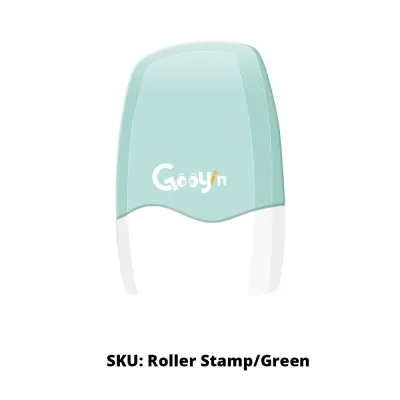
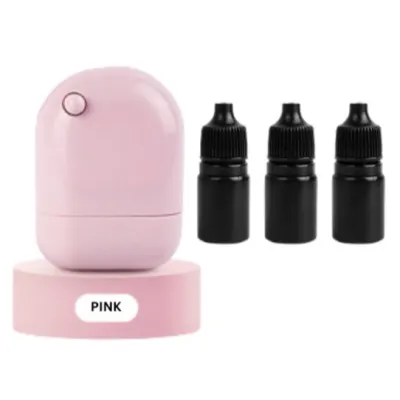
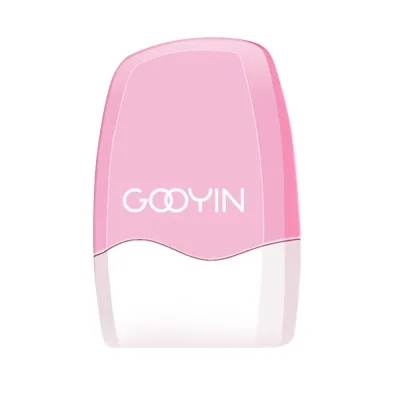
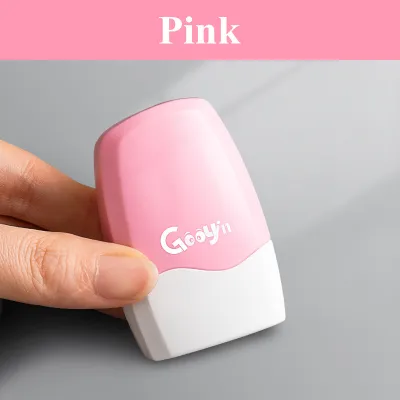
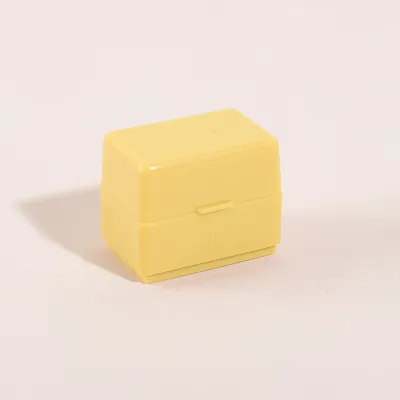
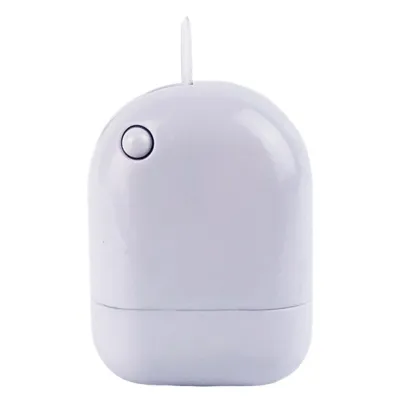
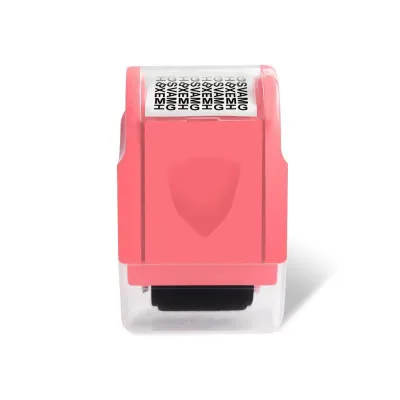
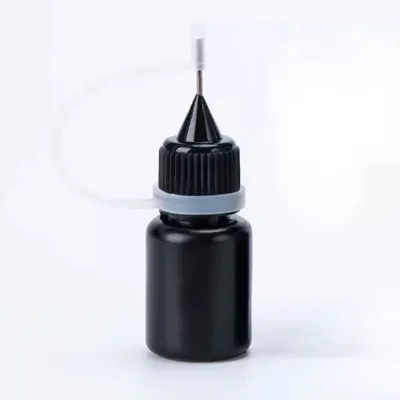
Prices are valid at publication and may change. Please refer to the product page for the latest price.
In a school context, the primary use case for this tool is protecting personal identifiers before documents are discarded or shared. Students frequently handle papers containing home addresses, phone numbers, grades, and identification details. A quick swipe of a privacy roller ensures this information remains confidential, preventing unauthorized viewing by peers or anyone handling the classroom recycling bin.
It is important to recognize that a privacy stamp is a specialized data-protection tool rather than a daily academic necessity. Unlike essential items such as glue sticks, rulers, or scissors, a student can easily complete their daily schoolwork without one. Understanding this distinction helps parents avoid unnecessary purchases during the busy back-to-school shopping season.
Assessing the Need by Educational Stage
As children progress through school, their administrative responsibilities and the complexity of the paperwork they handle change significantly. Younger students live in a highly supervised environment where teachers manage most sensitive documents, while older students take on independent administrative tasks.

To determine if a privacy stamp is a practical addition to your child’s stationery kit, it is helpful to look at their specific educational phase. The transition from teacher-managed paperwork to student-managed confidential forms dictates whether this tool will actually be used or simply sit forgotten at the bottom of a schoolbag.
Primary School Years
During the primary school years, students rarely handle documents containing highly sensitive personal data. Their daily paperwork consists almost entirely of spelling lists, math worksheets, drawing paper, and creative art projects. For these items, the only personal information present is usually the child’s first name and class section, which does not require masking.
When it comes to labeling school gear, standard name stamps or adhesive name stickers are far more practical. These tools help teachers and classmates return lost items to their rightful owners, whereas a privacy stamp would only obscure ownership. There is little practical need for a data-masking tool in a standard primary school classroom.
Rare exceptions might occur during specific media literacy or digital citizenship lessons, where teachers introduce the concept of data privacy and physical document security. However, these activities are typically supervised, and schools provide any necessary materials. For general daily use, primary school students do not need a privacy stamp, and introducing one may simply lead to accidental ink stains on hands, clothing, and school desks.
Secondary School and Pre-University
As students enter secondary school and pre-university levels, their administrative footprint expands. They begin filling out their own co-curricular activity (CCA) registration forms, leadership camp consent slips, medical declaration sheets, and peer evaluation forms. These documents frequently require sensitive details, including national identification numbers, home addresses, parent contact numbers, and personal health histories.
Older students also tend to value personal privacy much more highly. They may use privacy stamps to mask teacher feedback or grades on test papers before sharing study notes with classmates. Additionally, those who keep personal journals or planners often use these stamps to cover up private thoughts, names, or schedules on pages they wish to keep confidential.
Several observable signals can indicate that your teenager would benefit from owning a privacy stamp. If they regularly express concern about who can see their test scores, take on administrative roles in the student council where they handle peer records, or frequently carry a personal planner, a compact privacy roller can provide peace of mind and encourage responsible data-handling habits.
Evaluating Document Types and Paper Surfaces
Before purchasing a privacy stamp, it is essential to consider the types of paper your child regularly encounters. The effectiveness of any masking ink depends entirely on the physical properties of the paper medium, and using the wrong combination can result in messy smudges or compromised security.
Standard school worksheets, notebook pages, and typical printer papers are porous and uncoated. These surfaces absorb ink quickly, allowing the privacy stamp to dry almost instantly and resist smudging. On these standard papers, a quality privacy stamp works exceptionally well, completely obscuring the text beneath.
Conversely, smooth or coated papers present a significant challenge. Glossy textbook covers, laminated sheets, plastic folders, and high-grade planner pages do not absorb ink easily. On these surfaces, the stamp’s ink may pool, smear when touched, or fail to adhere properly, leaving the sensitive text partially visible and creating a mess in the student’s folder.
Thermal paper, which is commonly used for school canteen receipts, public transport top-up slips, and bookstore receipts, reacts poorly to the solvents found in many stamp inks. The heat-sensitive coating on thermal paper can turn completely black or cause the ink to run. Always advise your child to check the stamp’s ink specifications on the product label and perform a quick test on an inconspicuous corner of the paper before attempting to mask important documents.
Practical Alternatives When a Stamp Is Unnecessary
If you decide that a dedicated privacy stamp is not a necessary purchase for your child, there are several highly effective, low-cost alternatives that utilize standard household and school supplies. These workarounds are perfect for occasional, low-volume text masking without the need for a specialized tool.
An ordinary black permanent marker is one of the simplest substitutes. Drawing a few overlapping, wavy lines over the sensitive text with a broad-tipped marker easily mimics the effect of a privacy stamp. For precise, clean masking of small text blocks—such as a single phone number or a grade—heavy-duty correction tape is an excellent alternative that leaves a clean, dry surface.
For highly sensitive documents that are being discarded, physical destruction is often safer than relying on ink alone. Teaching your child to tear discarded forms into tiny, unreadable fragments by hand or using a simple household paper shredder ensures the data is permanently unrecoverable. This is particularly useful for documents containing financial details or official identification numbers.
It is also worth considering the digital shift in modern education. Many schools now distribute, collect, and grade assignments electronically through secure online portals. If your child’s school has transitioned largely to digital administration, the volume of physical paperwork containing sensitive data drops significantly, making a physical privacy stamp largely redundant.
How to Choose a Student-Friendly Privacy Stamp
If your diagnostic process indicates that a privacy stamp is a useful addition to your child’s school supplies, selecting the right model requires looking at a few practical design features. A student-friendly stamp should be easy to carry, safe to use, and simple to maintain throughout the academic year.
First, consider the physical size and weight of the tool. Look for a compact roller or block stamp that fits easily inside a standard student pencil case alongside pens and pencils. The casing should be lightweight and ergonomically designed, allowing smaller hands to apply even pressure across the paper without slipping or causing hand fatigue.
Next, verify the ink formulation by checking the manufacturer’s label on the packaging. Water-based inks are generally safer for school environments, as they are easier to wash off skin and clothing, though they may bleed slightly on very thin paper. Solvent-based or oil-based inks offer superior water resistance and permanent coverage on a wider variety of papers, but they require careful handling and should only be used in well-ventilated spaces.
Finally, look for refillable options or models that feature replaceable ink cartridges. Choosing a stamp that can be refilled with ink bottles or cartridge swaps reduces long-term plastic waste and ongoing replacement costs. This ensures the tool remains a sustainable, cost-effective part of your child’s stationery collection for years to come.
Frequently Asked Questions (FAQ)
Can a privacy stamp be used as a regular name stamp?
A privacy stamp cannot be used effectively as a regular name stamp because the two tools serve opposite purposes. A privacy stamp uses a dense, scrambled pattern designed to block out light and blend text into a solid, unreadable dark block. A name stamp is designed to print clear, legible letters so teachers and peers can easily identify the owner of an item. Attempting to use a privacy stamp to label a textbook or uniform will only result in a messy, unreadable black patch.
Is the ink from a privacy stamp safe for children to handle?
Most student-oriented privacy stamps use non-toxic, water-based inks, but parents should always verify this by checking the product packaging for recognized safety certifications and age recommendations. Avoid solvent-based or industrial-grade permanent stamps for younger children, as these can cause skin irritation or emit strong fumes. It is best to teach your child to avoid direct skin contact with the wet ink and to let the stamped document dry completely before handling it.
Community discussion
Share your experience or ask a question. Comments are reviewed before publication.