
A penknife pen—often referred to as a pen-style craft knife or precision carving tool—is not a standard daily requirement for every student in Singapore. Its necessity depends entirely on your child’s specific grade level, enrolled subjects, and the school’s strict safety policies regarding sharp tools. Before adding it to your back-to-school shopping cart, use this guide to diagnose whether your child actually needs one, when to buy it, and how to ensure it complies with school regulations.
Which School Subjects Typically Require a Penknife Pen?
In Singapore’s primary school curriculum, the Ministry of Education designs Art and craft activities to be highly accessible and safe. At this level, students primarily work with safety scissors, glue, and pre-cut materials. There is virtually no scenario where a primary school student requires a penknife pen for their standard schoolwork. Introducing a sharp blade at this stage poses unnecessary safety risks without offering any academic advantage.
As students transition to secondary school, the curriculum introduces more complex, hands-on subjects. Upper secondary Art students and those taking Design and Technology (D&T) often engage in coursework that requires precise cutting. For instance, creating intricate paper stencils, cutting delicate film, or carving lightweight modeling materials may call for a precision tool. In these specific academic tracks, a pen-style craft knife becomes highly useful.
Products mentioned in this guide

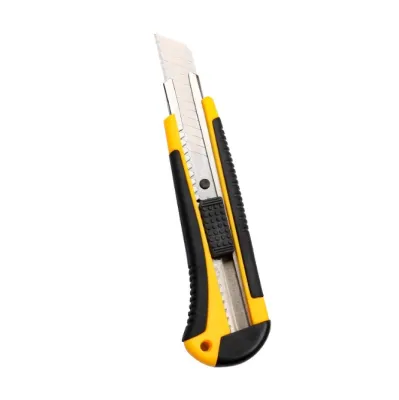
Prices are valid at publication and may change. Please refer to the product page for the latest price.
It is important to distinguish between a pen-style craft knife and a standard heavy-duty utility knife. A penknife pen features a slim, pen-like body with a small, angled blade at the tip, designed specifically for detailed, low-resistance cutting like paper or thin cardstock. In contrast, a standard utility knife has a wider, thicker blade designed for heavy-duty tasks like cutting thick cardboard, wood, or acrylic sheets. D&T classes often require the latter for structural work, while Art classes are more likely to permit the former for delicate detailing.
Understanding School Safety Rules and Grade Restrictions
Singapore schools maintain strict safety protocols regarding the possession of sharp objects on school premises. Generally, primary schools enforce a blanket ban on students carrying any form of utility knife, pocket knife, or penknife pen. Even in secondary schools, students are not permitted to carry these tools in their daily pencil cases for general use. Possession of unauthorized sharp objects can lead to disciplinary action or immediate confiscation by school authorities.

When a subject syllabus does require a precision cutting tool, schools distinguish clearly between supervised classroom use and general carriage. Students are typically allowed to use these tools only within the designated Art room or D&T workshop under the direct supervision of a teacher. Carrying a penknife pen in a school bag during recess, on the school bus, or during non-art classes is generally prohibited to prevent accidental injuries or misuse.
To manage these risks, many schools implement strict storage policies. Some teachers require students to hand over all craft knives at the beginning of the term, storing them securely in a locked cabinet in the art room. Other schools may permit students to bring the tool to school only on days when practical coursework is scheduled, requiring them to take it home immediately afterward. Parents should consult the school’s student handbook or contact the form teacher to understand these specific storage and transport rules.
How to Confirm Your Child's Exact Needs Before Purchasing
Before purchasing any stationery items, parents should carefully review the official school booklist and stationery list distributed at the end of the previous academic year or during orientation. If a penknife pen is a mandatory requirement, it will be explicitly listed under the specific subject requirements for Art or D&T. If the tool does not appear on these official lists, you should assume it is not allowed on school grounds.
Even if a tool is listed, the most prudent approach is to wait until the first week of school before making a purchase. Subject teachers often use the introductory lessons to explain the exact specifications of the tools required for the upcoming projects. A teacher might specify a particular blade angle, handle material, or even recommend a specific brand that has been vetted for safety and suitability. Waiting for these instructions prevents parents from spending money on non-compliant tools.
When evaluating a penknife pen for school use, look for specific safety features that align with school guidelines. Opt for models that feature a secure, screw-on cap or a fully retractable blade mechanism that locks firmly in place when not in use. Some pen-style knives also feature anti-roll designs on the handle to prevent the tool from rolling off school desks and causing accidental injury. Avoid purchasing cheap, unbranded craft knives that lack secure caps or have loose blade housings.
Safe Handling, Storage, and Practical Alternatives
If your child is cleared to use a penknife pen, proper storage is essential to ensure safety during transit. The tool should always be kept in a dedicated, hard-shell pencil case separate from daily writing instruments like pens and pencils. Ensure the protective cap is tightly secured after every use, and consider using a small protective sheath for added security. Clearly labeling the tool with your child’s name and class using a waterproof marker or label maker can also prevent accidental mix-ups.
For younger students or those in schools where penknife pens are strictly banned, several safe alternatives can achieve similar results. Safety scissors with specialized tips can handle basic paper crafts, while plastic modeling tools are excellent for shaping clay or soft materials. Parents can also look for pre-scored craft kits or stencils that eliminate the need for any manual cutting, allowing students to complete creative projects safely at home or in school.
At home, parents should establish clear boundaries regarding the use of craft knives. Teach your child to use the tool only on a dedicated cutting mat to protect furniture and prevent the blade from slipping. Emphasize that school tools must never be shared with classmates or used for non-academic purposes, such as sharpening pencils or carving desks. Setting these expectations early helps foster a culture of safety and responsibility.
Frequently Asked Questions (FAQ)
What should I do if the school bans the penknife pen after I have already bought it?
If you have already purchased a penknife pen only to find out it is prohibited at school, do not let your child bring it to the classroom. Instead, keep the tool at home in a secure, high-reach cabinet for supervised homework, holiday art projects, or family crafting sessions. If the item was purchased directly from the official school bookshop or an approved school vendor, check their return or exchange policy to see if you can swap it for approved stationery. You can also contact the subject teacher directly to ask if they can recommend a safer, school-approved alternative that complies with their classroom safety standards.
Are pen-style craft knives safer than standard retractable utility knives for students?
Pen-style craft knives offer several design features that can make them safer than standard utility knives for detailed schoolwork, but they are not inherently risk-free. The pen-like grip provides superior control and stability, reducing the likelihood of the hand slipping during intricate cuts. Additionally, many pen-style knives use secure caps rather than sliding mechanisms, which can prevent the blade from accidentally exposing itself in a school bag. However, because the blades are exceptionally sharp and fine, safety ultimately depends on the student’s maturity, proper handling techniques, and strict adherence to teacher supervision during lessons.
Community discussion
Share your experience or ask a question. Comments are reviewed before publication.