
Selecting the right calligraphy brush is the most critical decision when assembling your traditional writing tools, known historically as the Four Treasures of the Study (文房四宝). To choose the correct brush, you must match the hair material’s stiffness to your writing script and align the brush head’s physical dimensions with your target character size. While experienced practitioners often develop highly specific preferences, beginners can avoid frustration by starting with a medium-sized, mixed-hair brush that offers a balance of flexibility and control.
Quick Guide: Matching Brush Specs to Your Calligraphy Style
This matrix maps common calligraphy scripts to recommended brush specifications, helping you select the most essential tool among the traditional Four Treasures of the Study.
| Script Type | Recommended Hair Material | Recommended Brush Size (Diameter) | Stroke Characteristics |
|---|---|---|---|
| Regular Script (Kaishu) | Wolf hair or stiff mixed hair | Small to Medium (5mm to 8mm) | Sharp, structured, precise |
| Running Script (Xingshu) | Mixed hair or soft wolf hair | Medium (7mm to 10mm) | Fluid, connected, moderate speed |
| Cursive Script (Caoshu) | Sheep hair or long mixed hair | Medium to Large (8mm to 12mm+) | Expressive, continuous, high ink capacity |
While this matrix provides a reliable starting point, your final choice depends on several personal and environmental variables. Your physical grip strength and the speed of your hand movements will influence how a brush responds. Furthermore, the absorbency of your practice paper plays a major role; highly absorbent Xuan paper requires a brush with excellent ink retention, whereas sized or less absorbent papers work well with stiffer, less absorbent hairs. Beginners should generally opt for a medium-sized mixed-hair brush, as it provides enough resistance to learn stroke structure without being overly sensitive to minor hand tremors.
Products mentioned in this guide
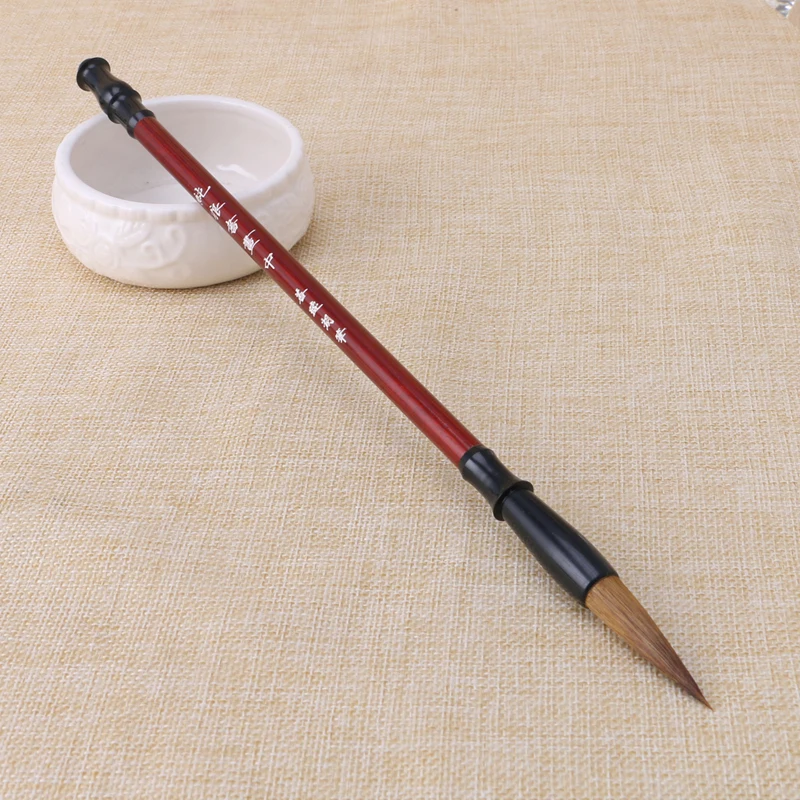
Prices are valid at publication and may change. Please refer to the product page for the latest price.
Decoding Brush Hair Materials: Wolf, Sheep, and Mixed Blends
Traditional calligraphy brushes are categorized primarily by the animal hair used in the brush head, which dictates how the brush holds ink and springs back during a stroke.

Wolf Hair (Langhao): Typically crafted from weasel hair, this material is valued for its natural stiffness and sharp elasticity. It springs back to its original shape quickly, making it ideal for precise lines in smaller regular scripts.
Sheep Hair (Yanghao): Made from goat hair, these brushes are soft and flexible with high ink retention. Because they lack natural springiness, they require advanced wrist control, making them suited for expressive running or cursive scripts and larger characters.
Mixed Hair (Jianhao): Combining stiff inner hairs (wolf or rabbit) with soft outer layers (sheep), these brushes offer a balanced blend of stiffness and ink capacity. They are highly versatile, providing a forgiving learning curve for transitioning between script styles.
When purchasing, keep in mind that traditional naming conventions do not always guarantee a specific performance level. Actual brush behavior depends heavily on the specific animal species, the season the hair was harvested, and the proprietary processing methods used by the manufacturer.
Sizing Your Brush: Length, Diameter, and Script Scale
Understanding brush dimensions is essential for matching your tool to your writing grid. Manufacturers typically specify the visible hair length and the diameter of the brush head at the base of the handle.
Visible hair length determines flexibility and ink capacity. Short-hair brushes offer stability but hold less ink, while long-hair brushes provide great flexibility and dramatic stroke variation but require a disciplined hand to prevent splaying. Medium-hair brushes offer a practical compromise.
The brush head diameter dictates the maximum character size. As a rule of thumb, your target character size should be three to five times the brush head’s diameter. For example, an 8mm diameter brush is well-suited for characters roughly 2.4cm to 4cm wide.
Check labeled dimensions against your practice grid. An oversized brush leads to crowded strokes that lack definition, while an undersized brush forces you to paint or fill in lines, ruining the natural flow of the calligraphy.
Inspecting and Testing Your Brush Before Use
Because natural hair brushes are hand-assembled, individual batches vary. Performing a few simple, observable checks before writing ensures your brush is free of defects.
Start with a dry visual inspection. The tip should taper smoothly to a fine, symmetrical point without stray or broken hairs protruding. Gently tug the brush head to ensure the hairs are securely anchored and do not shed excessively.
Next, perform a water-test verification. Dip the brush into clean, room-temperature water, then gently shape the tip on a flat surface. A well-made brush will form a cohesive, sharp point. If the hairs splay or split when wet, the brush may have structural defects and should be rejected.
Finally, evaluate the handle’s balance. Hold the brush in your writing grip and mimic a few strokes. The weight should be distributed evenly so it does not feel top-heavy. A well-balanced brush reduces hand fatigue during extended practice.
Frequently Asked Questions (FAQ)
How do I prepare a new calligraphy brush for its first use?
New brushes are shipped with the hairs held together by water-soluble natural glue. To prepare it, submerge the tip in clean, room-temperature water. Avoid hot water, which can damage natural hair fibers and dissolve the adhesive holding the hairs inside the handle.
Gently massage the brush head while submerged, working from the tip upward. Let the glue dissolve naturally until the head is soft and pliable. Once opened, rinse under cool water, gently squeeze out excess moisture, and shape the tip into a fine point before using ink.
Does the brush handle material affect my calligraphy performance?
The handle material—whether bamboo, hardwood, horn, or synthetic resin—primarily influences weight, balance, and durability rather than stroke quality. Bamboo is traditional and widely used because it is lightweight, comfortable, and naturally slip-resistant.
Prioritize grip comfort and weight over decorative elements. In humid climates like Singapore, natural wood and bamboo handles require proper drying to prevent warping, while synthetic handles offer high moisture resistance. An ornate handle cannot compensate for poor-quality hair or incorrect sizing.
Community discussion
Share your experience or ask a question. Comments are reviewed before publication.