
Selecting the right bubble wrap packing material requires looking beyond generic packaging labels. The protection level of bubble wrap is determined by two distinct specifications: bubble diameter, which dictates the type of impact force the wrap mitigates, and film thickness (measured in mils or microns), which governs puncture resistance and structural durability. Choosing the wrong combination can lead to shattered glassware or popped bubbles that leave items vulnerable during transit.
Understanding these technical specifications allows you to customize your packaging strategy to the exact items you are shipping. By matching the physical dimensions of the air pockets and the density of the plastic film to your specific cargo, you can minimize damage rates, reduce packaging waste, and lower overall shipping costs.
Understanding Bubble Diameter: Surface Protection vs. Shock Absorption
Bubble diameter refers to the horizontal width of the individual air pockets, typically measured in millimeters (mm) or fractions of an inch. On standard product labels, you will commonly find three primary sizes: small (typically 10mm or 3/8 inch), medium (typically 20mm or 1/2 inch), and large (typically 32mm or 1 inch). This measurement is crucial because it determines how much space exists between the wrapped item and the outer shipping box, directly influencing how the wrap handles external forces.
Products mentioned in this guide
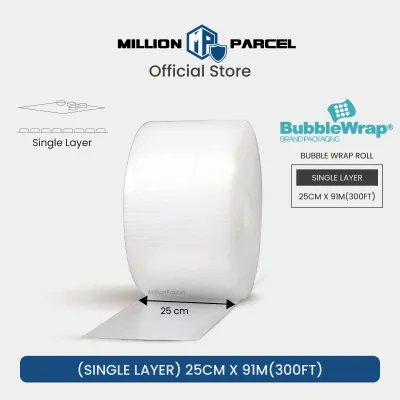
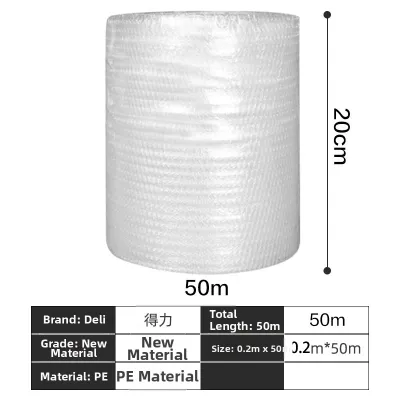
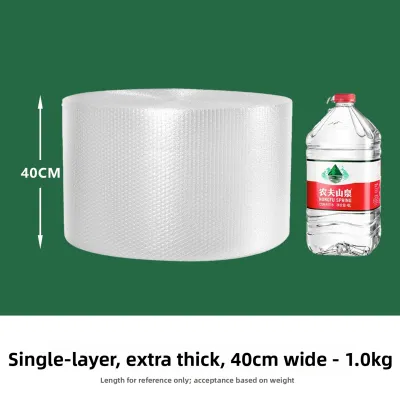
![91m/20m/10m BubbLest™ [FREE PENKNIFE] Bubble Packaging Material Direct Singapore Manufacturer | Clingwrap | Plasticwrap | Cling Wrap | Plastic Wrap | Bubble Roll |](https://img.lazcdn.com/g/p/118908581c7285d2410f3d4422311ca0.png_400x400q80.png_.webp)
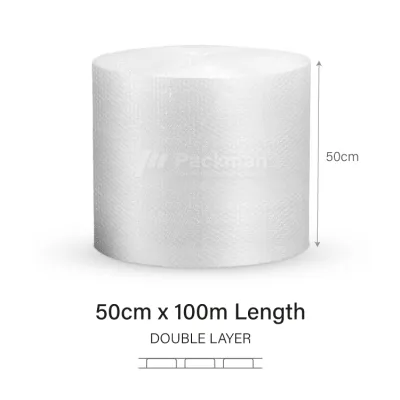
Prices are valid at publication and may change. Please refer to the product page for the latest price.
Small bubbles excel at providing surface protection and preventing scratches. Because these tiny air pockets are densely packed together, the resulting sheet is highly flexible and conforms easily to irregular, delicate, or intricate shapes. If you are wrapping items with polished finishes, detailed figurines, or delicate glassware stems, small bubbles provide a uniform, continuous barrier that prevents abrasion and scuffing caused by friction during transit.
Large bubbles are designed specifically for shock absorption and cushioning against heavy impacts. When a shipping box is dropped, stacked, or subjected to sudden vibrations, the larger volume of air inside these bubbles compresses to absorb the kinetic energy, preventing the shock from reaching the enclosed item. Additionally, because of their height and volume, large bubbles are highly effective for void-fill applications, securing items in place so they do not slide around inside a larger box.
A common misconception among shippers is that larger bubbles automatically provide stronger overall protection. In reality, bubble size determines the type of protection rather than the strength. Wrapping a flat, delicate mirror in large-bubble wrap leaves significant gaps of un-cushioned surface area between the large pockets, making the glass vulnerable to localized pressure points. Conversely, wrapping a heavy metal tool in small-bubble wrap will fail because the weight of the tool will easily bottom out the tiny bubbles, rendering them useless against drops.
Decoding Mil Thickness: Puncture Resistance and Film Durability
While bubble diameter determines the cushioning volume, the thickness of the plastic film itself dictates the wrap’s structural integrity. Film thickness is measured in “mils” (one-thousandth of an inch) or “microns” (one-millionth of a meter). In Singapore, packaging suppliers frequently list thickness in microns, where 1 mil is roughly equivalent to 25.4 microns. Standard bubble wrap typically ranges from 1.2 mil (30 microns) for light-duty applications up to 4 mil (100 microns) for heavy-duty industrial shipping.

Thicker plastic film offers superior resistance to tearing, puncturing, and popping. When shipping items with sharp edges, heavy weights, or complex metal components, the physical stress on the packaging material is intense. A thicker film ensures that the air pockets do not burst under pressure when stacked under other heavy boxes. It also prevents sharp corners from piercing the plastic, keeping the air sealed inside the bubbles throughout the shipping journey.
Thinner plastic film is lighter, more pliable, and highly cost-effective for everyday items. Standard-grade wrap (around 1.2 to 1.5 mil) is ideal for cushioning lightweight items with smooth, rounded surfaces, such as plastic homeware, books, or cosmetics. Because thin film is highly flexible, it wraps tightly around small items without creating excess bulk, allowing you to use smaller shipping boxes and save on volumetric shipping fees.
However, assuming that thicker film is always the superior choice is a mistake. Excessive film thickness makes the bubble wrap stiff and rigid, which can make it incredibly difficult to fold around tight corners or secure around delicate items. Stiff wrap tends to spring back to its original shape, putting constant outward pressure on the tape and requiring significantly more adhesive to hold it in place. For highly delicate items, this stiffness can actually transfer unwanted pressure to fragile protrusions.
Matching Specifications to Your Packing Scenarios
To achieve optimal protection, you must match the bubble size and film thickness to the physical characteristics of the items you are packing. Different materials, weights, and shapes require specific combinations of these two variables to ensure they arrive at their destination undamaged.
For fragile, smooth, and lightweight items:
- Glassware, ceramics, porcelain, and polished electronics require a combination of small bubble diameter (10mm) and medium film thickness (1.5 to 2 mil / 38 to 50 microns).
- This configuration ensures that the smooth surfaces are protected from scratches while providing enough flexibility to wrap tightly around handles, stems, and delicate corners.
For heavy, dense, or sharp-edged items:
- Metal tools, mechanical parts, heavy hardware, and large household appliances require large bubble diameter (25mm to 32mm) paired with heavy-duty film thickness (3 to 4 mil / 75 to 100 microns).
- The thick film prevents the sharp metal edges from puncturing the wrap, while the large bubbles absorb the high-impact forces generated by the heavy weight of the item shifting during transit.
The strategy of layering:
- Rather than relying on a single, ultra-thick sheet of bubble wrap, professional packers often use a layering strategy to maximize protection.
- Wrapping an item first in a layer of small-bubble wrap (bubbles facing inward) provides excellent surface protection and initial scratch resistance. Following this with an outer layer of large-bubble wrap creates a robust shock-absorbing barrier.
- Alternatively, using multiple layers of standard, thin-film wrap creates a distributed cushioning effect where each layer absorbs a portion of the impact, often outperforming a single layer of heavy-duty wrap.
When specifications matter less:
- If your primary goal is simply to fill empty space inside a shipping box to prevent items from shifting, film thickness is relatively unimportant.
- For void-fill applications, prioritize large bubble diameter (which fills volume quickly using less material) with standard, lightweight film thickness to keep shipping weights and material costs low.
Verifying Labels and Storing Bubble Wrap in Singapore
When purchasing bubble wrap packing supplies from local stationery shops or online marketplaces, look closely at the product specifications. Avoid relying on vague marketing descriptions like “heavy-duty,” “premium,” or “super strong.” Instead, search the product description for explicit measurements of bubble diameter (in millimeters) and film thickness (in microns or mils). If these specifications are missing, contact the supplier to verify them before purchasing.
To ensure the quality of a roll before wrapping valuable items, perform a simple squeeze test. Press a single bubble firmly between your thumb and forefinger; a high-quality wrap should resist popping under moderate pressure, indicating a strong barrier layer that prevents air from escaping.
Singapore’s tropical climate—characterized by high humidity and ambient temperatures averaging around 30°C—can accelerate the degradation of low-density polyethylene (LDPE) plastics. To maintain the structural integrity of your bubble wrap rolls, store them in a cool, dry indoor area away from direct sunlight. Exposure to ultraviolet (UV) rays and extreme heat (such as in non-air-conditioned metal storerooms or balconies) makes the plastic brittle and causes the air inside the bubbles to expand and slowly leak, leading to deflation over time.
Additionally, ensure you secure your bubble wrap with compatible packing tape. Standard stationery tape or low-tack masking tape will easily peel off the polyethylene surface, especially in humid conditions. Use high-quality acrylic-based or hot-melt packaging tape, applying firm pressure to ensure a secure bond. When cutting the wrap to size, use heavy-duty scissors or a utility knife, always cutting on a flat, stable surface and working away from your body to prevent accidental slips or punctures to the bubbles.
Frequently Asked Questions (FAQ)
Should the bubbles face inward or outward?
As a general rule, the bubbles should always face inward, directly touching the item you are wrapping. This orientation allows the individual air pockets to conform closely to the item’s unique shape, maximizing shock absorption and preventing the flat, smooth side of the wrap from sliding against the item. The flat outer surface also provides a clean, even area for applying packing tape and shipping labels, and it slides easily into shipping boxes without catching or tearing.
How do I know if my bubble wrap is too old to use?
You can easily determine if your bubble wrap has degraded by conducting a physical inspection. Inspect the roll for signs of yellowing, a dusty or powdery residue on the surface, or plastic that feels brittle and tears easily like paper. If the bubbles feel soft, flat, or pop effortlessly under light finger pressure, the air has slowly deflated over time. Brittle or deflated bubble wrap has lost its structural integrity and will not provide adequate protection for your items during transit.
Community discussion
Share your experience or ask a question. Comments are reviewed before publication.