
Quick Answer: Which Shredder Cut Type Do You Need?
Choosing the right shredder machine paper device depends entirely on the sensitivity of the documents you handle daily. If you are looking to quickly dispose of non-confidential bulk documents, junk mail, or simple office drafts, a strip-cut shredder offers a fast and basic solution. For standard home and office privacy—such as disposing of utility bills, bank statements, and standard business correspondence—a cross-cut shredder is the industry standard. When your work involves highly sensitive information like national identification numbers, financial records, legal contracts, or medical files, a micro-cut shredder provides the highest level of security. Ultimately, the best way to confirm a machine’s capability is to verify the manufacturer’s specific security rating on the product label before finalizing your purchase.
Understanding Paper Shredder Security Levels
To make an informed decision, it helps to understand how paper shredders are classified globally. The security of a shredder machine paper device is directly tied to the size of the shredded particles and the difficulty of reconstructing the document. Smaller particles mean higher security, as they make manual or digital reconstruction virtually impossible.

Most modern shredders use the international DIN 66399 standard to define their security levels, represented by a “P” rating followed by a number from P-1 to P-7.
Products mentioned in this guide
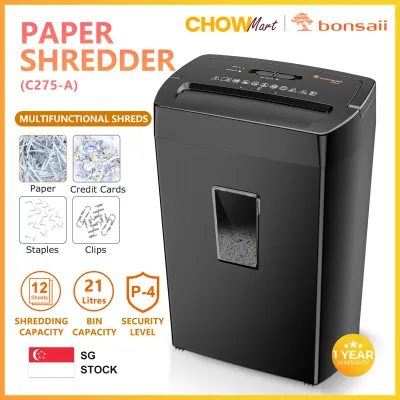
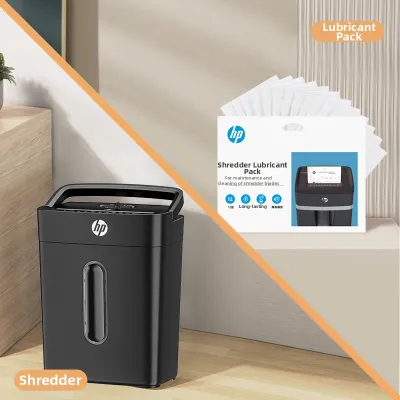
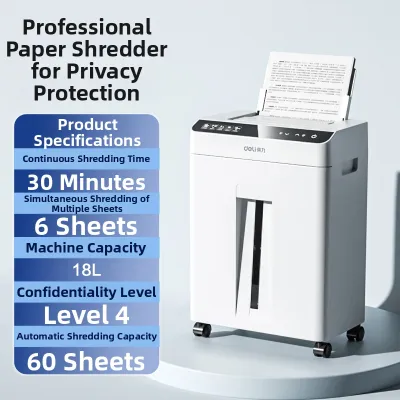
![[SG] Aurora AS600SB Strip Cut Paper Shredder [Evergreen Stationery]](https://img.lazcdn.com/g/p/a83d00938a5835ef19bbb5b828e93374.jpg_400x400q80.jpg_.webp)
![[SG] A4 Multi-Functional Electric Paper Shredder with Built-in Basket](https://img.lazcdn.com/g/p/e13a5b4a0cd7800074c9a408a1f0b8e7.jpg_400x400q80.jpg_.webp)
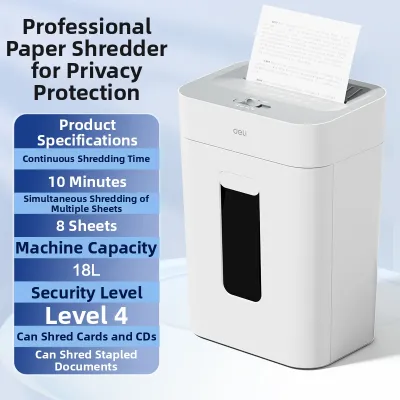
Prices are valid at publication and may change. Please refer to the product page for the latest price.
- Low Security (P-1 to P-2): Typically associated with strip-cut machines, these levels offer basic protection by cutting paper into long, readable strips.
- Medium Security (P-3 to P-4): Usually associated with cross-cut machines, these levels are suitable for standard business and personal documents, reducing paper to small confetti-like pieces.
- High Security (P-5 to P-7): Associated with micro-cut and high-security government-grade machines, these levels reduce a single sheet of paper into thousands of tiny, unreadable particles.
When shopping for a shredder, always check the product specification sheet or the physical label on the machine. Manufacturers clearly print the DIN P-level to help consumers verify that the device matches their specific privacy requirements.
Strip-Cut Shredders: Basic Volume Reduction
Strip-cut shredders are the entry-level option in the document destruction market. These machines use a single set of parallel blades to slice paper vertically into long, continuous ribbons. A single sheet of standard A4 paper is typically cut into approximately 30 to 40 strips, depending on the blade spacing.
These machines are highly efficient for basic volume reduction. If your primary goal is to clear out old, non-sensitive files, packing materials, or generic office drafts to save space in your recycling bin, a strip-cut model is a practical choice. They often operate at faster speeds because the motor only needs to drive a single cutting direction.
However, strip-cut shredders have notable limitations. Because the strips remain intact vertically, anyone with enough time and patience can reconstruct the document. Additionally, long paper strips do not compress well inside the waste basket. This means the bin fills up quickly, requiring frequent emptying. Overfeeding these machines can also lead to severe paper jams, as the long strips can easily bunch up around the cutting shaft.
Cross-Cut Shredders: The Standard for Everyday Privacy
Cross-cut shredders represent the most popular choice for both home offices and commercial workspaces. Unlike strip-cut models, these machines utilize a dual-blade mechanism. The blades cut the paper both vertically and horizontally, transforming a single sheet of A4 paper into hundreds of small, diagonal or rectangular confetti-like pieces.
This cut type is ideal for safeguarding everyday personal and business information. It is highly effective for destroying bank statements, expired credit card offers, tax documents, and internal business memos. The resulting particles are small enough to prevent casual snooping and make reconstruction an incredibly difficult and time-consuming task.
A major practical benefit of cross-cut shredders is waste bin efficiency. Because the paper is cut into small pieces rather than long strips, the waste compresses naturally under its own weight. This allows you to shred more documents before needing to empty the bin. To maintain this performance, however, you must adhere to the manufacturer’s maintenance guidelines. The dual-blade system experiences more friction than a strip-cut system, making regular lubrication essential to prevent blade wear and motor strain.
Micro-Cut Shredders: Maximum Security for Sensitive Data
For those who handle highly confidential information, micro-cut shredders offer the ultimate peace of mind. These advanced machines use precision-engineered blades to reduce a single sheet of paper into upwards of several thousand tiny, microscopic particles. The output resembles tiny bits of confetti or dust, making document reconstruction virtually impossible even with advanced digital scanning tools.
This level of security is necessary for protecting highly sensitive data. If you regularly handle documents containing national registration identity card (NRIC) numbers, passport details, proprietary corporate designs, medical records, or legally binding contracts, a micro-cut machine is highly recommended. It ensures compliance with strict data protection regulations and safeguards against sophisticated identity theft.
Operating a micro-cut shredder requires a clear understanding of its mechanical limits. Because the blades must perform significantly more cuts per square inch, the motor experiences higher strain and heat generation. Consequently, micro-cut shredders typically have lower sheet capacity limits per pass compared to strip-cut or cross-cut models of a similar size. They also require more frequent cooling periods and strict adherence to the manufacturer’s maintenance instructions, including regular oiling, to keep the complex cutting heads functioning smoothly.
Cut Type Comparison and Maintenance Requirements
To help you visualize how these three cut types compare, the table below outlines their key operational differences. Keep in mind that exact specifications, such as sheet capacity, continuous run-time, and noise levels, vary by model and must be verified on the specific product’s label.
| Cut Type | Relative Security Level | Ideal Document Types | Bin Space Efficiency | Maintenance Focus |
|---|---|---|---|---|
| Strip-Cut | Low (P-1 to P-2) | Non-sensitive drafts, packaging material | Low (fills up quickly) | Basic cleaning, occasional clearing of jams |
| Cross-Cut | Medium (P-3 to P-4) | Bank statements, utility bills, business memos | Medium to High (compresses well) | Regular oiling, dust removal |
| Micro-Cut | High (P-5 and above) | NRIC/ID data, legal contracts, medical files | Excellent (highly compressed) | Frequent oiling, strict sheet-limit adherence |
Before making a purchase, always check the manufacturer’s label to verify the exact security rating, recommended sheet capacity, and warranty conditions.
How to Choose the Right Shredder Machine for Your Documents
Selecting the perfect shredder machine paper device involves a systematic evaluation of your daily workflow and environment. Follow these steps to find the model that best fits your needs:
Step 1: Audit your document sensitivity Take a close look at the papers you discard. If you primarily handle generic printouts, a basic model suffices. However, if your trash contains financial statements, personal identification details, or client contracts, prioritize a cross-cut or micro-cut machine to ensure adequate data protection.
Step 2: Estimate your weekly shredding volume Determine how often and how much you shred. For light, occasional home use, a compact machine with a smaller bin and a lower sheet capacity (e.g., 5 to 8 sheets per pass) is sufficient. For busy office environments, look for heavy-duty models with larger waste bins and higher sheet capacities to save time.
Step 3: Evaluate your physical environment Consider where the shredder will be placed. In compact home offices or shared workspaces, noise levels and physical dimensions are crucial. Check the product specifications for decibel ratings and physical footprints to ensure the machine fits comfortably without causing disruptions.
Step 4: Verify safety and operational features Review the product manual or official specification sheet for essential safety mechanisms. Look for features such as automatic stop sensors that halt the blades if hands get too close, thermal overload protection to prevent overheating, and reverse modes to clear paper jams safely.
Frequently Asked Questions (FAQ)
Can I shred credit cards and CDs in a standard paper shredder?
Shredding non-paper media like credit cards, loyalty cards, and CDs requires specific blade durability and motor power. While some standard paper shredders can handle occasional plastic cards, doing so on a machine not rated for these materials can dull or chip the cutting blades. Always check the manufacturer’s specifications for an explicit compatibility label before attempting to shred plastic or optical media. Many modern shredders feature a dedicated slot specifically designed to safely process these harder materials.
Does a higher security level mean the shredder will jam more often?
A higher security level, such as micro-cut, does not inherently mean the machine will jam more frequently, but it does require stricter adherence to operational limits. Because micro-cut blades perform more complex cuts, they require more motor torque and generate more heat. Jams typically occur when users exceed the manufacturer’s stated sheet capacity or attempt to shred thick stacks of paper. To prevent jams, always feed paper within the recommended sheet-per-pass limit and remove heavy staples or paper clips unless the user manual explicitly states the blades can handle them.
How often should I oil or maintain my shredder blades?
The frequency of maintenance depends heavily on the cut type and how often you use the machine. Cross-cut and micro-cut shredders generate significant paper dust and friction, meaning they require more frequent lubrication than strip-cut models. As a general guideline, you should oil your cross-cut or micro-cut shredder every time you empty the waste bin, or at least twice a month if you use it regularly. Always consult your user manual to verify the manufacturer’s recommended lubrication schedule and to ensure you use only approved shredder oil or lubricant sheets.
Community discussion
Share your experience or ask a question. Comments are reviewed before publication.