
Quick Answer: Which Shredder Type is Right for You?
Choosing the right paper shredder is a balancing act between security, speed, and budget. If you are looking to quickly dispose of high volumes of non-sensitive documents without spending a lot of money, a strip-cut shredder is often the most efficient choice. These machines slice paper into long, parallel bands, allowing them to work quickly and handle more sheets at once. However, they offer minimal protection against determined data thieves.
For those who need to destroy sensitive documents like bank statements, medical records, or confidential business files, a cross-cut shredder is the standard recommendation. By cutting paper both lengthwise and crosswise, these machines turn your documents into tiny, confetti-like pieces that are nearly impossible to reassemble. While they generally cost more and require regular maintenance, the peace of mind and superior bin-packing efficiency they offer make them the preferred choice for modern home offices and corporate environments alike.
Understanding the Mechanisms: How They Cut Paper
To understand why these two shredder types perform so differently, it helps to look at their internal engineering. A strip-cut shredder relies on a single set of parallel, interlocking rotary blades. As paper is fed into the throat of the machine, these blades act like multiple pairs of scissors, slicing the sheet vertically into continuous strips. The width of these strips typically ranges from 5.8 millimetres to 12 millimetres, depending on the model. Because the paper is only cut along one axis, the length of the strips matches the original length of the document.
Products mentioned in this guide
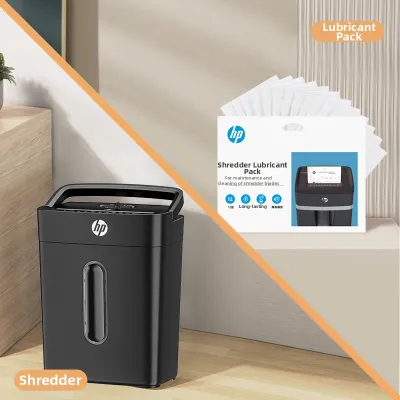
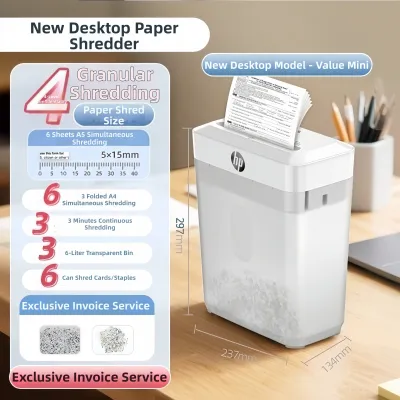
![[SG] A4 Multi-Functional Electric Paper Shredder with Built-in Basket](https://img.lazcdn.com/g/p/e13a5b4a0cd7800074c9a408a1f0b8e7.jpg_400x400q80.jpg_.webp)
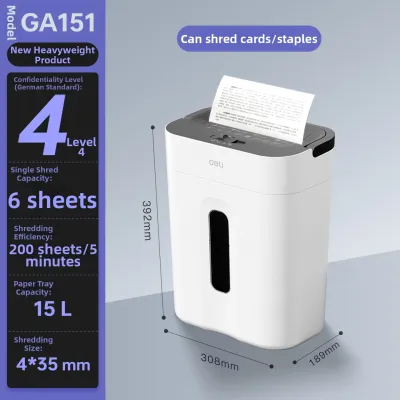
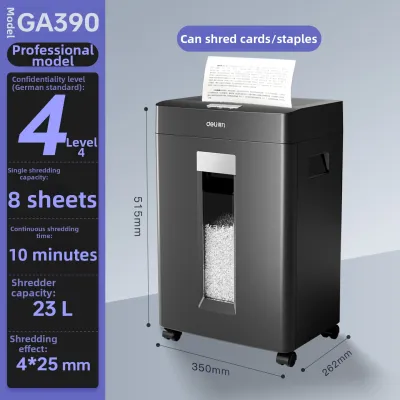
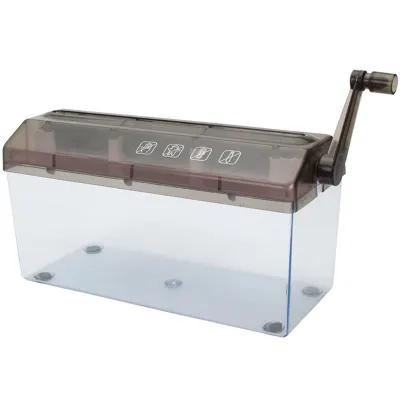
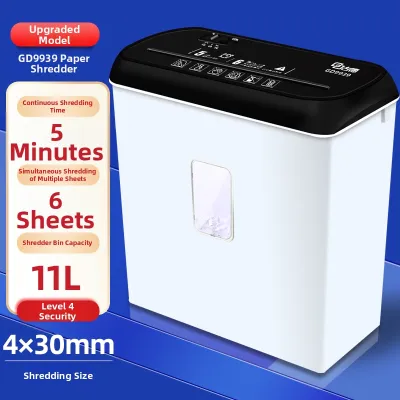
Prices are valid at publication and may change. Please refer to the product page for the latest price.

In contrast, a cross-cut shredder utilizes a more complex dual-cut mechanism. It features two sets of blades that rotate in opposite directions. The first set slices the paper vertically, while the second set cuts across those strips horizontally at precise intervals. This two-dimensional cutting action reduces a single sheet of A4 paper into hundreds of tiny rectangular or diamond-shaped pieces, often measuring around 4 millimetres by 40 millimetres.
This physical difference in output size directly impacts how the shredded paper behaves once it falls into the waste bin. Strip-cut pieces do not compress easily; they fall in loose, tangled heaps that trap air, causing the bin to fill up rapidly despite containing relatively little paper by weight. Cross-cut confetti, on the other hand, settles flatly and packs together tightly. This dense packing means you can fit significantly more shredded material into a cross-cut bin before it needs to be emptied.
Core Comparison: Security, Speed, and Maintenance
Security Levels and Data Protection
The fundamental reason to buy a shredder is to protect sensitive information, and this is where the two designs diverge most sharply. Strip-cut shredders are generally classified under lower security levels (typically P-1 or P-2 under the international DIN 66399 standard). Because a strip-cut machine only divides a page into roughly 30 to 40 strips, a motivated individual with basic adhesive tape or specialized reconstruction software can reassemble the document with relative ease. This makes strip-cut models unsuitable for destroying documents that contain personal identifiers, credit card numbers, tax details, or proprietary business strategies.
Cross-cut shredders offer a much higher level of data protection, usually falling into the P-3 or P-4 security categories. A standard cross-cut machine divides a single A4 sheet into upwards of 300 to 400 individual particles. Reassembling a document of this size requires extraordinary effort and time, rendering the information practically unrecoverable for identity thieves.
When shopping for a shredder, you should look beyond the marketing terms on the packaging. Always check the manufacturer’s technical specifications for the official DIN 66399 P-level rating. A P-4 rating indicates a much smaller particle size than a P-3 rating, providing a verifiable benchmark for the level of security you are actually purchasing.
Shredding Speed and Bin Capacity
Operational efficiency is another critical factor, particularly in busy office environments where document destruction is a frequent task. Strip-cut shredders are the clear winners when it comes to raw processing speed. Because the motor only has to drive blades cutting along a single axis, there is minimal mechanical resistance. This allows strip-cut machines to pull paper through the feed throat very quickly and often enables them to handle a higher maximum sheet capacity per pass compared to cross-cut models of a similar motor size.
However, raw speed does not tell the whole story of office productivity. The time you save during the shredding process can easily be lost if you have to constantly stop to empty the waste bin. Because strip-cut paper forms a bulky, springy mass, the bin sensor will trigger a “full” alert much sooner.
Cross-cut shredders may have a slightly slower feed rate and a lower sheet capacity per pass, but their superior bin-packing efficiency compensates for this. The small confetti particles settle tightly against one another, allowing the bin to hold up to three to four times more paper by weight than a strip-cut bin of the same physical volume. For most users, the reduction in trips to the recycling bin more than makes up for the slightly slower shredding cycle.
Maintenance, Jamming, and Noise
The day-to-day user experience of owning a shredder is heavily influenced by maintenance requirements and mechanical reliability. Cross-cut shredders require more active upkeep than strip-cut models. Because cross-cut blades perform a complex, two-way slicing action, they generate a significant amount of friction and paper dust. Over time, this fine dust can accumulate in the cutting head, absorbing the factory lubricant and putting extra strain on the motor.
To prevent jams and preserve the lifespan of a cross-cut shredder, you must oil the blades regularly. This is typically done by running specialized shredder oil sheets through the machine or applying shredder oil directly onto the blades as directed by the manufacturer’s care instructions. Strip-cut shredders, having simpler mechanisms with less friction, require far less frequent oiling and are generally more forgiving of neglect.
Noise levels and operating cycles also differ between the two types. Cross-cut motors work harder to drive the dual-blade system, which often results in a louder or higher-pitched acoustic profile during operation. Additionally, because the motor experiences higher thermal stress, cross-cut shredders often have stricter continuous run-time limits (or duty cycles) before the thermal overload switch triggers, requiring a cool-down period of 15 to 45 minutes. Strip-cut models often boast longer continuous run times because their motors run cooler.
In humid climates like Singapore, paper can absorb moisture from the air, making it softer and more pliable. This dampness increases the risk of paper fibers wrapping around the blades rather than cutting cleanly. Because cross-cut blades have more intricate cutting points, humid paper is more likely to cause minor jams in these machines if they are overloaded. Keeping your paper stored in a dry cabinet and adhering strictly to the shredder’s recommended sheet capacity can help mitigate this environmental issue.
Cross-Cut vs. Strip-Cut: Feature Comparison
| Feature | Strip-Cut Shredder | Cross-Cut Shredder |
|---|---|---|
| Cut Shape | Long, continuous vertical strips | Small, rectangular or diamond-shaped confetti |
| Security Level | Low (typically DIN P-1 to P-2) | Medium to High (typically DIN P-3 to P-4) |
| Shredding Speed | Fast (high feed rate and sheet capacity) | Moderate (slower feed rate and lower capacity) |
| Bin Emptying Frequency | High (strips do not compress well) | Low (confetti packs densely) |
| Maintenance Needs | Low (rarely requires oiling) | Moderate to High (requires regular oiling) |
| Best Use Case | Non-sensitive bulk documents, junk mail | Bank statements, tax forms, business records |
Budget and Value: What to Expect
When planning your purchase, it is important to understand the relative pricing landscape. Strip-cut shredders are generally the most affordable, entry-level options on the market. In Singapore, basic strip-cut models designed for light home use can often be found for under S$50, making them highly accessible for budget-conscious buyers who only need to shred occasionally.
Cross-cut shredders represent the mid-range of the market, with prices typically starting around S$100 and rising to S$300 or more for heavy-duty office models. While the initial investment is higher, a cross-cut model often provides better long-term value for a busy home office or small business. The inclusion of advanced features like active anti-jam technology, larger bin capacities, and more robust motors can save you hours of frustration and prevent premature motor burnout.
To get an accurate sense of current pricing, you should check local office supply stores or reputable online marketplaces in Singapore. Keep in mind that if your work demands absolute, top-tier security—such as destroying highly classified government documents or sensitive medical records subject to strict regulatory compliance—you may need to look beyond both of these options. Micro-cut shredders, which reduce paper to tiny, microscopic particles, offer the highest level of security but command a significant price premium over standard cross-cut machines.
The Decision Framework: How to Choose
Choose a Strip-Cut Shredder If…
A strip-cut shredder is the ideal choice if you are operating on a tight budget and only need a basic machine for light, occasional household tasks. If your primary goal is to clean out drawers of old utility bills that do not contain highly sensitive personal identifiers, or to dispose of bulk materials like junk mail, catalogs, and rough drafts, a strip-cut model will get the job done quickly.
This option is also highly suitable for those who prioritize raw speed and want to process large stacks of paper in a single session without waiting. If you do not mind emptying the waste bin frequently and are comfortable with a lower level of information security, the simplicity and low maintenance requirements of a strip-cut machine make it a practical, hassle-free addition to your home.
Choose a Cross-Cut Shredder If…
You should invest in a cross-cut shredder if you regularly handle documents containing sensitive personal, financial, or professional data. In an era where identity theft is a constant concern, destroying bank statements, credit card offers, medical records, tax documents, and client contracts requires a machine that guarantees the information cannot be recovered.
Beyond security, a cross-cut shredder is the right choice if you value convenience and want to minimize daily maintenance tasks. Because the confetti-like output packs down tightly, you will spend far less time emptying the waste bin and cleaning up loose paper scraps. If you are willing to pay a moderate premium for superior data protection and a cleaner, more efficient workflow, a cross-cut model is the superior choice for any modern home office or business environment.
When to Verify Specifications First
Before making your final decision, it is crucial to look beyond the cutting mechanism and verify several key specifications to ensure the machine matches your specific workflow. First, check the maximum sheet capacity per pass. This rating tells you how many sheets of standard paper the shredder can handle at once; feeding more than this limit can lead to immediate jams and motor strain. Testing a single sheet of your typical paper weight (such as standard 80gsm copy paper) is a good way to observe how smoothly the motor operates before running a full stack.
Second, verify what materials the shredder is designed to handle. If you need to destroy expired credit cards, CDs, or documents held together by staples and paper clips, you must check the product manual or manufacturer specifications to ensure the blades are rated for these materials. Attempting to shred non-paper items in a machine not designed for them can permanently dull or chip the cutting blades, voiding your warranty.
Finally, consider the physical footprint and noise level of the machine. If you are placing the shredder in a small home office or a quiet shared workspace, look for models that highlight quiet operation and compact designs that fit easily under a desk. Always prioritize checking the manufacturer’s guidelines to ensure safe and optimal performance.
Frequently Asked Questions (FAQ)
Can I upgrade a strip-cut shredder to cross-cut later?
No, it is not possible to upgrade or convert a strip-cut shredder into a cross-cut model. The cutting mechanism, including the arrangement of the blades and the motor gearing, is permanently built into the core hardware of the machine. If you find that your security needs have increased, you will need to purchase a new cross-cut shredder rather than attempting to modify your existing equipment.
Is a cross-cut shredder safe enough for highly classified documents?
For standard household and business privacy needs, a high-quality cross-cut shredder (such as one with a DIN P-3 or P-4 rating) offers excellent protection. However, for highly classified, top-secret, or legally regulated government documents, standard cross-cut particles may still be considered too large. In these specialized scenarios, you should look for a micro-cut shredder (DIN P-5 or higher) or employ a certified professional document destruction service.
Do cross-cut shredders use more electricity?
Because cross-cut shredders utilize two sets of blades to cut paper both vertically and horizontally, their motors must work harder and draw slightly more electrical power during active shredding cycles compared to strip-cut models. However, because shredders are typically run for only a few minutes at a time, this slight difference in power consumption has a completely negligible impact on your monthly household or office utility bills.
Community discussion
Share your experience or ask a question. Comments are reviewed before publication.