
Selecting the right paper shredder is a critical step in protecting sensitive personal data and maintaining corporate compliance. While both cross-cut and micro-cut machines destroy documents, they do so with vastly different levels of precision, security, and operational efficiency. The primary difference lies in the final size of the shredded pieces: cross-cut shredders cut paper diagonally into small confetti-like strips, whereas micro-cut shredders reduce sheets into thousands of tiny, unreadable particles. Your choice depends on whether you need everyday privacy or strict compliance with data protection laws.
Understanding the Cut: How Cross-Cut and Micro-Cut Mechanisms Work
To understand how these machines operate, it helps to look at their internal cutting assemblies. A cross-cut paper shredder, often referred to as a confetti-cut machine, utilizes two counter-rotating shafts equipped with notched blades. As paper passes through, these blades cut the sheet both vertically and horizontally. This dual-action process transforms a standard A4 sheet into roughly 300 to 400 rectangular or diamond-shaped pieces, typically measuring around 4mm by 40mm.
In contrast, a micro-cut paper shredder employs a much finer, denser array of highly engineered blades. The cutting mechanism slices the paper into extremely small, grain-of-rice-sized particles. A single A4 sheet fed into a micro-cut machine is typically pulverized into upwards of 2,000 to 3,000 tiny pieces. This dramatic reduction in size makes it virtually impossible to read any remaining text fragments.
Products mentioned in this guide
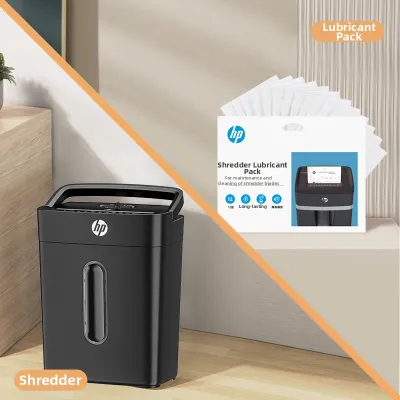
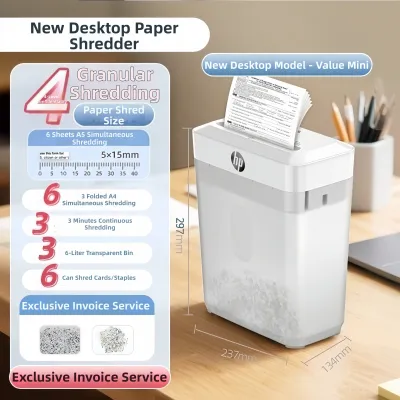
![[SG] A4 Multi-Functional Electric Paper Shredder with Built-in Basket](https://img.lazcdn.com/g/p/e13a5b4a0cd7800074c9a408a1f0b8e7.jpg_400x400q80.jpg_.webp)
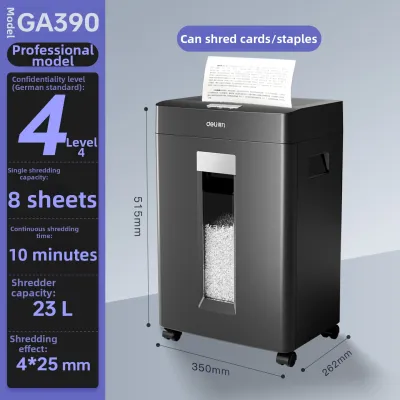
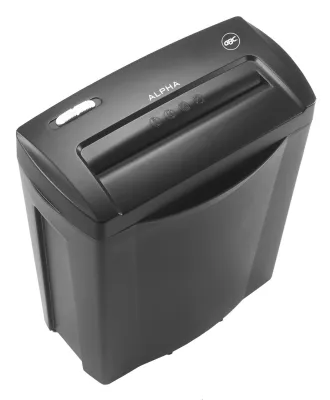
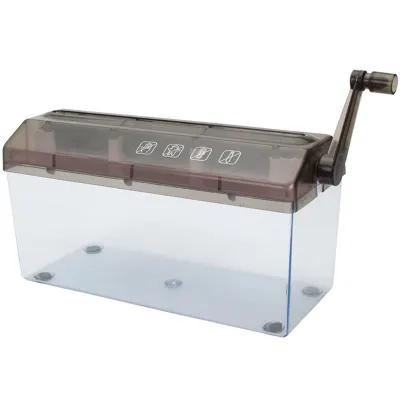
Prices are valid at publication and may change. Please refer to the product page for the latest price.
This physical difference in particle size directly impacts how you manage the shredded waste. Cross-cut pieces are relatively large and tend to catch on one another, creating air pockets that quickly fill up the waste bin. Micro-cut particles, being so small and dense, settle flatly and compact naturally under their own weight. Consequently, a waste bin of the same physical volume can hold up to four times more shredded paper from a micro-cut machine, meaning you spend less time emptying the bin.
Security Levels Decoded: What DIN Ratings Mean for Your Data
When evaluating data security, the global benchmark is the DIN 66399 standard, which defines security levels for destroying various media types. For paper, these are categorized as P-levels, ranging from P-1 (least secure) to P-7 (most secure). Understanding these levels helps you match your shredder’s performance to your specific data protection requirements.

Cross-cut shredders generally fall into the medium-security categories of P-3 or P-4. A P-3 shredder produces strips that are less than 2mm wide, while a P-4 shredder yields particles smaller than 160 square millimeters. These levels are highly effective for destroying everyday office documents, utility bills, junk mail, and internal drafts that require basic privacy protection.
Micro-cut shredders operate at high to maximum security levels, typically rated at P-5 or higher. A P-5 rating requires particles to be smaller than 30 square millimeters, making them ideal for destroying highly sensitive information like financial statements, HR records, medical files, and legal documents. For government or military-grade security, P-6 and P-7 micro-cut machines reduce paper to near-microscopic dust.
The core benefit of a higher P-level is the near-zero risk of document reconstruction. While a dedicated individual with advanced scanning software might eventually piece together a P-3 cross-cut document, reconstructing a P-5 micro-cut document is practically impossible. In Singapore, where businesses must strictly comply with the Personal Data Protection Act (PDPA), opting for a P-4 or P-5 micro-cut shredder provides a robust defense against accidental data breaches and regulatory fines when disposing of physical files.
Daily Performance Trade-offs: Speed, Jams, and Maintenance
While micro-cut shredders offer superior security, they require distinct operational trade-offs in speed, capacity, and maintenance. Because micro-cut blades must perform significantly more cuts per square inch, they encounter greater physical resistance. This means micro-cut machines generally have lower sheet capacities—often handling only 6 to 10 sheets of standard 80gsm A4 paper per pass—and operate at slower linear speeds than cross-cut models.
Cross-cut shredders, with their wider blade spacing, process paper much faster and can easily handle larger batches of 15 to 25 sheets at once. This makes them highly efficient for high-volume environments where speed is prioritized over maximum security.
The finer blade tolerances of micro-cut shredders also make them more susceptible to paper jams. This risk is amplified in humid environments like Singapore, where stored paper can absorb ambient moisture, making the fibers limp and prone to clumping inside the cutting head. To prevent jams, users must strictly adhere to the manufacturer’s specified sheet limits and avoid feeding damp or heavily folded paper.
Maintenance demands are also higher for micro-cut machines. The intensive cutting action generates a substantial amount of paper dust, which can accumulate in the cutting assembly, absorb lubricant, and strain the motor. To prevent premature wear and maintain smooth operation, micro-cut shredders require regular oiling—ideally after every bin emptying or after 30 minutes of continuous use—using specialized shredder oil or oil sheets. Cross-cut models are more forgiving but still require occasional lubrication to maintain peak performance.
Safety is another critical consideration given the sharp cutting mechanisms. Always keep fingers, loose clothing, and hair away from the feed slot of any shredder, and unplug the machine before performing any maintenance, cleaning, or oiling.
Additionally, the heavy-duty motors and high-torque gearboxes required to drive micro-cut blades can result in a different noise profile. They often produce a deeper, more consistent grinding hum, and they may consume slightly more power during operation compared to the lighter, faster mechanism of a cross-cut shredder.
How to Choose the Right Shredder for Your Security Needs
Choosing the right shredder requires balancing your security obligations, daily document volume, and budget. For home offices and general business environments where the primary goal is preventing identity theft from basic mail and receipts, a cross-cut shredder is usually the most practical choice. These machines are fast, require less active maintenance, and are highly budget-friendly, with quality models often available for under S$150.
If your organization handles proprietary business data, customer financial records, or medical histories, investing in a micro-cut shredder is highly recommended. The added security ensures compliance with strict data privacy laws and eliminates the risk of sensitive information falling into the wrong hands.
When space and budget are tight, remember to factor in the total cost of ownership. Micro-cut shredders carry a higher upfront price tag—often starting around S$200 to S$400—and require ongoing purchases of shredder oil. However, because micro-cut waste compacts so efficiently, you can select a model with a smaller physical footprint without needing to empty it constantly. This makes micro-cut models excellent for compact Singapore office spaces or home study corners where floor area is at a premium.
Frequently Asked Questions (FAQ)
Can I shred credit cards or CDs in a micro-cut shredder?
You must strictly check your specific model’s manufacturer guidelines before feeding non-paper media into the machine. While some micro-cut shredders feature reinforced blades or dedicated feed slots designed to handle rigid plastics, feeding credit cards, staples, or CDs into standard fine-cut blades can dull the cutters, damage the motor, and void your warranty.
Does a micro-cut shredder need more frequent emptying?
No, a micro-cut shredder actually requires less frequent emptying than a cross-cut shredder of the same bin size. Because micro-cut particles are extremely small, they pack together tightly without leaving large air gaps. This natural compaction allows the waste bin to hold up to four times more shredded documents than it would if you used a cross-cut machine, though the final frequency still depends on your daily shredding volume.
Community discussion
Share your experience or ask a question. Comments are reviewed before publication.