
Quick Answer: Which A4 80gsm Paper Brand Fits Your Office?
Choosing the right A4 80gsm paper for your Singapore office is not about finding a single universal winner. Instead, the ideal choice depends on your specific printing volumes, document types, and equipment. For high-stakes client proposals and legal contracts, premium brands with superior opacity and high stiffness prevent double-sided show-through and feed flawlessly. For everyday internal memos, standard reports, and mixed-use environments, balanced mid-range brands offer the best compromise between cost and runnability.
If your office runs high-volume internal drafts, training manuals, or temporary archival documents, value-tier brands prioritize cost-efficiency without sacrificing basic legibility. However, remember that actual performance is never entirely isolated to the paper itself. Your specific printer model, its maintenance history, and local storage conditions all play critical roles in how smoothly a sheet of paper feeds through the rollers. Matching the paper’s characteristics to your daily printing tasks will minimize waste, reduce printer downtime, and keep your office running efficiently.
What Makes a Good 80gsm Copy Paper? (Key Comparison Dimensions)
To make an informed decision, you need to understand the technical dimensions that define paper quality. These specifications are typically listed on the physical packaging or manufacturer datasheets, and they directly influence how a sheet behaves under heat, pressure, and ink.
Products mentioned in this guide
![[SG] FujiXerox A4 x EverydayCopier Paper | 80gsm | 1 Carton | MAX 2 CARTONS/ORDER [Evergreen Stationery]](https://img.lazcdn.com/g/p/0125993f2367983b77308ed48045bba3.jpg_400x400q80.jpg_.webp)
![[2 Reams 1000 sheets] A4 80Gsm Paperone Copy Paper / Paperone Digital Inkjet & Laser Paper 85gsm A4](https://img.lazcdn.com/g/p/6b30a8abe0e8c9414c33ea8ecc1cc966.jpg_400x400q80.jpg_.webp)
Prices are valid at publication and may change. Please refer to the product page for the latest price.

Opacity is the first critical dimension to consider, especially for modern offices looking to reduce waste through double-sided printing. Measured as a percentage, opacity indicates how much light is blocked from passing through the sheet. A higher opacity rating prevents the text or images on the reverse side from showing through, which is essential for maintaining professional readability in duplex documents.
Surface smoothness is another vital factor that affects both print quality and printer longevity. A smoother surface ensures that toner particles from laser printers adhere evenly, resulting in sharp text and solid blacks. For inkjet printers, controlled smoothness helps manage ink absorption, preventing feathering and reducing drying times to avoid smudges.
Stiffness and structural stability are what keep your printer running without interruption. A sheet of paper must be stiff enough to resist bending as it is pulled from the tray, yet flexible enough to navigate the tight curves of the paper path. Low stiffness often leads to misfeeds and multi-sheet pulls, which are the primary causes of frustrating paper jams.
Brightness and whiteness are often confused, but they refer to different optical standards. Brightness, typically measured using the ISO standard, refers to the amount of blue light reflected from the paper’s surface, affecting the contrast of the printed text. Whiteness, measured using the CIE standard, represents the paper’s appearance under full-spectrum light, determining how “cool” or “warm” the sheet looks to the human eye. Higher whiteness values generally make colors pop and text appear sharper, though extremely high whiteness can sometimes cause eye strain under bright office lights.
Finally, environmental responsibility has become a major consideration for corporate procurement. Look for eco-certifications such as the Forest Stewardship Council (FSC) or the Programme for the Endorsement of Forest Certification (PEFC) on the packaging. These labels verify that the wood fibers used to make the paper were sourced from responsibly managed forests, providing an excellent tie-breaker when comparing brands of similar price and performance.
Evaluating Popular A4 80gsm Brands in Singapore
Evaluating the popular A4 80gsm brands available in Singapore requires looking at how they perform in typical office scenarios. The local market is well-served by several established brands, each targeting different segments of the office printing spectrum. When selecting a brand, you must balance your budget against the cost of potential downtime caused by low-quality paper.
It is also important to note that Singapore’s unique tropical climate can affect how these papers behave. High relative humidity can quickly compromise paper structure, meaning that even a premium brand can suffer from curling or misfeeds if left unprotected. Therefore, evaluating these brands assumes they are stored and handled under optimal conditions.
Premium and High-Reliability Options
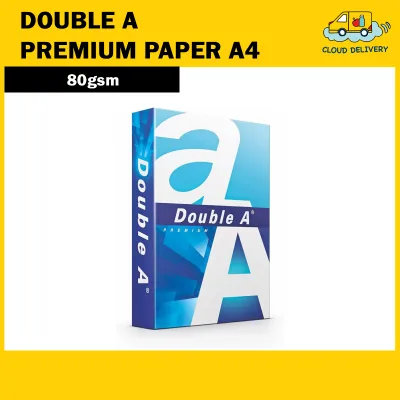
Premium brands, such as Double A, are engineered for offices that demand flawless reliability and high-impact presentation. Double A is widely recognized in Singapore for its distinctively smooth surface and high stiffness, which are achieved through the use of high-quality eucalyptus fiber. This structural integrity makes it exceptionally resistant to curling under the high heat of laser printer fuser units.
These premium sheets offer superior opacity, making them the preferred choice for double-sided client proposals, legal contracts, and formal presentations. The high whiteness (often exceeding 160 CIE) provides excellent contrast for both monochrome text and full-color charts. The primary trade-off is cost, as these brands command a higher price per ream. However, for high-speed enterprise copiers that run continuously, the reduction in paper jams and associated maintenance downtime easily offsets the initial investment.
Balanced Everyday Options
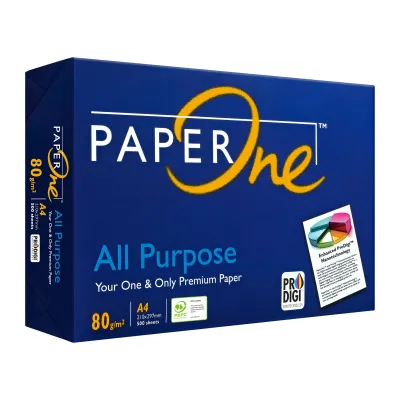
For offices that require a versatile, all-purpose paper, mid-range brands like PaperOne All Purpose offer an excellent balance of performance and value. Manufactured using renewable elemental chlorine-free fibers, these papers are designed to perform reliably across both high-volume laser copiers and desktop inkjet printers.
These balanced options feature good surface smoothness and moderate stiffness, ensuring consistent runnability for daily reports, emails, and standard business correspondence. While they may not have the ultra-premium feel of top-tier brands, their opacity and brightness are more than adequate for standard double-sided printing. Choosing a mid-range brand allows an office to maintain a professional standard for internal and external communication while keeping paper procurement costs manageable.
High-Volume and Cost-Effective Options
When high-volume printing is the norm—such as for internal drafts, training manuals, packing slips, or temporary archival records—cost-effective brands like IK Plus or value-tier lines from regional manufacturers become highly attractive. These brands focus on delivering basic runnability at the lowest possible price point per ream.
While these budget-friendly papers are highly economical, they do come with certain trade-offs that office managers must manage. They often have slightly lower opacity, which can result in visible show-through if used for heavy double-sided printing. Additionally, value-tier papers may release more paper dust (microscopic fiber fragments) during the printing process. Over time, this dust can accumulate on the printer’s pickup rollers and optical sensors, potentially leading to slippage or false jam alerts. If your office relies heavily on budget paper, planning for more frequent, simple maintenance—such as wiping down the feed rollers—is a necessary step to ensure continuous operation.
Quick Comparison: A4 80gsm Paper Specifications
To help you quickly contrast the options available in Singapore, the following table summarizes the key characteristics of the main brand categories.
| Brand Category / Example | Brightness / Whiteness (Typical) | Opacity Level | Eco-Certification | Recommended Use Case | Relative Price Tier |
|---|---|---|---|---|---|
| Premium (e.g., Double A) | High (150–165 CIE) | Excellent (94%–95%) | FSC / PEFC (Check packaging) | Client proposals, legal contracts, high-speed copying | $$$ (S$7.50–S$9.00 per ream) |
| Balanced (e.g., PaperOne All Purpose) | Medium-High (145–160 CIE) | Very Good (92%–93%) | PEFC Certified | Daily office reports, correspondence, mixed-use | $$ (S$6.00–S$7.20 per ream) |
| Cost-Effective (e.g., IK Plus) | Standard (140–150 CIE) | Moderate (90%–91%) | PEFC / Ecolabel (Check packaging) | High-volume drafts, internal manuals, packing slips | $ (S$4.80–S$5.80 per ream) |
Note: Technical specifications and prices are subject to change and may vary by production batch or retailer. Always check the physical packaging or manufacturer datasheets for the most current data.
Optimizing Printer Settings and Preventing Jams with 80gsm Paper
No matter which brand of A4 80gsm paper you choose, proper printer configuration and physical handling are essential to prevent frustrating jams and ensure clean prints. Many common office printing issues are not caused by defective paper, but rather by minor oversights in how the paper is loaded and processed by the machine.
First, always verify that your printer driver settings match the physical media loaded in the tray. By default, most printers are set to “Plain Paper,” which is ideal for standard 80gsm copy paper. However, if you notice that your prints are curling excessively or that toner is rubbing off the page, check if your printer driver or the machine’s physical control panel allows you to adjust the media weight or paper type. Setting the printer explicitly to “80gsm” or “Plain Paper (Medium)” ensures that the fuser unit applies the correct amount of heat and pressure to bond the toner without overheating the fibers.
Before loading a new stack of paper into the feed tray, take a moment to fan the sheets. Paper is tightly packed during manufacturing and shipping, which can create static electricity or vacuum pockets that cause sheets to stick together. Fanning the stack introduces air between the sheets, allowing the printer’s pickup rollers to grab a single page at a time. When placing the stack into the tray, ensure that the paper guides are adjusted snugly against the edges of the paper without bending them. Overfilling the tray past the maximum capacity markers is a frequent cause of multi-sheet feeds and severe jams, so always leave a small gap below the limit line.
Finally, keep the printer’s internal paper path clean. As paper moves through the machine, it naturally sheds tiny amounts of fiber dust. This dust can coat the rubber feed rollers, reducing their grip and causing them to slip. If you notice frequent “no paper” errors when the tray is full, or if sheets jam immediately upon leaving the tray, wiping the rubber rollers with a slightly damp, lint-free cloth can restore their grip. Always consult your specific printer’s user manual for safe cleaning procedures and approved maintenance steps.
Buying and Storing Copy Paper in Singapore's Climate
Singapore’s tropical climate, characterized by high temperatures and high ambient humidity, presents unique challenges for paper storage and usage. Paper is highly hygroscopic, meaning it naturally absorbs moisture from the surrounding air. When paper fibers absorb moisture, they expand unevenly, leading to wavy edges, curling, and a significant increase in printer jams.
To protect your paper investment, you must follow strict storage practices. Always keep paper reams sealed in their original moisture-resistant wrappers until you are ready to load them into the printer. These wrappers are lined with a thin moisture barrier specifically designed to keep the paper dry during transit and storage. Once a ream is opened, try to use the paper within a reasonable timeframe, and avoid leaving large stacks of loose paper in the printer’s feed tray overnight or over the weekend when the office air conditioning might be turned off.
Store unopened boxes of paper in a cool, dry, air-conditioned environment rather than in a humid storeroom or directly on concrete floors. Elevating the boxes on pallets or shelving units prevents ground moisture from seeping into the packaging. If you must store paper in a non-air-conditioned space, consider investing in a heavy-duty plastic storage bin with a tight-sealing lid to keep humidity at bay.
When purchasing copy paper in Singapore, you have access to a wide range of sourcing options. For small offices, local office supply stores and major online marketplaces offer convenient delivery options, often with discounts for bulk purchases of full cartons (usually containing five reams). For larger organizations, establishing a contract with a dedicated commercial stationery distributor can provide more stable pricing and scheduled deliveries. Regardless of where you buy, purchasing by the carton rather than individual reams is generally more cost-effective and provides better physical protection for the paper during transport.
Frequently Asked Questions (FAQ)
Is 80gsm paper significantly better than 70gsm for double-sided printing?
Yes, 80gsm paper is generally much better suited for double-sided (duplex) printing than 70gsm paper. The primary reason is opacity; 80gsm paper is thicker and denser, which significantly reduces the amount of text or ink that shows through to the opposite side of the sheet. Additionally, the extra weight provides greater structural stiffness, which helps the paper resist curling when it is heated and flipped inside the printer’s duplexing unit. While high-quality 70gsm paper can be used for basic draft printing, 80gsm remains the professional standard for double-sided business documents.
Will using cheaper 80gsm paper damage my office printer?
Using budget-friendly 80gsm paper will not cause immediate or catastrophic damage to your office printer, but it can increase the frequency of required maintenance. Lower-cost papers often have less refined edges and can shed higher amounts of paper dust and lint as they pass through the paper path. This dust accumulates on pickup rollers, optical sensors, and fuser assemblies, leading to paper slippage, misfeeds, and temporary sensor errors. If your office prints high volumes using value-tier paper, you can prevent issues by regularly cleaning the feed rollers and scheduling routine professional servicing.
Community discussion
Share your experience or ask a question. Comments are reviewed before publication.