
Direct Answer: Navigating Licensed Snoopy Notebook Paper Quality
When you purchase a Snoopy notebook, you are buying a product featuring licensed intellectual property from Peanuts Worldwide. Because various stationery manufacturers across the globe hold licenses to produce these items, there is no single, universal standard for “Snoopy notebook paper.” The quality, weight, and ink resistance of the pages depend entirely on the specific brand or manufacturer that produced the notebook.
For example, a limited-edition Moleskine Snoopy notebook utilizes their proprietary acid-free, cream-colored paper, which behaves very differently from a Japanese Kokuyo Campus Snoopy notebook or a generic promotional notebook sold at a local gift shop. To ensure your pens do not bleed through the pages, you must evaluate the paper’s technical specifications—such as weight (measured in GSM), coating, and sizing—rather than relying on the character branding on the cover. Understanding these manufacturing differences is the key to finding a notebook that keeps your writing clean and legible on both sides of every page.
The Core Dimensions: Paper Weight, Coating, and Ink Resistance
To understand why ink behaves beautifully on one notebook and bleeds through another, you must look at the physical properties of the paper. The most common specification you will encounter is paper weight, which is measured in Grams per Square Meter (GSM). This metric indicates the density and thickness of the paper sheet. Standard office copy paper and cheap promotional notebooks typically range from 70 GSM to 80 GSM. While lightweight and easy to carry, this paper is highly porous and thin, making it prone to ink penetration. Premium notebooks designed for serious writing usually feature paper weights between 90 GSM and 120 GSM, providing a thicker barrier that naturally resists show-through and bleeding.
Products mentioned in this guide
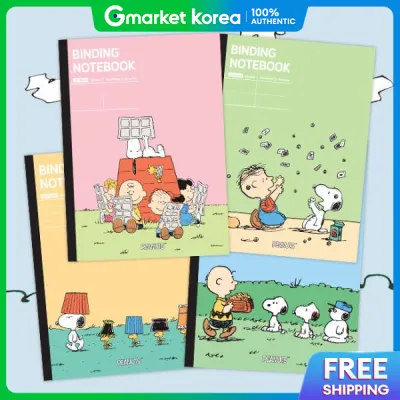
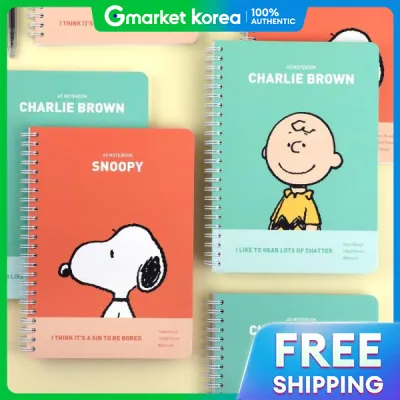
Prices are valid at publication and may change. Please refer to the product page for the latest price.

Beyond weight, the manufacturing treatments applied to the paper fibers play a critical role in ink resistance. Sizing is a process where chemical agents, such as starch or synthetic polymers, are added to the paper pulp or applied to the surface. This treatment regulates how the paper absorbs moisture. Without proper sizing, the paper acts like a paper towel, drawing ink rapidly into its fibers and causing the lines to spread outward—a phenomenon known as feathering. Surface coatings, such as light clay or mineral layers, also create a smooth barrier that keeps ink on the surface rather than letting it sink deep into the sheet.
When evaluating paper performance, stationery enthusiasts distinguish between show-through and bleed-through. Show-through, often called ghosting, occurs when the shadow of your writing is visible from the reverse side of the page, even though the ink has not physically broken through the paper fibers. This is largely a function of paper opacity and thickness. Bleed-through, on the other hand, is a catastrophic failure where the ink physically saturates the paper and leaks onto the back of the page, or worse, onto the sheet underneath. While ghosting is an aesthetic preference that many writers tolerate, bleed-through renders the reverse side of the page completely unusable.
The texture of the paper, known as its “tooth” or finish, also dictates how your writing experience will feel. A highly textured paper has a rough tooth that offers resistance, which is excellent for graphite pencils and ballpoint pens because it helps shave off the writing medium onto the page. However, fountain pens and wet gel rollers perform best on smooth, satin-finished papers. These smooth surfaces allow the pen nib or rollerball to glide effortlessly without catching. The trade-off is that highly smooth, coated papers often have slower drying times. In a humid climate like Singapore, wet ink can sit on top of a coated page for several seconds, increasing the risk of accidental smudging if you close the notebook too quickly.
Pre-Purchase Checklist: Evaluating Paper Quality In-Store and Online
Selecting the perfect Snoopy notebook requires a systematic evaluation, whether you are browsing the shelves of a physical bookstore in Orchard Road or shopping online. When shopping in-store, start by examining the packaging and labels. High-quality stationery brands almost always print their paper specifications on the back cover, the paper band, or the retail tag. Look for indicators such as “90 GSM,” “acid-free,” or “wood-free paper.” Acid-free paper is processed to remove active acids, ensuring the pages will not turn yellow or become brittle over time, while wood-free paper (made from chemical pulp rather than mechanical pulp) offers superior durability and ink stability.
If the notebook is not sealed in plastic, use visual and tactile cues to assess the paper quality. Hold a single page up toward the store’s overhead lighting. If you can clearly see the outline of your hand or the text on the next page through the sheet, the paper is highly translucent and will likely suffer from significant ghosting. Next, gently run your fingertips across the surface of the page. Feel for a consistent, smooth texture. If the paper feels overly thin, rough, or dry like newsprint, it is likely standard promotional-grade paper that will struggle to handle wet gel or fountain pen inks.
Identifying the actual manufacturer behind the Snoopy license is one of the most reliable ways to predict paper performance. Prominent stationery brands like Moleskine, Kokuyo, and Sun-Star frequently release Peanuts-themed collections. These brands maintain strict quality control and use their signature paper stocks, which have well-documented characteristics in the stationery community. For instance, Japanese brands like Kokuyo are famous for their smooth, high-grade paper designed to handle liquid inks with minimal feathering. Conversely, unbranded or generic licensed notebooks sold as novelty merchandise often prioritize cover design over paper quality, using cheaper, generic paper stocks that vary wildly from batch to batch.
When purchasing online where physical inspection is impossible, you must rely on targeted research. Scroll past the promotional descriptions and head straight to the customer review sections. Use search filters or the “Find” function on your browser to look for keywords such as “bleed,” “ghost,” “fountain pen,” “gel pen,” or “ink.” Pay close attention to reviews written by students, bullet journalers, or planners, as they tend to test various pen types and often post photos of the back of the pages. If a product listing fails to mention the GSM or the manufacturer, and reviews complain about thin pages, it is safest to assume the notebook is best suited for dry media like pencils and standard ballpoint pens.
Decision Framework: Matching Paper Specs to Your Pen Type
Your choice of writing instrument should directly dictate the paper specifications of your Snoopy notebook. Different inks exert different levels of stress on paper fibers. Fountain pens, for example, lay down a generous volume of liquid, water-based ink. To handle this wet flow without feathering or bleeding, you need paper with a high weight—ideally 90 GSM or higher—and robust internal sizing. Without these properties, the liquid ink will spread rapidly along the paper fibers, turning sharp handwriting into fuzzy, illegible lines.
Gel pens and rollerballs, which are incredibly popular for everyday writing and color-coding, use water-based or gelled inks that flow smoothly but still contain a high water content. These pens perform best on smooth paper with a moderate weight of 80 GSM to 90 GSM. The smooth finish allows the rollerball to glide without skipping, while the moderate weight prevents the ink from showing through to the other side. Because gel ink dries via absorption and evaporation, a paper with balanced absorption properties is necessary to minimize both smudging and ghosting.
If you prefer writing with traditional ballpoint pens or mechanical pencils, your paper requirements are much more forgiving. Ballpoint pens use thick, oil-based inks that paste onto the surface of the paper rather than soaking into it. Pencils rely on solid graphite transfer. Because neither of these mediums introduces moisture to the paper, they pose virtually zero risk of bleeding or feathering. For these tools, a standard 70 GSM to 80 GSM paper is perfectly adequate, allowing you to enjoy a lighter, more portable notebook without worrying about ruining the reverse pages.
The following table summarizes how different pen types interact with paper specifications:
| Pen Type | Recommended Minimum GSM | Ideal Paper Finish | Primary Risk |
|---|---|---|---|
| Fountain Pens | 90 GSM | Smooth / Sized Satin | Bleeding & Feathering |
| Gel & Rollerball | 80 GSM | Semi-Smooth / Matte | Smudging & Ghosting |
| Ballpoint Pens | 70 GSM | Medium Tooth | Smudging (Oil Paste) |
| Pencils (Graphite) | 70 GSM | Medium to Rough Tooth | Smudging & Erasability |
To help you make the right choice when shopping for your next Snoopy notebook, apply these conditional decision rules based on your writing habits:
- Choose 90+ GSM with sizing if you primarily write with fountain pens, broad-tip gel pens, calligraphy markers, or wet highlighters, as this combination provides the necessary structural barrier to prevent ink from penetrating the page.
- Choose 80-90 GSM smooth finish if you use standard gel pens (such as 0.5mm or 0.7mm tips) or fine-liner pens for daily note-taking, ensuring a balance between a lightweight notebook and clean, legible pages with minimal ghosting.
- Choose standard 70-80 GSM if you write almost exclusively with ballpoint pens, multi-pens, or pencils, allowing you to opt for thinner, more affordable, and highly portable notebook designs.
- Verify first if the notebook is marketed specifically for sketching, drawing, or mixed media; these notebooks often feature heavy, textured paper (120+ GSM) that is excellent for colored pencils or light washes but may have too much "tooth" for fine-point gel pens or delicate fountain pen nibs.
Post-Purchase: How to Safely Test for Ink Bleed and Feathering
Once you have purchased your new Snoopy notebook, it is wise to perform a controlled test before committing to your main journal entries or notes. This prevents you from accidentally ruining a beautifully designed page with an incompatible pen. The most effective way to do this is the back-page test. Open your notebook to the very last page, or use a designated “test page” if the manufacturer has provided one. Gather the entire collection of pens you plan to use in the notebook, ranging from your finest ballpoints to your wettest highlighters and fountain pens.
Write a short sample sentence with each pen, clearly labeling the pen model and ink type next to the text. As you write, pay close attention to how the ink behaves on the surface. Does the line remain sharp and crisp, or does it begin to spread outward like tiny spiderwebs? If you notice the line expanding, the paper lacks sufficient sizing to handle that specific ink’s flow rate, indicating a high risk of feathering.
Immediately after writing each sample, conduct a drying time check. Use a stopwatch or count slowly in your head, then gently tap or swipe a clean finger across the ink at intervals of one, three, and five seconds. This test is incredibly important, especially in Singapore’s humid climate, which naturally slows down ink evaporation. If a gel pen takes more than five seconds to dry, you will need to exercise caution when turning pages quickly to avoid smudging your work.
For a more advanced assessment of the paper’s chemical treatments, you can perform a low-risk water drop test. Dip the tip of a clean toothpick or a fine pin into water and place a single, microscopic droplet onto an unused corner of your test page. Observe how the droplet behaves. If the water beads up and sits on top of the paper for several seconds, the paper has excellent surface sizing, which will easily resist ink bleeding. If the water is instantly absorbed into the paper fibers, creating a dark, wet circle, the paper is highly absorbent and will likely bleed if paired with wet liquid inks.
If your tests reveal severe bleed-through or heavy ghosting with your favorite gel or fountain pens, do not despair or discard your notebook. This is your cue to adjust your tool selection. Simply transition to dry media for this specific notebook. Standard ballpoint pens, colored pencils, and high-quality graphite pencils will allow you to enjoy your favorite Snoopy illustrations without compromising the usability of the pages. Save your wet, high-flow ink pens for notebooks that have verified 90+ GSM or highly sized paper.
Frequently Asked Questions (FAQ)
Does cream-colored paper prevent ink bleed better than white paper?
No, the color of the paper pulp has no direct impact on its ability to resist ink bleed. Cream-colored and bright white papers are created using different dyes, bleaching processes, or fiber sources, which primarily affect visual contrast, eye strain, and overall aesthetic appeal. Bleed resistance is determined entirely by physical and chemical properties: the weight of the paper (GSM), the density of the fibers, and the presence of internal or surface sizing agents. A thin, unsized cream paper will bleed just as easily as a thin, unsized white paper.
Can I use a backing sheet to stop ink bleed in a thinner notebook?
Using a backing sheet—such as a plastic pencil board (shitajiki), a thick piece of cardstock, or a sheet of blotting paper—is an excellent way to protect your notebook. Placing this sheet directly behind the page you are writing on will physically block any bleeding ink from seeping onto the subsequent pages. However, it is important to understand that a backing sheet does not prevent the ink from bleeding through the active page you are currently writing on. The reverse side of that page will still show ink stains, meaning you will likely only be able to write on one side of each sheet.
Community discussion
Share your experience or ask a question. Comments are reviewed before publication.