
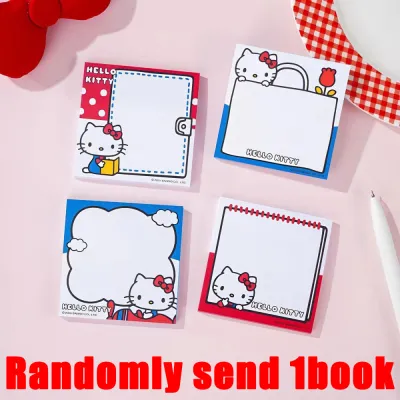
When you buy a pack of cute Sanrio sticky notes featuring Hello Kitty, My Melody, or Cinnamoroll, you are not buying paper manufactured by Sanrio itself. Instead, you are purchasing a product created by one of many licensed stationery manufacturers. Because of this licensing model, there is no single standard for “Sanrio” paper quality. The best paper quality and adhesive performance depend entirely on which licensed partner manufactured the specific sticky notes you choose.
To find the highest quality option, you must look beyond the character design and inspect the manufacturing details on the packaging. Brands like Sun-Star Stationery, Kamio Japan, Crux, and Sanrio’s own official retail division each use different paper mills, adhesive formulations, and printing standards. By understanding how to identify these manufacturers and evaluate their technical specifications, you can select sticky notes that resist ink bleeding, hold their grip on your planner pages, and provide a smooth writing surface.
Understanding Sanrio Licensing and Manufacturer Differences
Sanrio operates primarily as a character licensing company, allowing third-party stationery brands to use its intellectual property. This means that when you walk into a stationery shop in Singapore or browse an online marketplace, the Sanrio-branded sticky notes you see could come from several entirely different companies. Each of these manufacturers operates under its own production standards, sourcing paper from different regions and applying different adhesive technologies.
Products mentioned in this guide
![[SG INSTOCK] Childrens Day Gift: Sanrio Family Cafe Treats A7 Memo Notepad 50 Sheets 70gsm OBA-Free Paper Hello Kitty Pompompurin Melody Cinnamoroll Little Twin Stars Hangyodon Cute Kawaii Student Childrens Goodie Bag Gift](https://img.lazcdn.com/g/p/6b3a13bf9e2f663b760a9a7851004e61.png_400x400q80.png_.webp)
Prices are valid at publication and may change. Please refer to the product page for the latest price.
To determine who actually made your sticky notes, you need to turn the packaging over and look at the fine print on the back. Licensed products will feature a holographic Sanrio license sticker alongside the name of the actual manufacturing partner. Common Japanese stationery manufacturers licensed by Sanrio include Sun-Star, Kamio Japan, Crux, and Green Flash. In some cases, the product is manufactured directly by Sanrio’s in-house merchandising division, which typically distributes items through official Sanrio Gift Gate stores.
These manufacturers target different market segments, which directly influences the paper quality. For instance, premium stationery brands often focus on paper compatibility with fountain pens and gel pens, utilizing heavier paper weights and specialized surface treatments. Conversely, mass-market novelty manufacturers may prioritize vibrant color printing and low production costs, resulting in thinner, uncoated paper that is better suited for simple ballpoint pens. Understanding these distinctions helps you manage your expectations and choose a product that aligns with your specific writing tools.
Key Dimensions for Evaluating Sticky Note Paper
To compare the paper quality of different licensed Sanrio sticky notes, you must evaluate several physical and chemical characteristics. The most critical factor is paper thickness and weight, which is measured in grams per square meter (GSM). Standard sticky notes typically range from 70 GSM to 80 GSM, which is sufficient for basic notes but prone to ghosting when using wet inks. Premium licensed options often utilize 90 GSM or even 100 GSM paper, providing a sturdy barrier that prevents your writing from showing through to the other side of the page.

Ink bleed and feathering resistance depend heavily on the paper’s surface treatment, known as sizing. Uncoated, highly porous paper acts like a sponge, drawing ink outward along the paper fibers and causing your writing to look fuzzy or “feathered.” High-quality licensed stationery brands apply a light sizing agent to the paper surface, which slows down ink absorption. This treatment allows gel pens, fine liners, and rollerballs to dry cleanly with sharp, crisp lines, though it may slightly increase the required drying time.
Adhesive strength and residue are equally important when evaluating sticky notes. The adhesive strip must provide enough grip to keep the note flat on various surfaces, such as planner pages, computer monitors, or whiteboards, without curling at the edges. At the same time, the glue formulation must allow for clean, residue-free removal and repositioning. High-quality manufacturers use a microsphere adhesive that creates a temporary bond, whereas lower-tier licensed products may use cheaper acrylic adhesives that either lose their stickiness quickly or leave a tacky residue behind.
Opacity and surface smoothness also play a major role in the overall writing experience. Highly opaque paper ensures that the text underneath the sticky note does not distract from the message written on top. Surface smoothness, or calendered finish, determines how much friction your pen encounters as you write. A smooth, satin-like finish reduces pen drag and prevents fiber pickup on felt-tip pens, while a slightly textured, matte finish is ideal for graphite pencils and ballpoint pens.
How to Verify Paper Quality Before and After Purchase
Verifying the quality of Sanrio sticky notes requires a mix of careful label reading and hands-on testing. When shopping, always check the back of the packaging for technical specifications. While many cute sticky notes do not explicitly list the GSM, you can look for indicators such as country of origin, which often correlates with higher-quality paper sourcing and stricter quality control. Additionally, look for labels indicating acid-free paper, as this prevents the paper from yellowing and deteriorating over time.
If you are shopping in a physical retail store, you can perform several tactile checks even through the plastic packaging. Gently bend the pad of sticky notes to assess its stiffness; a rigid pad generally indicates thicker, higher-weight paper. Inspect the edges of the sticky notes to ensure they are cleanly cut without any fraying or paper dust. You should also check that the adhesive strip is flat and does not cause the individual sheets to curl upward at the bottom edge while still in the package.
Once you have purchased the sticky notes, conduct a simple at-home test on a single sacrificial sheet before using them in your main planner or journal. Write on the note using your favorite pens, including gel pens, highlighters, and ballpoints, to observe the drying speed and check for any bleed-through on the reverse side. Stick the tested note onto a variety of surfaces, such as a matte paper page, a glossy plastic folder, and a laptop lid, then peel it off after twenty-four hours to verify that it leaves no sticky residue and retains its grip when repositioned.
If a particular pack of sticky notes fails these basic tests—for example, if the paper curls immediately upon peeling or allows gel pen ink to bleed through completely—you do not have to throw them away. Instead, you can repurpose them for dry media applications. These lower-quality notes are still perfectly functional for pencil sketches, dry color coding, or temporary labeling using standard ballpoint pens, saving your premium sticky notes for important planning and journaling tasks.
Decision Framework: Choosing the Right Sanrio Sticky Notes
Selecting the right Sanrio sticky notes requires matching the manufacturer’s characteristics to your daily writing habits and tools. If you primarily use heavy-ink instruments like gel pens, fountain pens, or liquid ink rollerballs, you should seek out premium licensed brands that utilize coated or high-GSM paper. These products, often manufactured by specialized Japanese stationery brands, provide the necessary ink resistance to prevent feathering and bleed-through, ensuring your notes remain legible and neat.
If your daily writing relies on standard ballpoint pens, mechanical pencils, or dry highlighters, standard uncoated paper brands will serve you well. These sticky notes often feature a slightly textured surface that provides excellent feedback for graphite and oil-based inks. Because these pens do not deposit large amounts of wet ink, you can prioritize adhesive strength, sheet count, and character design over premium paper thickness, making these options highly cost-effective for quick reminders.
When purchasing Sanrio sticky notes from third-party sellers on online marketplaces, extra caution is necessary. Many listings do not specify the actual manufacturer or may use generic descriptions that omit paper weight and adhesive details. In these cases, look closely at the product photos for the official Sanrio holographic seal and try to identify the manufacturer’s logo. If the seller cannot verify the producing brand, it is best to assume the product is a standard-grade novelty item and test it accordingly upon arrival.
It is also important to recognize the limitations of cute character sticky notes. If you require archival-quality, strictly acid-free paper for long-term document preservation or professional drafting, standard licensed sticky notes may not meet your needs. Most character-themed stationery is designed for temporary, everyday use rather than permanent record-keeping. For archival applications, you should rely on specialized professional drafting media, using your cute Sanrio notes for active planning, temporary reminders, and creative journaling.
Frequently Asked Questions (FAQ)
Do thicker sticky notes always have stronger adhesive?
No, paper thickness and adhesive strength are entirely independent of each other. In fact, thicker paper is heavier and stiffer, which means it actually requires a wider or more robust adhesive strip to prevent the note from curling away from the surface under its own weight. If a manufacturer uses thick paper but applies a weak or narrow glue strip, the sticky note is highly likely to fall off quickly.
Can I use wet highlighters on standard licensed sticky notes without tearing the paper?
It depends on the paper’s surface treatment and thickness. Standard uncoated paper is highly absorbent and can easily pill, tear, or lift when subjected to the moisture and friction of a wet highlighter. To avoid damaging the paper, test the highlighter on a small corner first, or opt for dry highlighter tape or mild, water-based highlighters applied with a very light touch.
Community discussion
Share your experience or ask a question. Comments are reviewed before publication.