
Quick Answer: Matching Planner Types to Your Workflow
Finding the perfect planner is a highly personal decision that depends entirely on your daily writing tools, scheduling habits, and carry requirements. There is no single brand or model that serves as a universal winner for every user. Instead, selecting the right planner involves balancing the physical trade-offs between premium paper thickness, layout complexity, and overall portability.
If you write with heavy inks, such as fountain pens or wet gel pens, you will need a planner with thicker, coated paper to prevent ink from bleeding through the pages. However, this high-quality paper naturally increases the overall weight and thickness of the book, making it less convenient for daily travel. Conversely, if you prioritize a lightweight carry that fits easily into a small bag, you will need to opt for a slimmer, lower-GSM planner, which may limit you to using standard ballpoint pens to avoid ghosting.
Evaluating Paper Quality and Ink Compatibility
Paper quality is the foundation of any satisfying planning experience, directly affecting how smoothly your pen glides across the page and how clean your notes look. The most common metric for paper quality is weight, measured in grams per square meter (GSM). You can typically find this specification on the product packaging, the manufacturer’s website, or the retail label. Standard planners generally feature paper weights ranging from a lightweight 50 GSM to a substantial 120 GSM or more.
Products mentioned in this guide
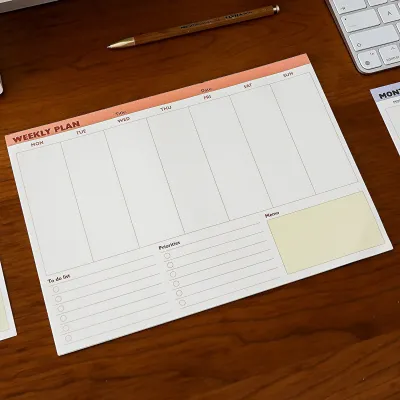
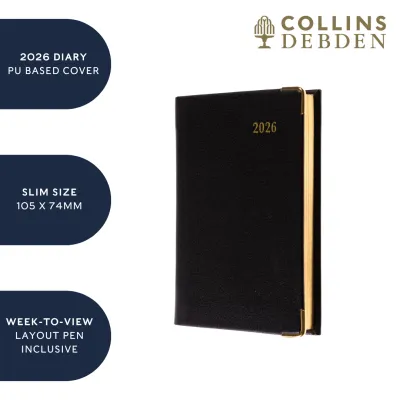

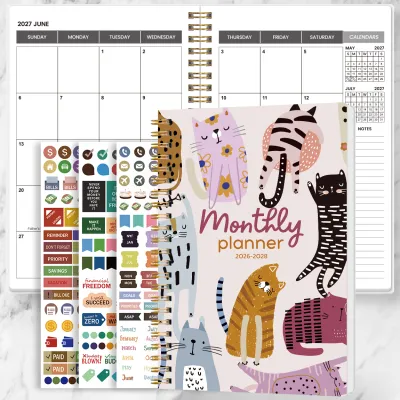
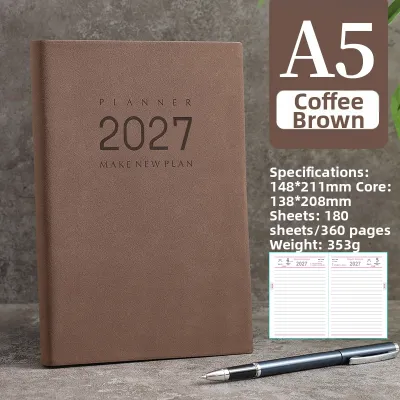
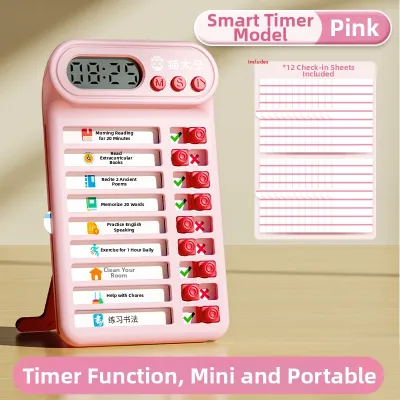
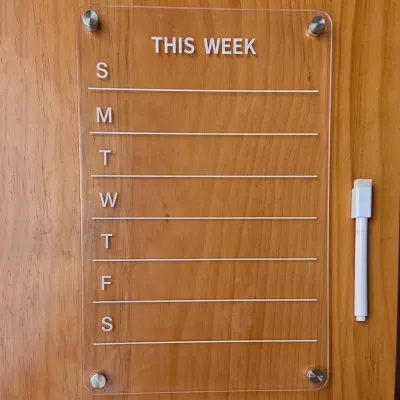
Prices are valid at publication and may change. Please refer to the product page for the latest price.

Thinner paper, usually between 50 GSM and 70 GSM, is highly efficient for keeping a planner slim and portable. This weight is common in multi-month or daily planners that would otherwise become too bulky to carry. The primary drawback of thin paper is its susceptibility to ghosting—where writing is visible on the reverse side of the page—and bleed-through, where ink actually penetrates the paper fibers and ruins the next page.
Medium to heavy paper, ranging from 80 GSM to 120 GSM, offers a much sturdier surface that handles a wider variety of writing instruments. Gel pens, rollerballs, and fine-liner markers perform beautifully on these weights with minimal show-through. However, this extra thickness means a 12-month daily planner will be significantly heavier and bulkier, making it more suited for desk use than constant travel.
Beyond weight, the paper finish plays a critical role in ink compatibility. Smooth, coated finishes slow down ink absorption, which helps prevent feathering—the fuzzy spreading of ink along the paper fibers—and keeps lines crisp. The trade-off is a longer drying time, which can lead to smudging, especially for left-handed writers. Textured, uncoated papers absorb ink almost instantly, reducing smudges, but they are more prone to feathering when used with wet inks.
To ensure your favorite pens work harmoniously with a new planner, always perform a discreet corner test before committing to your main pages. Turn to the very last index or notes page and write a few test strokes with each pen you plan to use. Observe how quickly the ink dries, check for any feathering along the edges, and flip the page to inspect the back for ghosting or bleed-through. If you notice slight ghosting but still want to use that specific planner, placing a sheet of heavy blotter paper behind your active page can protect the sheets underneath.
Comparing Page Layouts for Different Planning Styles
The internal layout of your planner dictates how you visualize your time and organize your daily tasks. Choosing the right structure depends on whether you prefer strict, time-based scheduling or open-ended, creative tracking.
Structured layouts are designed for precise time management and busy schedules. Daily hourly layouts allocate a full page or a two-page spread to a single day, allowing you to block out meetings, tasks, and notes in detail. While highly effective for busy professionals, these layouts result in a much thicker book. Weekly vertical layouts display the entire week across a two-page spread with vertical columns for each day, making it easy to see your weekly schedule at a glance. Weekly horizontal layouts offer a more traditional diary format, providing lined blocks for each day that work well for general task lists.
Open layouts, such as dotted, grid, or completely blank pages, offer maximum flexibility for those who find pre-printed lines restrictive. These formats are highly popular for bullet journaling, where you design your own weekly spreads, trackers, and logs. Dotted and grid patterns provide just enough structure to keep your handwriting straight and your drawings aligned without cluttering the page with heavy lines.
Supplementary pages can significantly enhance the utility of your planner by consolidating different areas of your life. Many modern planners include dedicated habit trackers, monthly budget sheets, goal-setting spreads, and project management timelines. These specialized pages help you track long-term progress alongside your daily appointments, reducing the need to carry multiple notebooks.
Before making a purchase, always verify the exact page count, date range, and format. Standard planners typically cover a 12-month calendar year, but academic versions often span 18 months, which can add unnecessary bulk if you only need a single year. You must also decide between dated planners, which save time by having all calendar dates pre-printed, and undated planners, which offer the flexibility to start and stop planning whenever you like without leaving empty, wasted pages.
Assessing Portability, Size, and Binding Durability
Balancing the physical dimensions of your planner with your daily routine is essential for ensuring you actually carry and use it. A planner that is too large will end up left behind on your desk, while one that is too small may not offer enough space for your writing.
Standard paper sizes provide a helpful reference point for assessing portability. An A5 planner (approximately 148mm x 210mm) is widely considered the ideal middle ground, offering a generous writing area while fitting easily into most work bags and backpacks. If you travel frequently or have limited bag space, a B6 planner is slightly smaller and highly portable without sacrificing too much writing room. Personal and Pocket sizes are exceptionally compact, fitting into small purses or jacket pockets, but they require very neat, compact handwriting and are best suited for brief bullet points rather than detailed scheduling.
The binding style of a planner directly impacts its durability and how comfortable it is to write in. Spiral and wire-o bindings allow the planner to open completely flat and even fold back on itself, which is incredibly convenient when working on a crowded desk. However, the metal or plastic coils can catch on clothing or bag linings, and they can bend over time, making it difficult to turn pages. Stitched or thread-bound planners offer a classic, book-like appearance and are highly durable. High-quality thread bindings allow the planner to lay completely flat when open, ensuring you can write comfortably near the center seam. Glued bindings are common in budget planners but are prone to cracking and losing pages over a year of heavy use.
Cover materials protect your pages from the wear and tear of daily transit while contributing to the overall weight. Hardcovers provide a solid, stable writing surface when you are on the go and do not have access to a desk, but they add noticeable weight and bulk. Softcovers, made from flexible cardstock or plastic, are much lighter and bend easily to fit into packed bags, though they offer less protection against bent page corners. Leather or premium synthetic covers offer excellent durability and a professional aesthetic, but they generally increase both the weight and the cost of the planner.
Decision Framework: Choosing the Right Planner for You
To find the perfect match for your workflow, use the following profiles to guide your selection:
- Choose a high-GSM, stitched A5 planner if… You write primarily with fountain pens, heavy gel pens, or markers; you prefer a structured weekly or daily layout to manage a busy schedule; and you mostly use your planner at a desk or carry a medium-to-large backpack.
- Choose a slim, pocket-sized, or B6 softcover planner if… You prioritize portability and want a planner that fits into small bags or pockets; you use standard ballpoint pens that do not require thick, coated paper; and you only need to jot down quick daily reminders, appointments, or monthly overviews.
- Choose an undated, dotted, or grid layout planner if… Your scheduling needs fluctuate, and you want to avoid wasting pages during quiet weeks; you enjoy customizing your own layouts, habit trackers, and creative spreads; and you want a multi-purpose book that functions as both a planner and a journal.
Verify first if… You can visit a local stationery store to feel the paper texture and test the binding in person. Additionally, check if the retailer has a flexible return policy, as many stores do not accept returns on planners once the protective plastic wrap has been removed or the pages have been written on.
Before making your final purchase, run through this quick checklist to ensure the planner meets all your practical needs:
- Paper Weight: Is the GSM compatible with your preferred writing instruments?
- Layout: Does the daily, weekly, or monthly structure match your planning style?
- Size and Weight: Will it fit comfortably in your daily carry bag?
- Binding: Does the book lay flat easily for comfortable writing?
Frequently Asked Questions (FAQ)
Can I use fountain pens in any standard planner?
Standard planner paper often lacks the specialized coating or density required for wet inks, which frequently leads to bleed-through, feathering, or excessive ghosting. If you prefer writing with fountain pens, look for planners that explicitly state they use fountain-pen-friendly paper or have a weight of 80 GSM or higher with a smooth, coated finish. You can also place a sheet of blotter paper or a plastic pencil board underneath your active page to prevent ink from transferring to the sheet below.
What is the difference between dated and undated planners?
Dated planners come with pre-printed calendar dates, offering immediate usability and a highly structured framework that keeps you accountable from day one. Undated planners leave the dates blank, giving you the flexibility to start planning at any time of the year and skip weeks without leaving empty, wasted pages. However, undated planners require a regular time investment to manually write in the dates and set up the monthly or weekly spreads before you can begin scheduling.
Community discussion
Share your experience or ask a question. Comments are reviewed before publication.