
Quick Answer: Which Notebook Brand Fits Your Writing Style?
Finding the perfect notebook is about matching your writing instruments to the physical characteristics of the paper rather than chasing a single “best” brand. If you primarily write with fine-nib fountain pens and prefer lightweight, highly portable books, thin and heavily sized Japanese-style papers offer an exceptionally smooth glide without bleeding. Conversely, if you use wet inks or markers and dislike ghosting, thicker European-style coated papers provide excellent ink resistance and minimal show-through, though they require longer drying times. For those relying on everyday ballpoint pens, gel pens, or pencils, a classic textured hardcover notebook provides the necessary friction and immediate drying speed for quick note-taking. Understanding how paper weight, surface texture, and chemical treatments interact with your daily writing tools is the key to selecting a notebook that elevates your handwriting and ensures a friction-free creative or professional workflow.
Key Dimensions for Evaluating Notebook Paper Quality
To compare notebook brands effectively, you must understand the technical specifications that dictate how paper behaves under different writing instruments. The most common metric is GSM (grams per square meter), which measures the physical weight and density of the paper, directly influencing its thickness and opacity. Generally, papers ranging from 50 to 68 GSM are considered lightweight, those between 70 and 90 GSM are standard for everyday writing, and papers from 100 to 160 GSM are classified as heavyweight. While a higher GSM typically correlates with greater opacity and better resistance to show-through (ghosting), it is not the sole indicator of paper quality or ink compatibility.

The surface finish, or “tooth,” of the paper determines the physical feedback you feel as your pen moves across the page. Smooth, coated surfaces reduce friction, allowing fine nibs and delicate tips to glide effortlessly without catching fibers. This smoothness is highly prized by fountain pen enthusiasts because it preserves crisp line definitions. On the other hand, textured or “toothy” paper possesses a microscopic roughness that grips the writing tip. This friction is essential for graphite transfer from pencils and prevents ballpoint pens from sliding uncontrollably, offering a more tactile and controlled writing experience.
Products mentioned in this guide
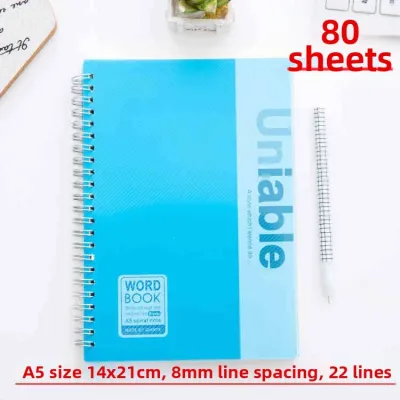
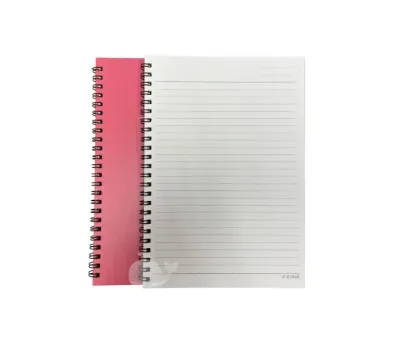
![[SG Stock] A7 Plain Paper Notepad w/ Pen Assorted Customizable (ODO) | Childrens Day](https://img.lazcdn.com/g/p/3a5bbe324d99b2a1f01a32aa634fe97a.jpg_400x400q80.jpg_.webp)
Prices are valid at publication and may change. Please refer to the product page for the latest price.
Beyond weight and texture, paper sizing is the most critical factor governing ink behavior. Sizing refers to chemical additives applied internally during pulping or externally to the surface of the paper to control its absorbency. Unsized paper acts like a sponge, drawing liquid ink rapidly into the fibers. This rapid absorption causes feathering—where the ink spreads outward along the paper fibers, creating fuzzy, distorted lines—and bleed-through, where ink penetrates completely to the reverse side of the sheet. Highly sized papers resist liquid penetration, forcing the ink to sit on top of the surface and dry via evaporation rather than absorption. This preserves sharp lines and vibrant ink colors but significantly extends drying times.
In tropical environments like Singapore, where relative humidity levels frequently exceed 80%, paper sizing becomes even more critical. Cellulose fibers naturally absorb ambient moisture from the air, which can temporarily weaken the paper’s original sizing and make it more susceptible to feathering and ghosting. This environmental factor makes it crucial to choose paper with robust sizing if you plan to use liquid inks in non-air-conditioned spaces.
Finally, the physical construction and binding style of the notebook shape your daily writing comfort. Lay-flat bindings, such as thread-bound or section-sewn spines, allow the notebook to open completely flat on a desk. This design ensures that you can write comfortably across the entire width of the page, right up to the central gutter, without having to hold the pages down with your non-dominant hand. In contrast, traditional glued or tight case-bound spines can create a steep slope near the gutter, causing hand fatigue and disrupting the flow of your writing.
How Popular Notebook Brands Compare in Writing Experience
Notebook manufacturers generally design their products around distinct paper philosophies, tailoring their paper formulations to serve specific user groups and writing instruments. Rather than comparing individual proprietary formulas that may change over time, it is more practical to evaluate brands based on three major regional and functional categories: Japanese precision paper, European premium coated paper, and classic everyday hardcovers. Each category balances weight, texture, and ink compatibility differently, offering a unique tactile experience.
Japanese Notebooks: Thin, Smooth, and Fountain Pen Friendly
Japanese notebook brands—such as those featuring Tomoe River, Midori MD, or Kokuyo paper—maximize portability and ink performance through advanced manufacturing. These brands often utilize remarkably thin paper, frequently from 52 to 68 GSM. Despite this low weight, the paper is engineered with intensive surface sizing that prevents liquid inks from penetrating the fibers, making these notebooks exceptionally resistant to feathering and bleed-through, even when using wet fountain pen nibs.
The writing experience is characterized by an ultra-smooth, glassy feel. With virtually no tooth to catch the pen tip, your hand glides effortlessly, reducing writing fatigue during long sessions. This smooth surface also excels at showcasing unique ink properties like shading (tonal variation) and sheening (a metallic secondary color that appears as the ink dries).
However, this high sizing introduces distinct trade-offs. Because ink dries primarily through evaporation, drying times are longer. In Singapore’s humid climate, a wet ink line can take several minutes to dry, increasing the risk of smudging if you close the notebook too quickly. Additionally, the thin paper means ghosting—where writing is visible on the reverse side—is common, even if the ink does not bleed through. Readers should verify specific product lines, as formulations can vary within the same brand’s lineup.
European Premium Notebooks: Coated, Heavyweight, and Ink-Resistant
European premium notebook brands, such as Clairefontaine, Rhodia, and Leuchtturm1917, prioritize structural integrity, opacity, and a substantial tactile feel. These notebooks typically feature thicker paper, generally ranging from 80 to 120 GSM. Many utilize clay-coated or heavily sized vellum paper, providing a smooth, satin-like finish that remains highly consistent across pages.
Writing on European premium paper offers crisp, controlled feedback. The added density almost entirely eliminates ghosting, allowing you to use both sides of every sheet with confidence, even with dark inks, broad nibs, or markers. The surface coating prevents ink from spreading, ensuring letters remain sharp and well-defined.
The primary trade-off is physical bulk. A 200-page notebook made from 90 GSM European paper is significantly thicker and heavier than a Japanese equivalent, impacting portability in daily commuter bags. Furthermore, these coated surfaces resist absorption, requiring moderate to long drying times. Check the manufacturer’s specifications, as some brands offer uncoated, more absorbent options that dry faster but exhibit slightly more ghosting.
Classic Hardcovers: Versatile, Textured, and Everyday Use
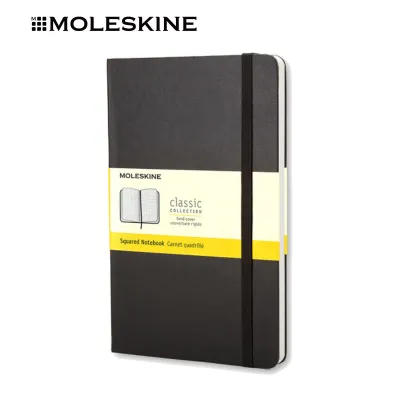
Classic hardcover notebooks, such as Moleskine and standard lifestyle brands, are versatile everyday carry tools meant for general note-taking and sketching. These notebooks typically utilize medium-weight paper, usually between 70 and 80 GSM, with an ivory or cream tone. Unlike ultra-smooth specialized papers, classic hardcovers generally feature an uncoated, slightly textured or toothy finish.
This toothy texture provides excellent physical feedback for dry media. When writing with a ballpoint pen, mechanical pencil, or graphite, the paper grips the tip perfectly for precise control. The uncoated surface also allows inks to dry almost instantaneously as liquid absorbs quickly into the fibers. This rapid drying speed makes classic hardcovers practical for fast-paced note-taking and left-handed writers.
The compromise lies in performance with liquid inks. Because the paper is less sized and more porous, wet fountain pens, heavy gel pens, and markers often experience feathering as ink spreads through the fibers. Bleed-through is also common, frequently forcing users to write only on one side of the page or stick to dry writing instruments. For everyday writing with ballpoints and pencils, however, these notebooks remain highly reliable.
Matching Paper Characteristics to Your Pen and Ink Type
Selecting the right notebook requires analyzing the specific mechanics of your preferred writing instruments. Different inks and tips interact uniquely with paper surfaces, and matching them correctly prevents common frustrations like smudging, bleeding, and hand strain.
Fountain pens and liquid-ink rollerballs deliver a relatively large volume of water-based ink to the page. To prevent this wet ink from spreading and soaking through the sheet, you require a paper with high sizing or a protective surface coating. These treatments keep the ink crisp and localized. If you use medium or broad fountain pen nibs, look for papers with a GSM of 80 or higher to minimize ghosting, or select specialized thin Japanese papers that are chemically treated to handle high ink volumes.
Gel pens and fine-liner markers utilize water-based or pigment-bound inks that are thicker than fountain pen ink but still prone to smudging. For these tools, especially if you are a left-handed writer, you need a paper that balances sizing with moderate absorbency. A medium-weight paper (around 80 to 90 GSM) with a semi-smooth finish allows gel ink to dry within a few seconds while maintaining clean, vibrant lines without feathering.
Ballpoint pens and pencils rely on physical friction to function correctly. Ballpoint pens use a thick, oil-based ink that is transferred to the page via a tiny rotating ball, while pencils rely on the paper scraping away microscopic layers of graphite. If the paper is too smooth or heavily coated, a ballpoint pen may skip or slip, and a pencil may struggle to leave a dark mark. For these writing instruments, a slightly textured, uncoated paper with a moderate tooth is ideal. The texture provides the necessary resistance to rotate the ballpoint tip smoothly and shave off the graphite, resulting in a highly controlled and comfortable writing experience.
To help you quickly identify the best pairing for your writing setup, refer to the following comparison table:
| Pen/Ink Type | Ink Characteristics | Ideal Paper Feature | Recommended Paper Category | Key Considerations |
|---|---|---|---|---|
| Fountain Pen (Wet/Broad) | High volume, water-based, slow-drying | High sizing, smooth finish, high opacity | European Premium or Specialized Japanese | Long drying times; showcases ink shading and sheen |
| Fountain Pen (Fine/Extra-Fine) | Low volume, water-based, precise | High sizing, ultra-smooth surface | Specialized Japanese (low GSM) | Excellent line definition; some ghosting may occur on thin sheets |
| Gel / Rollerball Pen | Medium volume, water/gel-based | Moderate sizing, semi-smooth finish | European Premium or High-Quality Standard | Good balance of drying speed and line sharpness; left-hand friendly |
| Ballpoint Pen | Low volume, oil-based, instant-drying | Uncoated, moderate tooth/texture | Classic Hardcover or Standard Office | Instant drying; prevents slipping and skipping |
| Graphite Pencil | Solid dry medium, requires friction | Textured, toothy, uncoated surface | Classic Hardcover or Sketching Paper | Excellent graphite transfer and erasability; avoids smudging |
Practical Testing: How to Verify Paper Quality Before Buying
While manufacturer specifications provide a helpful starting point, the ultimate test of paper quality is how it performs under your unique writing style, pen pressure, and ink choices. Before committing to a high-end notebook purchase, there are several practical steps you can take to verify that the paper will meet your expectations.
First, carefully examine the product packaging or online specifications for key indicators. Look for the stated GSM to gauge the physical weight and potential opacity of the paper. Check if the manufacturer explicitly mentions acid-free or archival-grade paper, which ensures that the pages will not yellow or deteriorate over time. Additionally, look for terms like “fountain pen friendly,” “satin finish,” or “uncoated” to understand the intended design of the paper surface.
If you have access to a physical store with display models, or once you receive a new notebook, perform a simple “swatch test” on an inconspicuous page—typically the very last page of the notebook. Use your everyday carry pens and inks to write a few test lines, draw solid blocks of color, and write a sequence of numbers to track drying times.
- Bleed-through check: Inspect the reverse side of the page to see if any ink has physically soaked through the fibers.
- Show-through (ghosting) check: Hold the page up to normal light to evaluate how visible the writing is from the back.
- Feathering check: Examine the edges of your written lines; if they appear fuzzy or blurred, the paper lacks sufficient sizing.
- Drying time check: Run your finger across a fresh ink line at intervals of 5, 10, 15, and 30 seconds to determine exactly how long it takes to set.
Additionally, test the binding flexibility of the notebook. Open the book to the center and press down gently on the spine. A high-quality notebook should lie relatively flat without requiring constant physical pressure to keep it open. If the binding resists and springs closed immediately, writing near the inner margins will be difficult and uncomfortable over extended periods.
Final Decision Framework: Choosing Your Ideal Notebook
To select the perfect notebook for your collection, match your primary writing habits and environmental conditions to the following clear decision paths:
- Choose Japanese-style thin paper (e.g., 52–68 GSM, highly sized) if you prioritize a lightweight and portable notebook, write primarily with fine-nib fountain pens or precise gel pens, enjoy seeing complex ink characteristics like shading and sheen, and do not mind waiting a few moments for your ink to dry.
- Choose European premium coated paper (e.g., 80–120 GSM, satin finish) if you use wet fountain pens, broad gel pens, or markers, absolutely dislike ghosting or show-through on the reverse side of the page, prefer a smooth but controlled writing feedback, and do not mind carrying a slightly heavier and thicker notebook.
- Choose classic textured hardcovers (e.g., 70–80 GSM, toothy finish) if you write primarily with standard ballpoint pens, mechanical pencils, or quick-drying gel pens, require your ink to dry instantly to prevent smudging, prefer a tactile grip and physical feedback while writing, and value a durable, widely available notebook for everyday note-taking.
By aligning your writing tools with these specific paper characteristics, you can ensure a seamless, enjoyable, and reliable writing experience that preserves your thoughts beautifully for years to come.
Frequently Asked Questions (FAQ)
Does a higher GSM always mean better notebook paper?
No, a higher GSM (grams per square meter) does not automatically guarantee superior paper quality or better writing performance. GSM measures only the physical weight and density of the paper, which directly influences thickness and opacity. While a higher GSM paper (such as 120 GSM) is excellent for preventing show-through and handling heavy media, it can still feather or bleed if it lacks proper chemical sizing. Conversely, a lightweight paper (such as 52 GSM) that has undergone high-quality surface sizing can handle wet fountain pen inks perfectly without any feathering or bleeding, despite being thin enough to show ghosting. When evaluating notebook paper, you must consider the surface treatment, sizing, and texture alongside the GSM to find the best match for your writing instruments.
Community discussion
Share your experience or ask a question. Comments are reviewed before publication.