
Selecting the ideal brush pens set is a pivotal decision for any artist, calligrapher, or hobbyist. The market is filled with diverse options, ranging from flexible nylon tips designed for elegant hand lettering to juicy, alcohol-based markers engineered for seamless character illustration. Finding the right set is not about searching for a single, universal winner; instead, it requires matching the specific chemical properties of the ink and the physical construction of the pen tip to your creative goals and paper choices.
Quick Guide: Choosing the Right Brush Pens Set
To navigate the vast array of creative tools available, you can simplify your decision by matching your primary artistic technique to a specific ink and tip category. This conditional framework ensures you invest in a brush pens set that behaves predictably on your chosen medium.
- Choose water-based dye ink sets if your primary focus is modern illustration, card making, or casual sketching. These inks are highly water-reactive, allowing you to blend colors smoothly on the page, create soft watercolor-like gradients, and pull pigment with a wet brush. They are excellent for expressive, colorful designs where archival permanence is not a strict requirement.
- Choose water-based pigment ink sets if you specialize in formal calligraphy, hand lettering, bullet journaling, or creating crisp outlines for mixed-media art. Once dry, pigment-based inks are highly water-resistant, smudge-proof, and lightfast. This ensures your delicate lettering remains sharp and will not bleed if you paint over it with watercolors or run a highlighter across the text.
- Choose alcohol-based marker sets if you require vibrant, streak-free, and heavily layered coloring for professional illustration, manga art, or product design. These permanent inks dry almost instantly and allow you to build deep, smooth gradients without warping paper fibers. However, they are highly prone to bleeding and require specialized, non-porous marker paper to perform correctly.
While popular stationery brands offer diverse configurations, the ultimate performance of any brush pens set depends on matching these ink formulations with the correct tip style. Before purchasing a large, expensive collection, artists should evaluate the technical specifications of the tips and inks to ensure they align with their specific creative workflows.
Products mentioned in this guide
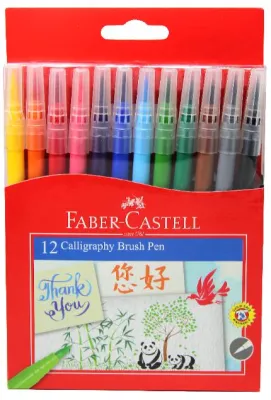
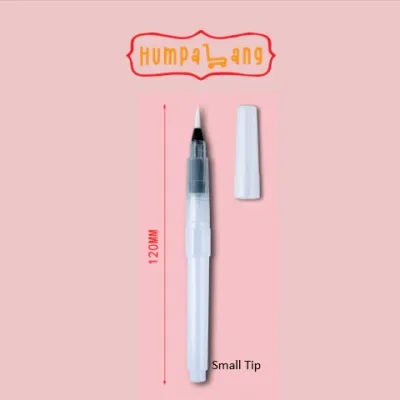
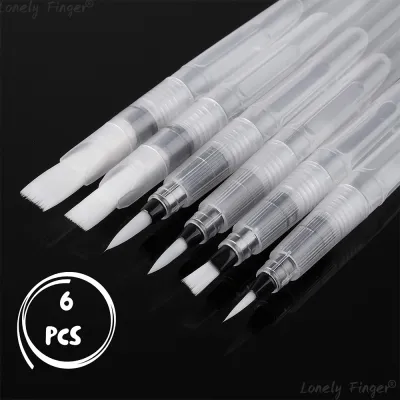
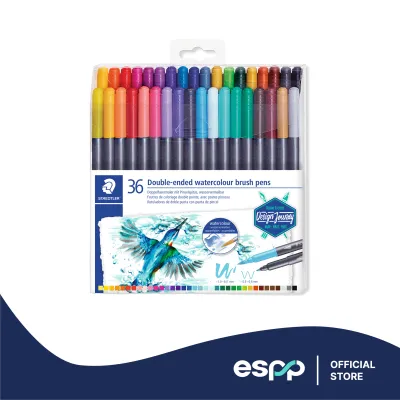
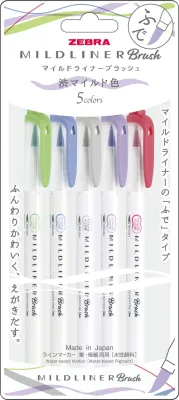
Prices are valid at publication and may change. Please refer to the product page for the latest price.
Core Comparison Dimensions for Brush Pen Sets
To make an informed purchase, you must look beyond attractive packaging and evaluate the physical and chemical specifications of a brush pens set. Understanding how these technical elements interact with your hand movements and climate is the key to achieving professional results.

Tip Material and Flexibility
The construction of a brush pen tip directly dictates your control over line variation, the ease of transitioning between strokes, and the overall lifespan of the pen. Brush tips generally fall into two main categories: molded synthetic felt and bundled nylon fibers.
Molded felt tips are typically shorter, firmer, and highly resilient. Because they offer significant resistance when pressed against the page, they are incredibly easy to control, making them the preferred choice for beginners learning the basics of hand lettering. However, felt tips are more susceptible to physical wear. If used on rough, uncoated paper, the friction will quickly abrade the synthetic fibers, causing the tip to “mushroom” or fray, which permanently ruins the pen’s ability to produce sharp lines.
In contrast, nylon fiber tips are constructed from individual, extruded synthetic hairs bundled together to form a flexible brush. These tips possess excellent “elastic memory” or snap-back—the physical ability of the tip to spring back to its original, sharp point immediately after a heavy, high-pressure downstroke. Nylon tips allow for dramatic, expressive line variation, enabling you to transition from a broad, sweeping downstroke to a microscopic hairline upstroke in a single, fluid movement. The trade-off is that these highly flexible tips require excellent wrist stability and muscle memory, which can present a steep learning curve for novices.
When evaluating a brush pens set, check the manufacturer’s specifications regarding tip durability and firmness. Firm, small brush tips are ideal for detailed illustration and small-scale writing, while long, soft, flexible tips are better suited for large-scale calligraphy and expressive, painterly strokes.
Ink Formulation and Flow Characteristics
The chemical makeup of the ink determines how it behaves when it contacts paper, how easily it blends, and how it reacts to environmental factors like light and humidity.
Water-based dye inks consist of colorants fully dissolved in a liquid water base. Because there are no solid particles in the solution, the ink flows effortlessly through the pen’s internal feed system, resulting in highly consistent saturation. These inks are exceptionally vibrant and blend beautifully when wet. However, because dyes are chemically sensitive to ultraviolet light, they are not archival; artwork created with dye-based brush pens will gradually fade over time if exposed to direct sunlight.
Water-based pigment inks utilize microscopic, solid color particles suspended in a liquid medium. When the water evaporates, these particles bind permanently to the paper fibers, creating a lightfast, waterproof layer that will not fade or smear. This makes pigment-based sets essential for professional documents, archival calligraphy, and multi-medium art. However, because the pigments are suspended solids, these pens can occasionally suffer from slower ink flow or require shaking to redistribute the particles before use.
Alcohol-based inks employ fast-drying dyes suspended in an alcohol solvent. This formulation allows the ink to flow generously and dry almost instantly, which is highly advantageous for illustrators who want to apply multiple layers of color without waiting. The rapid evaporation of the alcohol prevents the paper fibers from absorbing excessive moisture, eliminating the paper warping and pilling common with water-based inks.
Ink flow is also controlled by the pen’s delivery system. Pre-saturated fiber reservoirs rely on capillary action to draw ink to the tip. This system is highly stable, reliable, and virtually leak-proof, but the ink flow can gradually dry out as the reservoir empties. Valve-action systems, common in opaque or metallic pigment pens, store free-flowing liquid ink in an internal chamber. Shaking the pen and pressing the tip down opens an internal valve to saturate the nib. This provides incredibly rich, juicy coverage, but carries a higher risk of leaking, pooling, or blotting if handled carelessly.
For artists working in Singapore, local environmental factors play a significant role in ink behavior. In Singapore’s tropical, high-humidity climate, the high moisture content in the air slows down the evaporation of water-based inks. This extended drying time means you must exercise extra caution to avoid smudging wet ink as your hand moves across the page. Conversely, alcohol-based solvents have a very low boiling point and evaporate rapidly. In warm, humid environments, leaving an alcohol-based brush pen uncapped for even a few minutes can cause the solvent at the tip to dry out instantly, leaving behind concentrated dye that clogs the nib. Always recap your pens immediately and store your brush pens set horizontally in a cool, dry place away from direct sunlight to maintain consistent ink flow.
Matching Sets to Specific Creative Applications
Different creative disciplines demand different physical performance from a brush pens set. By understanding the unique requirements of your chosen craft, you can select a set designed to streamline your workflow.
Calligraphy and Hand Lettering
Calligraphy is an art form rooted in precision, rhythm, and contrast. To create beautiful modern lettering, you must maintain absolute control over the transition between thick downstrokes and thin upstrokes. This requires a brush pens set with a highly responsive tip and a consistent, regulated ink flow that does not skip or pool.
For hand lettering, sets that feature dual-ended pens are highly practical. These dual pens typically offer a flexible brush tip on one end for main lettering and a fine-liner or bullet tip on the other. The companion fine-liner is invaluable for sketching guidelines, adding intricate flourishes, cleaning up messy transitions, or practicing “faux calligraphy”—a technique where you manually draw double lines to simulate brush strokes.
When browsing for lettering tools, look specifically for packaging labeled “brush pen” or “fude” rather than generic “markers.” True brush pens are engineered with flexible, tapered tips that respond dynamically to varying hand pressure. Generic markers, even those with tapered tips, often lack the structural snap-back required to transition cleanly from a heavy downstroke to a delicate hairline, resulting in clumsy, blunt strokes.
If you intend to digitize your calligraphy, scan your artwork, or create pieces for long-term display, prioritize pigment-based ink sets. Pigment inks produce deep, solid blacks and rich colors that register beautifully on scanners without washed-out spots. Furthermore, their waterproof nature ensures your hard work won’t be ruined if you decide to add decorative watercolor washes or metallic accents over your finished lettering.
Illustration, Blending, and Coloring
For illustrators, character designers, and colorists, the priority shifts from rigid stroke control to color range, seamless blending, and layering capabilities.
Water-based dye ink sets are highly favored for painterly illustrations. Because the dye remains chemically active and water-soluble even after it dries on the page, you can easily blend different colors together. By using a colorless blender pen or a water brush, you can soften harsh color borders, create smooth gradients, and achieve beautiful watercolor washes without needing actual paint cakes. This makes water-based sets highly versatile for sketching on the go.
For professional illustration, comic art, and product design, alcohol-based brush pen sets are the industry standard. They offer unparalleled color vibrancy and allow you to apply multiple layers of the same color to build up shadows and depth without damaging the paper. Because alcohol ink is translucent, you can blend colors by overlapping them directly on the page, creating smooth, streak-free fields of color that look printed.
Before purchasing a large, expensive brush pens set, carefully evaluate the color palette. Many premium brands offer specialized, smaller sets curated for specific illustration styles, such as pastel palettes, primary color sets, portrait/skin tone selections, or cool and warm grayscales. Selecting a targeted palette that matches your specific subject matter prevents you from paying for dozens of colors that will sit unused in your studio.
Verifying Specifications and Value Before Purchase
To ensure you get the best value and performance from your brush pens set, you must verify the manufacturer’s technical specifications and understand the critical role of paper compatibility.
Always read the product labels and official specifications carefully. Look for clear indications of the ink type (dye vs. pigment), tip material (nylon vs. felt), and safety certifications. For example, look for the AP (Approved Product) non-toxic seal from the Art and Creative Materials Institute (ACMI). This certification is essential if the pens will be used by younger artists or if you plan to spend long hours working in enclosed studio spaces with alcohol-based solvents.
If you are uncertain about committing to a large, expensive collection, consider visiting local specialty art supply or stationery stores in Singapore, such as those in Bras Basah Complex or Orchard, which often provide tester pens. Testing a single pen allows you to feel the flexibility of the tip and observe the ink flow firsthand. Alternatively, you can purchase a small, 2-to-6-piece starter set from official online brand stores. This low-risk trial helps you determine if the pen’s physical feedback matches your hand pressure and writing speed before investing S$50 to S$150+ in a comprehensive professional set.
It is impossible to overstate the importance of paper compatibility. Even the highest-quality brush pens set will perform poorly, bleed, and wear out prematurely if paired with the wrong paper. Standard copy paper (typically 70 to 80 gsm uncoated paper) is highly absorbent and fibrous. It acts like a sponge, pulling water-based and alcohol-based inks outward along its fibers, resulting in severe feathering and bleed-through. Furthermore, the rough, microscopic wood fibers of copy paper act like sandpaper, quickly fraying delicate nylon and felt brush tips within a few hours of use.
To protect your investment and achieve clean results, always pair your brush pens set with appropriate, high-quality paper:
- For alcohol-based brush pens: Use smooth, coated marker paper (often labeled as bleed-proof layout paper). This paper features a specialized barrier coating on the reverse side that prevents ink from soaking through to your desk, while the ultra-smooth front surface allows the alcohol ink to sit on top longer, facilitating seamless blending and preventing tip wear.
- For water-based brush pens (lettering): Use ultra-smooth, heavy, calendered paper or specialized smooth practice pads. The glass-like surface allows the brush tips to glide effortlessly without catching, preserving the sharp point of your pens for thousands of strokes.
- For water-based brush pens (blending/watercolor techniques): Use heavy, sized mixed-media or watercolor paper (ideally 200 to 300 gsm). The sizing treatment controls water absorption, allowing you to pool and blend water-based inks with a wet brush without causing the paper surface to warp, pill, or tear.
Frequently Asked Questions (FAQ)
How do I restore a dried-out brush pen?
For water-based brush pens, you can often redistribute the ink by storing the pen horizontally or tip-down for 24 hours, allowing gravity to pull the remaining moisture back into the nib. If the manufacturer’s care instructions allow, you can gently revive a dry felt tip by dipping the very tip of the nib into a single drop of distilled water for two to three seconds, capping it tightly, and letting it rest horizontally for several hours to let the water diffuse through the ink reservoir.
Never use water on alcohol-based brush pens, as water is immiscible with alcohol solvents and will permanently ruin the chemical formulation, causing the binder to separate and clog the pen. Always consult the specific manufacturer’s care instructions first; attempting to force ink through valve-action pens by aggressively pumping the tip can damage the internal mechanism and cause permanent, messy leaks.
What paper works best with brush pen sets?
For alcohol-based brush pen sets, the best choice is smooth, coated marker paper, which features a non-porous backing barrier that prevents bleed-through and allows for streak-free color blending. For water-based brush pen sets used for blending and watercolor washes, choose heavy, sized mixed-media or watercolor paper (at least 200 gsm) to prevent paper warping, pilling, and tearing under wet applications.
Avoid using standard, uncoated copy or printer paper for any serious calligraphy or illustration work. The rough, highly absorbent wood fibers will rapidly fray delicate nylon or felt brush tips and cause your ink lines to feather uncontrollably.
Community discussion
Share your experience or ask a question. Comments are reviewed before publication.