
Selecting the ideal planner for the upcoming year requires balancing your personal scheduling style with physical paper performance and structural durability. Rather than searching for a single universal winner, the most effective approach is to match your daily workflow—whether that involves detailed hourly time-blocking or flexible, open-ended journaling—with the specific layout and paper specifications that support your preferred writing instruments. By evaluating key physical attributes such as paper weight, binding style, and cover resilience against your typical daily environment, you can secure a reliable organizational tool that remains functional throughout the entire year.
Identifying Your 2027 Planning Goals and Core Needs
Before comparing specific planner options, you must define how you intend to interact with your layout on a daily basis. Planning styles generally fall into three primary categories: structured time-blocking, expressive journaling, and task-focused management. Time-blocking requires rigid hourly grids to map out appointments, making it ideal for professionals managing back-to-back meetings. Journaling and creative planning demand open, unlined, or dot-grid spaces that accommodate reflective writing and sketches. Task management systems prioritize checklist formats, weekly action items, and dedicated goal-setting sections that keep long-term projects visible.
Your primary decision criteria should center on three core pillars: layout format, paper compatibility, and physical features. Each pillar directly impacts how easily you can integrate the planner into your routine. For instance, a planner with exceptional paper quality is of little use if its layout does not match your cognitive style, while a perfect layout can become frustrating if your favorite gel pens constantly bleed through the pages.
Products mentioned in this guide
![[2 in 1] 2027 Vincent van Gogh Monthly Planner + Weekly Planner/Notebook - (A5 | 120 pages)|ROYCE PUBLISHING](https://img.lazcdn.com/g/p/167f5ca7dc71bb65dfe551a31e9f4650.jpg_400x400q80.jpg_.webp)
![[2 in 1] 2027 Winnie-The-Pooh Classic Monthly Planner + Weekly Planner / Notebook-(A5 | 120 pages)|ROYCE PUBLISHING](https://img.lazcdn.com/g/p/3491d50b9272e2bf0ff159491255808a.jpg_400x400q80.jpg_.webp)
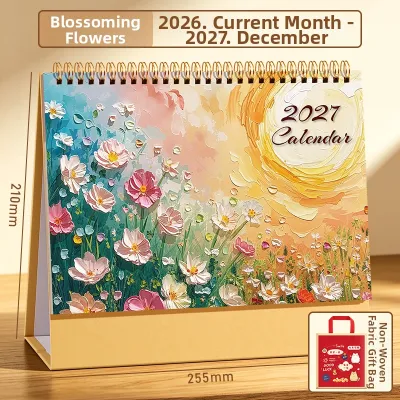
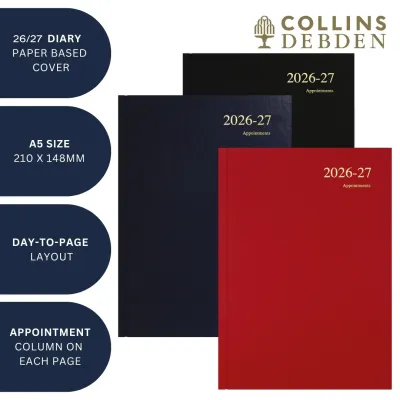
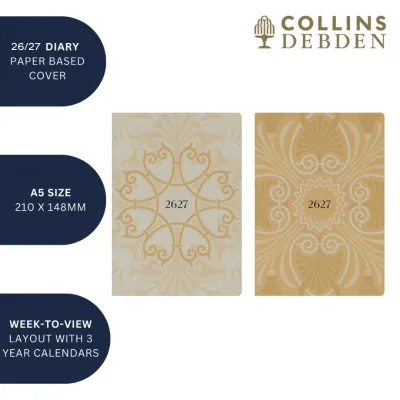
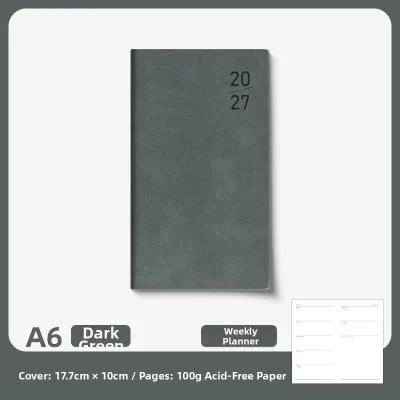
Prices are valid at publication and may change. Please refer to the product page for the latest price.
Additionally, consider your daily environment and mobility needs. If you commute regularly on public transit or work across hot-desking spaces, a compact, lightweight planner that fits easily into a small bag is essential. Conversely, if your planner is destined to remain on a study desk or office workstation, a larger, heavier format with expansive writing space may be more practical. For those who view their planners as permanent records, archival longevity—ensured by acid-free paper and durable binding—is a critical factor to prevent yellowing and page separation over time.
Comparing Layout Formats Across Popular Brands
The structural layout of your planner dictates how you visualize your time and organize your tasks. Daily pages offer the highest level of detail, often featuring hourly schedules from morning to evening alongside dedicated spaces for daily priorities and notes. This format is highly beneficial for individuals with dense, complex schedules, though it results in a thicker, heavier book. Weekly spreads, on the other hand, provide a broader overview of your week across a two-page spread. These are typically available in horizontal layouts (ideal for narrative writing and task lists) or vertical layouts (perfect for column-based time-blocking).

Monthly calendars serve as the foundation for long-term project tracking, habit monitoring, and milestone planning. Many planners combine monthly overviews with daily or weekly pages, allowing you to zoom out for a macro view of your commitments before diving into daily execution. When evaluating these formats, consider whether you prefer a dated 2027 system or an undated system. Dated planners save setup time and keep you aligned with the calendar year, but they carry the risk of page waste if you skip weeks. Undated systems offer total flexibility, allowing you to pause and resume planning without leaving blank pages, though they require you to write in the dates manually.
To ensure a planner fits your physical writing style, always verify the exact layout dimensions, margin sizes, and actual writing space from the manufacturer’s specifications. Standard paper sizes like A5 (148mm x 210mm) or B6 (125mm x 176mm) are widely popular for balancing portability with writing area, but line spacing (such as 5mm grids versus 6mm ruled lines) can significantly affect how much text you can comfortably fit on a single page.
Evaluating Paper Quality and Pen Compatibility
Paper quality is not merely a matter of tactile preference; it directly determines which writing instruments you can use without ruining subsequent pages. When reviewing planner specifications, pay close attention to the paper weight, measured in grams per square meter (GSM). Lower-weight papers (around 52 GSM to 68 GSM) are incredibly thin and allow for lightweight, high-capacity planners, but they are more prone to ghosting—where writing is visible on the reverse side of the page. Medium to heavy papers (80 GSM to 120 GSM and above) offer greater opacity and structural stiffness, making them highly resistant to ink penetration.
The paper finish also plays a vital role in your writing experience. Smooth, coated finishes allow gel pens and fountain pens to glide effortlessly across the surface, though they often require longer drying times, which can be a challenge in humid climates where moisture slows ink evaporation. Toothy, uncoated papers offer more tactile feedback and faster drying times, making them excellent for ballpoint pens and pencils, though they may cause fine-liner markers or fountain pens to feather, where the ink spreads sideways along the paper fibers.
Because ink formulas and paper coatings interact uniquely, you should perform a safe, reversible ink test before committing to your 2027 planner. Locate a blank page at the very back of the book—such as an index or notes page—and write small sample strokes using your preferred fountain pens, gel pens, highlighters, and markers. Allow the ink to dry completely, then inspect the reverse side of the sheet for three key issues: bleed-through (ink soaking completely through the paper), ghosting (shadowing visible on the back), and feathering (fuzzy line edges).
Always consult the manufacturer’s guidelines or product labels for specific ink restrictions or recommended pen types. Some specialized ultra-thin papers require specific oil-based ballpoint inks or low-moisture gel pens to prevent smudging, while heavier mixed-media papers are designed to handle wet inks, watercolors, and heavy markers without warping.
Assessing Binding, Durability, and Special Features
The physical construction of your planner determines how comfortably it sits on your desk and how well it survives daily wear. Binding types vary significantly in utility. Thread-sewn binding (often referred to as lay-flat binding) allows the planner to open completely flat on a desk without requiring you to hold the pages down, providing an uninterrupted writing surface across the center seam. Wire-o or spiral binding also lays flat and allows you to fold the planner back on itself to save desk space, though the metal or plastic coils can sometimes interfere with your hand while writing near the margins. Disc-bound and ring-bound systems offer maximum customization, allowing you to add, remove, or rearrange pages easily, though they tend to be bulkier and require specialized hole punches for custom inserts.
Cover materials must be matched to your typical usage environment. Hardcovers made of thick cardboard or wrapped book cloth provide a sturdy writing surface when you do not have a desk available, and they offer excellent protection against bent page corners inside a bag. Softcovers, including flexible cardstock or lightweight plastics, reduce overall weight and conform easily to tight spaces, though they offer less structural protection. Vegan leather and polyurethane covers provide a professional aesthetic and moderate water resistance, which is particularly useful for protecting your notes from accidental spills or high-humidity environments.
Special features can greatly enhance your daily efficiency. Look for functional add-ons such as expandable back pockets for storing loose receipts or tickets, integrated pen loops that keep your writing instrument secure, dual ribbon bookmarks for marking both your monthly overview and your current daily page, and elastic band closures that keep the planner securely shut during transit.
Before making a final selection, verify the exact outer dimensions and total weight of the planner. A planner listed as “A5” may have significantly larger outer dimensions once you account for a thick cover, a pen loop, or a spiral binding. Ensure these physical measurements align with your favorite bag compartments or organizer covers to avoid carrying unnecessary bulk.
Decision Framework: Choosing the Right 2027 Planner
To finalize your choice for the upcoming year, map your primary daily habits to the structural characteristics of the planner.
Choose a daily, high-GSM thread-sewn planner if you are a heavy writer who uses fountain pens or wet gel pens, values detailed daily scheduling, and primarily works from a dedicated desk where weight is not a concern.
Choose a weekly, slim B6 or A5 format with medium-weight paper if you are a minimalist or commuter who needs a lightweight overview of your weekly tasks, writes with standard ballpoint pens, and requires a highly portable book that fits easily into a daily carry bag.
Choose a modular disc-bound or ring-bound system if you are a student or project manager whose schedule changes frequently, requiring the flexibility to insert custom templates, move notes between sections, and archive older pages to keep the current book light.
When purchasing from local stationery boutiques or online marketplaces, expect to invest anywhere from S$20 to S$70 depending on the binding complexity and paper grade. Before finalizing your purchase, use this quick verification checklist:
- Date Accuracy: Confirm the planner is explicitly printed for the 2027 calendar year, checking that the start days of the week (Monday versus Sunday start) match your preference.
- Stock and Availability: Verify if the specific layout and cover color are currently in stock, as popular formats often sell out quickly in the months leading up to the new year.
- Return and Exchange Policies: Check the retailer's return policy, ensuring you can return the planner if you inspect it upon arrival and find the paper texture or layout size does not meet your expectations.
Once you have verified these details, secure your chosen system, perform your initial pen tests on the back pages, and begin setting up your key milestones to ensure a seamless transition into 2027.
Frequently Asked Questions (FAQ)
How can I prevent my planner pages from tearing or damaging over the year?
To preserve the physical integrity of your planner, store it in a cool, dry environment away from direct sunlight and high humidity, which can warp covers and degrade paper fibers over time. If you use a ring-bound or disc-bound system, consider reinforcing high-stress page holes with adhesive reinforcement rings to prevent tearing during frequent page-turning. Avoid folding the corners of your pages to mark your place; instead, utilize built-in ribbon bookmarks, magnetic page markers, or repositionable sticky notes. For cleaning, always follow the manufacturer’s care instructions; most polyurethane or plastic covers can be gently wiped with a slightly damp, lint-free cloth, whereas book cloth and genuine leather require specialized dry-cleaning methods or leather conditioners to avoid staining.
What should I do if I make a mistake in my dated 2027 planner?
Making mistakes is an inevitable part of keeping a physical planner, and several reversible methods can correct errors without compromising the paper. High-quality correction tape that matches the off-white or cream tone of your planner paper is excellent for covering small writing errors cleanly. Alternatively, you can apply decorative washi tape or repositionable sticky notes over the mistake, which not only hides the error but also provides a fresh writing surface. Avoid using harsh chemical ink erasers, abrasive friction-based erasers, or excessive liquid correction fluids, as these can tear thin paper fibers, strip away protective paper coatings, or cause the page to warp and buckle. Embracing minor mistakes as a natural reflection of your year can also reduce planning anxiety and help you maintain a consistent writing habit.
Community discussion
Share your experience or ask a question. Comments are reviewed before publication.