
When planning a custom notebook project, comparing paper quality across brands requires looking past marketing labels and focusing on three core technical specifications: paper weight (measured in grams per square meter, or GSM), surface finish, and color. Popular retail brands and custom manufacturers categorize their paper options into distinct tiers that directly impact how ink behaves, how colors print, and how the final product feels in the hand.
There is no single “best” paper; the ideal choice depends on your specific custom printing method, the writing instruments your audience will use, and your budget. By understanding how these specifications interact, you can design a custom notebook that aligns perfectly with your brand’s aesthetic and functional requirements.
Comparing Paper Weight (GSM) Across Notebook Tiers
Paper weight, expressed in grams per square meter (GSM), is the primary indicator of paper thickness, density, and opacity. In the custom notebook industry, paper options generally fall into three distinct tiers, each serving a different purpose and budget.
Products mentioned in this guide
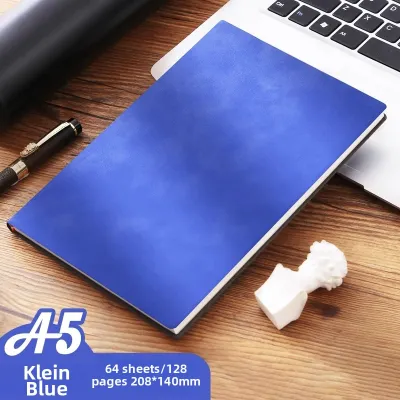
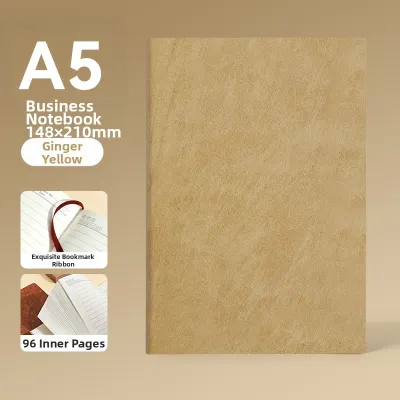
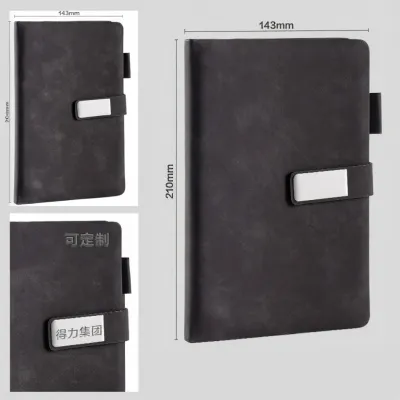
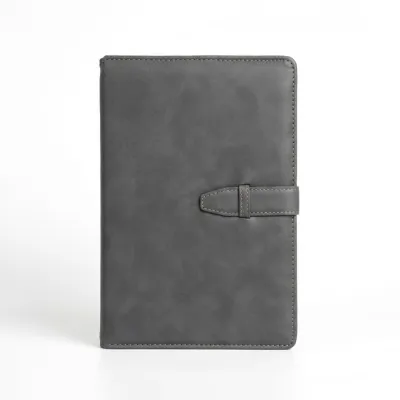
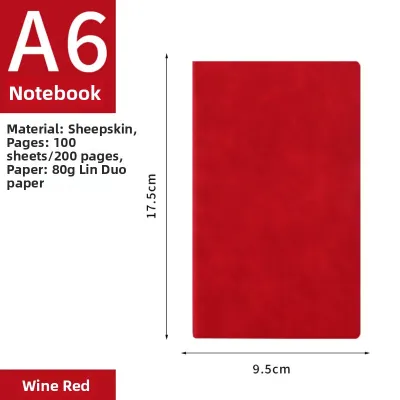
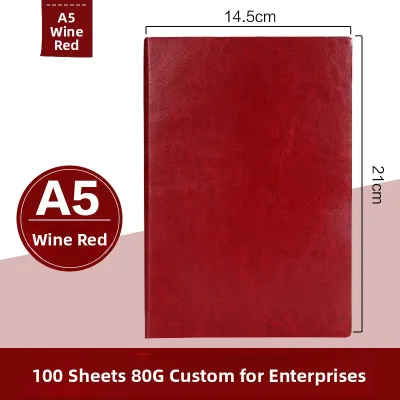
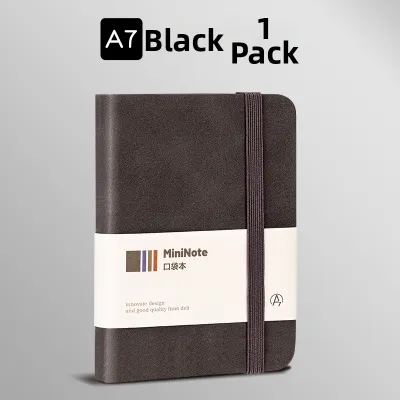
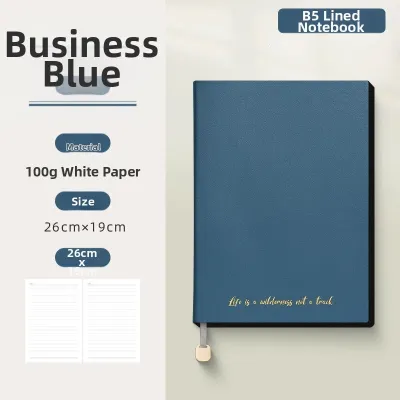
Prices are valid at publication and may change. Please refer to the product page for the latest price.
Mass-market and promotional tiers typically use 70 to 80 GSM paper. This weight is highly cost-effective for high-volume bulk orders, such as corporate giveaways or event stationery. However, because the paper is relatively thin, it is prone to bleed-through and ghosting (where writing is visible on the reverse side of the page), especially when users write with heavy ink, gel pens, or fountain pens. It is best suited for simple ballpoint pen use.
Premium and professional stationery tiers usually offer 90 to 100 GSM paper. This range provides a balanced, high-quality experience for double-sided writing and standard custom printing. It offers excellent resistance to ghosting with standard rollerball and gel pens, while keeping the notebook’s physical thickness and weight manageable. This is the industry standard for executive journals, retail-grade notebooks, and professional planner projects.
Specialty or art-focused tiers provide 120 GSM or heavier paper. This thick stock is ideal for creative notebooks intended for markers, heavy ink, or light watercolor washes. While it virtually eliminates bleed-through and ghosting, it significantly increases the notebook’s bulk, weight, and overall production cost. Additionally, shipping fees for large custom orders of heavy-gauge notebooks will be substantially higher.
Evaluating Paper Finish and Texture for Custom Designs
The surface finish of the paper determines how comfortable it is to write on and how accurately your custom designs, logos, or page grids will print.

Coated or highly calendered smooth finishes enhance color vibrancy and sharpness for custom image printing. Because the paper fibers are sealed, the ink sits on top of the coating rather than sinking deep into the sheet. This results in crisp lines, vibrant colors, and excellent detail for full-color graphics or brand logos. However, this smooth, non-porous surface slows down ink drying times, which can lead to smudging when users write with gel, rollerball, or fountain pens.
Uncoated or matte finishes offer excellent ink absorption and a natural, tactile feel for writing. They are highly compatible with almost all writing instruments, allowing ink to dry quickly and reducing the risk of smudges. The trade-off is that uncoated fibers absorb more ink, which can slightly mute custom printed graphics, making colors appear less saturated and fine details slightly softer.
Textured or laid papers add a premium, tactile experience that communicates luxury and craftsmanship. These papers feature a distinct ribbed or felt-like texture that feels exceptional to the touch. However, these uneven surfaces can interfere with fine-line custom printing, small text, or foil stamping alignment, as the foil or ink may not adhere evenly to the recesses of the texture. If your custom design relies on intricate details, textured paper may require adjustments to your printing plates.
Comparing Paper Color and Brightness for Brand Alignment
The color and brightness of your notebook paper set the visual tone for your custom project and directly affect how your printed designs appear.
High-brightness white paper, often rated above 90% on the brightness scale, provides sharp contrast and accurate color reproduction. This is the ideal choice for vibrant custom logos, full-color graphics, and precise brand color matching. Because the background is neutral, it does not distort the printed ink colors, ensuring that your corporate brand guidelines are met with high fidelity.
Natural white, ivory, or cream paper reduces eye strain during long writing or reading sessions. It offers a classic, premium aesthetic that softens harsh black ink and gives the notebook an elegant, literary feel. However, the warm undertones of cream paper will shift the appearance of custom printed colors. Cool blues may look slightly greenish, and warm tones will appear richer, which must be factored into your design files before printing.
Understanding opacity ratings is crucial to prevent show-through when printing custom designs or heavy ink on both sides of the page. Opacity is the measure of how much light is blocked by the paper. If you plan to print dark custom page grids, dot patterns, or headers, selecting a paper with high opacity is essential to ensure the design on one side does not distract from the writing space on the other.
Matching Paper Specs to Custom Printing Methods
To ensure a successful custom notebook project, the physical properties of the paper must be fully compatible with the manufacturing and binding techniques used by your supplier.
Digital and offset printing have distinct requirements regarding paper moisture content, coating, and heat resistance. Digital printing presses use heat and static to fuse toner to the paper, which can cause low-quality or improperly stored paper to curl or warp. Offset printing, while highly versatile, requires careful ink-water balance and sufficient drying time, especially when printing large solid blocks of color on uncoated paper stocks.
Special post-print processes like foil stamping, embossing, debossing, or spot UV require specific paper weights and finishes to achieve clean results. For example, deep debossing or foil stamping works best on thicker, slightly softer uncoated papers (100+ GSM) that can hold the physical impression without tearing or showing through on the reverse side. Spot UV, on the other hand, requires a smooth, coated base to prevent the glossy varnish from sinking into the paper fibers.
Checking paper grain direction is essential for binding integrity. The grain of the paper must run parallel to the spine of the custom notebook. If the grain runs perpendicular, the pages will resist turning smoothly, the notebook will not lay flat, and the paper may buckle or crack along the binding edge. This issue is particularly pronounced with heavier GSM stocks and can cause the binding to fail prematurely.
How to Verify Paper Quality Before Bulk Ordering
Committing to a large custom print run without verifying the physical materials can lead to costly mistakes. Taking proactive steps to test the paper ensures the final product meets your expectations.
Always request physical dummy samples, blank proofs, or paper swatch books from the manufacturer. A dummy sample is a blank version of your notebook made with the exact paper weight, finish, and binding style you plan to order. This allows you to evaluate the real-world feel, weight, and color under different lighting conditions rather than relying on digital mockups.
Conduct practical tests using the exact pens, markers, and printing files intended for the final product. Write on the sample pages with fountain pens, gel pens, and highlighters to check for feathering, bleed-through, and drying speed. If you are printing custom page grids, print a test sheet on the sample paper to verify that the ink does not feather or spread.
Inspect the binding edge and page turnover for tearing, fraying, or stiffness. Turn the pages repeatedly to check how they behave near the spine. Heavier papers bound with certain methods, such as perfect binding, can feel stiff and resist opening unless the manufacturer uses specialized scoring or flexible adhesives. Ensuring the paper and binding work in harmony is key to a durable custom notebook.
Frequently Asked Questions (FAQ)
What is the most common paper weight for custom promotional notebooks?
The most common paper weight for custom promotional notebooks is 80 GSM uncoated paper. This standard is widely used because it is highly cost-effective for bulk production, keeps the notebook lightweight for shipping, and performs well with standard ballpoint pens. Upgrading to 100 GSM is justified when the notebook is intended for professional clients, executive gifts, or when you expect users to write with gel pens, rollerballs, or fountain pens that require higher bleed resistance.
Does recycled paper affect custom printing quality?
Yes, recycled paper can affect custom printing quality due to variations in brightness, surface texture, and ink absorption. Recycled fibers often have a slightly lower brightness level and may contain tiny, visible flecks, which can soften printed colors and reduce contrast. Additionally, recycled paper tends to be more porous, meaning it absorbs ink more quickly, which can lead to slightly less vibrant graphics compared to virgin paper. However, many brands choose recycled paper because these characteristics provide an organic, eco-friendly aesthetic that aligns with their sustainability values.

Community discussion
Share your experience or ask a question. Comments are reviewed before publication.