
When choosing an A5 notebook, paper quality is the most critical factor determining your writing experience. Because individual preferences for smoothness, thickness, and ink resistance vary widely, there is no single best brand for everyone. Instead of relying on generic rankings, this guide breaks down the measurable specifications of notebook paper, matches them to specific writing tools, and provides a practical framework to evaluate and select the right A5 notebook for your daily needs.
In Singapore’s humid climate, paper can absorb ambient moisture over time, which directly alters how ink behaves on the page. This environmental factor makes understanding paper specifications even more vital, as a notebook that performs beautifully in a dry climate might exhibit unexpected feathering or longer drying times locally. By focusing on objective metrics rather than brand prestige, you can find a notebook that keeps your writing clean, legible, and enjoyable.
Key Paper Quality Metrics to Check Before Buying
To make an informed decision, you must look past aesthetic covers and examine the technical specifications of the paper. Manufacturers often print these details on the notebook’s band, packaging, or online product descriptions. Understanding these metrics allows you to predict how the paper will handle your preferred writing instruments.
Products mentioned in this guide
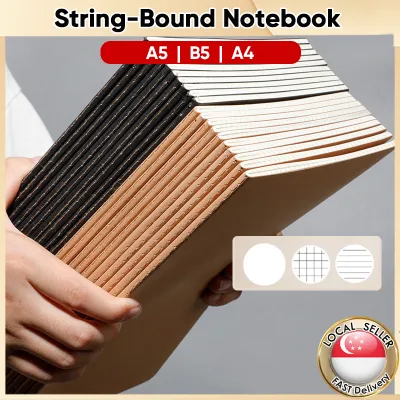
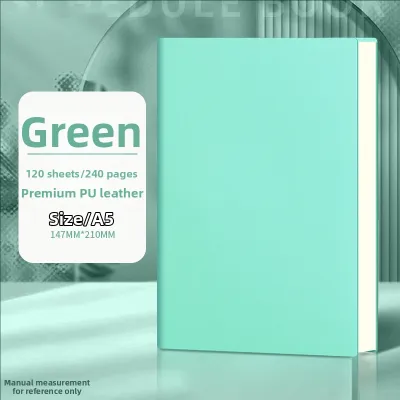
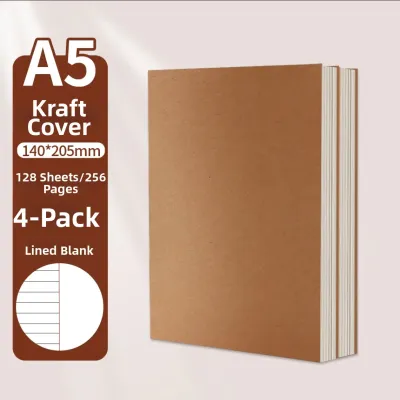
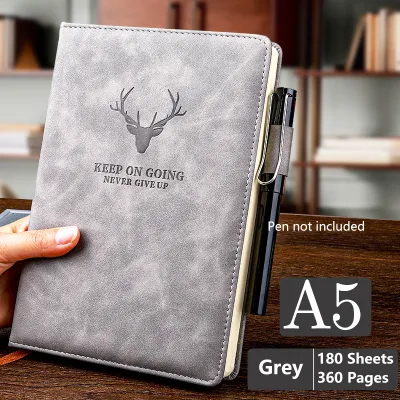
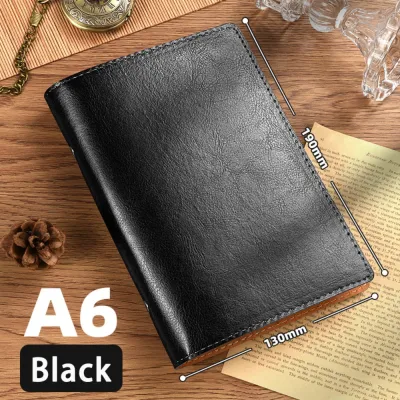
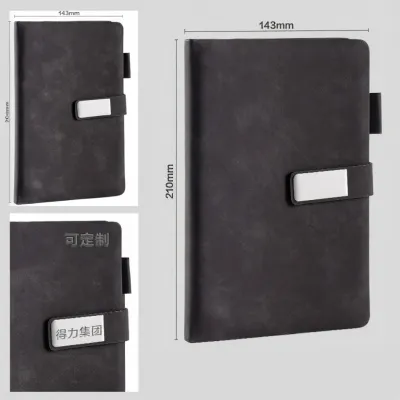
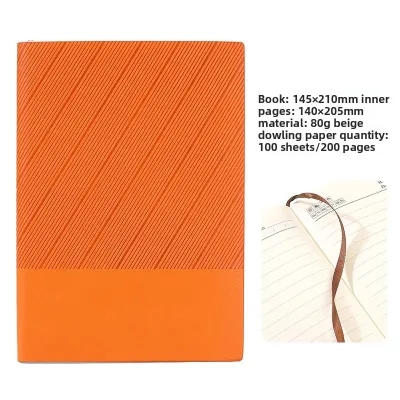
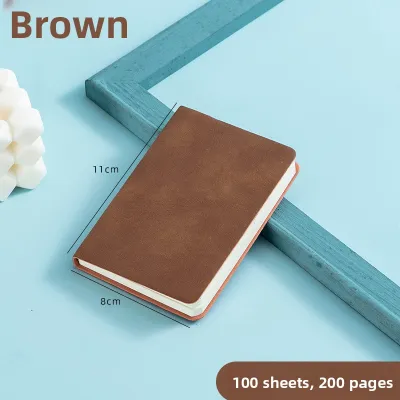
Prices are valid at publication and may change. Please refer to the product page for the latest price.
Grams per Square Meter (GSM) is the standard unit of measurement for paper weight and density. In A5 notebooks, GSM typically ranges from 50 GSM to 160 GSM. Lower weights, such as 50 to 70 GSM, result in thin, lightweight pages that allow for a high page count without making the notebook bulky. However, thin paper is highly prone to ghosting, where the writing on one side is visible on the reverse. Mid-weight papers of 80 to 90 GSM offer a balanced compromise, while heavy papers of 100 to 160 GSM provide excellent opacity and structural integrity, making them ideal for heavy ink applications.
The surface finish of paper dictates how a pen glides across the page. Coated papers have a thin layer of material applied to the surface, which fills in microscopic gaps between the wood fibers. This creates an exceptionally smooth surface that restricts ink absorption, keeping lines sharp and colors vibrant. Uncoated papers, on the other hand, retain their natural fiber texture, often referred to as having ‘tooth.’ Textured paper provides tactile feedback and absorbs ink quickly, which helps prevent smudging but can cause wet inks to spread.
Sizing is a chemical treatment applied during the papermaking process to control absorbency. Internal sizing is mixed into the paper pulp, while external sizing is applied to the surface of the dried sheet. Highly sized papers resist water penetration, forcing liquid inks to dry via evaporation on the surface rather than soaking into the core. If a notebook lacks adequate sizing, even thick paper can suffer from severe bleed-through, where ink penetrates completely to the other side of the page.
The color of the paper affects both visual contrast and eye comfort. Bright white paper provides maximum contrast, making colored inks stand out vividly, which is highly beneficial for color-coded notes or detailed diagrams. Cream, off-white, or ivory papers absorb more blue light, offering a warmer tone that reduces eye strain during extended writing sessions under bright office or study lights.
Matching Paper Characteristics to Your Writing Tools
No single paper type excels with every writing instrument. The ideal notebook for a fountain pen user is often entirely different from the one preferred by someone who writes exclusively with mechanical pencils or ballpoint pens.

Fountain pens deposit a relatively large volume of water-based ink onto the page. To prevent feathering—where the ink spreads along the paper fibers like a spiderweb—and bleed-through, fountain pen users require highly sized, dense paper. Smooth, coated papers ranging from 80 GSM to 120 GSM are generally preferred. Because these papers restrict absorption, the ink takes longer to dry, meaning you must allow extra time before closing the notebook to avoid transfer smudges.
Gel and rollerball pens also use liquid or water-based inks, but they are typically applied in finer, more controlled lines than fountain pens. These pens perform best on smooth, semi-absorbent paper in the 80 to 90 GSM range. The paper must absorb the ink quickly enough to prevent smudging as your hand moves across the page, yet remain dense enough to prevent the ink from bleeding through to the reverse side.
Ballpoint pens use viscous, oil-based inks that require physical pressure and friction to transfer from the rolling ball to the page. Similarly, graphite pencils rely on the abrasive texture of the paper to wear down the lead and leave a mark. For these tools, highly smooth or heavily coated papers can cause the pen tip to slip or the pencil to slide without leaving a clear line. Uncoated, slightly textured papers with a moderate tooth, typically between 70 GSM and 80 GSM, provide the necessary grip for consistent, skip-free writing.
Practical Steps to Test and Verify Paper Quality
When shopping for an A5 notebook, you cannot always test the paper before purchasing. However, by combining careful inspection of manufacturer specifications with structured testing of new notebooks, you can avoid costly purchasing mistakes.
Before buying, carefully read the product labels or official online listings. Look for specific terminology beyond just the GSM rating. Terms such as ‘fountain pen friendly,’ ‘acid-free,’ or ‘wood-free’ indicate higher-quality manufacturing processes. Acid-free paper is particularly important in warm, humid environments, as it resists yellowing and degradation over time, ensuring your notes remain preserved for years.
If you are inspecting a notebook in a physical retail store, you can gauge its opacity without writing on it. Hold a single page up to the store’s overhead lighting, or place the page directly over a sheet of printed text, such as a sign or another book. If you can clearly read the text or see the outline of objects through the page, the paper has low opacity. This indicates that you will experience significant ghosting, which may limit your ability to write comfortably on both sides of the page.
Once you have purchased a notebook, dedicate the very last page to a comprehensive ink test before committing to daily use. Draw a series of lines and solid blocks using your primary writing tools. Observe how long the ink takes to dry by gently touching the lines at intervals of three, five, and ten seconds. Turn the page over to inspect the reverse side: check for ghosting (the shadow of the ink) and bleeding (actual spots of ink coming through the paper fibers). This test establishes clear boundaries for which pens are safe to use in that specific notebook.
Condition-Based Selection Guide for A5 Notebooks
To find the right A5 notebook, match your specific writing habits and environmental conditions to the paper’s physical properties. This conditional approach ensures you select a notebook tailored to your daily routine.
Select a notebook with 100+ GSM or specialized surface coatings if you write with wet inks, broad gel pens, or brush markers. This combination prevents ink from penetrating the page, allowing you to utilize every sheet fully without ruining the reverse side. These notebooks are ideal for bullet journaling, creative writing, and sketching, where visual presentation is paramount.
Opt for a standard 70 to 80 GSM uncoated notebook if you write primarily with ballpoint pens, fine-liner gel pens, or pencils. These notebooks are lighter, thinner, and typically offer a higher page count for the same thickness. This makes them highly practical for students and professionals who need a portable, high-capacity notebook for daily meetings, lectures, and quick task lists.
Regardless of paper weight, ensure the notebook features lay-flat binding, such as section-sewn or thread-bound construction. Because the A5 format is relatively compact, stiff bindings that force the pages to curve sharply near the spine make writing near the inner margins highly uncomfortable. Furthermore, high-quality notebooks are bound with the paper grain running parallel to the spine. This alignment allows the pages to turn smoothly and resist warping or buckling when exposed to changes in ambient humidity.
Frequently Asked Questions (FAQ)
Does a higher GSM always guarantee no ink bleed-through?
No, GSM measures only the weight and density of the paper, not its chemical resistance to liquid. A thick 100 GSM paper that is highly porous and lacks proper sizing can still experience severe bleed-through when used with wet fountain pen inks. Conversely, a lighter 68 GSM paper that has been treated with high-quality external sizing can resist bleed-through entirely. The chemical treatment of the fibers is just as important as the paper’s thickness.
How can I minimize show-through when using both sides of an A5 notebook page?
To minimize show-through on thinner or standard-weight paper, switch to finer pen tips, such as 0.38mm or 0.5mm gel pens, or extra-fine fountain pen nibs. Using drier inks or pencil-based mediums also significantly reduces ghosting. Additionally, you can place a dark-colored sheet of plastic or heavy cardstock—often called a pencil board—directly behind the page you are writing on to visually mask the text on the reverse side while you work.

Community discussion
Share your experience or ask a question. Comments are reviewed before publication.