
Choosing the right 2027 diary planner is a highly personal decision, but the foundation of any good planner is its paper. The way your writing tools interact with the page determines whether your daily planning is a satisfying ritual or a frustrating chore. Rather than relying on generic marketing terms like “premium quality,” you can make an informed decision by evaluating specific paper metrics such as weight, sizing, and texture to match your preferred pens.
A diary planner is designed to last an entire year, serving as a repository for your schedules, reflections, and goals. If the paper is poorly matched to your writing instruments, you may experience issues like ink bleeding through to the next page, feathering that turns fine handwriting into illegible smudges, or long drying times that lead to accidental smears. These small frustrations can accumulate, eventually discouraging you from using your planner consistently.
It is important to recognize that there is no single “best” paper for everyone. A paper that is perfect for a fountain pen user might be frustratingly slow-drying for a gel pen user, while a paper optimized for quick-drying ballpoints might cause a fountain pen to feather excessively. Understanding the physical properties of paper allows you to look past brand hype and select a planner that aligns perfectly with your specific writing habits.
Products mentioned in this guide
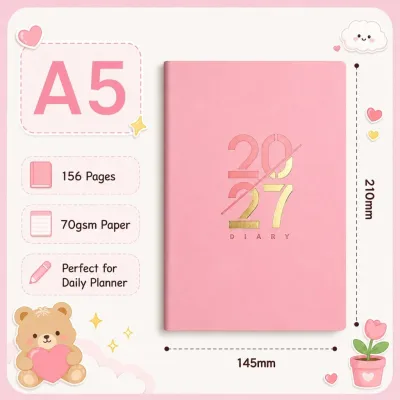
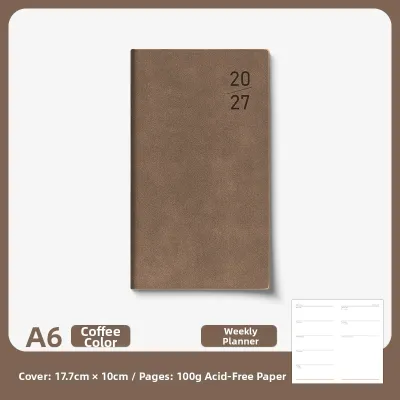
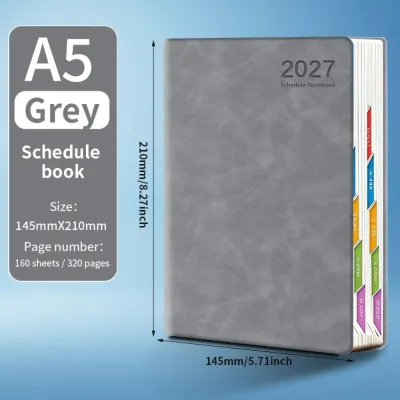
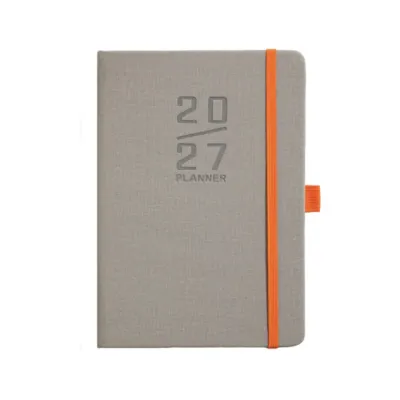
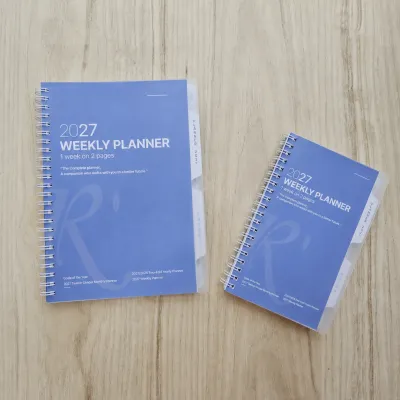
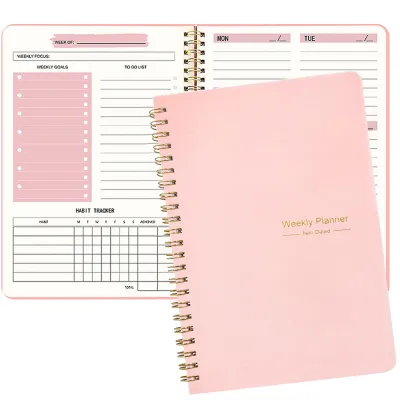
Prices are valid at publication and may change. Please refer to the product page for the latest price.
This guide breaks down the essential technical metrics of planner paper, explains how different writing instruments behave on various paper types, and provides practical strategies for verifying paper quality before you buy. Finally, we offer a structured decision framework to help you select the ideal 2027 diary planner for your daily routine.
Understanding Paper Quality Metrics in Planners
The most common metric used to describe planner paper is its weight, measured in grams per square meter (GSM). GSM indicates the density and thickness of the paper sheet. In the context of diary planners, paper weight typically ranges from a very light 52 GSM to a substantial 120 GSM or higher. Understanding where a planner’s paper falls on this spectrum gives you an immediate clue about its physical behavior and portability.
Generally, higher GSM paper offers greater opacity, meaning that writing on one side of the page is less visible from the other side. This visibility is known as “ghosting” or “show-through.” If you dislike seeing a shadow of your previous entries while writing on a fresh page, you will likely prefer paper that is 80 GSM or higher. However, some specialized, lightweight papers use advanced manufacturing techniques to minimize bleed-through while maintaining a low GSM, allowing the planner to remain slim and compact.
Beyond weight, the surface treatment of the paper plays a critical role in how it handles ink. Sizing is a chemical treatment applied during manufacturing to control the paper’s absorbency. Unsized paper, like newsprint or blotting paper, is highly absorbent and draws liquid ink deep into its fibers. Planners require sized or coated paper to prevent liquid inks from spreading outward (feathering) or soaking completely through the sheet (bleed-through).
Coated and heavily sized papers keep the ink on the surface of the page rather than letting it sink in. This preservation of the ink on the surface allows for crisp lines and brings out the unique characteristics of specialized inks, such as shading or sheening. However, because the ink sits on top of the paper, it takes longer to dry. If you close your planner quickly or run your hand across the page, you risk smudging your writing.
The tactile texture of the paper, often referred to as its “tooth,” is another essential metric. Smooth paper has very little tooth, offering minimal resistance as a pen glides across the surface. This is highly desirable for fine-point pens and liquid inks, as it prevents the nib from catching or skipping. Conversely, paper with more tooth has a microscopic roughness that provides friction, which is necessary for certain writing tools to function correctly.
Matching Paper Characteristics to Your Writing Instruments
Fountain pens and other high-water-content writing instruments require paper with excellent surface sizing and moderate-to-high weight. Because fountain pens deposit a relatively large volume of liquid ink, unsized or low-quality paper will immediately absorb the water, causing the ink to feather into fuzzy lines and bleed through to the next page. To enjoy a smooth writing experience with a fountain pen, look for planners that specify ink-resistant, highly sized paper, which allows the ink to dry slowly and maintain its sharp edges.

Gel and rollerball pens are incredibly popular for daily planning due to their vibrant colors and smooth flow. Gel inks are water-based but thicker than fountain pen inks, while rollerball inks are highly fluid. These pens perform best on smooth, moderately absorbent paper. If the paper is too heavily coated, the gel ink will pool on the surface and remain wet for a long time, leading to smudges. A medium-weight paper between 70 GSM and 90 GSM with light sizing provides the perfect balance of quick drying and clean lines.
Ballpoint pens use a thick, oil-based ink that requires physical pressure to transfer onto the page. Because the ink is not water-based, it rarely suffers from feathering or bleed-through, making ballpoints highly compatible with almost any paper weight. However, ballpoint pens require a certain amount of friction to make the tiny ball bearing in the tip roll smoothly. On ultra-smooth, heavily coated papers, a ballpoint pen may slip and skip, resulting in incomplete lines. A standard paper with a slight tooth is ideal for ballpoint users.
Pencils, including mechanical pencils, rely entirely on the abrasive quality of the paper to wear down the graphite core and leave a mark. If you prefer planning in pencil so you can easily erase and reschedule appointments, avoid ultra-smooth or heavily coated papers. These surfaces lack the necessary tooth to shear off the graphite, resulting in faint, barely visible lines. A slightly textured, uncoated paper provides the perfect grip for pencils, allowing for dark, legible writing that is also easy to erase cleanly.
How to Verify Paper Quality When Shopping for 2027 Planners
When shopping for a 2027 diary planner, the first step is to carefully read the manufacturer’s technical specifications. Look past generic marketing phrases and search for concrete details. Note the exact GSM, whether the paper is acid-free (which prevents yellowing over time), and if the brand mentions the origin of the paper. Some planner brands proudly state that they use paper from renowned mills in Japan, Sweden, or Germany, which is often a reliable indicator of consistent quality control and specialized sizing.
Because paper formulations can subtly change from year to year, it is highly beneficial to analyze recent user reviews and community feedback. Search online stationery forums, blogs, and video reviews specifically for discussions about the 2027 editions. Look for real-world feedback from users who write with the same pens you use. Pay close attention to any mentions of ghosting, bleed-through, or long drying times, as these practical observations are often more accurate than official product descriptions.
If you are located in Singapore, take advantage of physical stationery boutiques and specialty bookstores that stock 2027 planners. Many of these shops display open sample copies specifically for customers to examine. Bring your favorite daily pens, highlighters, and pencils with you when you shop. Find an inconspicuous page or a designated test sheet in the display model to conduct a quick pen test, observing how quickly the ink dries and whether it shows through to the other side.
If you are purchasing a planner online and cannot visit a physical store, check if the manufacturer or retailer offers paper sample cards. Some specialty stationery brands provide small swatch books or sample sheets of their different paper types for a nominal fee or as part of a catalog. Testing these samples at home with your own writing instruments is the most reliable way to guarantee compatibility before committing to a full-year planner.
Decision Framework: Selecting the Right Planner Brand
If your primary writing instrument is a fountain pen or a wet rollerball, your priority should be paper with high sizing and a weight of 80 GSM to 120 GSM. This combination ensures that the liquid ink remains on the surface, preventing feathering and bleed-through while showcasing the ink’s true color and shading. Be prepared for slightly longer drying times, and consider using blotting paper to prevent smudging when closing your planner.
If you prefer the smooth, vibrant lines of gel pens and need to write quickly without worrying about smudges, look for smooth, lightly coated paper in the 70 GSM to 90 GSM range. This paper absorbs the water-based gel ink relatively quickly while keeping the edges of your writing sharp. Avoid heavily coated papers that cause ink to pool, as well as very thin, unsized papers that may allow the gel ink to bleed through.
If you rely on the simplicity of ballpoint pens or the flexibility of pencils, choose standard, slightly textured paper between 60 GSM and 80 GSM. The microscopic tooth of this paper provides the necessary friction for ballpoints to roll smoothly and for graphite to transfer clearly. This choice also allows you to opt for a slimmer, lighter planner that is easy to carry in your bag throughout the day.
Regardless of your writing preferences, always verify the specific paper details of your chosen 2027 diary planner before making your final purchase. Check for verified user reviews or perform a physical pen test if a sample is available. Taking the time to match the paper to your writing tools ensures that your planner remains a functional, enjoyable tool for organizing your year.
Frequently Asked Questions (FAQ)
Does higher GSM always mean better paper for planners?
No, a higher GSM (grams per square meter) does not automatically make paper superior for daily planning. While thicker paper (such as 120 GSM) offers excellent opacity and prevents ink from bleeding through, it also adds significant weight and bulk to the planner. This can make the diary heavy to carry in your bag and difficult to lay flat on a desk. Some lightweight papers (around 52 GSM to 68 GSM) are engineered with high-quality fibers and specialized sizing that resist bleed-through exceptionally well, offering a slim, highly portable planner that still handles wet inks beautifully.
Can I use standard highlighters on typical planner paper without ghosting?
Standard alcohol-based or highly wet water-based highlighters often cause significant ghosting or even bleed-through on typical planner paper under 100 GSM. Because highlighters deposit a wide, wet line of ink, they easily saturate standard paper fibers. To prevent this, consider using mild, pastel-toned highlighters, which contain less intense pigments and moisture, or dry highlighter pencils. Alternatively, look for planners that explicitly specify high-GSM paper or test your highlighters on an inconspicuous page to check the absorption rate before highlighting important schedules.

Community discussion
Share your experience or ask a question. Comments are reviewed before publication.