
Quick Answer: Matching Paper to Your Pen and Purpose
Finding the ideal writing surface is not about chasing the most expensive brand name; it is about matching the physical characteristics of the paper to the specific writing or drawing instruments you use daily. If you write with wet fountain pens or heavy gel ink, you require heavily sized, high-GSM paper that resists feathering and bleed-through. Conversely, if you sketch with graphite, charcoal, or colored pencils, you need paper with a distinct physical texture—known as “tooth”—to shave off and hold the dry particles.
A notebook brand’s premium reputation does not guarantee universal compatibility with every pen type. A luxurious, ultra-smooth page that makes a fountain pen glide effortlessly might cause a graphite pencil to slip faintly and smudge, or a standard ballpoint to skip. This guide breaks down how to read paper specifications, understand paper behavior under different writing media, and evaluate note books and pads to find your perfect match.
Core Dimensions of Notebook Paper Quality
To move beyond subjective marketing terms, you must understand the technical specifications that govern how paper behaves. Paper quality is determined by a combination of raw fiber source, manufacturing methods, and chemical treatments. By understanding these core dimensions, you can accurately predict how a notebook will perform before your pen ever touches the page.
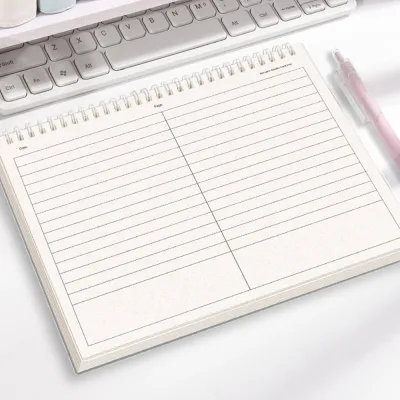
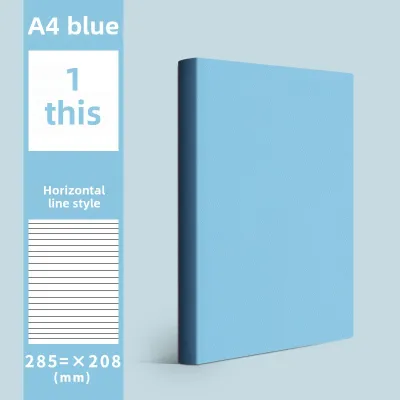
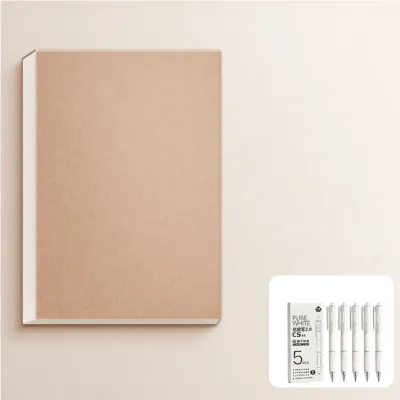
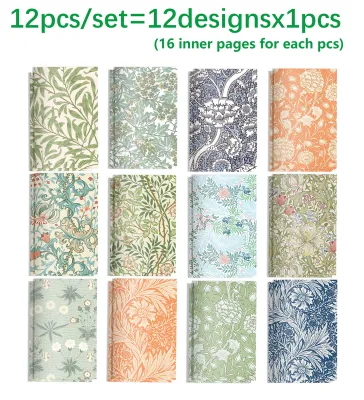
Products mentioned in this guide
![[SG Stock] A6 Recycled Notebook | Notebook with Pen](https://img.lazcdn.com/g/p/d51a17477c311ea340bb0dc30b685a32.jpg_400x400q80.jpg_.webp)

Prices are valid at publication and may change. Please refer to the product page for the latest price.

Paper Weight (GSM) and Thickness
Paper weight is globally measured in GSM, which stands for Grams per Square Meter. This metric represents the weight of a single sheet of paper measuring one square meter, serving as a reliable proxy for thickness and density. Standard office printer paper typically sits around 70 to 80 GSM, while premium notebook paper ranges from 80 GSM to 120 GSM or higher.
However, GSM is not the sole indicator of ink resistance. A highly engineered, thin paper can resist ink penetration better than a thick, porous paper. Choosing the right GSM involves a structural trade-off: higher GSM papers offer excellent durability and minimal ghosting, but they result in thicker, heavier notebooks with fewer pages. Lower GSM papers allow for lightweight, high-capacity, pocket-friendly note books and pads, but they require specialized manufacturing to prevent ink from soaking through.
Surface Texture (Tooth) and Sizing
The tactile feel of a page is defined by its surface texture, commonly referred to as “tooth,” and its chemical sizing. Tooth is the microscopic roughness of the paper fibers. A paper with significant tooth provides resistance, grabbing dry media like graphite or pastel and pulling the material from the core.
Sizing, on the other hand, is a chemical treatment applied during manufacturing (either mixed into the pulp or coated on the surface) that regulates the paper’s absorbency. Heavily sized papers resist liquid penetration, forcing wet inks to sit on top of the page and dry slowly, which preserves crisp lines and vibrant colors. If a paper lacks sizing, it acts like a paper towel, drawing ink rapidly into the fibers. While a perfectly smooth, heavily sized surface is ideal for wet fountain pens and fine liners, it is poorly suited for pencils, which require physical tooth to leave a legible mark.
Opacity, Ghosting, and Bleed-Through
When evaluating paper, you must distinguish between three distinct visual phenomena: ghosting, bleed-through, and feathering. Ghosting, also known as show-through, occurs when you can see the shadow or outline of your writing on the reverse side of a page, even though the ink has not physically penetrated the paper fibers. Bleed-through is a more severe issue where ink physically soaks through the page, emerging as wet spots or stains on the back, rendering the reverse side unusable.
Feathering happens when ink spreads outward from your pen stroke along the paper’s capillary fibers, resulting in fuzzy, blurry lines instead of clean edges. Opacity—the ability of paper to block light and hide writing on the other side—is achieved through the strategic inclusion of mineral fillers (like clay or titanium dioxide) and dense fiber structures, rather than raw thickness alone. Understanding these differences helps you determine whether a notebook can be used double-sided with your preferred writing tools.
How Different Notebook Categories Approach Paper in Note Books and Pads
Notebook manufacturers generally align their paper production with specific regional philosophies and target audiences. By grouping popular options into broad categories, you can better understand their typical performance profiles and structural trade-offs.
Premium European Notebooks
Heritage European notebook makers often prioritize structural durability, tactile substance, and classic aesthetics. These brands typically utilize thicker paper, generally ranging from 80 to 100 GSM or higher, featuring warm ivory or cream tones designed to reduce eye strain under artificial light. The paper is often heavily sized and acid-free, ensuring that written records remain stable and do not yellow or deteriorate over decades.
While these characteristics make European notebooks highly reliable for general writing, ballpoints, and many fountain pens, some lines carry a subtle, natural texture. This slight tooth can occasionally cause ultra-fine technical pens or high-flow liquid rollerballs to feel slightly scratchy or experience minor feathering if the ink chemistry conflicts with the specific sizing agents used.
Japanese Notebooks
In contrast, premium Japanese stationery brands approach paper through meticulous chemical engineering, focusing on high performance at remarkably low weights. It is common to find Japanese notebooks featuring paper between 52 and 68 GSM that performs exceptionally well with wet inks. By utilizing highly processed, long-fiber wood pulps and advanced surface-calendering machines, Japanese manufacturers create incredibly smooth, dense sheets with high opacity.
This allows for lightweight, high-capacity notebooks that can hold hundreds of pages without becoming bulky. These papers handle gel pens, fine liners, and fountain pens beautifully, keeping lines crisp with virtually zero feathering. However, the extreme smoothness means that graphite can feel slippery, and the dense surface coating significantly extends ink drying times.
Everyday and Utility Notebooks and Pads
Everyday utility notebooks and legal pads represent the most widely accessible tier of stationery, designed primarily for rapid note-taking, temporary lists, and general office work. These products typically use standard 70 to 80 GSM paper made from short-fiber recycled pulps or basic chemical pulps with minimal sizing. From budget utility pads costing under S$2 to premium imported notebooks retailing for S$15 to S$35, the market offers a vast range of options.
This composition gives the paper a moderate, versatile tooth that works reliably with standard ballpoint pens and pencils. However, because these utility pages are highly porous and lack protective sizing coatings, they are highly susceptible to ghosting and immediate bleed-through when paired with wet inks, fountain pens, or heavy water-based markers. They are excellent for quick, disposable notes but unsuitable for archival journals or multi-media sketching.
Matching Paper to Your Specific Tools
A notebook’s paper quality is only as good as its compatibility with your writing instruments. To avoid the frustration of ruined pages or skipping pens, you should match your primary tools to the paper’s physical properties.
Fountain Pens, Dip Pens, and Wet Inks
Fountain pens and dip pens lay down a relatively large volume of liquid, water-based ink, which demands highly specialized paper. To prevent the ink from spreading uncontrollably, you must select paper with excellent surface sizing. Sizing acts as a barrier, slowing down absorption and allowing the ink to dry via evaporation on the surface, which preserves the sharp edges of your handwriting and highlights ink properties like shading and sheen.
You also require high opacity to prevent the heavy ink volume from ghosting through to the other side. Avoid highly absorbent, unsized papers—such as those found in cheap sketchbooks, recycled utility pads, or newsprint. These porous sheets will instantly pull the ink from your nib, causing severe feathering, bleeding, and a dull, washed-out color appearance.
Gel, Rollerball, and Ballpoint Pens
Gel and rollerball pens utilize water- or gel-based inks that flow easily, requiring smooth paper surfaces to prevent the rollerball tip from skipping or catching. Because these inks sit on top of the paper longer than oil-based ballpoint inks, they require adequate drying time to prevent smudging.
In humid climates, such as Singapore’s tropical environment where relative humidity regularly exceeds 80%, the ambient moisture slows down the evaporation of water-based inks on smooth, coated papers. For left-handed writers, this extended drying time poses a significant risk of smudging as the hand drags across the freshly written line. If you write in high-humidity conditions, look for moderately sized, semi-smooth papers that offer a balance of quick absorption and line crispness, or opt for fast-drying gel refills.
Pencils, Charcoal, and Markers
Dry media and heavy solvent-based markers occupy opposite ends of the paper-requirement spectrum. For graphite, charcoal, and colored pencils, you must avoid slick, ultra-smooth premium papers. Without adequate tooth, the graphite core cannot wear down properly, resulting in faint, barely legible lines that smudge at the slightest touch; instead, select medium-textured pages that grab and hold the dry particles.
Conversely, alcohol- and water-based markers lay down aggressive solvents that will easily bleed through almost all standard notebook papers, regardless of brand. If you use markers for sketching or color-coding, you must use specialized bleed-proof marker pads coated with a plastic barrier on the reverse, or place a thick protective blotter sheet directly behind your active page to shield the subsequent sheets.
How to Verify Paper Quality Before You Buy
Selecting a notebook online or in-store requires a systematic approach to verify paper quality beyond generic marketing claims. Because smoothness, bleed resistance, drying speed, water resistance, and erasability depend heavily on the exact material combination of ink and paper, you should always look for objective trial and verification criteria.
Check the Label When browsing note books and pads, look past vague descriptors like “premium,” “luxury,” or “high-quality.” Instead, examine the technical specifications on the label or product description. Look for explicit weight metrics (such as 80 GSM or 100 GSM), fiber content (such as cotton blend or alpha-cellulose), and environmental or longevity standards like “acid-free” or “ISO 9706 compliant.” If a brand does not openly publish its paper weight or sourcing details, it is highly likely using standard, utility-grade paper that may not perform well with specialized writing instruments.
The Swatch Test If you are shopping in a physical stationery boutique in Singapore that provides sample notebooks, perform a structured swatch test. Rather than simply scribbling a single line, write a full paragraph using your heaviest daily pen to simulate actual writing pressure and ink flow. Draw a solid block of color to test ink saturation, and cross two wet lines to see if the intersection feathers. Once the ink dries completely, turn the page to inspect the reverse side. Check for ghosting (the visibility of the writing shadow) and bleed-through (physical ink dots). Also, rub your finger gently over the dry ink to test the drying speed and smudge resistance.
Review Analysis When purchasing notebooks online where physical testing is impossible, do not rely solely on overall star ratings, which are often skewed by aesthetics or delivery speeds. Instead, utilize the search and filter functions within user reviews on ecommerce platforms. Search for specific terms related to your writing tools, such as “fountain pen,” “gel ink smudge,” “ghosting,” or “pencil tooth.” Reading the detailed experiences of users who share your exact writing setup will provide a much more accurate prediction of paper compatibility than any manufacturer’s product description.
Frequently Asked Questions (FAQ)
Does higher GSM always mean better paper quality?
No, higher GSM (Grams per Square Meter) does not automatically equate to superior paper quality. While a higher GSM indicates a thicker, heavier sheet that is physically more durable and resistant to ghosting, it does not guarantee compatibility with wet inks. A thick 100 GSM paper that lacks proper chemical sizing will behave like blotting paper, causing fountain pen ink to feather and bleed. Conversely, a highly engineered, heavily sized 52 GSM Japanese paper can handle wet inks with immaculate precision while keeping the notebook lightweight and compact. The right GSM depends entirely on your tool of choice and your portability needs.
What is the difference between acid-free and archival paper?
The primary difference lies in the level of chemical processing and long-term stability. Acid-free paper is manufactured using an alkaline pulp process, resulting in a neutral pH (7.0 or higher) that prevents the paper from becoming yellow, brittle, and deteriorating over several decades. Archival paper represents a much stricter standard; it is not only acid-free but is also made from highly purified cotton or alpha-cellulose fibers and contains calcium carbonate buffers. This buffering agent actively neutralizes acidic environmental pollutants, ensuring the paper can preserve written records without degradation for hundreds of years.
Can I use marker pens in standard notebooks?
Standard notebook paper is generally unsuitable for marker pens, particularly alcohol-based or heavy water-based markers. The thin, porous fibers of everyday stationery will rapidly absorb the liquid solvents, causing the ink to spread outward (feathering) and bleed heavily through to the next page. If you must use markers in a standard notebook, place a thick sheet of scrap paper or a plastic blotter directly behind your active page to protect the rest of the notebook. For dedicated marker work, you should purchase specialized marker pads featuring coated, bleed-proof backings designed specifically for solvent-based inks.
Community discussion
Share your experience or ask a question. Comments are reviewed before publication.