
Choosing the right lined notebook is rarely a matter of finding a single, universally outstanding brand. Instead, paper quality is a highly subjective metric determined by how a specific paper formulation interacts with your chosen writing instrument. A notebook that provides a smooth, skip-free experience for a standard ballpoint pen might cause a wet fountain pen ink to feather, bleed, or ghost through to the opposite side of the page. To make an informed decision, you must look past brand marketing and evaluate the physical properties of the paper, such as its weight, surface treatment, and fiber composition, alongside the visual layout of the ruled lines.
Defining Your Lined Paper Needs and Core Quality Metrics
To understand how different notebook brands compare, you must first understand the technical specifications that dictate paper behavior. The most common metric listed on notebook packaging is paper weight, measured in grams per square meter (GSM). While GSM is a reliable indicator of paper thickness and density, it does not tell the entire story of paper quality. A heavy 100 GSM paper can still bleed if it lacks proper surface treatment, while a highly engineered 52 GSM paper can resist wet inks entirely.
Surface sizing is the chemical treatment applied to paper during manufacturing to control its absorbency. Internal sizing is mixed into the paper pulp, while external sizing is applied to the surface of the finished sheet. Sizing acts as a barrier, preventing liquid ink from soaking rapidly into the paper fibers. Without adequate sizing, ink spreads out along the fibers—a phenomenon known as feathering—and sinks through to the back of the page, causing bleed-through.
Products mentioned in this guide
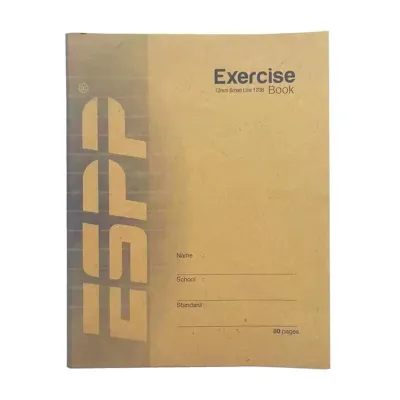
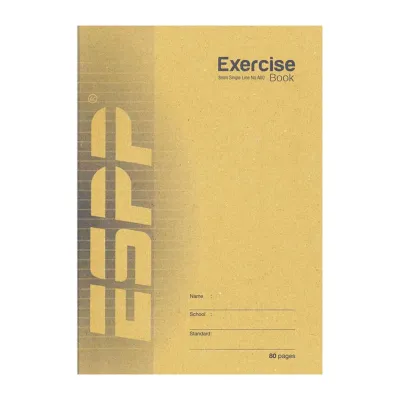
Prices are valid at publication and may change. Please refer to the product page for the latest price.
The raw material used to make the paper pulp also plays a critical role in the writing experience. Most commercial notebooks use wood pulp, which can vary in fiber length. Longer fibers, often derived from softwoods, create stronger paper that resists tearing and handles erasing well. Some premium brands incorporate alternative fibers like cotton, bamboo, or sugarcane bagasse. Cotton fibers add softness and durability, making the paper highly receptive to shading in fountain pen inks, while bamboo and bagasse offer eco-friendly alternatives with unique textural feedback.
Before comparing brands, identify your primary writing tool, as this serves as your baseline. Gel pens and rollerballs use water-based inks that require moderate absorption to dry quickly without smearing. Fountain pens demand highly sized, non-porous paper to showcase ink properties like sheen and shading without bleeding. Ballpoint pens, which use thick, oil-based inks, perform exceptionally well on slightly textured, uncoated papers that provide enough friction to rotate the pen’s ball tip.
Evaluating Paper Smoothness and Ink Bleed Resistance
When comparing notebook brands, paper smoothness and bleed resistance are often the primary points of differentiation. Smoothness is achieved through a manufacturing process called calendering, where the paper sheet is pressed between heavy, heated rollers. Highly calendered paper feels glassy and allows pens to glide effortlessly across the surface. However, this extreme smoothness reduces friction, which can cause some ballpoint and gel pens to skip or hard-start because the ball cannot grip the page to rotate.

Conversely, textured or “toothy” paper retains some of the natural fiber feel. This texture provides tactile feedback that many writers favor for pencil work or precise print handwriting. When evaluating brands, look at the manufacturing descriptions: terms like “satin finish,” “vellum,” or “glazed” indicate high smoothness, while “matte,” “rough,” or “medium tooth” suggest a more textured surface.
Bleed-through resistance is closely tied to both paper weight and sizing. Standard everyday notebooks typically feature paper weights between 60 GSM and 80 GSM. At this range, most water-based inks will exhibit some degree of “ghosting”—where the writing is visible as a shadow on the reverse side of the page—even if the ink does not physically break through the paper fibers. If you prefer writing on both sides of a page, look for brands that offer 90 GSM to 120 GSM paper, which provides the physical density needed to block light and ink penetration.
To assess bleed resistance without relying on brand reputation, examine the manufacturer’s technical specifications. High-quality brands often specify if their paper is “fountain pen friendly” or acid-free. Acid-free paper is treated with an alkaline reserve to neutralize naturally occurring acids, preventing the paper from yellowing and becoming brittle over time. This is a crucial specification if you intend to archive your journals or professional notes for years to come.
Comparing Line Clarity, Spacing, and Rule Styles
The visual design of the ruled lines is just as important as the physical paper quality, as it directly influences your writing comfort and page organization. Line spacing, or ruling, is standardized across several common formats. Narrow ruling (typically 5mm to 6mm) is ideal for compact handwriting, detailed calculations, or maximizing the amount of text on a single page. College ruling (approximately 7mm to 7.1mm) is the standard for general writing, offering a balanced layout for medium-sized handwriting. Wide ruling (8mm to 8.7mm) is well suited for larger handwriting, educational settings, or those who prefer a spacious, uncluttered look.
The method used to print the lines also varies by brand and affects line clarity. Some brands use heavy, dark blue or black ink to print their rules. While this provides high contrast, it can visually compete with your own writing, especially if you use fine-tipped pens or lighter ink colors. Premium brands often opt for pale gray, light violet, or dotted lines printed with subtle, water-based inks. These muted lines provide a gentle guide for your hand but recede into the background once the page is filled, making the text much easier to read and scan.
Beyond basic spacing, consider the secondary structural features printed on the page. Some notebooks include a vertical margin line on the left side, which is useful for adding dates, bullet points, or reference codes. Others feature header blocks at the top of each page for titles and dates, or subtle tick marks along the top and bottom rules to help you draw vertical columns.
Additionally, verify the physical construction of the notebook’s pages. Perforated pages are excellent for quick notes that need to be torn out and filed, but they can weaken the binding if you intend to keep the notebook intact. If you prefer a seamless writing experience across a two-page spread, look for thread-bound notebooks that lay completely flat when open, preventing the binding from obstructing your hand.
How to Test and Verify Notebook Paper Before Buying
Because paper performance depends so heavily on your specific pen and ink combination, conducting a personal paper test is the most reliable way to verify quality. If you are purchasing notebooks in a physical stationery shop, look for tester sheets or sample books. If you are ordering online, consider buying a single notebook or a pocket-sized memo book from the brand before committing to a bulk purchase or an expensive leather-bound edition.
To perform a comprehensive paper test, select a page at the very back of the notebook. Draw a series of horizontal lines using your everyday writing tools, ranging from fine-point gel pens to broad-tipped markers or fountain pens. Pay close attention to how the ink behaves as it hits the paper. Does the line remain sharp and crisp, or does it begin to spread out and look fuzzy? Fuzzy edges indicate feathering, which means the paper’s surface sizing is insufficient for that specific ink.
Next, measure the drying time of your pens on the paper. Draw a line and immediately run a finger across it at one-second intervals. On highly coated, smooth papers, wet inks can take upwards of ten to fifteen seconds to dry completely. If you are a left-handed writer or need to take rapid notes during meetings, a paper with a slightly faster absorption rate—even if it sacrifices a bit of smoothness—will prevent frustrating smudges.
Finally, turn the page over to inspect the reverse side under normal, ambient lighting. Distinguish between ghosting and actual bleed-through. Ghosting is the visual shadow of your writing showing through the paper; it is common in thinner papers and is generally acceptable if the ink has not broken through. Bleed-through occurs when physical spots of ink penetrate the paper fibers and appear as distinct dots on the back. If you see active bleed-through, that specific pen and paper combination is incompatible for two-sided writing.
Making Your Final Brand Selection Based on Writing Tools
To simplify your decision-making process, use your primary writing tools to guide your choice of paper profile. Different pen types require distinct paper characteristics to perform optimally, and matching them correctly will ensure a frustrating-free writing experience.
Choose a high-GSM, coated paper profile (typically 90 GSM to 120 GSM with a satin or glazed finish) if you primarily write with fountain pens, broad gel pens, or liquid ink rollerballs. This profile prevents wet inks from soaking through, preserves the vibrant colors of your ink, and allows the pen tip to glide without catching.
Choose a standard-GSM, textured paper profile (typically 70 GSM to 85 GSM with a matte or medium-tooth finish) if you rely on ballpoint pens, fine-point gel pens, or wooden pencils. The subtle texture provides the necessary friction for ballpoints to roll smoothly and for graphite to adhere to the page, while the faster absorption rate prevents gel ink from smudging as you write.
Verify first if you live or work in a high-humidity environment, such as Singapore’s tropical climate. Paper is highly hygroscopic, meaning it naturally absorbs moisture from the air. In humid conditions, even premium paper can lose some of its sizing effectiveness over time, leading to unexpected feathering or longer drying times. If you write in these conditions, store your unused notebooks in a dry drawer or choose brands that package their notebooks in sealed shrink-wrap to preserve the paper’s original moisture levels until you are ready to write.
Frequently Asked Questions (FAQ)
Does higher paper weight always guarantee no ink bleed-through?
No, a higher paper weight (GSM) does not automatically guarantee that ink will not bleed through. While thicker paper physically blocks light and provides more fiber volume to absorb ink, bleed-through is primarily controlled by the paper’s surface sizing and the chemical composition of the ink. A poorly sized 100 GSM paper can still experience significant bleed-through with wet fountain pen inks, whereas a highly sized, calendered 68 GSM paper can resist bleeding entirely. Always look for manufacturer specifications regarding ink compatibility rather than relying solely on GSM.
What is the standard line spacing for professional notebooks?
The standard line spacing for professional and academic notebooks typically falls into two categories: college rule and wide rule. College rule features a spacing of approximately 7.1mm (about 9/32 inches) and is the most common choice for professional settings, as it accommodates medium-to-small handwriting efficiently. Wide rule features a spacing of approximately 8.7mm (about 11/32 inches) and is favored for larger handwriting or quick, spacious brainstorming sessions. If your workflow requires precise spacing for diagrams or structured notes, it is advisable to measure a sample page with a ruler before purchasing.
Community discussion
Share your experience or ask a question. Comments are reviewed before publication.