
Finding the perfect notebook is not about searching for a universal “best” brand, but rather about discovering the precise synergy between your writing instrument, your ink, and the paper surface. In Singapore’s diverse stationery market, options range from ultra-smooth imported sheets to robust, utilitarian pads. To make an immediate decision, you can guide your choice using a straightforward, condition-based framework:
- Choose high-GSM (100 GSM or more), smooth, coated paper if you primarily write with fountain pens, broad gel pens, or heavy ink feeds. This specialized treatment prevents the ink from spreading outward (feathering) or soaking through to the next page (bleeding).
- Choose standard 70 to 80 GSM paper with a slight "tooth" or texture if your daily tools are ballpoint pens, mechanical pencils, or fine-liner pens. This provides the necessary friction for clean lines and is highly cost-effective for high-volume note-taking, lectures, or office logs.
- Choose highly absorbent, uncoated, or quick-drying paper if you write with fast-flowing gel pens and frequently struggle with smudging, a common issue for left-handed writers or those taking rapid meeting minutes.
Ultimately, paper quality is a relative concept. A notebook that feels luxurious under a graphite pencil might feather terribly when met with a wet fountain pen, while a highly coated sheet designed to showcase shimmering inks might cause a standard ballpoint pen to skip and slide frustratingly. The ideal choice depends entirely on the pen-ink-paper combination.
Key Paper Quality Dimensions to Check on the Label
When browsing the shelves of physical stationery boutiques or scrolling through online marketplaces, understanding the technical specifications on a notebook’s label is the most reliable way to predict its performance. Manufacturers use standardized metrics that tell you exactly how the paper was made and how it will behave under pressure.
Products mentioned in this guide
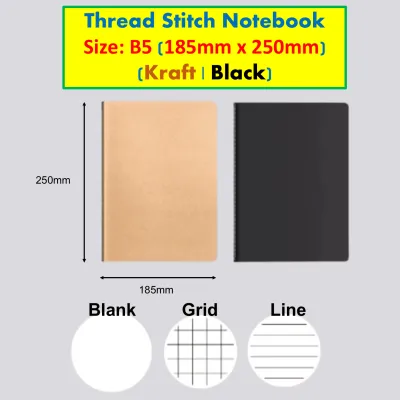
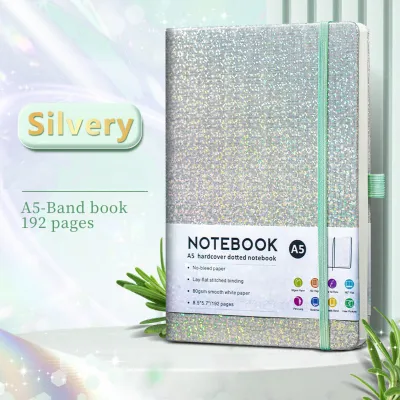
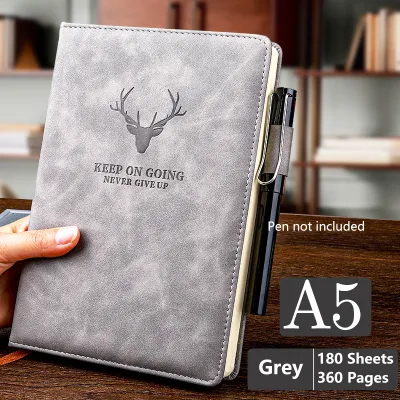
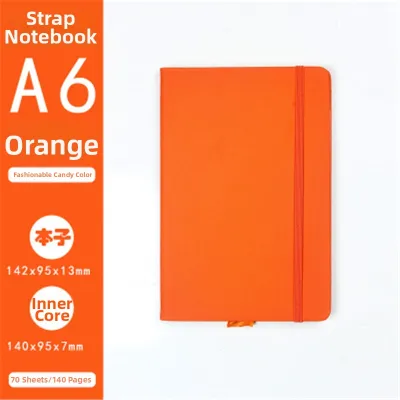
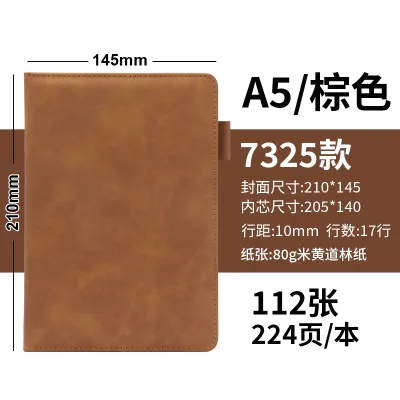
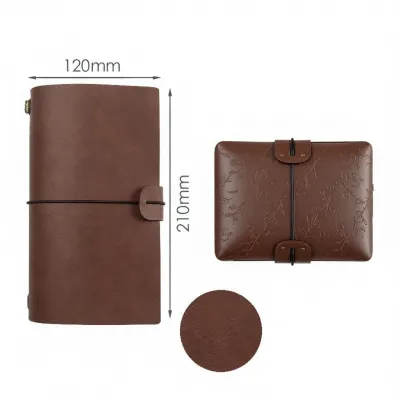
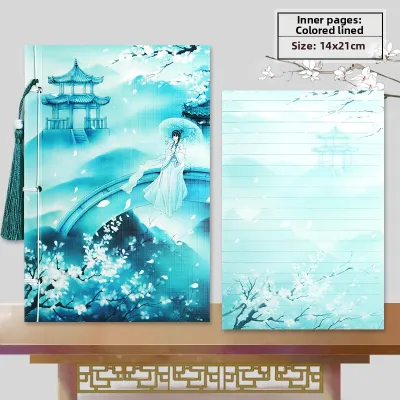
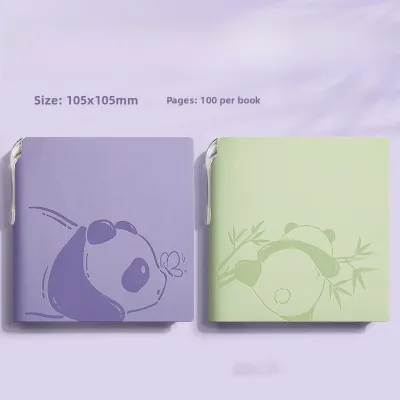
Prices are valid at publication and may change. Please refer to the product page for the latest price.
Paper Weight (GSM): Grams per square meter (GSM) measures the density and weight of the paper. Standard office copy paper and budget school notebooks typically sit between 70 GSM and 80 GSM. While lightweight and easy to carry, these sheets are prone to showing ink on the reverse side. Premium notebooks generally begin at 90 GSM and can go up to 120 GSM or higher. Thicker paper generally offers greater structural integrity and opacity, making it much more resilient against heavy ink applications, though it also results in a heavier, bulkier notebook.
Surface Texture and Sizing: The tactile feel of a page is determined by its texture and the presence of “sizing”—a chemical agent (often starch or synthetic compounds) added during manufacturing to control water absorption. Highly sized paper is smooth, almost slick, and resists liquid absorption, forcing the ink to dry on top of the page rather than sinking in. Unsized or lightly sized paper is “toothy” and highly absorbent. It grabs the graphite from a pencil or the oil-based ink from a ballpoint pen beautifully but will cause liquid inks to spread uncontrollably.
Opacity and Bleed-Through Resistance: Opacity refers to how translucent a sheet of paper is. Low opacity leads to “ghosting” or “shadowing,” where you can clearly see the outline of your writing on the back of the page, even if the ink has not actually broken through the fibers. Bleed-through occurs when the ink completely saturates the paper and leaks onto the subsequent page. High-quality manufacturing balances fibers and fillers to maximize opacity, ensuring you can comfortably write on both sides of every sheet.
Paper Color and Brightness: Notebook paper generally falls into two aesthetic categories: bright white and cream or ivory. Bright white paper offers maximum contrast, making it the ideal choice if you plan to scan your notes, use color-coding highlighters, or need absolute color accuracy for drawing. However, bright white can reflect a significant amount of harsh light. Cream, off-white, or ivory paper absorbs more light, drastically reducing eye strain during long-term writing or reading sessions under bright office lights or the Singapore sun.
When shopping, always check the product packaging, back cover, or online specifications for these exact terms. Look for explicit mentions of GSM, acid-free status, or specialized paper names, which serve as your first line of defense against poor paper performance.
How Popular Notebook Categories Compare in Paper Quality
The global stationery market is rich with diverse manufacturing philosophies, and the notebooks available in Singapore generally align with their regional heritage. Each region designs its paper to cater to specific writing cultures, resulting in distinct paper characteristics that you can easily observe during use.

Rather than declaring an absolute winner, it is more practical to compare how these different categories approach manufacturing and quality control. This allows you to select a notebook that aligns with your preferred writing instrument and aesthetic tastes.
Japanese Stationery Brands
Japanese notebooks are highly celebrated by pen enthusiasts for their meticulous quality control, extreme smoothness, and exceptional ink handling. Japanese writing culture heavily features fine-nibbed fountain pens, gel pens, and intricate characters, which require paper that can hold a sharp, precise line without any feathering.
Interestingly, Japanese manufacturers often achieve incredible bleed resistance without relying on thick, heavy paper. They utilize highly dense, specialized wood fibers and advanced sizing techniques to produce thin sheets—sometimes as light as 52 GSM to 68 GSM—that can handle wet fountain pen inks with ease. The surface of these papers is typically ultra-smooth, offering a frictionless glide that makes writing feel effortless.
These papers are ideal for users who prioritize a frictionless writing experience and clean ink lines. However, because the ink sits on top of the highly sized surface, drying times can be noticeably longer, particularly in Singapore’s humid tropical climate where moisture in the air slows down evaporation.
European Premium Brands
European premium notebooks often emphasize structural durability, archival longevity, and a luxurious, tactile experience. These brands frequently utilize thicker, heavier paper stocks ranging from 80 GSM to 120 GSM. The paper is almost always acid-free, meaning it will not yellow or degrade over decades, making these notebooks excellent for journals, permanent archives, and professional records.
The texture of European premium paper often features a light “vellum” finish—a smooth surface that still retains a microscopic touch of texture. This balance provides a satisfying feedback to the writer, letting you feel the connection between the pen tip and the page.
While these papers offer outstanding opacity and minimal ghosting due to their thickness, some highly coated European varieties can cause very wet inks to pool or take an exceptionally long time to dry. They are best suited for those who appreciate a substantial, heavy page and use a variety of writing instruments, from ballpoints to moderate fountain pens, in professional or creative environments.
Everyday and Budget-Friendly Notebooks
Everyday notebooks, commonly found in local supermarkets, school bookshops, and convenience stores across Singapore, are designed for high-volume, utilitarian tasks. These notebooks almost exclusively use standard 70 GSM to 80 GSM wood-pulp paper without specialized coatings or heavy sizing.
While these sheets will almost certainly show ghosting or bleed-through if subjected to wet fountain pens, calligraphic inks, or broad gel pens, they are highly optimized for daily office work and student notes. The uncoated, slightly toothy surface provides excellent traction for standard ballpoint pens and wooden or mechanical pencils, preventing skipping and allowing for rapid, uninterrupted writing.
They dry almost instantly because the raw paper fibers quickly drink up the ink, making them highly practical for fast-paced environments where you need to flip pages quickly without waiting for ink to dry. Additionally, their cost-effectiveness makes them the ideal choice for students and professionals who consume notebooks rapidly.
Pen and Ink Compatibility: Preventing Smudges and Bleed-Through
Achieving a frustration-free writing experience requires matching the physical properties of your pen’s ink with the absorption characteristics of your notebook’s paper. When these two elements are mismatched, common issues like feathering, ghosting, and smudging will occur.
Fountain Pens and Wet Inks: Fountain pens deliver liquid, water-based ink through a metal nib, depositing a relatively large volume of fluid onto the page. To handle this, you must use paper that is heavily sized. Sizing acts as a barrier, preventing the liquid ink from immediately sinking into the paper’s core and spreading laterally along the fibers. If you use highly absorbent, unsized paper, your crisp fine lines will quickly feather into fuzzy, illegible shapes, and the ink will bleed straight through to the next page, ruining your notebook.
Gel Pens: Gel pens use a water-based gel ink that is thicker than fountain pen ink but wetter than ballpoint ink. The primary challenge with gel pens is smudging. Because gel ink contains binders to keep the pigment suspended, it takes longer to dry on highly coated, smooth surfaces. If you use a very smooth, non-absorbent notebook, the ink will sit wet on the surface for several seconds, making it highly susceptible to smearing under your hand. Left-handed writers should actively seek out slightly textured, uncoated papers or notebooks that explicitly advertise fast-drying properties to avoid dragging their palm across wet ink.
Ballpoint Pens and Pencils: Ballpoint pens use a thick, oil-based paste ink that requires physical friction to roll the tiny ball at the tip and transfer the ink. Similarly, graphite pencils rely on the abrasive texture of the paper to shave off microscopic particles of carbon. Consequently, both tools perform exceptionally well on standard, slightly toothy paper. If you try to write with a ballpoint pen on an extremely smooth, highly coated premium paper, the ball tip may slide without rotating, causing frustrating gaps and skips in your writing. Pencils on ultra-smooth paper will produce faint, light lines and may smear easily.
Markers and Highlighters: Alcohol-based markers, permanent markers, and heavy liquid highlighters present the ultimate challenge for notebook paper. Alcohol acts as a powerful solvent that rapidly penetrates paper fibers, meaning almost any standard notebook paper—even premium 90 GSM sheets—will experience significant bleed-through. If your daily workflow involves heavy color-coding or sketching with markers, you must look for specialized “marker-proof” notebooks, which feature unique internal plastic barriers or exceptionally heavy paper weights of 150 GSM to 200 GSM.
How to Test and Verify Paper Quality Before Buying
Because paper performance is highly dependent on your specific writing tools, taking a systematic approach to verifying paper quality before committing to a full notebook purchase will save you time and money.
In-Store Swatch Testing: When visiting local stationery boutiques in Singapore, look for display models or sample notebooks designated for testing. Always bring your favorite everyday writing instruments with you. Flip to the very last page of the sample notebook and draw a series of test patterns: a few rapid scribbles to check for skipping, a solid block of ink to test for drying speed, and a few fine lines to look for feathering. Wait ten seconds, run your finger gently across the ink to check for smudging, and then flip the page over to inspect the reverse side for ghosting or bleed-through.
Reading Packaging and Labels: If a physical sample is not available, or if you are shopping online, look closely at the packaging or product descriptions. Check for key specifications:
- GSM Rating: Ensure the weight matches your pen type (90+ GSM for heavy inks, 70-80 GSM for ballpoints).
- Acid-Free / Archival: Crucial if you want your writing to remain legible and the paper to resist yellowing over many years.
- Binding Method: Thread-bound notebooks lie flat, reducing strain on the paper and making it easier to write near the margins, while spiral bindings offer flexibility but can wear down the paper edges over time.
Evaluating Online Listings: When buying from online marketplaces or specialized stationery e-tailers, customer reviews are an invaluable resource. Skip the generic star ratings and search the review text specifically for keywords like “fountain pen,” “ghosting,” “bleed,” or “drying time.” Look closely at user-uploaded photos, especially those showing the back of a written page. These real-world images provide a much more accurate representation of opacity and bleed resistance than polished marketing photos.
The Light Test: If you have physical access to a notebook but cannot write in it, lift a single page and hold it up against a bright overhead light source. Observe the distribution of the fibers. High-quality paper will show a highly uniform, dense cloud of fibers with no major thin spots or irregular patching. If you see distinct watermarks or a perfectly consistent density, it indicates a high standard of manufacturing and excellent structural uniformity, which translates to a more reliable writing experience.
Frequently Asked Questions (FAQ)
Does higher GSM always mean better paper quality?
No, higher GSM (grams per square meter) simply indicates that the paper is thicker and heavier, which naturally improves opacity and reduces the likelihood of ink bleeding through to the other side. However, thickness does not automatically equal quality. A specialized, low-GSM Japanese paper (such as 52 GSM or 68 GSM) can easily outperform a standard 100 GSM sketchbook paper when it comes to fountain pen ink. This is because the thin Japanese paper has superior fiber density and advanced surface sizing that prevents feathering, whereas the thicker, unsized paper will act like a sponge, absorbing and spreading the ink.
Why does my ink smear on premium notebooks?
Many premium notebooks utilize highly calendered (polished) and heavily sized paper to create an exceptionally smooth, luxurious surface that feels wonderful to the touch. While this surface treatment is perfect for preventing fountain pen ink from feathering, it also creates a barrier that prevents liquid and gel inks from absorbing quickly into the paper fibers. As a result, the ink must dry solely through evaporation on the surface of the page. In humid environments, this process takes even longer, leaving the wet ink exposed and highly prone to smudging when your hand brushes over it.
Is cream-colored paper better for my eyes than bright white?
Yes, cream, ivory, or off-white paper is generally much gentler on the eyes than bright white paper. Bright white sheets reflect a high percentage of ambient light, including harsh blue light from overhead fluorescent office fixtures or digital screens, which can lead to rapid eye fatigue, glare, and headaches during long sessions. Cream paper absorbs more of these harsh wavelengths and provides a softer contrast against dark inks, making it the preferred choice for long-form journaling, creative writing, and extended reading. Bright white remains superior only when you require absolute color accuracy or high-contrast scanning.
Community discussion
Share your experience or ask a question. Comments are reviewed before publication.