
Preparing a child for the school year in Singapore involves organizing an extensive array of belongings, from textbooks and stationery to water bottles, lunchboxes, and uniform accessories. Keeping track of these items requires a reliable labeling system that can withstand daily classroom use, outdoor play, and frequent cleaning. The best label maker for creating a name sticker for kids’ school items depends on whether you prioritize quick, app-based convenience for dry stationery or ultra-durable, laminated labels for items subjected to daily washing.
Choosing the right device requires understanding how different printing technologies perform under the specific conditions of a student’s daily routine. Singapore’s warm, humid climate, combined with the rigorous washing of food containers and water bottles, means that standard paper stickers often peel, fade, or turn into a sticky residue within weeks. By evaluating the physical demands of school environments and comparing the two primary types of label makers, parents can select a tool that keeps belongings clearly identified all year round.
Essential Traits of Durable School Name Stickers
To select a label maker that delivers long-lasting results, it is important to first establish what makes a name sticker durable enough for school use. Children’s belongings undergo constant handling, friction inside school bags, and exposure to various liquids. A label that falls off or becomes unreadable within the first term fails its primary purpose and requires time-consuming replacement.
Products mentioned in this guide
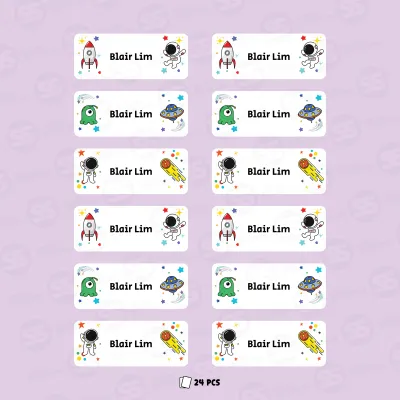
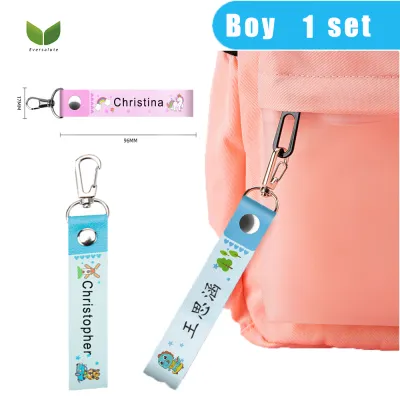
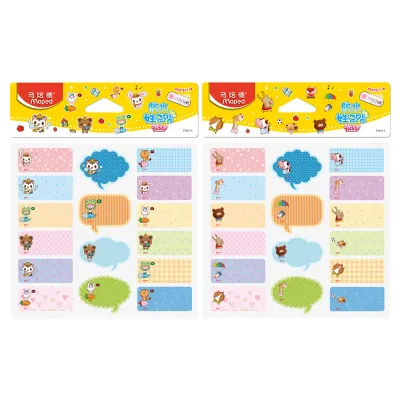
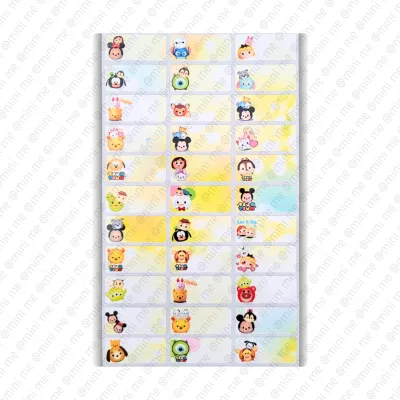
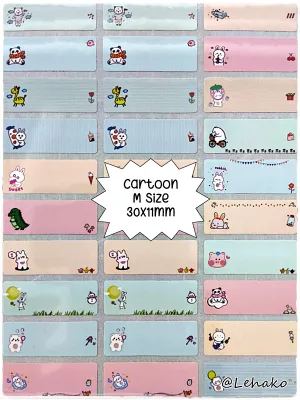
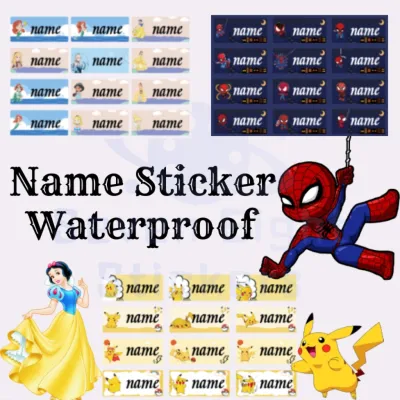
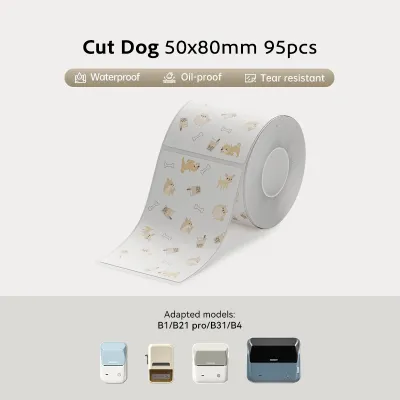
Prices are valid at publication and may change. Please refer to the product page for the latest price.
Adhesion and clean removal represent the first major balancing act. A high-quality name sticker must grip firmly to curved, textured, or smooth plastic surfaces, such as water bottles and food containers, without peeling at the corners. At the same time, parents often need to label rented textbooks, school-issued library books, or shared electronic devices. For these items, the adhesive must allow for clean removal at the end of the school year without tearing the underlying paper or leaving a stubborn, sticky residue that ruins the item.
Environmental resistance is another critical factor in Singapore’s tropical climate. School items are frequently exposed to high humidity, sweat, and direct sunlight during outdoor physical education classes or co-curricular activities. Furthermore, lunchboxes and snack containers undergo daily washing with dish soap and warm water. A durable label must feature water-resistant or waterproof properties, scratch resistance to survive being jostled inside a backpack, and UV resistance to prevent the printed text from fading over time.
Size and readability are equally vital when labeling a diverse range of school gear. A standard school kit includes tiny items like color pencils, slim pens, and rulers, alongside larger items like folders and sports equipment. The label maker must support narrow tape widths to fit slim stationery while maintaining high-contrast, crisp printing. Clear, legible fonts ensure that young children, teachers, and bus operators can easily read the name at a glance, reducing the likelihood of lost items.
Portable Thermal vs. Desktop Thermal Transfer: The Core Comparison
When shopping for a label maker, parents will primarily choose between two distinct printing technologies: portable direct thermal printing and desktop thermal transfer printing. While both systems eliminate the need for traditional liquid ink cartridges, they operate differently, resulting in distinct levels of durability, cost, and convenience.

Direct thermal printing uses heat-sensitive paper or synthetic tape that darkens when it passes over a heated print head. In contrast, thermal transfer printing uses a heated ribbon to melt ink onto the tape surface, often sealing it beneath a protective laminated layer. Understanding these mechanisms helps clarify why one type of machine may excel where the other falls short.
Portable Bluetooth Thermal Label Makers
Portable Bluetooth thermal label makers have gained immense popularity for home and school organization due to their compact size and ease of use. These pocket-sized devices connect wirelessly to smartphones or tablets, allowing parents and children to design labels together using intuitive mobile applications. The companion apps typically offer a wide selection of fonts, borders, emojis, and pre-designed templates tailored for children.
One of the main advantages of portable thermal printers is their convenience and low initial cost. Because they do not require ink ribbons, the only ongoing expense is the thermal paper or synthetic tape rolls. The devices are lightweight, highly portable, and easy to store in a drawer when not in use. They are excellent for quick, on-the-spot labeling sessions before the school term begins.
However, direct thermal technology has inherent physical limitations. Because the paper is heat-sensitive, the printed text can fade or turn entirely black if exposed to high temperatures, such as hot water washes, steam sterilization, or prolonged direct sunlight. Friction from daily handling can also wear away the printed image over time. To mitigate this, parents must look for specialized, high-quality synthetic thermal tapes rather than standard paper rolls.
For school items, portable thermal label makers are ideal for dry, low-friction applications. They perform exceptionally well on notebooks, files, pencil cases, rulers, calculators, and school bags. They are also highly suitable for temporary labeling, such as marking folders for a specific semester project.
Desktop Thermal Transfer Label Makers
Desktop thermal transfer label makers are more robust, traditional machines designed for heavy-duty labeling tasks. These devices are typically larger, featuring built-in physical keyboards (often in a QWERTY layout) and small LCD screens, though many modern versions also offer USB or Bluetooth connectivity for computer and smartphone integration.
The primary advantage of thermal transfer printing is the exceptional longevity of the labels. The process bonds the ink securely to the tape material, and most manufacturers offer laminated tapes that sandwich the print beneath a clear protective layer. This makes the labels highly resistant to water, dishwashing detergents, scratching, oil, and UV exposure. They can survive repeated cycles in a dishwasher or microwave without peeling or fading.
These advantages are balanced by a higher initial device cost and a bulkier footprint. Additionally, the ongoing cost of consumables is generally higher because users must purchase proprietary tape cartridges that house both the labeling tape and the ink ribbon. The physical keyboard design can also feel less intuitive to users accustomed to modern smartphone interfaces.
Desktop thermal transfer label makers are the preferred choice for high-wear, frequently washed items. If you need to label water bottles, lunchboxes, food containers, umbrellas, swim gear, and outdoor sports equipment, the durability of laminated thermal transfer tape is unmatched.
Critical Specifications to Verify Before Purchasing
Before purchasing a label maker from a local retailer or online store, parents should verify several technical specifications to ensure the device meets their specific school labeling needs. Comparing these factors beforehand prevents compatibility issues and unexpected ongoing costs.
- Tape Width Compatibility: Ensure the device supports a range of tape widths. For general school items, a machine that accommodates 9mm and 12mm tapes is highly versatile. If you plan to label individual color pencils or slim pens, verify that the device can print on narrow 6mm tapes without cutting off the text.
- App Ecosystem and Connectivity: For Bluetooth-enabled models, download the companion app beforehand to check its user interface. Look for features like bulk-printing (which allows you to print an entire class list or subject list in one go), font variety, and a library of kid-friendly icons. Stable Bluetooth connectivity is essential to avoid dropped connections during long printing sessions.
- Power Source: Consider how the device is powered. Some portable models feature built-in rechargeable lithium-ion batteries, which are highly convenient and cost-effective over time. Others rely on multiple AA or AAA batteries, which can quickly add to the operating cost if the machine is used frequently.
- Consumable Pricing and Availability: Calculate the long-term cost of ownership by checking the local S$ price of replacement tape rolls or cartridges. Compare the length of the tape roll (typically ranging from 4 meters to 8 meters) against the price to determine the cost per meter. Ensure that compatible tapes are readily available in the local market.
To verify the water resistance and adhesion of any new tape material, perform a simple home test. Apply a sample label to a spare plastic container, let it bond for 24 hours, and run it through a standard hand-washing cycle with dish soap. Observe if the edges lift or if the print smudges before committing to labeling your child’s entire school kit.
Decision Framework: Matching the Maker to Your Needs
To finalize your decision, match your primary labeling goals and household habits to the strengths of each technology. This framework helps ensure you invest in a device that fits your lifestyle and budget.
Choose a portable Bluetooth thermal label maker if:
- You prioritize a fast, creative design process using a smartphone app with diverse fonts and icons.
- The majority of the items you need to label are dry stationery, books, files, and electronic devices.
- You prefer a compact, rechargeable device that can be easily stored or carried in a bag.
- You want to keep initial and ongoing consumable costs relatively low.
Choose a desktop thermal transfer label maker if:
- You require highly durable, waterproof, and dishwasher-safe labels for water bottles, lunchboxes, and outdoor gear.
- You prefer a standalone device with a physical keyboard that does not rely on smartphone connectivity or app updates.
- You do not mind a larger device footprint and a higher ongoing cost for laminated tape cartridges.
- You want labels that will reliably last the entire school year and beyond without fading.
Additionally, always check if your child’s school or preschool has specific guidelines regarding name stickers. Some schools request specific label colors, high-contrast black-on-white text for readability, or prohibit highly decorative stickers on school-issued materials. If you are labeling shared library books or rented textbooks, ensure you use a removable tape variant to avoid damage fees at the end of the year.
Sourcing Devices and Consumables in Singapore
When purchasing a label maker and its consumables in Singapore, sourcing from reliable channels is essential to ensure product quality and avoid counterfeit tapes that can damage your device.
To secure genuine products, navigate to official brand flagship stores on major e-commerce platforms. Buying from authorized sellers guarantees that you receive authentic devices covered by local warranties, as well as genuine tape cartridges that offer the promised level of adhesion and environmental resistance. Be cautious of extremely low-priced third-party tapes, as they may use inferior adhesives that peel easily or leave heavy residue.
For immediate needs, local brick-and-mortar stationery shops, department stores, and electronics retailers across Singapore carry popular label maker models and standard tape refills. Visiting a physical store allows you to assess the physical size of the device and verify the layout of the keyboard before buying. Before committing to a specific or niche model, always check that its matching tape refills are consistently stocked by local retailers so you can easily replenish your supplies before the rush of the new school term.

Community discussion
Share your experience or ask a question. Comments are reviewed before publication.