
Quick Answer: Matching Paper Specs to Your Ink and Tools
Finding the perfect bullet journal notebook is not as simple as picking a popular brand off the shelf. No single notebook brand universally prevents all ink issues; performance depends entirely on the intersection of paper weight, sizing, ink wetness, and nib size. To avoid frustrating bleed-through and feathering, you must match your specific writing tools to the physical properties of the paper. For instance, heavy water-based markers require thick, high-weight paper profiles to prevent shadowing, whereas wet fountain pens demand smooth, highly sized paper that resists rapid absorption. Rather than relying on generic “bullet journal” branding or aesthetic cover designs, you must verify technical manufacturer specifications and product labels to ensure compatibility with your creative tools.
Decoding Paper Specifications: What Notebook Labels Actually Tell You
When browsing stationery shops or online marketplaces, the technical specifications on a notebook’s label are your first line of defense against poor ink performance. The most common metric you will encounter is paper weight, measured in grams per square meter (GSM). While it is tempting to assume that a higher GSM automatically guarantees a bleed-free experience, this is a common misconception. Paper weight primarily dictates the opacity of the sheet and its resistance to physical tearing. A 160 GSM page will naturally show less ghosting than an 80 GSM page simply because it is thicker, but thickness alone does not prevent ink from spreading or feathering across the surface.

To understand how paper handles wet ink, you must look at paper sizing. Sizing refers to chemical additives applied during manufacturing to control how the paper absorbs liquids. Internal sizing is mixed directly into the paper pulp before the sheets are formed, reducing the overall absorbency of the fibers. Surface sizing, on the other hand, is applied to the dried sheet to create a barrier that keeps ink sitting on top of the page rather than sinking deep into the core. For fountain pen users, high surface sizing is critical; it allows the ink to pool slightly and dry slowly, preserving crisp lines and showcasing unique ink properties like shading or sheen. Without adequate sizing, even a thick 120 GSM paper can act like blotting paper, pulling ink outward in fuzzy webs.
Products mentioned in this guide
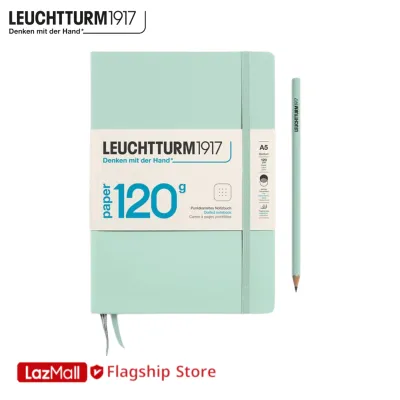
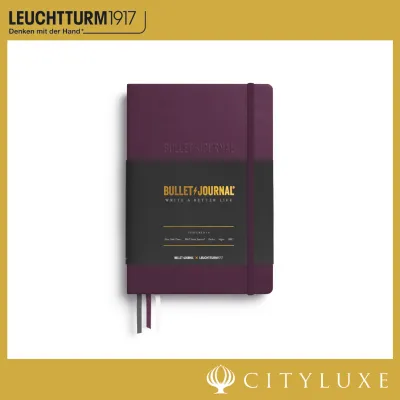
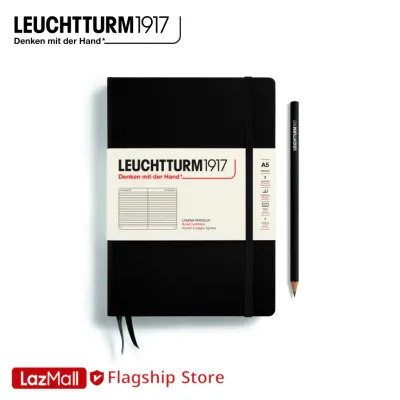
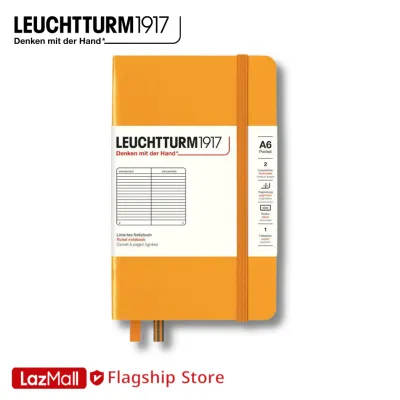
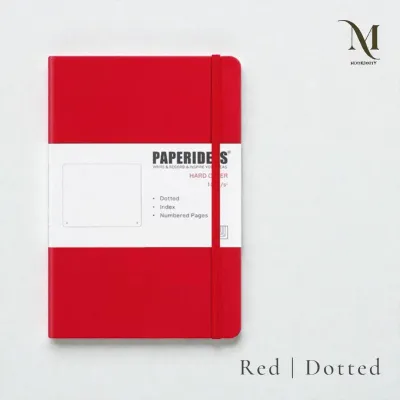
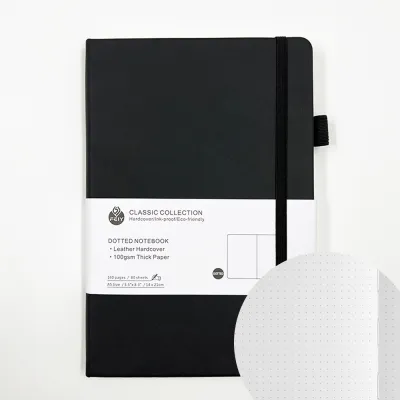
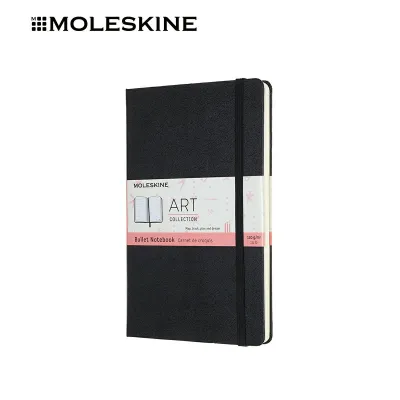
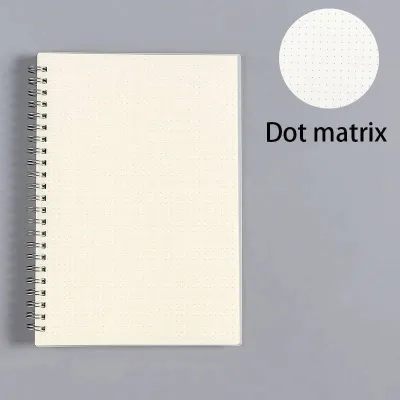
Prices are valid at publication and may change. Please refer to the product page for the latest price.
The coating and finish of the paper also play a major role in your daily writing experience. Uncoated, “toothy” papers have a textured surface that provides tactile feedback, which some writers prefer for pencil or gel pen work. However, this texture can cause marker tips to fray and can catch the fine tines of a fountain pen nib. Coated or highly calendered papers have been pressed between heavy rollers to create an ultra-smooth finish. This smoothness allows fountain pens and markers to glide effortlessly across the page, reducing physical wear on your tools. The trade-off for this smooth surface is a significantly longer drying time, as the ink must evaporate from the surface rather than absorbing instantly into the fibers.
Tool and Ink Variables: How Fountain Pens and Markers Interact with Paper
To select the right notebook, you must analyze how your specific writing instruments interact with different paper fibers. Fountain pens operate on a capillary action system, delivering a continuous stream of liquid, water-based ink to the page. The volume of ink deposited depends heavily on the nib size (ranging from extra-fine to broad) and the wetness of the pen’s feed. A wet, broad nib will flood the paper surface with a high volume of water, putting immense strain on the paper’s sizing. If the paper cannot resist this sudden moisture load, the ink will penetrate deep into the sheet, resulting in bleed-through or severe feathering.
Markers present a different set of challenges depending on their solvent base. Water-based markers, such as dual-brush pens, deposit a moderate to high volume of water and dye onto the page. Because these inks dry relatively slowly, they can saturate the paper fibers if you apply multiple layers for blending or coloring. Alcohol-based markers, on the other hand, rely on fast-evaporating solvents that dissolve paper sizing almost instantly. The alcohol carries the dye deep into the paper structure, making bleed-through nearly inevitable on standard notebook papers, regardless of the brand. Understanding these chemical differences helps you anticipate how a paper profile will react before you ever touch pen to page.
It is also essential to distinguish between two common paper failures: bleed-through and ghosting. Bleed-through occurs when ink physically penetrates through the entire thickness of the sheet, appearing as distinct spots or lines on the reverse side. This completely ruins the usability of the back of the page. Ghosting, or shadowing, is a purely visual phenomenon where the outline of your writing is visible through the page due to the paper’s translucency, even though the ink has not broken through the surface fibers. While bleed-through is a structural failure of the paper-ink pairing, ghosting is an aesthetic characteristic that varies based on paper opacity and your personal tolerance for visual clutter.
A Practical Framework for Testing and Comparing Notebook Brands
Because manufacturers rarely list proprietary sizing formulas on their packaging, conducting a standardized at-home ink test is the most reliable way to evaluate a new notebook’s paper quality. When you purchase a new journal, dedicate the very last page to a comprehensive pen test. Begin by drawing a single, consistent line with each of your favorite pens and markers, noting the drying time for each. Next, draw a series of closely spaced dots to see if the ink pools and spreads. Finally, create a high-saturation patch by coloring in a small square with your wettest marker or layering ink with a fountain pen.
Once the ink has dried completely, examine the test page closely under good lighting. Look at the edges of the lines under a magnifying glass or your phone’s camera zoom; if the edges look fuzzy or resemble tiny tree roots, the paper lacks sufficient surface sizing to handle that specific ink. Turn the page over to assess both ghosting and bleed-through. If you see distinct spots of ink on the reverse side, that tool is unsuitable for double-sided use in that notebook. If you only see a faint shadow, the paper has successfully resisted the ink, and you can decide if the visual ghosting is acceptable for your layout style.
When shopping online or in local stationery boutiques, do not let premium pricing, elegant linen covers, or gilded edges fool you into assuming superior paper performance. Whether you are spending S$15 or S$40 on a premium journal, many lifestyle brands prioritize cover aesthetics and binding durability over specialized paper chemistry. Instead, look past the marketing copy and search for specific technical details. Check the manufacturer’s product descriptions for terms like “fountain pen friendly,” “acid-free,” or “calendered.” Additionally, consult dedicated stationery community forums and user reviews, searching specifically for feedback from users who write with the exact pen and ink combinations you plan to use.
Decision Framework: Choosing the Right Paper Profile for Your Setup
To simplify your purchasing decision, use the following profile-based framework to match your primary writing tools to the ideal paper specifications.
Choose Profile A (Smooth, Coated, Moderate Weight: 80 to 100 GSM) if:
- Your primary writing instruments are fountain pens, especially those with fine or medium nibs.
- You enjoy using shading, sheening, or shimmering inks and want to showcase their unique visual properties.
- You prefer an ultra-smooth writing feel with minimal feedback from the paper.
- You do not mind waiting a few extra seconds for your ink to dry, or you are willing to use blotting paper.
Choose Profile B (Thick, Uncoated, High Weight: 120 to 160 GSM) if:
- Your journaling style relies heavily on water-based markers, brush lettering, and light watercolor washes.
- You absolutely detest ghosting and want the reverse side of your pages to look completely clean.
- You prioritize fast drying times so you can close your notebook immediately after writing.
- You prefer a slightly textured, toothy surface that provides physical feedback as you write.
Verify first if:
- You are a mixed-media user who wants to combine wet fountain pens with heavy marker art. In this scenario, look for specialized multi-media notebooks that explicitly state they feature high-weight paper (at least 140 GSM) that has been treated with heavy surface sizing.
- You plan to use alcohol-based markers. These tools will bleed through almost all standard bullet journal papers; you will need to verify if the manufacturer offers specialized bleed-proof paper coated with a plastic barrier, or accept that you must use a protective backing sheet and write on only one side of the page.
Before committing to a bulk purchase or an expensive imported journal, always check the retailer’s return policy regarding opened stationery. Whenever possible, purchase a single test unit or a pocket-sized notebook from the same brand family to verify the paper’s performance under your local environmental conditions before investing in a full-sized journal for the year.
Frequently Asked Questions (FAQ)
Can I use both sides of a bullet journal page if I see ghosting?
Yes, you can absolutely use both sides of the page if you only experience ghosting. Because ghosting is a visual shadow rather than a physical ink leak, the paper fibers remain completely intact and dry on the reverse side, allowing you to write smoothly without any ink transfer or smudging. If the visual clutter of ghosting bothers you, try adjusting your page layout strategies. You can use lighter ink colors, opt for finer pen nibs that deposit less ink, or reserve one side of the page for dense text and the other side for decorative elements, stickers, or tip-ins that naturally cover up the shadows from the previous page.
Does storing a bullet journal in a humid environment affect paper performance?
Yes, environmental factors can significantly alter how your notebook paper behaves over time. In warm, humid climates like Singapore’s, paper fibers naturally absorb moisture from the surrounding air. This excess moisture can compromise the paper’s sizing, causing the fibers to swell and become highly absorbent. As a result, a notebook that performed beautifully when first opened may begin to exhibit increased feathering, slower drying times, and more severe bleed-through after a few months of exposure to high humidity. To protect your journal’s paper quality, store your notebooks in a dry, air-conditioned room, keep them away from open windows, and consider storing active journals in a drawer with a small silica gel packet to absorb excess moisture.
Community discussion
Share your experience or ask a question. Comments are reviewed before publication.