
When learning to sew in Singapore, working with knit patches presents a unique set of challenges for beginners. Knit fabrics, commonly found in comfortable t-shirts, activewear, and cozy sweaters, are highly elastic and behave very differently from stable woven fabrics. If you are looking to repair garments or add decorative knit patches, choosing the right sewing machine is crucial to achieving a flat, professional finish without ruining your fabric.
While major sewing machine brands like Brother, Singer, and Janome all offer excellent entry-level options in the local market, the brand name on the machine is actually less important than the specific features the model offers. To successfully sew stretchy knit patches, a beginner needs a machine that can handle fabric elasticity without stretching, puckering, or skipping stitches. Instead of focusing solely on brand loyalty, you should evaluate individual models based on their mechanical capabilities and accessory compatibility.
Why Knit Patches Require Specific Sewing Machine Features
Knit fabrics are constructed from a series of interlocking loops, which is what gives them their characteristic stretch and flexibility. When you attempt to sew a knit patch onto a garment using a standard straight stitch, the seam becomes rigid. As soon as the fabric stretches during wear or washing, the inelastic thread will snap, causing the patch to peel away. Furthermore, the tension of the needle thread can pull the stretchy fabric upward, creating a puckered or tunneled seam that looks uneven and distorted.
Products mentioned in this guide
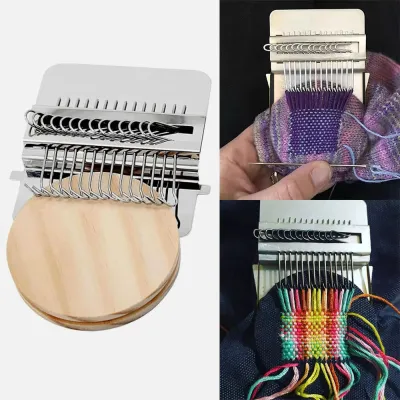
Prices are valid at publication and may change. Please refer to the product page for the latest price.
Using the wrong needle type on knit patches can also cause permanent damage to your project. Standard sharp needles are designed to pierce through woven threads, but when they hit knit loops, they can cut the delicate fibers. This cutting action leads to skipped stitches, broken threads, and small holes that can quickly run and unravel the entire patch. To prevent this, beginners must use specialized ballpoint or stretch needles, which feature a rounded tip that gently slides between the fabric loops rather than cutting them.
The feed mechanism of a standard sewing machine also poses a challenge when working with stretchy materials. Standard feed dogs pull the bottom layer of fabric through the machine, while the presser foot holds the top layer down with constant pressure. This friction often causes the top layer of a knit patch to stretch out of shape while the bottom layer remains flat, resulting in a wavy, misaligned edge. Managing this fabric shift requires specific machine adjustments or specialized presser feet to ensure both layers feed through at the exact same rate.
Comparing Common Beginner Sewing Machine Brands
Brother is highly popular among beginners in Singapore due to its user-friendly interfaces, lightweight designs, and computerized features. Many entry-level Brother models offer intuitive drop-in bobbin systems and clear stitch selection screens that make setting up your first project straightforward. However, when shopping for a Brother machine to sew knit patches, you must carefully check the specifications of individual entry-level models. Some basic computerized models have fixed presser foot pressure, which can make it difficult to prevent highly elastic knit patches from stretching out during sewing. If you choose a Brother model, look for one that explicitly lists adjustable presser foot pressure in its manual or product specifications to ensure you can handle stretchy fabrics without distortion.

Singer is another household name with a long history of producing reliable machines that are widely available in local retail shops and sewing centers. Singer machines often feature robust internal metal frames, which provide excellent stability and piercing power when sewing a knit patch onto heavier base fabrics like denim or canvas. When evaluating entry-level Singer mechanical models, it is important to check the stitch selection dial to ensure it includes dedicated stretch stitches, such as the triple straight stitch or the stretch zigzag. Additionally, verify that the model can easily accommodate a standard screw-on walking foot, which is highly beneficial for managing stretchy layers. Some entry-level mechanical models may require purchasing this foot separately, so checking compatibility beforehand is essential.
Janome is widely recognized among sewing enthusiasts for its consistent mechanical stitch quality and precise tension control. Their entry-level machines are often praised for having robust feed dog systems that help guide difficult fabrics smoothly through the machine. If you are considering a Janome model for sewing knit patches, look closely at the accessibility of the manual tension dial and the feed dog layout. Fine-tuning the upper thread tension is often necessary when working with stretchy materials, and Janome’s mechanical precision can make this adjustment process highly predictable. Ensure the model you select allows you to easily adjust the stitch width and length independently, as this flexibility is key to customizing your stretch stitches for different knit weights.
As a crucial caveat, you must remember that brand reputation alone does not guarantee a specific entry-level model will handle knit patches successfully. A basic model from any reputable brand might lack the necessary stitch types or pressure adjustments required for elastic fabrics. Always verify the individual model’s manual, specification sheet, or product label rather than relying solely on the brand name on the chassis before making your final decision.
Essential Features to Verify Before You Buy
Before purchasing any beginner sewing machine, you should verify a specific checklist of mechanical and functional features to ensure it can handle knit patches. First, confirm the presence of essential stitch options. Your machine must offer at least a basic zigzag stitch, a triple stretch stitch, or a mock overlock stitch. These stitches are designed to expand and contract along with the knit fabric, allowing the patch to stretch naturally without putting undue stress on the thread.
Second, look for a machine that features adjustable presser foot pressure. This feature, often controlled by a dial on top of the machine, allows you to lighten the downward force exerted on the fabric. When sewing stretchy knit patches, reducing the presser foot pressure prevents the machine from stretching the top layer of fabric out of shape as it passes under the needle, ensuring your patch lies completely flat when finished.
Third, evaluate the feed dog system and accessory compatibility. Check if the machine has a drop-feed capability, which allows you to lower the feed dogs for free-motion sewing or manual fabric guiding. More importantly, verify if the machine is compatible with an even-feed or walking foot accessory. A walking foot mechanically moves the top layer of fabric at the exact same rate as the lower feed dogs move the bottom layer, preventing the layers from shifting or stretching independently.
Finally, ensure the machine uses a standard home sewing needle system, typically designated as the 130/705H system. This standard compatibility is essential because it ensures you can easily purchase and swap in specialized ballpoint, jersey, or stretch needles from local haberdashery shops in Singapore. Using the correct needle system is the simplest way to prevent skipped stitches and protect your knit patches from structural damage.
Decision Framework: Choosing the Right Machine Profile
To make your final decision, consider your specific sewing habits, project scope, and budget in S$. If you plan to sew thick or multiple layers of knit patches frequently—such as attaching heavy ribbed patches onto fleece hoodies or denim jackets—choose a feature-rich mechanical model. These machines typically offer robust manual tension dials and sturdy internal frames that handle dense layers well, giving you direct control over the mechanical settings.
Alternatively, if you prioritize ease of use, automatic tension settings, and only plan to sew small, single-layer knit patches occasionally, a lightweight computerized entry model is highly suitable. These machines often pre-set the optimal stitch width and length for stretch stitches automatically, reducing the learning curve for beginners and allowing you to focus on fabric guiding.
Regardless of the profile you choose, always verify first if the specific model includes a stretch stitch and adjustable presser foot pressure before checkout. Do not assume these features are standard on all beginner machines, as many budget-friendly models omit them to keep manufacturing costs low.
Keep in mind that neither machine profile will fit your needs if the machine lacks a basic zigzag stitch, cannot accommodate a walking foot accessory, or if the total cost exceeds your budget when factoring in necessary add-ons. Be sure to budget for essential accessories, such as specialized stretch needles and a compatible walking foot, alongside the purchase price of the machine itself to ensure a successful sewing experience.
Frequently Asked Questions (FAQ)
Do I need a serger (overlocker) to sew knit patches?
No, you do not need a serger to sew knit patches. While a serger is excellent for constructing entire knit garments and finishing raw edges, a standard beginner sewing machine equipped with a zigzag or stretch stitch is perfectly capable of securely attaching a knit patch to a base fabric.
What type of needle should I use for knit patches on a beginner machine?
You should always use a ballpoint or stretch needle rather than a standard universal needle. Ballpoint needles feature a slightly rounded tip that pushes between the knit fabric’s loops instead of piercing and cutting the fibers, which prevents skipped stitches, fabric runs, and structural damage to your patch.
Community discussion
Share your experience or ask a question. Comments are reviewed before publication.