
Finding the best B5 loose leaf paper in Singapore is not about locating a single, universally perfect sheet. Instead, the ideal choice depends on the specific writing instruments you use, your preferred tactile feedback, and even how you store your stationery in Singapore’s humid climate.
If you prioritize an ultra-smooth, effortless glide for gel pens and fine-liners, look for brands that apply specialized surface treatments to minimize friction. If you write with fountain pens or wet rollerballs, your priority should shift to high-density paper with robust ink-handling properties to prevent feathering and show-through. For those who rely on mechanical pencils or classic ballpoint pens for high-volume daily note-taking, a standard uncoated paper with a slight texture or “tooth” provides the necessary resistance to deposit ink or graphite cleanly.
Ultimately, paper performance is a dynamic interaction between the physical properties of the sheet and the viscosity of your pen’s ink. Understanding this relationship is the key to choosing a refill system that makes writing a pleasure rather than a chore.
Products mentioned in this guide
Prices are valid at publication and may change. Please refer to the product page for the latest price.
Key Dimensions for Evaluating Loose Leaf Paper Quality
Evaluating B5 loose leaf paper requires looking beyond the brand name and understanding the physical specifications listed on the packaging. When shopping at local stationery hubs in Singapore, keeping a few critical metrics in mind will help you predict how a paper will perform before you ever touch a pen to its surface.
Paper Weight and Thickness (GSM) The weight of paper is measured in grams per square meter, commonly abbreviated as GSM. Standard loose leaf refills typically range from 70 GSM to 100 GSM. A higher GSM rating generally indicates a thicker, denser sheet that offers excellent resistance to ghosting—the shadow of writing visible on the reverse side of the page. However, thicker paper also means your binder will hold fewer total sheets, which is an important trade-off to consider if you carry multiple subjects in a single B5 binder to school or the office.
Surface Treatment and Texture Paper texture ranges from highly textured (often called “toothy”) to glass-smooth. Uncoated papers retain the natural texture of the wood fibers, creating subtle friction that helps control the tip of a pencil or ballpoint pen. In contrast, treated or calendered papers undergo a manufacturing process where they are pressed between heavy rollers to flatten the surface fibers. Some premium brands apply light chemical coatings to create a silky barrier. This treatment reduces drag, allowing gel pens to glide effortlessly, though it can occasionally extend ink drying times.
Ink Handling and Opacity How paper reacts to liquid ink depends heavily on “sizing”—the chemical additives used during manufacturing to regulate water absorption. Without proper sizing, wet inks from fountain pens, highlighters, or broad gel pens will spread along the paper fibers, a frustrating phenomenon known as feathering. In severe cases, the ink will penetrate completely to the other side, known as bleed-through. If you use wet writing instruments, look for explicit labels such as “fountain pen friendly” or “bleed-resistant” rather than relying solely on high GSM.
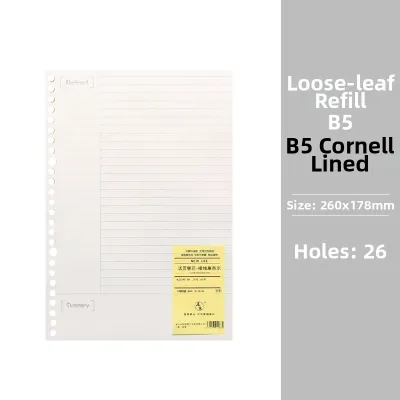
Punching Standard and Binder Compatibility The standard configuration for B5 loose leaf paper in Singapore and Japan is 26 holes. This multi-hole design distributes tension evenly, preventing the pages from tearing out of the binder rings during frequent flipping. However, you must verify the margin width and the precise alignment of the holes. While most Japanese-style 26-hole binders are cross-compatible, some specialty binders use proprietary spacing or a different number of rings, making standard refills incompatible.
Popular B5 Loose Leaf Brands in Singapore Compared
Singapore’s stationery market offers access to some of the world’s finest paper manufacturers, primarily sourced from Japan. You can find these brands across major retail outlets in Singapore, such as Hands, NBC Stationery & Gifts, Popular Bookstore, and Kinokuniya, as well as various online marketplaces.

While each of these manufacturers produces multiple product lines, comparing their flagship B5 loose leaf refills reveals distinct philosophies in paper engineering. Because formulations and product lineups can change, always check the physical packaging for specific paper series names and weight specifications before purchasing.
Kokuyo: The Standard for Everyday Notes
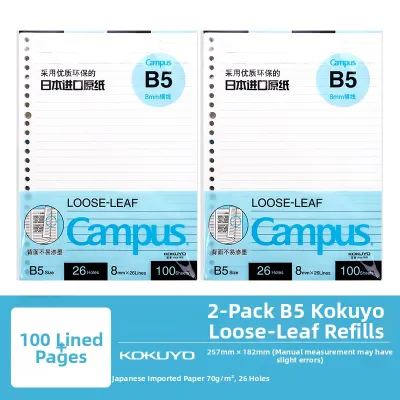
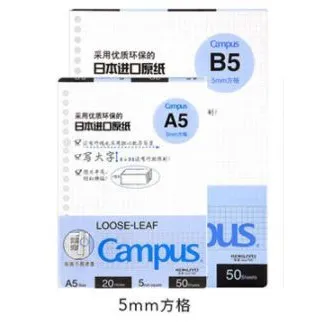
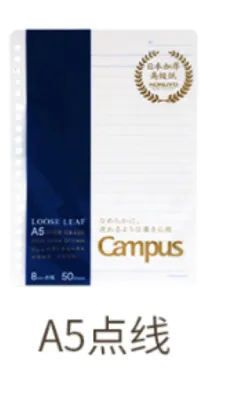
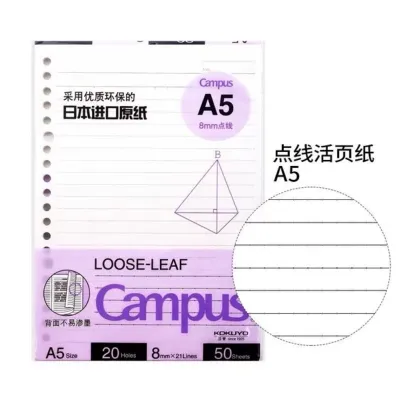
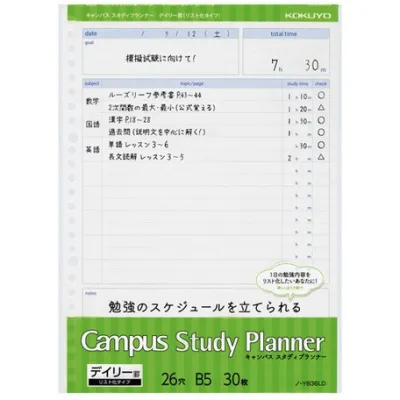
Kokuyo is widely regarded as the benchmark for loose leaf paper systems in Singapore, particularly among students and professionals who require reliable, high-volume note-taking tools. Their flagship Campus series is engineered to offer a balanced, dependable writing experience across a wide array of everyday writing instruments.
To cater to different writing preferences, Kokuyo divides its standard loose leaf lineup into two primary textures: “Sarasara” (smooth) and “Shikkari” (firm). The Sarasara paper features a low-friction surface that allows gel pens and ballpoints to glide with minimal resistance, making it ideal for fast, cursive writing. The Shikkari paper is designed with a slightly toothier surface, providing a satisfying tactile feedback that helps stabilize your hand, which is highly beneficial when writing print characters or using mechanical pencils.
Beyond these standard options, Kokuyo also offers specialized lines like “MIO” paper, which uses lightweight, high-density fibers designed to dry quickly and resist ink feathering, making it popular among left-handed writers. All Kokuyo refills feature incredibly precise 26-hole punching, ensuring they slide smoothly onto standard B5 binder rings without catching or tearing.
Maruman: Premium Smoothness and Ink Handling
Maruman positions itself as a premium step up in the stationery world, focusing heavily on paper density, surface refinement, and superior ink handling. If you find standard loose leaf paper too rough or prone to bleeding, Maruman’s offerings are designed to address those frustrations directly.
Their standard loose leaf refills, often labeled as “Easy Writing” or “Kurufit” compatible, utilize high-quality paper that is noticeably smoother than typical school-grade refills. For an even more refined experience, Maruman’s premium lines, such as those associated with the Mnemosyne series or their high-end Giuris refills, feature heavier paper weights (often exceeding 80 or 90 GSM) and advanced surface sizing. This meticulous manufacturing process ensures that even wet fountain pen inks and heavy highlighters sit beautifully on the page without feathering or bleeding through.
The trade-off for this premium performance is a slightly higher price point per sheet in Singapore retail stores. However, for professionals, journal keepers, or stationery enthusiasts who demand an immaculate, drag-free writing surface for fine-liners and liquid inks, the investment in Maruman’s superior paper quality is highly justified.
MUJI: Minimalist and Reliable Everyday Paper
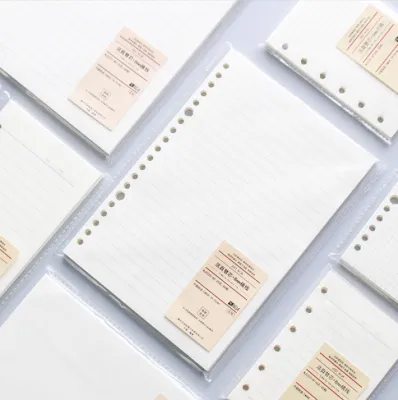
MUJI is a staple in Singapore for those who appreciate a clean, minimalist aesthetic and reliable, functional design. Their B5 loose leaf refills are highly popular due to their unbranded, distraction-free appearance and accessible pricing.
MUJI’s paper generally features a more natural, lightly treated surface compared to the silky coatings of Maruman or Kokuyo Sarasara. This gives the paper a classic “toothy” texture that provides excellent feedback. It is a superb match for mechanical pencils, wooden pencils, and standard oil-based ballpoint pens, as the physical friction helps transfer graphite and high-viscosity ink cleanly onto the page.
However, because MUJI paper is less heavily sized than specialized premium alternatives, users of high-flow gel pens or wet fountain pens should exercise caution. Liquid inks may take slightly longer to dry on certain MUJI paper stocks, or they may experience mild ghosting if you write with a heavy hand. For everyday study notes and structured planning with standard pens, MUJI offers an exceptional balance of quality, aesthetic appeal, and value.
Lihit Lab: Durable and Specialty Options
Lihit Lab approaches the loose leaf category with a strong emphasis on mechanical durability, innovative organization, and proprietary binding systems. While other brands focus primarily on the tactile feel of the paper fibers, Lihit Lab prioritizes how the paper functions within a highly active, constantly reorganized filing system.
A crucial technical distinction to keep in mind is that Lihit Lab’s famous Twist Ring notebook system does not use the standard Japanese 26-hole configuration for B5. Instead, it utilizes a proprietary 29-hole pattern. This design features smaller, more closely spaced holes that distribute the mechanical stress of page-turning across a greater surface area, significantly reducing the risk of the paper tearing at the margins.
The paper used in Lihit Lab refills is generally robust and thick, designed to withstand frequent removal and reinsertion into the flexible ring mechanisms. While the paper writing quality itself is highly reliable and handles standard gel pens and ballpoints beautifully, you must verify your binder compatibility. Standard 26-hole B5 refills will not fit into a Lihit Lab Twist Ring binder, and Lihit Lab’s 29-hole refills will not align with a standard 26-ring binder.
Matching Your Paper Choice to Pens and Inks
To get the absolute best performance out of your B5 loose leaf paper, you must match the paper’s physical characteristics with the specific writing instruments in your daily rotation. A mismatch can lead to smudging, skipping, or frustrating ink bleed.
Gel and Rollerball Pens Gel and rollerball pens deposit water-based or gelled inks that require a short drying window. If you use these pens, look for paper with a balanced absorption rate. Heavily coated, ultra-smooth papers can cause the ink to pool on the surface, leading to smudges if your hand brushes across the text. Look for “quick-dry” or “smooth” designations on refill packaging, such as Kokuyo’s Sarasara line, which is optimized to absorb gel ink rapidly while maintaining a low-friction glide.
Fountain Pens and Wet Inks Fountain pens require paper with robust internal and external sizing to prevent the liquid ink from feathering into the paper fibers. Standard school-grade loose leaf paper will often cause fountain pen ink to bleed through to the reverse side, rendering it unusable. If you write with fountain pens, prioritize papers with a higher GSM (80 GSM and above) and look for explicit “fountain pen friendly” labels. Maruman’s premium lines are highly regarded for this purpose. Always conduct a small ink swatch test on a single sheet before committing your entire binder to a new paper brand.
Ballpoint and Pencils Oil-based ballpoint pens and graphite pencils rely on physical friction to transfer their medium onto the page. If the paper surface is too slick or heavily coated, a ballpoint pen may “skip” or fail to roll consistently, and a pencil will leave faint, light marks. For these instruments, a paper with a natural, uncoated texture—such as MUJI’s standard refills or Kokuyo’s Shikkari line—is highly recommended, as the subtle tooth grabs the graphite or viscous ink effectively.
Highlighters Highlighters are a common source of smudging, especially when applied over freshly written gel or ballpoint ink. To minimize this, ensure your primary writing ink is fully dry before highlighting, or select loose leaf paper designed with high surface density. Some specialized paper lines are specifically formulated to resist the moisture of highlighters, preventing the underlying text from bleeding or smearing across the page.
Decision Framework: Which B5 Refill Should You Buy?
Selecting the right B5 loose leaf refill in Singapore comes down to matching your primary writing tool, budget, and binder system to the right brand. Use this quick decision framework to guide your next purchase at local stationery shops or online marketplaces.
Choose Kokuyo standard refills if: You need a highly reliable, cost-effective, and widely compatible paper for mixed daily note-taking. It is the ideal baseline for students and office workers who use standard gel pens, ballpoints, and highlighters, offering easily accessible options in both smooth (Sarasara) and textured (Shikkari) finishes.
Choose Maruman premium lines if: You prioritize an ultra-smooth, luxurious writing experience and frequently use fine-liners, fountain pens, or wet liquid inks. While it comes at a higher price point, the superior ink resistance and dense, velvety surface make it the premier choice for pristine, high-quality notes.
Choose MUJI refills if: You prefer a minimalist, clean aesthetic without distracting logos or margins, and you primarily write with wooden pencils, mechanical pencils, or standard oil-based ballpoint pens. It offers excellent value and a satisfying, natural paper texture.
Choose Lihit Lab if: You are using a proprietary Twist Ring binder system and require highly durable pages that can be frequently reorganized, removed, and reinserted without tearing at the punched margins.
Verify first if: You are a dedicated fountain pen user. Regardless of a brand’s general reputation, always check the packaging for specific ink-handling certifications or perform a physical swatch test on a single sheet to ensure your specific ink and nib combination will not feather or bleed.
Frequently Asked Questions (FAQ)
Does B5 loose leaf paper fit all standard ring binders?
While the 26-hole punch configuration is the standard for B5 loose leaf paper in Singapore and Japan, minor variations in margin width and hole diameter can occur between different manufacturers. Most standard 26-hole Japanese-style binders will accept standard 26-hole refills from other brands. However, specialty systems like Lihit Lab’s Twist Ring binders require a proprietary 29-hole punch, meaning standard 26-hole paper will not fit. Always check your binder’s ring count and spacing before purchasing refills.
How can I test if a loose leaf refill will bleed through?
To verify if a new loose leaf refill can handle your writing instruments, perform a simple, low-risk swatch test. Take a single sheet of the paper and write a few lines using your heaviest-flowing pens and highlighters, applying normal writing pressure. Inspect the reverse side of the sheet to check for ghosting (visible shadows) or actual bleed-through (ink penetrating the paper). Place a blank sheet of scrap paper underneath during the test to ensure no ink transfers to the surface below, and note how long the ink takes to dry completely.
Community discussion
Share your experience or ask a question. Comments are reviewed before publication.