
Starting a new craft can feel overwhelming when faced with dozens of packaged options online. To choose the right punch needle art kit as a complete beginner, you must look for a package that balances tool compatibility, fabric quality, and adequate yarn supply. A successful first project relies entirely on how well the needle, fabric, and yarn work together as a unified system.
Instead of buying the largest or most colorful kit available, prioritize one that includes a sturdy, comfortable punch needle, a dedicated foundation fabric like monk’s cloth, and enough matching yarn to complete the design without running short. Taking the time to verify these core elements before purchasing will save you from the common frustrations of slipping fabric, jammed needles, and unraveling loops.
Essential Components to Verify in a Beginner Kit
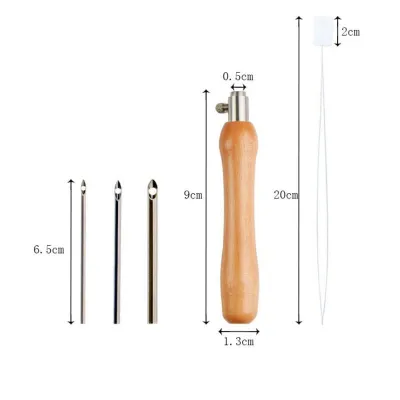
A complete beginner kit should allow you to open the box and start crafting immediately without requiring an urgent trip to a local craft store. The centerpiece of any kit is the punch needle tool itself. For your first project, look for a tool with an ergonomic handle, such as one made of smooth wood or contoured non-slip plastic, which prevents hand fatigue during long crafting sessions. Some kits feature adjustable punch needles that let you change the loop height by twisting the handle, while others provide a fixed-length needle. A fixed needle is often easier for absolute beginners to manage because it eliminates the variable of shifting loop heights while you are still mastering your basic physical technique.
Products mentioned in this guide
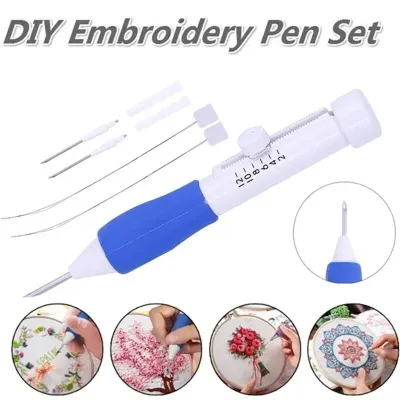
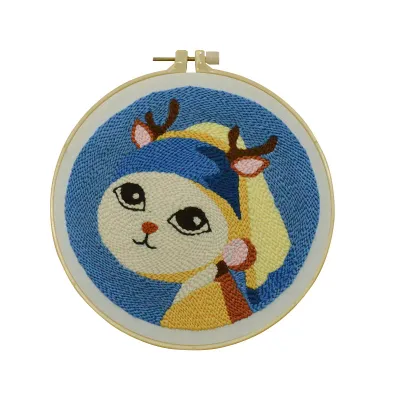
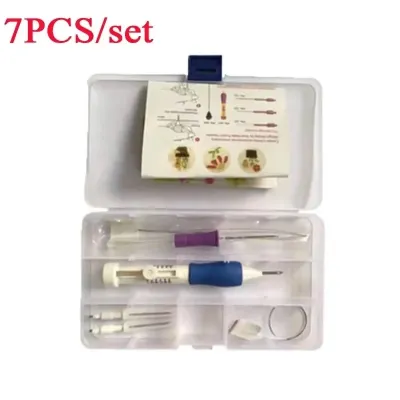
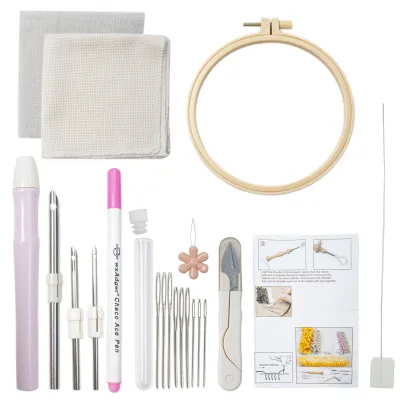
Prices are valid at publication and may change. Please refer to the product page for the latest price.
The foundation fabric is the next critical component to inspect before purchasing. Many low-cost kits sold on online marketplaces mistakenly include standard cross-stitch Aida cloth, which is too stiff and has wide, rigid holes that cannot hold punch needle loops in place. A proper beginner kit must feature a dedicated foundation fabric, such as monk’s cloth or primitive linen. Monk’s cloth is woven with a unique double-thread structure that yields slightly to the needle and then grips the yarn securely when the needle is withdrawn.
Yarn or thread selection within the kit must be generous and appropriate for the design. A common frustration for beginners is running out of a specific color before finishing the pattern. Verify that the kit description promises adequate yardage, ideally providing twenty to thirty percent more yarn than the pattern strictly requires to account for mistakes or uneven loop heights. The yarn weight must also match the needle size perfectly; thick rug yarn requires a wide-gauge needle, while fine embroidery threads require a delicate, thin needle.
Finally, a reliable kit must include a sturdy hoop or frame to hold your fabric. Punch needle art requires the foundation fabric to be stretched incredibly tight, similar to a drum head. Standard plastic or wooden embroidery hoops can sometimes slip under the constant downward pressure of the needle. Look for kits that include a hoop with a built-in lip or groove, or a heavy-duty tension screw that can be tightened firmly with a screwdriver. In a humid climate, wooden hoops can occasionally expand or warp slightly, making a high-quality plastic hoop with a secure locking ridge an excellent, stable choice for maintaining consistent tension.
How to Evaluate Tool Quality and Material Compatibility
The secret to a smooth, enjoyable punch needle experience lies in the physical compatibility of your tools. When evaluating a kit online, pay close attention to the relationship between the needle’s hollow shaft and the provided yarn. The yarn must slide completely freely through the inside of the needle and out of the eyelet at the tip. If the yarn is too thick for the needle, it will jam inside the shaft, preventing loops from forming on the back of your fabric. You can verify this compatibility by checking if the kit specifications list matching yarn weights, such as medium worsted yarn paired with a five-millimeter needle.

Fabric weave and tension require a careful visual inspection of the product photos. The weave of the foundation fabric must be loose enough to allow the needle to pass through without tearing the threads, yet tight enough to spring back and hold the yarn loop in place once the needle is pulled out. If you can see large, open gaps in the fabric weave in the product images, the fabric may be too loose, causing your loops to fall out easily. A high-quality monk’s cloth should have a dense but pliable weave, typically around twelve to fourteen count (threads per inch), which provides the perfect balance of resistance and grip.
To test and verify your material combination once your kit arrives, perform a quick trial on the outer edge of the fabric. Punch a short row of five to ten loops; if the loops immediately unravel when you lift the needle, the issue is likely a mismatch between the yarn thickness, the needle gauge, or the fabric tension. The needle tip must also be perfectly smooth. Any rough metal edges or burrs on the needle eyelet will snag the yarn fibers, disrupting your rhythm and fraying the material.
Hoop stability is another critical factor that directly impacts your success. A flimsy hoop that constantly loses tension will force you to stop and pull the fabric tight every few minutes, which ruins your stitch consistency. Look for kits where the hoop features a robust metal screw mechanism rather than a simple plastic snap-on ring.
Lastly, evaluate the clarity of the pattern transfer on the fabric. The design should be clearly printed or stamped directly onto the foundation fabric, with crisp lines that do not smudge when handled. If the pattern is faint or misaligned, you will struggle to see where to place your stitches, especially when working with darker yarn colors.
Kit Padding to Avoid: What Beginners Can Skip
When browsing online marketplaces, it is easy to be enticed by kits that boast a massive number of pieces or accessories. However, many of these packages are padded with low-quality items designed to inflate the perceived value of the kit while driving up the price. For example, kits that include dozens of tiny, multi-colored yarn skeins often do not provide enough yardage of any single color to complete a meaningful project. It is far better to choose a kit with a simple, three-to-five color palette that provides generous, full-sized skeins of high-quality yarn.
Advanced finishing tools are another category of kit padding that beginners can safely skip. Specialized items like heavy-duty carpet tack frames, latex backing compounds, rug binding tape, and professional fabric shears are completely unnecessary for your first few practice pieces. A simple coaster or wall hanging can be easily finished using basic household white craft glue or by sewing a simple felt backing onto the hoop. These advanced finishing materials only add unnecessary cost to your initial investment, which typically ranges from S$15 to S$35 for a quality beginner kit.
You should also watch out for redundant threading tools. While a wire threader is absolutely essential for pulling the yarn through the hollow shaft of your punch needle, a kit does not need to include five duplicate threaders, complex needle storage cases, or assortments of sewing pins. A single, durable wire threader is all you need to get started. Focus your budget on the core materials—the needle, the fabric, and the yarn—rather than a box filled with plastic toys that will sit unused in your drawer.
Building Your Shortlist: Final Checks Before Checkout
Before you click the buy button on an ecommerce platform, take a few minutes to conduct a thorough audit of the product listing. Read the product description carefully, looking for specific technical details rather than vague marketing terms like “premium DIY craft set.” A reputable seller will explicitly state the fabric type, the needle diameter, and the yarn material. If a listing fails to mention the type of fabric included or refers to it generically as “embroidery cloth,” it is highly likely to be low-grade Aida cloth that will frustrate your attempts to punch.
User feedback is an invaluable resource when shopping for punch needle kits online. When reading reviews, filter for comments written by other beginners. Look for recurring complaints regarding missing components, such as kits arriving without the essential wire threader, or hoops that refuse to tighten properly. Pay close attention to reviews mentioning that the yarn ran out before the pattern was completed, as this is a common issue with poorly portioned kits.
Additionally, verify what supplementary tools you will need to provide from your own household. Most beginner kits do not include household scissors, fabric glue, or backing felt for finishing the project. Knowing what is excluded allows you to prepare these items in advance, ensuring a seamless crafting experience from start to finish. By selecting a kit with compatible, high-quality core components and avoiding unnecessary filler, you will set yourself up for a relaxing and successful introduction to the world of punch needle art.
Frequently Asked Questions (FAQ)
Can I use regular embroidery floss instead of the yarn provided in a kit?
Regular embroidery floss can be used for punch needle art, but only if you are using an ultra-fine punch needle designed specifically for embroidery threads. Standard beginner kits typically come with a medium or thick punch needle designed for worsted or bulky yarn. If you attempt to use thin embroidery floss with a thick needle, the loops will not stay in the fabric because the needle will punch holes that are far too large for the thin thread to grip. Additionally, using embroidery floss results in a much flatter, highly detailed texture, whereas traditional punch needle yarn creates the classic, plush, raised loop texture that most beginners associate with the craft.
Do I need a different punch needle for every fabric type?
Yes, your punch needle size must always correspond to the weave density of your fabric. A thick, heavy-duty punch needle requires a loosely woven fabric with open holes, like monk’s cloth, to allow the wide needle tip to pass through without tearing the threads. Conversely, if you try to use a very fine embroidery punch needle on monk’s cloth, the fabric’s weave will be too loose to hold the tiny thread loops in place. Always check the manufacturer’s specifications on the needle packaging or product listing to ensure your needle gauge matches the recommended fabric count, ensuring your loops remain secure and even throughout your project.
Community discussion
Share your experience or ask a question. Comments are reviewed before publication.