
For anyone starting their journey into Chinese calligraphy, selecting the right ink brush is the single most important decision. The ideal starting point for a beginner is a medium-sized round brush made of mixed hair, often referred to as jianhao. This specific type of brush combines the soft, ink-absorbent qualities of goat hair with the stiff, resilient spring of wolf hair, providing the necessary control and feedback required to master foundational strokes. By choosing a mixed-hair brush in a medium size, you avoid the frustration of a brush that is either too floppy to direct or too stiff to hold sufficient ink, allowing you to focus entirely on learning proper wrist movement and stroke structure.
Understanding Brush Hair Types for Beginners
To make an informed choice, it is essential to understand how different hair materials behave when they contact paper. Traditional Chinese calligraphy brushes are categorized by the stiffness and absorbency of their hair, which directly influences how the brush responds to hand pressure and how much ink it can hold. The three primary categories of natural hair brushes are soft hair, stiff hair, and mixed hair.
Soft hair brushes, predominantly made from goat hair (yanghao), are highly absorbent and can hold a significant volume of ink. This allows for long, continuous strokes without the need to constantly reload the brush. However, goat hair is extremely pliable and lacks natural spring. When pressed against the paper, it does not easily return to its original shape. For a beginner, this lack of resistance makes it incredibly difficult to control stroke thickness and maintain a sharp tip, often leading to pooling ink and distorted characters.
Products mentioned in this guide
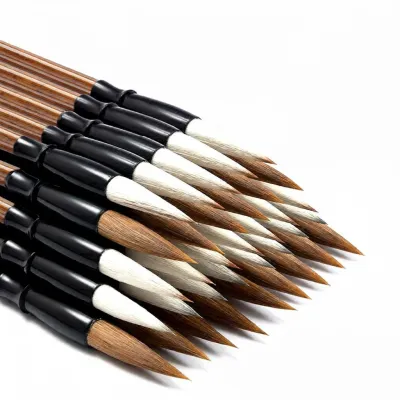
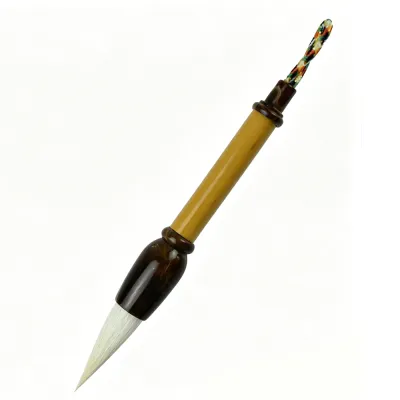
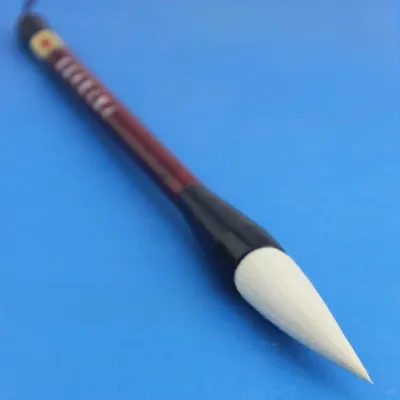
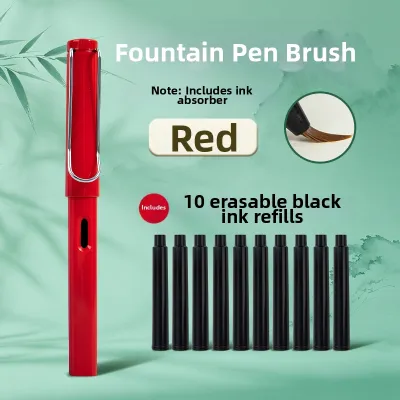
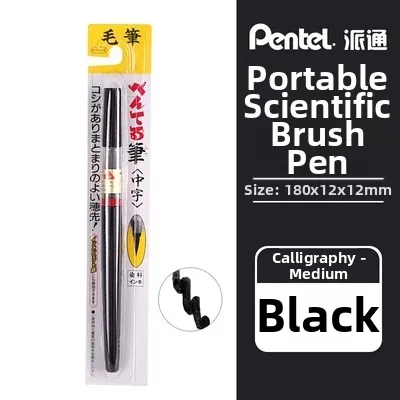
Prices are valid at publication and may change. Please refer to the product page for the latest price.
Stiff hair brushes, traditionally labeled as wolf hair (langhao) but actually crafted from weasel tail hair, offer the opposite characteristics. These brushes are highly resilient, featuring a strong spring that snaps back into a sharp point when lifted from the paper. While this stiffness provides excellent control and makes it easier to execute sharp, clean edges, stiff hair brushes hold significantly less ink. A beginner using a pure wolf hair brush may find themselves running out of ink mid-stroke, which disrupts the flow of practice.
Mixed hair brushes (jianhao) solve these problems by blending soft and stiff hairs in calculated ratios, typically featuring a stiff core surrounded by a soft outer layer. This construction delivers a balanced tool that holds a generous amount of ink while retaining enough spring to assist the writer in recovering the brush tip after a heavy stroke. For those practicing standard script (kaishu), which requires precise starts, transitions, and finishes, a mixed-hair brush is the most forgiving and versatile option.
While natural hair remains the standard for traditional practice, synthetic fiber brushes have become widely available on online marketplaces as low-cost alternatives. Synthetic brushes are durable and easy to clean, but they often lack the microscopic texture of natural hair, meaning they do not hold ink as evenly or respond to subtle pressure changes with the same sensitivity. If you choose a synthetic or blended synthetic brush, check the product labels carefully to ensure it is designed specifically for calligraphy rather than watercolor painting, as the water-retention properties differ significantly.
Selecting the Right Brush Size and Shape
Once you understand the hair type, you must select the appropriate brush size and shape to match your practice goals. Brushes are generally classified into small, medium, and large sizes, but these designations can vary between manufacturers. For foundational practice, the physical dimensions of the brush head—specifically the length of the visible hair (called the tip length) and the diameter of the brush head at the base (called the caliber)—are the most reliable measurements to check.

A medium brush typically features a tip length of approximately 3 to 4.5 centimeters and a caliber of about 0.8 to 1 centimeter. This size is perfectly suited for writing characters that are roughly 5 to 10 centimeters square, which is the standard size for beginner practice grids. Starting with a brush that is too small, such as a fine-tip brush designed for small-script calligraphy (xiaokai), is a common mistake. Small brushes force you to rely on tight, restrictive finger movements, which prevents you from developing the essential shoulder and wrist mechanics required for proper calligraphy.
Conversely, starting with an excessively large brush can make it difficult to control ink flow and maintain structural balance. A medium-to-large round brush strikes the ideal balance, encouraging you to write larger characters. Writing larger characters makes your structural mistakes highly visible, allowing you to identify and correct errors in stroke order, balance, and pressure much faster than you would when writing tiny characters.
In terms of shape, traditional Chinese calligraphy exclusively utilizes round brushes. Unlike flat or angled brushes used in Western painting, a round calligraphy brush is constructed with a perfectly symmetrical, conical tip. This round geometry is vital because traditional strokes require the brush to move in all directions—up, down, left, right, and diagonally—while keeping the tip centered within the stroke, a technique known as zhongfeng. A round brush ensures that the hair spreads evenly in all directions under pressure, allowing you to execute smooth transitions and rounded curves that are impossible to achieve with flat brush shapes.
Key Quality Checks Before Purchasing
Whether you are shopping at a local stationery store or browsing an online marketplace, knowing how to evaluate a brush’s construction will save you from purchasing a frustrating, low-quality tool. Traditional calligraphers look for four essential virtues in a brush: sharpness, evenness, roundness, and resilience. While some of these qualities can only be fully tested once the brush is wet, you can perform several reliable checks on a dry brush.
First, examine the brush tip (feng). When dry, the tip should taper smoothly to a fine, sharp point without any stray, broken, or splayed hairs. If you have the opportunity to handle the brush, gently press the tip against your finger; it should feel full and rounded at the shoulders, not hollow or flat. If you are shopping online, look for close-up product photos that show a clean, uniform cone shape. A brush that looks frizzy or blunt in photos will not perform well.
Second, inspect the connection between the brush hair and the handle. Traditional brushes do not use metal ferrules; instead, the bundle of hair is glued directly into a hollowed-out socket at the end of a bamboo or wooden shaft. Check this joint carefully to ensure there are no visible gaps, excess dried glue, or cracks in the shaft material. The handle itself should be perfectly straight, smooth to the touch, and free of splinters. Hold the brush near the top of the handle to check its balance; it should feel lightweight yet substantial enough to provide stable feedback when you write.
Finally, always verify the seller’s return or exchange policies before making a purchase. Natural hair brushes are handcrafted, and even reputable brands can occasionally produce a brush with manufacturing defects, such as a loose hair bundle or excessive, continuous shedding. While a new brush will naturally shed a few loose hairs during its first few uses, persistent shedding that ruins your practice sheets indicates poor gluing inside the socket. A flexible return policy ensures you can exchange a defective brush without hassle.
Building a Practical Starter Kit
To begin practicing effectively, you do not need an expensive or extensive collection of tools. A minimal, high-quality setup is far more beneficial than a cheap, multi-piece set filled with low-grade items. By focusing your budget on a few essential tools, you ensure a much smoother and more enjoyable learning experience.
A practical starter kit should center around two versatile brushes. Your primary tool should be a medium mixed-hair brush, which will handle the vast majority of your daily character practice. To complement this, consider adding a slightly larger goat-hair brush. The larger goat-hair brush is excellent for practicing broader, more expressive strokes on larger sheets of paper, helping you transition to free-flowing movements once you have mastered basic stroke structures with the mixed-hair brush.
Alongside your brushes, you will need three essential complementary items:
- Ink: High-quality bottled liquid ink is highly recommended for beginners. It eliminates the preparation time of grinding and ensures a consistent, smooth flow.
- Practice Paper: Look for paper printed with red grids, such as miziguan (star-shaped grids) or jiugongge (nine-square grids). These grids provide vital visual reference points for centering your characters and balancing stroke lengths.
- Brush Rest: A simple ceramic or wooden brush rest is necessary to keep your wet brush from rolling onto your desk and staining your workspace between strokes.
To protect your investment and ensure your brushes last for years, establish a consistent care routine. Before your first session, you must properly open the brush to dissolve the protective starch used during manufacturing. After every practice session, wash the brush thoroughly under cold or room-temperature running water, gently massaging the hair from the base to the tip until the water runs clear. Hang the brush vertically by its hanging loop with the tip pointing downward to dry. Never store a wet brush upright in a cup, as water will seep into the handle socket, dissolve the glue, and cause the hairs to fall out.
Frequently Asked Questions (FAQ)
How do I properly open and prepare a new calligraphy brush?
New calligraphy brushes arrive with their hairs stiffened by a water-soluble plant starch to protect the shape during transit. To open the brush, submerge the hair bundle in a container of cool or room-temperature water. Gently press the tip against the bottom or side of the container, using your fingers to massage the starch out of the hairs from the tip upward toward the handle. This process should take about five to ten minutes; do not rush it. Never use hot water, as it will melt the glue holding the hair bundle inside the handle. Avoid pulling, twisting, or bending the dry hairs forcefully, as this will snap the delicate fibers and permanently ruin the brush’s shape.
Should I use liquid ink or grind my own ink stick as a beginner?
For beginners, high-quality bottled liquid ink is the superior choice. Grinding your own ink using a traditional ink stone and ink stick is a meditative process, but it requires significant time, effort, and a specific technique to achieve the correct consistency. If the ground ink is too thick, it will clog your brush; if it is too thin, it will bleed uncontrollably on your paper. Bottled liquid ink provides a reliable, pre-mixed consistency right out of the bottle, allowing you to maximize your limited practice time and focus entirely on mastering brush control and stroke execution.
How often should I replace my calligraphy brush?
The lifespan of a calligraphy brush depends on how frequently you practice and how well you maintain it. You will know it is time to replace your brush when you observe physical signs of wear that interfere with your writing. These signs include a brush tip that permanently splays or splits during use, a loss of natural spring that prevents the brush from recovering its shape, or uneven hair lengths caused by broken fibers. If your brush can no longer form a sharp, clean point when wet, it will prevent you from executing precise strokes. However, with thorough washing and proper hanging to dry after every session, a high-quality mixed-hair brush can easily last for several months of daily practice.
Community discussion
Share your experience or ask a question. Comments are reviewed before publication.