
Selecting the appropriate sticker book for your child’s back-to-school supply list requires matching the product to their developmental stage and school environment. For lower primary students in Primary 1 and 2, the focus should be on educational activity books that build fine motor skills and reinforce early literacy or numeracy. As children progress to middle primary in Primary 3 and 4, sticker books shift toward personalization and self-expression, helping them label and identify their growing collection of school supplies. By upper primary in Primary 5 and 6, stickers become functional tools for organization, helping students manage homework diaries, track subject folders, and develop time-management habits.
Why Grade Level Matters When Selecting Sticker Books
A child’s developmental stage directly influences how they interact with stickers. In the early primary years, the physical act of peeling a sticker from a backing sheet and placing it precisely on a page is a significant fine motor challenge. Younger children require larger, thicker stickers with prominent peel-off borders to prevent frustration and accidental tearing. As hand-eye coordination and finger dexterity mature, students can easily handle smaller, intricate, and die-cut designs, allowing them to transition to detailed decorative or organizational stickers.
Cognitive engagement also evolves rapidly during the primary school journey. Lower primary students engage best with structured, puzzle-like sticker books where they match shapes, letters, or numbers to specific spots on a page. This active participation reinforces classroom learning in a tactile format. Conversely, older students seek open-ended utility. They use stickers to categorize information, highlight key deadlines in their planners, or express their personal style on their belongings.
Products mentioned in this guide
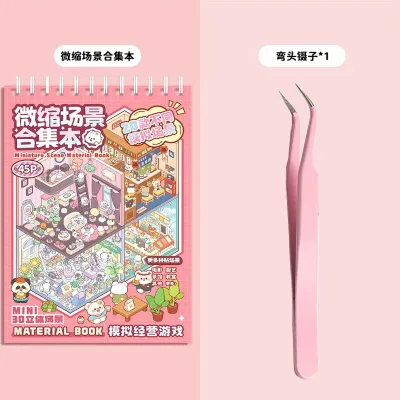
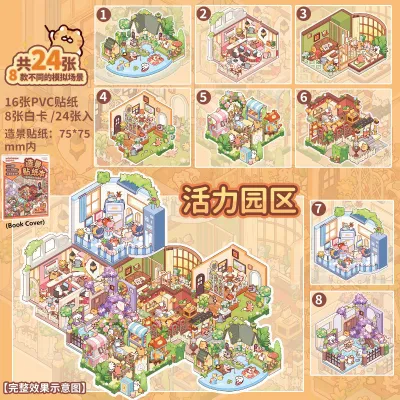
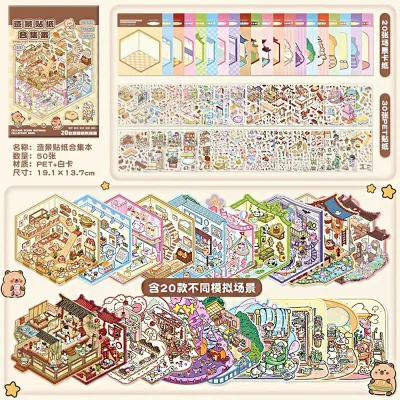
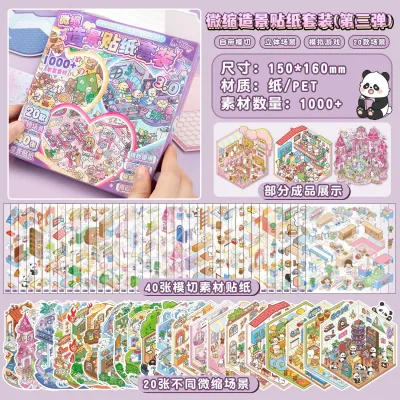
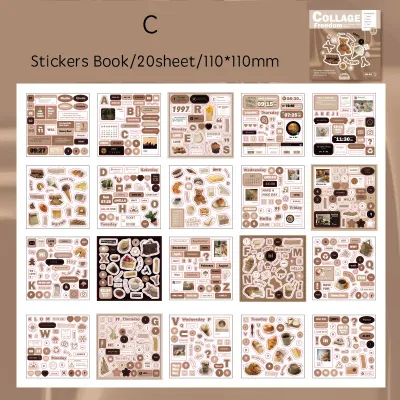
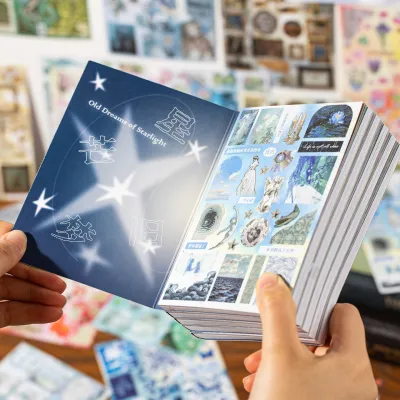
Prices are valid at publication and may change. Please refer to the product page for the latest price.
Finally, school environment and classroom policies dictate what is appropriate to bring to school. Many primary schools maintain strict guidelines regarding toys and potential distractions in the classroom. While an educational sticker book might be welcomed during recess or after-school care in the lower primary years, decorative stickers should generally be applied to items at home rather than brought to school as loose sheets. Understanding these boundaries helps parents select items that support, rather than disrupt, the learning environment.
Lower Primary (Primary 1 to 2): Educational and Activity Sticker Books
Entering Primary 1 is a major transition, and educational sticker books can ease this shift by making foundational learning interactive. For these younger learners, look for books that focus on basic literacy, phonics, simple arithmetic, and shape recognition. These books act as gentle reinforcement for the formal curriculum, allowing children to practice spelling or counting through hands-on play. The tactile feedback of placing a sticker helps solidify these abstract concepts in a child’s mind.

Physical design is critical when selecting books for this age group. Standard adult-use stickers are often too thin and fragile, leading to tears and tantrums. Instead, prioritize books featuring large, chunky stickers with generous margins. Some manufacturers include a peel-assist border or perforated backing sheets, which make it much easier for small fingers to lift each piece independently. This independence builds confidence and keeps the child engaged without requiring constant parental assistance.
Reusable sticker books are highly recommended for the lower primary years. These books typically feature laminated or silicone-coated pages and thicker, static-clinging or low-tack vinyl stickers. Because these stickers can be peeled off and repositioned multiple times, they allow children to correct mistakes freely. If a child places a letter in the wrong spot, they can simply lift and move it, removing the fear of failure and encouraging a growth mindset during early learning activities.
Middle Primary (Primary 3 to 4): Decorative and Personalization Stickers
By Primary 3 and 4, students are developing distinct personal interests, hobbies, and a sense of identity. Sticker books for this stage should focus on personalization, allowing children to customize their school supplies, such as plain plastic folders, notebook covers, and pencil cases. Popular themes often include science, space exploration, animals, sports, or whimsical illustrations. Giving children the autonomy to decorate their own gear fosters a sense of ownership and responsibility over their school belongings.
Because these stickers will be placed on items that travel back and forth in a school bag, material durability is a primary consideration. Standard paper stickers quickly scuff, fade, or peel at the corners when subjected to daily friction. Parents should check product specifications for vinyl, polyethylene, or laminated finishes. These materials offer superior tear resistance and can withstand light moisture, such as accidental water bottle spills or humid weather, ensuring the decorations remain intact throughout the school term.
While durability is key, the physical format of the sticker book itself must remain practical. Primary school bags can become quite heavy with textbooks, files, and writing materials. To avoid adding unnecessary bulk, opt for slim, lightweight sticker booklets or flat sticker sheets rather than thick, hardbound sticker compilation books. A compact booklet containing a few hundred high-quality stickers is far easier to store at home or slip into a homework folder than a heavy, oversized volume.
Upper Primary (Primary 5 to 6): Planner, Reward, and Subject-Specific Stickers
In Upper Primary, the academic workload increases, requiring students to develop strong organizational and time-management skills. Sticker books for Primary 5 and 6 should serve as functional tools rather than toys. Planner and diary stickers are highly effective for this age group. These books contain small, functional icons such as exclamation marks for urgent tasks, books for reading assignments, and calendar markers for exam dates. Using these visual cues helps students map out their weekly homework schedules and project deadlines clearly.
Subject-specific indexing stickers are another valuable addition to an older student’s toolkit. With multiple subjects to manage—including English, Mathematics, Science, and Mother Tongue—students can use color-coded or labeled stickers to index their notebooks and files. Placing a distinct science-themed sticker on a science journal or a color-coded tab on a math workbook allows for quick identification during hectic lesson transitions, saving valuable classroom time.
At this developmental stage, children often reject designs they perceive as childish. When shopping for upper primary students, look for sticker books featuring mature, minimalist, or aesthetic designs. Geometric patterns, clean typography, and subtle color palettes are generally preferred over cartoonish characters. Selecting designs that align with their maturing tastes ensures that students actually use the stickers to organize their work, rather than leaving them forgotten in a drawer.
Essential Features to Verify Before Purchasing
Before finalizing your back-to-school purchase, it is essential to verify several practical features to ensure the sticker books are suitable for school use. First, evaluate the adhesive quality. School-appropriate stickers should feature a medium-to-low tack adhesive, particularly if they might be applied to school-issued textbooks or library books. High-tack, permanent adhesives can leave a sticky, dirt-attracting residue or tear paper covers when removed. Look for labels indicating removable adhesive or clean removal to protect expensive school materials.
Second, check the ease of peeling. High-quality sticker books often feature perforated pages, allowing parents or students to tear out a single sheet at a time. This is far more convenient than forcing a child to flip back and forth through a bound book while trying to work. Additionally, examine the die-cut lines on the stickers; they should be deep and clean so that the stickers separate from the backing sheet effortlessly without tearing the edges.
Third, consider the physical portability and dimensions of the book. A standard A5 or slim A4 size is ideal, as it fits neatly into standard school bags and desk drawers. Avoid oversized, heavy formats that are difficult to store. Finally, always check the manufacturer’s age recommendation printed on the packaging. This ensures the content is cognitively appropriate and, more importantly, alerts you to potential choking hazards for households with younger siblings.
Sticker Book Selection Matrix by Grade Level
| Grade Level | Primary Sticker Type | Core Purpose | Key Selection Criteria |
|---|---|---|---|
| Lower Primary (P1–P2) | Educational & Activity | Skill reinforcement & motor development | Large size, easy-peel, reusable vinyl, bold educational themes |
| Middle Primary (P3–P4) | Decorative & Personalization | Self-expression & item identification | Water-resistant vinyl, durable laminate, slim and lightweight booklets |
| Upper Primary (P5–P6) | Planner & Subject-Specific | Organization & time management | Minimalist designs, functional icons, color-coded index tabs, clean-removal adhesive |
Frequently Asked Questions (FAQ)
Are reusable sticker books better for daily school use?
Reusable sticker books are excellent for home-based learning and recess activities in lower primary, as they allow younger children to correct placement mistakes and reuse pages without tearing. However, they are less suitable for daily school organization in older grades. For middle and upper primary tasks—such as labeling folders or marking homework deadlines in a planner—permanent or semi-permanent adhesive stickers are much better. Reusable stickers lack the necessary grip to stay attached to items that are frequently pulled in and out of school bags, meaning they can easily fall off and get lost.
How can I prevent stickers from damaging my child's textbooks and folders?
To protect school-issued textbooks and folders from adhesive damage, always test a sticker on a small, inconspicuous area of the material first to see if it peels off cleanly. If you plan to use permanent decorative stickers on textbook covers, consider wrapping the book in a clear plastic book cover first, then applying the stickers directly onto the plastic wrap. This customizes the book without touching the actual paper cover. For folders, look for stickers labeled with removable or low-tack adhesive, which are designed to lift off plastic surfaces without leaving a sticky residue.
Community discussion
Share your experience or ask a question. Comments are reviewed before publication.