
Selecting the right school supplies involves matching a child’s physical development with their academic workload. A stapler is a fundamental tool that transitions from a simple crafting aid in early primary school to an essential document organizer in secondary school. Choosing the correct model requires balancing hand size, grip strength, safety features, and the thickness of typical school assignments. By aligning the stapler’s mechanical design with your child’s grade level, you can prevent hand fatigue, avoid jammed mechanisms, and ensure their schoolwork remains neatly organized throughout the academic year.
Core Selection Criteria for Student Staplers
To find the most suitable stapler for a student, parents must evaluate several physical and practical factors rather than simply purchasing the first model they see on an online marketplace. The primary consideration is the relationship between a student’s hand size and the physical dimensions of the tool. A stapler that is too large forces a young child to use awkward, two-handed pressing angles, which reduces leverage and increases the risk of the tool slipping.
Grip strength also varies significantly between early childhood and adolescence. Younger students require mechanisms that maximize mechanical advantage, allowing them to bind pages with minimal physical exertion. Without this leverage, children may fail to press the mechanism fully, leading to bent staples and loose pages.
Products mentioned in this guide
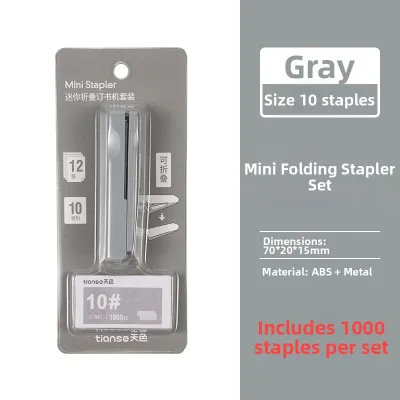
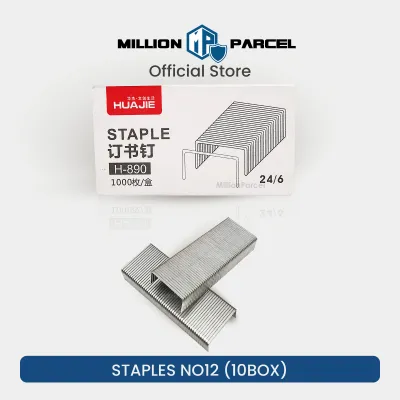
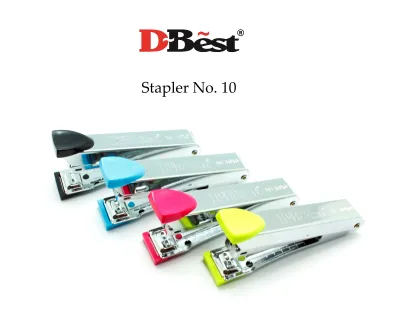
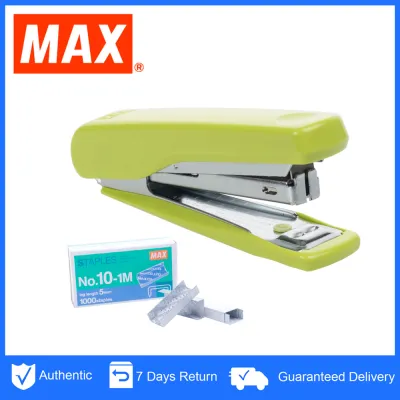
Prices are valid at publication and may change. Please refer to the product page for the latest price.
Fine motor skill development is another critical factor. Operating a mechanical binding tool requires precise finger placement and control, especially when reloading staples or clearing minor jams. A tool with exposed metal edges or a stiff spring tension can be frustrating or even hazardous for a child who is still developing coordination.
Academic requirements also dictate the necessary sheet capacity. While a lower primary student might only need to bind two or three sheets of a daily worksheet, a secondary student frequently handles multi-page project reports, lab sheets, and exam preparation booklets. The stapler must match these varying thicknesses without buckling or failing to close the staple legs properly.
Finally, parents must balance portability and stability. A heavy, full-metal desktop model provides excellent stability on a home study desk but adds unnecessary weight to a student’s backpack. Conversely, an ultra-lightweight pocket model is highly portable but may slide around during heavy use, making it less practical for binding thick documents at school.
Lower Primary (Grades 1 to 3): Prioritizing Safety and Small Hands
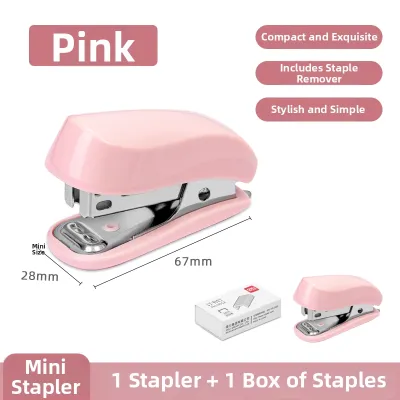
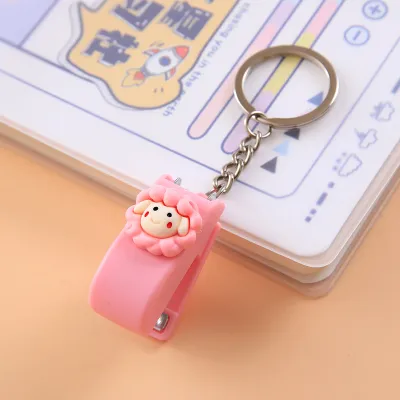
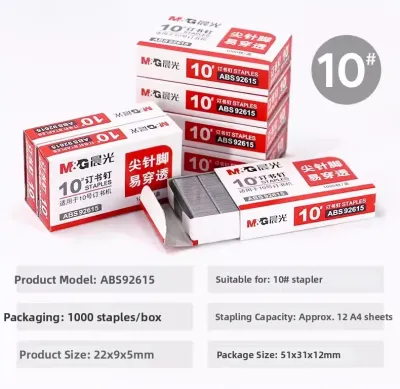
During the first few years of primary school, children are still developing their hand muscles and fine motor coordination. For these students, standard office staplers are often too bulky and difficult to squeeze. Mini or compact staplers are specifically designed to fit comfortably within smaller hand spans, allowing young students to operate them using a natural, single-handed grip. These compact models typically utilize smaller staple sizes, such as No. 10 staples, which require less force to penetrate paper and fold flat.

Safety is the paramount concern for this age group. Parents should look for staplers featuring blunt-edge designs, fully enclosed mechanical parts, or padded plastic casings. These features help prevent small fingers from getting pinched in the rear hinge or caught near the staple driver. Some child-friendly models incorporate a locked staple magazine that prevents children from opening the loading chamber without adult assistance, reducing the risk of accidental staple pricks.
The sheet capacity for lower primary staplers is generally modest, typically ranging from 2 to 10 sheets of standard copy paper. This is entirely sufficient for basic daily worksheets, spelling lists, and simple classroom craft projects. Because these tools are used infrequently but must remain reliable, choosing a model with a simple, direct-drive mechanism minimizes the likelihood of internal jams.
To foster independence, look for models with visual indicators, such as a transparent plastic window along the staple channel. This allows young students to easily see when their staple supply is running low before the tool stops functioning. Bright, high-contrast colors also make the tool easy to locate inside a crowded school bag or desk drawer, helping young children keep track of their personal belongings.
Upper Primary (Grades 4 to 6): Transitioning to Standard Tasks
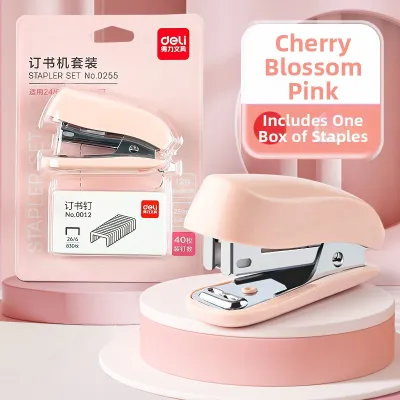
As students enter upper primary school, their academic workload increases, and they begin managing longer writing assignments, science reports, and multi-page worksheets. At this stage, children have developed sufficient hand span and grip strength to transition to standard half-strip staplers. These models hold half a strip of standard staples (typically size 24/6 or 26/6) and offer a practical compromise between the portability of a mini stapler and the capacity of a full-sized desktop model.
Ergonomics become increasingly important as the volume of schoolwork grows. Look for staplers with soft rubber grips on the top cap and a non-slip rubber base. These features provide a comfortable pressing surface for the palm and prevent the stapler from sliding across the desk during repetitive binding tasks. A stable base allows the student to press down firmly with one hand while keeping the paper aligned with the other.
Upper primary is also the ideal time to introduce students to independent supply management. This includes teaching them how to safely load new staple strips and how to use an integrated or handheld staple remover. Many half-strip models feature a built-in metal remover at the tail end, which is highly convenient for correcting mistakes on the go. Parents should guide their children through the process of pulling back the top cover, inserting a fresh strip of staples, and gently releasing the spring-loaded pusher.
When evaluating durability, consider the construction materials. While all-plastic models are lightweight and inexpensive, they are more prone to cracking if dropped on hard classroom floors. A plastic body with internal metal reinforcement in the driver and anvil provides the best balance of durability and weight, ensuring the tool can survive daily transport in a school bag while maintaining precise staple alignment over several school terms.
Secondary School (Grades 7 to 12): Handling Heavier Workloads
Secondary school students face demanding academic schedules characterized by extensive research papers, lab portfolios, and exam preparation booklets. To handle these heavier workloads, students require robust, high-capacity staplers that can reliably bind thick stacks of paper without jamming. Full-strip desktop staplers are highly suitable for home study spaces, while durable, metal-reinforced half-strip models remain the preferred choice for carrying to school.
For students who frequently compile thick reports, a flat-clinch mechanism is an exceptionally useful feature. Unlike standard staplers that bend the staple legs into a curved shape, flat-clinch models fold the legs completely flat against the back of the paper. This reduces the thickness of the bound corner by up to 30 percent, allowing multiple stapled documents to stack neatly inside folders, binders, and school bags without creating bulky, uneven corners.
Stapleless options are also worth considering for specific secondary school scenarios. These innovative tools bind paper by cutting and folding a small tab through the sheets, eliminating the need for metal refills entirely. While they are generally limited to binding five to ten sheets, they are excellent for temporary drafts, quick homework submissions, and environmentally conscious portfolios. They also eliminate the risk of torn pages when separating sheets later.
Long-term durability is essential for older students who rely on their tools daily. An all-metal inner chassis combined with a jam-resistant bypass mechanism ensures that the stapler can withstand heavy pressure without misaligning. Look for models that offer a dual-stapling function, allowing the user to switch between permanent stapling and temporary pinning by rotating the metal anvil at the base.
Key Features to Verify Before Purchasing
Before purchasing a stapler from a local stationery shop or an online marketplace, parents should verify several technical specifications to ensure the tool is practical for daily student use.
- Staple Size Compatibility: Always check which staple sizes the tool accepts. While standard 24/6 and 26/6 staples are widely available in almost every school bookstore and office supply shop, some mini staplers require proprietary or less common sizes like No. 10 or No. 11. Sourcing uncommon refills can be difficult and expensive, so choosing a model that uses standard, universally available sizes is highly recommended.
- Jam-Clearing Mechanisms: A jammed stapler can disrupt a student's study flow. Look for models with easy-access channels, such as a front-loading button or a top cover that opens a full 180 degrees. These designs allow the student to quickly clear bent staples without needing specialized tools or risking injury to their fingers.
- Base Padding and Noise Reduction: A fully padded rubber base serves two purposes: it protects wooden study desks at home from scratches and dampens the sharp clicking noise of stapling. This is particularly important for students who study in quiet environments like school libraries or shared bedrooms.
- Weight and Footprint: Consider where the stapler will be used most frequently. If it is meant to live in a pencil case, measure the case's dimensions and choose a lightweight, slim-profile model. For home use, a heavier desktop model with a wider footprint provides the stability needed for one-handed operation.
Frequently Asked Questions (FAQ)
Is a standard desktop stapler safe for lower primary students?
Standard desktop staplers are generally not recommended for lower primary students. These adult-sized tools require a level of grip strength that young children have not yet developed, often leading to incomplete stapling, bent staples, and frequent jams when operated with insufficient force. Furthermore, the larger, exposed metal mechanisms and heavy spring-loaded top covers present a real finger-pinch hazard for small hands. If a child must use a standard stapler, close adult supervision is necessary to ensure they keep their fingers clear of the anvil and driver area.
When are stapleless staplers appropriate for schoolwork?
Stapleless staplers are highly appropriate for daily homework assignments, spelling lists, and temporary drafts that consist of only a few pages. Because they do not use metal consumables, they are safe for younger children and highly cost-effective over time. However, they are not suitable for official exam submissions, thick project portfolios, or documents that will be handled repeatedly, as the paper-fold bond can pull apart under tension. For major assignments, a traditional metal-staple model remains the standard requirement.
How can students safely clear a jammed stapler?
To safely clear a jam, the student should first open the top cover to release the spring tension on the staple strip. Next, they should remove the remaining strip of staples from the magazine. If a bent staple is lodged in the driver channel, the student should use a pair of tweezers, small pliers, or the flat edge of a metal ruler to gently pry it loose. Students should never use sharp, brittle objects like pencil tips, pen nibs, or scissors, as these can snap under pressure, causing injury or permanently damaging the stapler’s internal mechanism.

Community discussion
Share your experience or ask a question. Comments are reviewed before publication.