
Selecting the ideal plaster of paris for your craft project requires matching the physical properties of the powder to your specific application, whether you are casting delicate figurines, carving a sculpture, or building a multi-part mold. While standard craft-grade plaster is widely available and highly suitable for simple, lightweight castings, specialized projects demand formulations with higher density, lower expansion rates, or extended working times. Choosing the wrong type can lead to brittle models that chip easily, molds that crack under stress, or a mixture that hardens in your mixing bowl before you can pour it. By evaluating key specifications such as density, setting time, and compressive strength, you can ensure your finished piece achieves the durability and detail your design requires.
Understanding Plaster Grades and Formulations
Plaster of paris is chemically known as calcium sulfate hemihydrate, produced by heating gypsum stone to drive off water. When you mix this powder with water, it rehydrates back into calcium sulfate dihydrate, forming a solid crystalline structure. However, the manufacturing process determines whether the plaster consists of beta-hemihydrate or alpha-hemihydrate crystals, which directly dictates the material’s water demand, density, and ultimate strength.
Standard craft-grade plaster is primarily composed of beta-hemihydrate. These crystals are irregular and porous, requiring a relatively high volume of water to create a workable, pourable slurry. Because much of this water evaporates during the drying process, the cured plaster contains microscopic voids, leaving it relatively lightweight, soft, and easy to carve, but also more fragile and highly absorbent. In contrast, higher-density formulations, such as pottery plaster, dental plaster, and industrial casting stones, are made from alpha-hemihydrate crystals. These crystals are dense, regular, and low in porosity, requiring significantly less water to mix. The resulting cured material is exceptionally hard, heavy, and resistant to chipping, making it the preferred choice for durable molds and high-definition castings.
Products mentioned in this guide
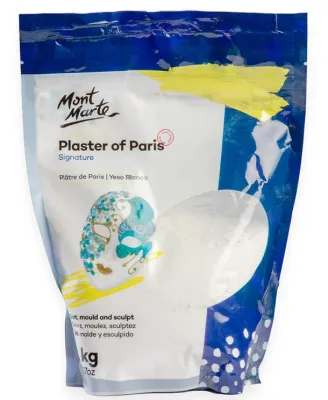

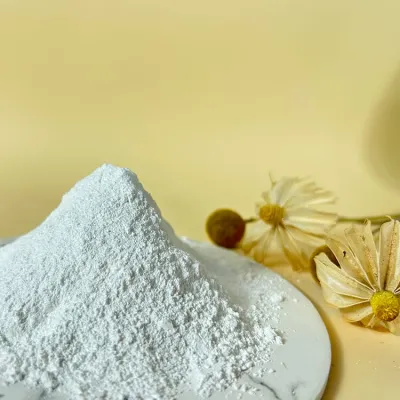

Prices are valid at publication and may change. Please refer to the product page for the latest price.
Setting time is another critical variable that varies by formulation. The curing process consists of three distinct phases: the working time (or pour phase), the initial set (when the plaster loses its gloss and becomes a firm, carveable solid), and the final set (when the chemical reaction is complete and the plaster cools down). Standard craft plasters typically offer a brief working window of 5 to 10 minutes and reach an initial set within 20 to 30 minutes. Specialized modeling plasters are formulated with retarders to extend the working time to 20 minutes or more, allowing artists to build up shapes gradually. Conversely, rapid-setting dental or casting plasters may set in under 5 minutes, requiring swift, precise handling.
The porosity of the cured plaster also determines how it interacts with post-processing treatments. High-porosity craft plasters absorb liquids rapidly, which can cause acrylic paints, sealants, or gesso to dry unevenly or sink into the surface, requiring multiple primer coats. Low-porosity alpha-grade plasters provide a smoother, less absorbent surface that accepts fine detail paints and sealants more uniformly, though they still require thorough drying before any surface finish is applied.
Matching Plaster Types to Your Craft Application
To select the correct plaster, you must align your project’s structural demands with the physical properties of the material. A simple casting of a flat ornament requires very different material characteristics than a deep, multi-part mold designed to withstand repeated clay pressings. By using a systematic selection framework, you can avoid common failures like structural cracking, loss of fine detail, or premature setting.

Sculpting and Hand-Building
For direct sculpting, hand-building, and carving, the primary requirements are an extended working window and a cured hardness that allows for easy manipulation. Standard casting plasters set too quickly and cure too hard for comfortable hand-carving, often chipping or splintering when worked with chisels or rasps. Sculptors require a material that remains in a plastic, workable state long enough to be built up in layers over an armature or shaped by hand.
To achieve this, look for products explicitly labeled as modeling plaster, sculpting plaster, or carving stone. These formulations typically feature a slower setting time, giving you ample opportunity to smooth surfaces, build contours, and refine details. Once cured, these plasters maintain a slightly softer, more uniform crystalline structure that responds beautifully to sandpaper, rasps, and carving tools without fracturing. Always verify the manufacturer’s label for specific modeling suitability, as these products are chemically balanced to ensure that subsequent layers adhere well to previously applied, semi-dry sections.
Mold-Making and Detail Casting
Creating reusable molds or casting intricate, high-definition figurines demands a plaster with exceptional dimensional stability, high density, and minimal porosity. When pouring plaster over a master model to create a mold, the material must flow effortlessly into every crevice to capture fine textures, such as wood grain, skin pores, or delicate fabric weaves. Standard craft plaster is often too weak to survive the demolding process, especially when pulling flexible silicone or rigid clay out of the mold.
For these applications, alpha-hemihydrate formulations like pottery plaster or ultra-hard casting stones are essential. These materials cure to a dense, porcelain-like finish that resists abrasion, chipping, and wear over multiple casting cycles. Furthermore, you must check the manufacturer’s specifications for the expansion rate. High-quality mold-making plasters exhibit extremely low expansion rates (often under 0.1%), ensuring that the cured mold is an exact dimensional replica of the original model. A plaster with a high expansion rate can distort fine details or bind tightly to the master model, making demolding exceptionally difficult.
Large-Scale or Structural Casting
Large-scale sculptures, architectural panels, and heavy structural castings present unique challenges regarding weight, shrinkage, and structural integrity. As plaster cures, it undergoes an exothermic reaction, generating heat. In massive, thick castings, this heat can build up rapidly, causing thermal stress that leads to internal cracking and warping. Additionally, the sheer weight of a large solid plaster piece can make it difficult to handle and prone to catastrophic failure under its own load.
To mitigate these risks, large-scale projects require structural-grade plasters or the strategic integration of approved reinforcing fillers. Incorporating materials such as chopped fiberglass, hemp fibers, or burlap into the wet mix distributes tensile stress and prevents cracks from propagating through the piece. For very large volumes, you can also blend the plaster with lightweight aggregates like perlite or pumice to reduce the overall weight without sacrificing bulk volume. When planning large castings, always verify the compressive strength specifications on the product packaging, and design an internal armature made of rust-resistant wire, wood, or metal to support the weight of the plaster during both the pouring and curing phases.
Key Selection Criteria and Product Specifications
When comparing different plaster products at an art supply store or online retailer, reading the technical data sheet or product packaging is the most reliable way to ensure compatibility with your project. The first specification to evaluate is the water-to-plaster ratio, which is always expressed as a weight ratio (for example, 70 parts water to 100 parts plaster by weight). Deviating from the manufacturer’s recommended ratio to make the mix thinner or thicker will severely compromise the final product. Adding too much water dilutes the crystalline structure, resulting in a weak, chalky, and highly fragile cast. Conversely, using too little water prevents the powder from fully hydrating, leading to dry pockets, clumps, and incomplete curing.
Expansion and contraction rates are equally critical, particularly for interlocking parts or precise architectural models. All plasters expand slightly as they crystallize, but the degree of expansion varies. Standard craft plasters may expand by up to 0.3%, which is negligible for simple crafts but problematic for tight-fitting joints. High-precision casting stones limit this expansion to less than 0.05%. Reviewing these specifications allows you to anticipate dimensional changes and adjust your molds accordingly.
Material freshness is another vital factor that is often overlooked. Plaster of paris is highly hygroscopic, meaning it actively absorbs moisture from the surrounding air. In humid environments, such as Singapore, even a tiny breach in the packaging can allow ambient humidity to initiate premature hydration, creating tiny, hard clumps within the powder. This compromised plaster will exhibit erratic setting times, reduced strength, and a grainy texture. Before purchasing, check the packaging for manufacturing dates or shelf life indicators, and inspect the bag or tub to ensure it is completely airtight and free of punctures.
Finally, always locate and review the Safety Data Sheet (SDS) provided by the manufacturer. Plaster of paris powder consists of extremely fine particles that can easily become airborne during mixing. Inhaling this dust can irritate the respiratory tract, and prolonged exposure can lead to more serious lung conditions. The SDS outlines essential handling precautions, including the use of a well-fitting dust mask (such as an N95 or equivalent respirator), protective eyewear, and gloves. Additionally, the SDS highlights the exothermic nature of the curing process; because plaster can reach high temperatures as it sets, you must never attempt to cast body parts directly with raw plaster, as doing so can cause severe thermal burns.
Purchasing Checklist and Storage Best Practices
To ensure your crafting process goes smoothly, follow a structured approach when purchasing and storing your plaster supplies. Before leaving the store or accepting an online delivery, perform a thorough physical inspection of the product. Squeeze the bag gently to check for hard lumps, which indicate that moisture has already penetrated the packaging and ruined a portion of the powder. Ensure that all heat-sealed seams are intact and that there are no powdery residues on the outside of the container, which could signal a tear or puncture.
When deciding where to buy, weigh the advantages of local art supply stores against online craft retailers. Local stores allow you to inspect the packaging physically before paying and avoid the risk of damage during transit. Furthermore, because plaster is heavy, shipping fees from online retailers can significantly increase your total cost in S$. However, specialized online retailers often carry a wider selection of high-grade alpha plasters, dental stones, and modeling formulations that may not be stocked on local retail shelves. If ordering online, ensure the seller packages the plaster in heavy-duty, moisture-resistant plastic wrap to protect it from humid weather during shipping.
Once you have purchased your plaster, proper storage is essential to preserve its shelf life, especially in warm, humid climates. Never store plaster in its original paper bag once opened. Instead, transfer the powder to a heavy-duty, airtight plastic bucket with a rubber-gasket lid. For added protection, place the original bag inside a thick plastic trash bag, tie it securely, and then place it inside the bucket. Adding silica gel desiccant packs to the container can help absorb any residual moisture. Always store the container off concrete floors—which can transfer moisture upward—and keep it in a cool, dry, climate-controlled room.
Safe cleanup and disposal are the final steps in a successful plaster project. Never wash wet plaster, mixing residue, or plaster-contaminated water down household drains. Plaster of paris is hydraulic, meaning it can set and harden underwater. Pouring it down the sink will inevitably lead to severe plumbing blockages that require expensive professional repairs. Instead, allow the leftover plaster in your mixing bowl to cure completely. Once it has hardened, flex the mixing bowl (flexible silicone bowls are ideal for this) to pop the solid plaster out, and dispose of it in your regular household trash. For wash water, let the plaster particles settle to the bottom of a bucket overnight, pour off the clear water on top, and scrape the settled plaster sludge into the bin.
Frequently Asked Questions (FAQ)
Can I use standard craft plaster for jewelry or metal casting?
No, standard craft-grade plaster of paris is not suitable for jewelry or metal casting. Standard plaster contains chemically bound water that is released when heated. When exposed to the extreme temperatures of molten metals—such as silver, gold, or bronze—this trapped moisture rapidly turns into steam. Because the steam cannot escape quickly through the dense plaster, it can cause the mold to crack, degrade, or violently explode, posing a severe safety hazard. For metal casting, you must use specialized investment casting powders. These products are formulated with refractory materials, such as silica or cristobalite, which can withstand high thermal shock and maintain structural integrity at temperatures exceeding 1,000 degrees Celsius.
How can I adjust the setting time if it cures too fast?
If your plaster is curing too quickly, the safest and most reliable method to extend the working time is to adjust the temperature of your mixing water. Using cold water slows down the chemical crystallization process, giving you a few extra minutes of working time. Conversely, warm water will accelerate the set. Always check the manufacturer’s label for specific temperature recommendations. If you require a significantly longer working window, look for commercial plaster retarders designed specifically for the formulation you are using. Avoid using unverified household additives like vinegar, lemon juice, or salt. While these household items can alter the setting speed, they disrupt the delicate crystalline alignment of the rehydrating gypsum, severely compromising the final compressive strength and leaving your finished craft brittle, chalky, and prone to crumbling.
Community discussion
Share your experience or ask a question. Comments are reviewed before publication.