
Laminating school projects, flashcards, and art pieces helps them survive the busy school year, but trimming those plastic edges requires the right tool. Selecting a laminate cutter for a student is not a one-size-fits-all decision; it requires balancing safety, physical coordination, and project demands. While primary school students need highly protected, enclosed cutting mechanisms to prevent accidental finger contact, secondary school students require tools that offer greater precision, alignment grids, and the capacity to slice through thicker laminating pouches. Matching the tool to the student’s grade level ensures that school assignments are completed neatly without compromising safety.
Understanding Laminate Cutter Types for School Projects
Before choosing a tool, it is essential to understand the primary types of laminate cutters available for school tasks. Each type operates differently, offering distinct advantages in terms of safety, capacity, and cutting style.
Rotary trimmers are among the most common tools for school-aged children. These devices feature a circular blade housed inside a plastic carriage that slides along a metal rail. Because the blade is enclosed, it only makes contact with the material when pressed down, making it an excellent option for straight, controlled cuts on standard laminating pouches.
Products mentioned in this guide
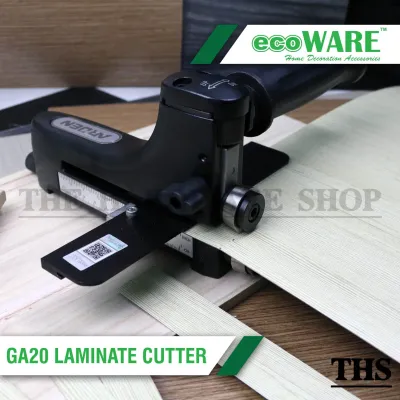
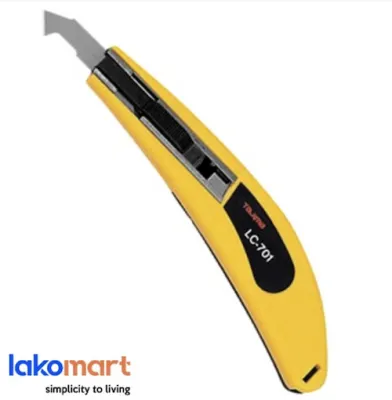
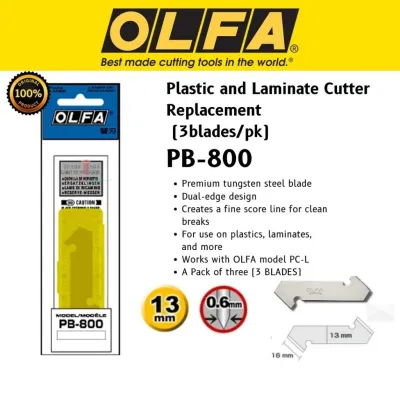
Prices are valid at publication and may change. Please refer to the product page for the latest price.
Guillotine cutters utilize a classic lever-action design with a long, pivoting blade that cuts downward against a flat edge. This style is highly efficient for slicing through thicker laminated sheets, heavy cardstock, or multiple pages at once. However, the exposed blade and the physical force required to operate the lever make them more suited for older users or supervised environments.
Safety scissors and manual craft cutters represent the most basic trimming options. While safety scissors are ideal for young children cutting simple shapes, manual craft cutters or utility knives offer high flexibility for intricate, curved cuts. These manual tools require a steady hand and a protective cutting mat to prevent damage to desks and tabletops.
Selecting a Laminate Cutter for Primary School Students
Primary school students are still developing their fine motor skills and spatial awareness, which makes safety the absolute priority when selecting stationery tools. At this stage, any cutting tool used at home or in the classroom must minimize the risk of accidental cuts.

When evaluating safety mechanisms, look for rotary trimmers that feature fully enclosed blades. Many student-friendly models are designed so that the blade only emerges from its protective housing when the user applies downward pressure during the cutting stroke. Finger guards and physical barriers along the cutting rail provide an extra layer of protection, keeping small hands far away from the cutting path.
The physical size and handling of the cutter also play a critical role in usability. A compact, lightweight base is ideal because it fits easily on smaller study desks and can be stored away without difficulty. The cutting mechanism should require minimal physical force to operate, allowing younger children to slide the carriage smoothly without shaking or tipping the entire unit.
Budget considerations are naturally part of the decision-making process for parents preparing for the school year. While it is tempting to opt for the cheapest available utility knife, investing in a dedicated safety trimmer is a necessary step for peace of mind. Fortunately, many basic rotary trimmers designed for home and school use are highly affordable in S$, offering robust safety features without requiring a significant financial investment.
Choosing a Laminate Cutter for Secondary School Students
As students transition into secondary school, their academic projects become more complex, requiring higher precision and the ability to handle a wider variety of materials. Older students are fully capable of managing more advanced tools, but their equipment must match their increased workload.
Precision and alignment features become critical for secondary school subjects like geography, design and technology, or art. Look for laminate cutters equipped with built-in alignment grids, angle markings, and clear measurement rulers printed directly on the base. These guides help students align their laminated sheets perfectly, ensuring straight borders and professional-looking presentations.
The capacity and durability of the cutter must also step up to meet secondary school demands. Standard laminating pouches range from thin 75-micron sheets to heavy-duty 150-micron options. A suitable cutter for this grade level must be able to slice through these thicker plastic layers cleanly, without tearing the edges or leaving rough, sharp corners.
Before purchasing a cutter for school use, it is vital to verify campus rules regarding stationery and cutting tools. Many secondary schools have strict regulations prohibiting students from bringing open blades, utility knives, or large paper cutters onto school premises. If the tool is intended for classroom projects, a compact, enclosed rotary trimmer is usually the most compliant option, whereas larger guillotine cutters should remain strictly at home.
Essential Safety Checks and Maintenance for Student Use
Regardless of the student’s grade level, regular maintenance and safety checks are essential to keep any laminate cutter functioning safely and effectively throughout the academic year. Dull or damaged tools are not only frustrating to use but can also lead to slips and accidents.
A quick pre-use inspection should become a habit before starting any trimming project. Students or parents should check for loose screws, misaligned rails, or cracked plastic guards that could compromise the tool’s stability. If the cutting carriage feels loose or wobbles during a test slide, it should be adjusted or repaired before cutting actual project materials.
Safe storage is another critical aspect of maintaining an accident-free home environment. When the cutter is not in use, the blade carriage should be locked in its designated safety position, and any protective covers should be securely fastened. Store the cutter flat on a shelf or in a drawer that is out of reach of younger siblings who might mistake the tool for a toy.
Cleaning routines are particularly important when working with laminated materials. Over time, tiny amounts of adhesive residue from the edges of heated laminating pouches can transfer to the cutter blade. This sticky buildup causes the blade to drag, resulting in jagged cuts and jammed carriages. Wiping the blade carefully with a dry microfiber cloth or a mild adhesive remover—under adult supervision—will keep the cuts clean and extend the lifespan of the tool.
Frequently Asked Questions (FAQ)
Can a primary school student use a guillotine cutter safely?
A guillotine cutter is generally not recommended for primary school students due to the physical coordination and force required to operate the lever safely. The exposed blade of a guillotine poses a significant risk of injury if a child’s hand slips while holding the paper in place. Even models equipped with basic finger guards require close attention and physical strength that younger children may not have fully developed. For primary school projects, parents should always opt for enclosed rotary trimmers as the default safer alternative, reserving guillotine cutters for adult use or highly supervised secondary school environments.
How do I know when the laminate cutter blade needs replacing?
A dull blade is easy to identify through several observable signs during use. If the cutter begins to tear, fray, or leave rough, jagged edges on the laminated plastic instead of a clean, smooth slice, the blade has likely lost its sharpness. You may also notice that it requires significantly more physical force to push the carriage across the paper rail. When replacing the blade, always consult the manufacturer’s instructions for compatible refill cartridges, and ensure that old blades are wrapped securely before disposal to prevent accidental cuts in the household trash.
Community discussion
Share your experience or ask a question. Comments are reviewed before publication.