
When selecting ik paper for your home or office, the choice between 70gsm, 75gsm, and 80gsm directly impacts print quality, appearance, and durability. Grammage represents the weight and density of the paper, influencing its physical thickness, opacity, and mechanical stiffness. Matching the right paper to your specific printing tasks ensures professional results while managing operational costs.
For high-volume internal drafts and single-sided text documents, 70gsm paper provides an economical, space-saving solution. If you require a balanced, everyday option that offers improved stiffness and reduced jam rates for standard reports, 75gsm serves as the ideal middle ground. Meanwhile, 80gsm paper stands as the premium standard, delivering the high opacity and rigid tactile feel required for professional client proposals, double-sided printing, and high-density color graphics.
What Paper Grammage Actually Means for Your IK Paper Prints
Paper grammage is measured in grams per square meter (gsm). This metric defines the weight of a single sheet of paper measuring one square meter, acting as a reliable proxy for density and structural integrity rather than physical thickness alone. When comparing options within the ik paper lineup, the grammage directly influences how the sheet behaves under printer mechanics and how it interacts with ink.
Products mentioned in this guide

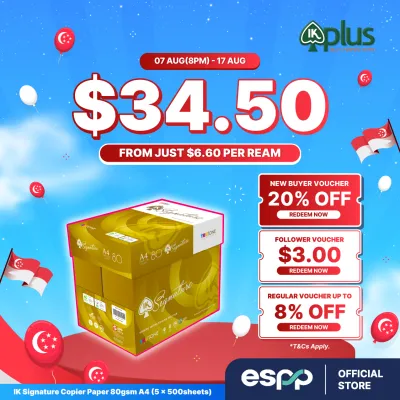
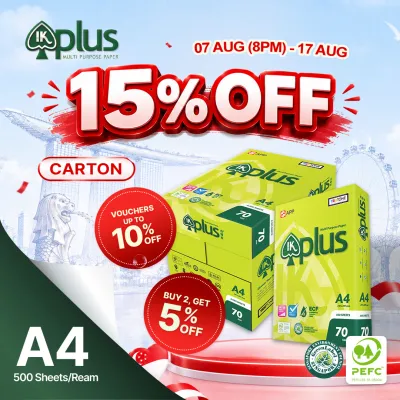
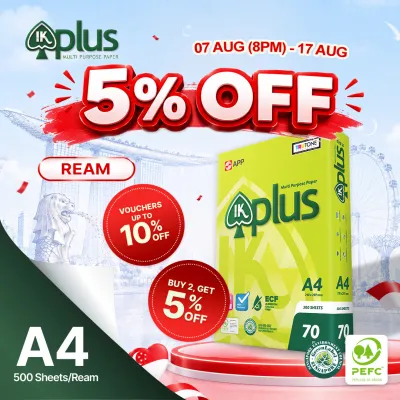
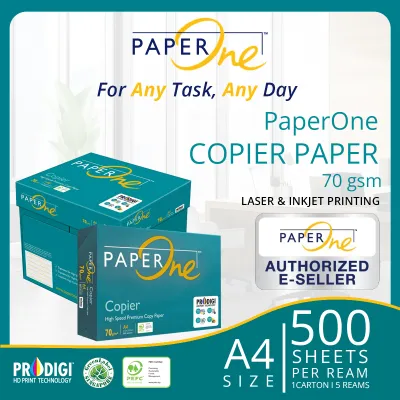
Prices are valid at publication and may change. Please refer to the product page for the latest price.
The most immediate consequence of higher grammage is increased opacity. Opacity determines how much light passes through the sheet, dictating the level of show-through or ghosting when printing on both sides. Additionally, higher grammage increases paper stiffness, a critical factor governing how reliably the sheet feeds through a printer’s roller mechanism without slipping or jamming.
However, a higher gsm rating does not automatically translate to a brighter or whiter sheet. Brightness and whiteness (CIE whiteness) are separate manufacturing specifications. An 80gsm sheet and a 70gsm sheet from the same product family share the same whiteness formula; the heavier sheet simply contains more raw wood fiber per square meter.
70gsm IK Paper: Best for High-Volume Drafts and Internal Memos
The 70gsm variant of ik paper is the lightest standard weight used in modern office environments. This paper is physically thinner, lighter, and more flexible than heavier options. Because it uses less raw material, it is highly cost-effective, making it the preferred choice for high-volume print runs where individual sheet cost is a primary metric.

Beyond cost savings, 70gsm paper offers significant space-saving benefits. Thinner sheets mean a ream takes up less physical height on storage shelves, and large archives of printed documents require less filing cabinet space. This makes it highly practical for temporary documents, internal drafts, and high-volume packing slips.
However, the thinness of 70gsm paper introduces distinct performance limitations. The primary drawback is low opacity, which makes show-through highly visible. If you print on both sides, text and graphics from the reverse side will bleed through. Consequently, this weight should be reserved for single-sided, text-only printing. Additionally, its lower mechanical stiffness makes it more susceptible to feeding issues in older printers or humid environments.
75gsm IK Paper: The Reliable Standard for Everyday Office Use
Bridging the gap between economy and premium performance, 75gsm ik paper is the workhorse of the modern office. It is engineered to provide a balanced compromise, offering a noticeable upgrade in structural stiffness and opacity over 70gsm, without the higher price tag of premium 80gsm paper. This makes it an excellent default choice for general office environments with diverse printing demands.
The slight increase in fiber density gives 75gsm paper sufficient stiffness to glide smoothly through standard office printers. This structural rigidity is particularly beneficial for high-speed laser printers and multi-function copiers, where fast paper paths demand a sheet that resists bending. Choosing 75gsm significantly reduces the frequency of paper jams, minimizing printer downtime.
In terms of print quality, 75gsm paper handles standard black-and-white text and simple line graphics with clean contrast. It is ideal for daily business correspondence, internal reports, and general documentation. Ultimately, 75gsm paper serves as a reliable “safe” option when the exact final use of the printed document varies.
80gsm IK Paper: The Premium Choice for Double-Sided and Professional Documents
When document presentation, durability, and print quality are paramount, 80gsm ik paper is the definitive choice. This is the heaviest standard copy paper weight, offering superior rigidity, high opacity, and a premium tactile feel that immediately conveys quality. It is designed to meet the rigorous demands of professional business environments and high-end presentation materials.
The standout advantage of 80gsm paper is its high opacity, which effectively eliminates show-through. This makes it the absolute standard for double-sided (duplex) printing. Whether you are printing text-heavy manuals or documents with colorful charts, the reverse side remains clean and highly legible. It also handles heavier ink coverage from inkjet printers without warping or bleeding.
Additionally, the physical stiffness of 80gsm paper provides the highest level of jam resistance. Modern high-speed office copiers benefit from the rigid structure of 80gsm sheets, which feed predictably through complex duplexing units. However, these premium qualities come with clear trade-offs: 80gsm paper is the most expensive option and takes up more physical storage space.
How to Choose the Right IK Paper Grammage for Your Workflow
Selecting the perfect grammage of ik paper requires assessing your printer hardware, document layouts, and operational budget. Many efficient offices adopt a multi-tiered approach, matching specific paper weights to different workflows to optimize both output quality and cost efficiency.
Printer Compatibility and Hardware Constraints Always consult your printer’s user manual to verify its supported paper weight ranges. While almost all modern printers handle weights between 70gsm and 80gsm, older desktop inkjet models can occasionally struggle with the stiffness of 80gsm paper. Conversely, heavy-duty commercial multi-function printers are often calibrated to run most reliably with 80gsm paper, as their high-speed feed mechanisms prefer the structural rigidity of heavier sheets to prevent multi-sheet pulling.
Content, Layout, and Ink Type Matching The design of your document should dictate the paper weight. For simple, text-only, single-sided documents like drafts and internal memos, 70gsm or 75gsm paper is entirely sufficient. If your documents contain high-density graphics, colorful charts, or require double-sided printing, you should exclusively use 80gsm paper. Furthermore, wet inkjet inks require the denser fiber structure of 80gsm paper to absorb the liquid properly without causing the paper to ripple.
Managing the Cost vs. Quality Trade-off For organizations with high monthly print volumes, the cost difference between 70gsm and 80gsm paper can accumulate into significant savings. Consider reserving 70gsm or 75gsm paper for daily internal operations, and keeping a dedicated tray of 80gsm paper for client-facing proposals and formal contracts.
Quick Comparison Table The table below provides a quick reference guide to help you decide which weight of ik paper best suits your immediate printing requirements:
| Grammage | Best Use Case | Opacity (Show-Through) | Printer Feed Reliability |
|---|---|---|---|
| 70gsm | Internal drafts, high-volume text | Low (Avoid duplex) | Moderate (Check older printers) |
| 75gsm | Standard office reports, daily use | Medium (Good for single-sided) | High (Standard compatibility) |
| 80gsm | Duplex printing, graphics, client docs | High (Excellent for duplex) | Very High (Stiff and reliable) |
Frequently Asked Questions (FAQ)
Can I use 80gsm IK paper in any standard home printer?
Yes, the vast majority of modern home inkjet and laser printers are designed to fully support 80gsm paper, as it is the global standard weight for everyday printing. However, always check your specific printer’s user manual for its maximum supported media weight. Using paper that exceeds your printer’s mechanical feed limits can cause persistent paper jams or accelerate wear on the internal pickup rollers.
Does a higher grammage mean the paper is brighter or whiter?
No, a higher grammage does not mean the paper will be brighter or whiter. Grammage is strictly a measurement of the paper’s weight and density per square meter, reflecting its physical thickness and structural rigidity. The brightness and whiteness of paper are separate optical specifications determined by the manufacturing process and the inclusion of optical brightening agents. An 80gsm sheet of ik paper will have the same color profile and brightness level as a 70gsm sheet from the same product line; it is simply thicker and more opaque.
Why does my printer jam more often with 70gsm paper?
Printers tend to jam more frequently with 70gsm paper because of its lower stiffness and high flexibility. When passing through a printer’s feed path, especially in high-speed machines or those with worn rubber pickup rollers, the thin paper can easily bend, buckle, or static-cling to adjacent sheets, leading to misfeeds. Additionally, in regions with high relative humidity like Singapore, lighter paper absorbs moisture from the air more rapidly, which causes the sheets to curl and increases the likelihood of a jam during the printing process. Upgrading to 75gsm or 80gsm paper provides the necessary rigidity to overcome these mechanical challenges.
Community discussion
Share your experience or ask a question. Comments are reviewed before publication.