
Finding the perfect Teachers’ Day gift in Singapore often begins with a thoughtful, well-crafted greeting card. While a physical gift is a kind gesture, a card carries the personal words of gratitude that educators truly cherish and keep for years. Navigating the diverse landscape of stationery brands—ranging from established global giants to local independent artisans and eco-friendly makers—requires understanding what makes a card durable, aesthetic, and personally meaningful. By focusing on paper quality, design style, and writing compatibility, you can select a card that serves as a lasting tribute to a teacher’s dedication.
Key Criteria for Selecting a Teachers' Day Card
To choose a card that stands out, start by evaluating the physical properties of the paper. A premium greeting card typically uses cardstock with a weight of 250 gsm (grams per square metre) to 350 gsm. This thickness ensures the card remains upright when displayed on a teacher’s desk without bending or warping over time.
The finish of the paper also plays a critical role in your selection. Uncoated or matte surfaces are highly receptive to various ink types, whereas glossy or UV-coated finishes may cause gel pens and fountain inks to smudge.
Products mentioned in this guide
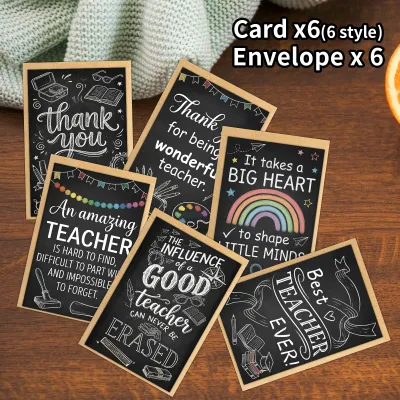
![[MIN 3 CARDS] 🇸🇬SG Punny Teacher Appreciation Card Special Editions for Graduation Greeting Thank You Heartfelt Support Message Card](https://img.lazcdn.com/g/ff/kf/S46b8562713de4564b8cea4c9945a655fF.jpg_400x400q80.jpg_.webp)
Prices are valid at publication and may change. Please refer to the product page for the latest price.
Design aesthetics should align closely with the recipient’s personality and the subject they teach. A minimalist design with clean typography and subtle gold foil accents suits a secondary school or junior college tutor who appreciates modern elegance. Conversely, playful, hand-drawn illustrations or vibrant floral patterns are excellent for primary school or preschool teachers.
Traditional designs featuring classic academic motifs, such as books, apples, or globes, offer a timeless appeal that works across all educational levels.
The interior layout of the card dictates how much space you have to express your appreciation. A blank interior offers maximum flexibility, allowing students to write long, heartfelt letters or draw custom illustrations. Pre-printed messages, on the other hand, provide a structured starting point, which is helpful for younger students or those who find it difficult to articulate their thoughts.
If choosing a pre-printed card, ensure the sentiment feels authentic and leaves at least a small blank area for a signature and a brief personal note.
Finally, do not overlook the quality of the envelope and packaging. A sturdy envelope made from heavy-weight paper (at least 100 gsm) protects the card during transit and adds a sense of anticipation when opened. Look for envelopes with secure adhesive seals, whether gummed or self-adhesive, to ensure any enclosed letters or small flat tokens remain safe.
Clear protective sleeves, preferably biodegradable, keep the card pristine from the store shelf to the classroom.
Categories of Greeting Card Brands to Explore
Understanding the different categories of stationery brands available in Singapore helps narrow down your search based on your budget, timeline, and aesthetic preferences. Each category offers distinct advantages, whether you prioritize convenience, cultural resonance, or environmental sustainability.

Established Global and Regional Card Brands
Established global and regional stationery brands are the go-to choice for reliability, consistency, and convenience. These brands operate on a large scale, ensuring that every card meets strict manufacturing standards with precise die-cuts, uniform folding, and high-resolution printing. Because they cater to a wide audience, their collections feature an extensive variety of themes, ranging from humorous and lighthearted to deeply sentimental.
One of the primary benefits of choosing a major regional or global brand is the availability of pre-written messages. These sentiments are professionally composed to strike the right balance of warmth and respect, making them ideal for students who struggle to find the right words. Additionally, these brands offer standardized sizing, such as standard C6 or DL formats, which makes finding matching envelopes or mailing sleeves incredibly straightforward.
These brands are highly accessible across Singapore, making them the perfect option for last-minute shopping or bulk purchases. If you need to buy cards for multiple subject teachers, co-curricular activity (CCA) instructors, and tutors, these brands often offer multi-pack assortments. This allows you to maintain a consistent level of quality across all your gifts while saving time and managing your budget effectively.
Local Independent Designers and Artisans
For a gift that feels deeply personal and culturally resonant, local independent designers and artisans in Singapore offer unmatched charm. These creators often draw inspiration from local school culture, incorporating familiar classroom humor, local food motifs, or bilingual puns that resonate uniquely with Singaporean educators. A card featuring a witty nod to “cher” (the common local shorthand for teacher) or local coffee shop orders adds a warm, lighthearted touch that global brands cannot replicate.
Artisan cards are typically produced in limited-edition print runs, giving them an exclusive, collectible feel. Many local designers use hand-painted watercolor illustrations, intricate calligraphy, or custom digital art that stands out from mass-produced stationery. This level of craftsmanship transforms the card from a simple greeting into a miniature piece of art that a teacher might frame or display permanently on their classroom notice board.
Choosing cards from local independent creators also directly supports the creative community in Singapore. These designers often share their production processes openly, highlighting their commitment to sourcing quality materials and maintaining ethical production standards. While these cards may carry a slightly higher price point, the uniqueness and thoughtfulness they convey make them a highly rewarding choice for a special mentor.
Eco-Friendly and Sustainable Card Makers
As environmental awareness grows among schools and educators, eco-friendly and sustainable card makers have become increasingly popular. These brands focus on reducing their ecological footprint by utilizing recycled post-consumer waste, FSC-certified (Forest Stewardship Council) paper, or alternative fibers like bamboo and hemp. Choosing a sustainable card demonstrates a shared commitment to environmental stewardship, which many teachers deeply appreciate.
In addition to recycled paper, some innovative brands offer seed paper cards. These cards are embedded with wildflower or herb seeds; after reading, the teacher can plant the card in soil, allowing it to biodegrade while growing into fresh plants. Other sustainable practices to look for include the use of soy-based or vegetable-based inks, which are less harmful to the environment than petroleum-based alternatives, and the elimination of plastic packaging in favor of compostable sleeves or paper bands.
When evaluating eco-friendly claims, look for clear labeling and brand transparency. Reputable sustainable brands will explicitly state their certifications or material origins on the back of the card. Verifying these details ensures that your purchase genuinely aligns with green principles, providing a thoughtful, zero-waste, or low-impact gifting option that honors both your teacher and the planet.
Where to Source Quality Greeting Cards in Singapore
Finding the right card involves knowing where to shop to match your specific needs, whether you prefer a tactile in-store experience or the convenience of online browsing. Visiting physical stationery stores and bookshops across Singapore allows you to feel the paper texture, assess the weight of the cardstock, and inspect the print quality firsthand. Major bookstores and lifestyle boutiques in shopping malls carry a curated selection of both global and regional brands, making them highly reliable stops.
To discover unique creations from local independent artisans, explore local craft markets, community pop-ups, and creative retail spaces. These events, often held on weekends in arts districts or lifestyle hubs, allow you to meet the designers, learn the stories behind the illustrations, and purchase exclusive designs that are not widely distributed. Many of these makers also stock their products in independent multi-label boutiques scattered across neighborhoods like Tiong Bahru or Haji Lane.
For maximum convenience, official brand websites and reputable online marketplaces offer extensive catalogs that you can browse from home. Online shopping allows you to filter by theme, price, and style, and read customer reviews regarding paper quality and delivery reliability. When ordering online, always check the seller’s shipping location and estimated delivery lead times. To ensure your cards arrive well before Teachers’ Day, place your orders at least two to three weeks in advance, especially if sourcing from international creators or customized print-on-demand services.
Tips for Personalising Your Teachers' Day Message
The true value of a Teachers’ Day card lies in the message written inside. To make your card a meaningful keepsake, move beyond generic phrases like “Thank you for teaching me” and focus on specific, positive impacts. Recall a particular lesson that sparked your interest, a moment when the teacher offered encouragement during a difficult topic, or a co-curricular activity where their guidance helped you grow. These specific memories show the teacher that their efforts had a tangible, lasting effect.
Match the tone of your message to the teacher’s personality and your established relationship. For a teacher who appreciates humor and maintains a lively classroom, a lighthearted message with a touch of wit is highly appropriate. For a mentor who has guided you through major academic milestones or personal challenges, a more formal, sincere expression of gratitude is fitting. Always maintain a respectful boundary, ensuring that even casual messages uphold the professional student-teacher dynamic.
Selecting the right writing instrument is crucial to preserving your message and preventing unsightly smudges. For uncoated or matte paper, fine liners and archival pigment ink pens are excellent choices as they dry almost instantly and resist fading over time. If your card has a semi-glossy or satin finish, avoid slow-drying gel pens or heavy fountain pen inks, which tend to pool and smear on non-porous surfaces. Test your pen on a small, inconspicuous corner of the card or a scrap piece of paper first to verify the drying speed and ensure the ink does not bleed through to the back of the page.
Frequently Asked Questions (FAQ)
Is it appropriate to give a digital greeting card instead of a physical one?
Digital greeting cards offer convenience and are highly eco-friendly, making them a practical choice for quick delivery or remote learning environments. However, they often lack the tangible, keepsake value of a physical card. Many teachers enjoy displaying physical cards on their desks or keeping them in a dedicated memory box to look back on in future years. Additionally, some schools have specific guidelines regarding digital communication or screen-time limits, so a physical card remains the most universally accepted and appreciated medium for expressing gratitude.
Should students pool money to buy a premium card or gift?
Pooling resources for a collective class card or gift is an excellent way to present a high-quality token of appreciation without placing a financial burden on individual students. A single, premium card signed by the entire class often carries significant sentimental value. When organizing a class collection, ensure that participation is entirely voluntary and transparent, with no pressure on students to contribute a specific amount. It is also essential to check your school’s official guidelines regarding gift value limits, as many educational institutions in Singapore have strict caps on the monetary value of gifts that teachers are permitted to accept.

Community discussion
Share your experience or ask a question. Comments are reviewed before publication.