
Selecting the right cutter knife for school projects requires balancing a student’s developmental stage with the practical demands of their coursework. While a primary school student needs highly guarded tools to prevent accidental cuts, a secondary school student requires a more robust utility knife capable of slicing through thick design materials. Matching the tool to the student’s age and dexterity ensures both safety and academic success.
Checking School Policies and Baseline Safety Rules
Before purchasing any cutting tool, parents must consult the school’s specific handbook or stationery list. Many schools, particularly at the primary level, have strict regulations regarding what tools are permitted in the classroom. Some schools ban standard utility knives entirely, requiring students to use safety scissors or school-provided tools under direct teacher supervision.
When shopping, look for mandatory safety features designed to minimize risk. Auto-retracting blades, which slide back into the handle the moment pressure is released, are excellent for younger users. Child-resistant locks that prevent the blade from being extended without a multi-step action also offer an extra layer of protection.
Products mentioned in this guide
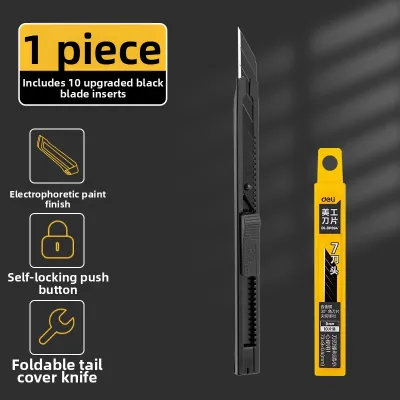
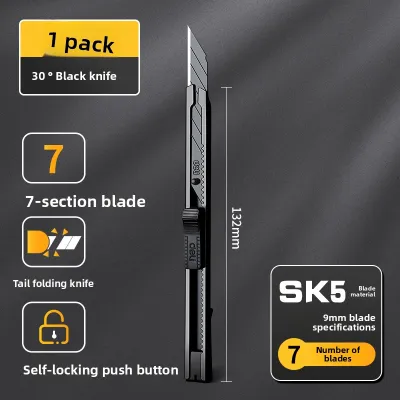

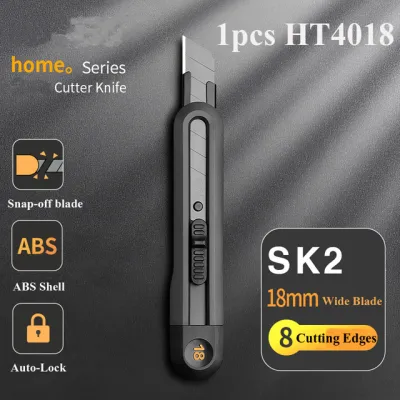
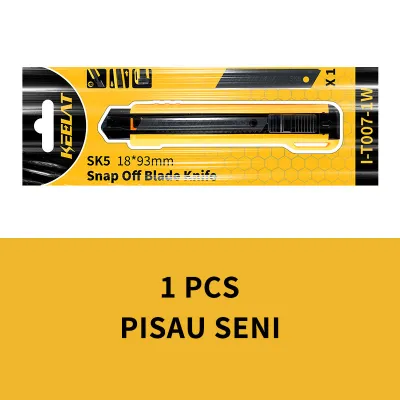
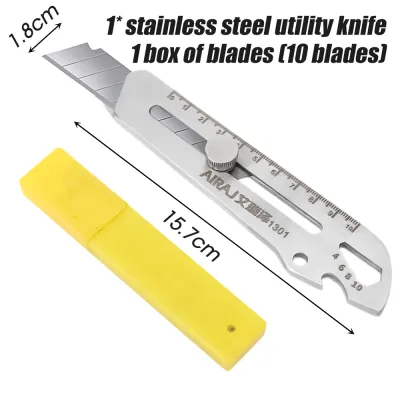
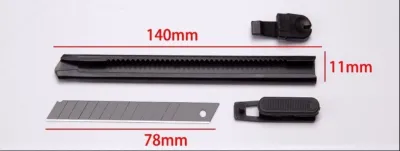
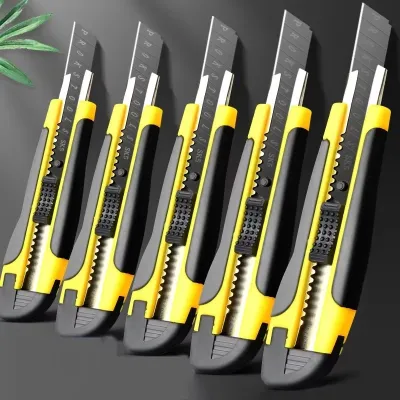
Prices are valid at publication and may change. Please refer to the product page for the latest price.
For younger students, establishing clear boundaries for supervised use at home is essential. Even if a school allows certain tools for home-based projects, parents should supervise the cutting process directly, ensuring the workspace is stable, well-lit, and free of distractions.
Matching Cutter Knife Types to Student Dexterity and Grade Levels
During the early primary years, children are still developing their fine motor skills and hand-eye coordination. For these students, standard exposed blades pose an unnecessary hazard. Instead, look for safety cutters with fully enclosed blades or micro-ceramic blades that only expose a tiny fraction of the cutting edge. These tools allow children to cut paper and thin cardstock for basic crafts while keeping fingers completely isolated from the sharp edge.

As students progress to upper primary levels, their school projects often require more detailed work, such as cutting out intricate shapes or working on science models. Pen-style craft knives or mini utility cutters are highly suitable for this stage. The pen-like grip mimics a familiar writing instrument, giving students superior control and precision over their cuts without requiring excessive hand strength.
Upon entering secondary school, students frequently encounter design and technology classes, art electives, and complex geography or science projects. These assignments often involve tougher materials like corrugated cardboard, foam boards, and plastics. At this stage, students can transition to standard slide-lock or push-button utility knives. These tools provide the necessary leverage and blade exposure to handle heavy-duty materials safely, provided the student has received proper instruction on safe handling.
Selecting Blade Sizes for Different School Project Requirements
The width of the blade plays a critical role in how a cutter knife performs under different conditions. Narrow blades, typically measuring 9mm in width, offer exceptional maneuverability. They are the ideal choice for intricate paper crafts, curved cuts, and detailed model making where precision is more important than raw cutting power. A narrow blade allows the student to navigate tight corners and delicate patterns without tearing the medium.
Conversely, wider blades, usually measuring 18mm, provide the stability and cutting depth needed for heavy-duty materials. When a student attempts to cut thick cardboard or dense foam board with a narrow blade, the blade can flex, bend, or snap under pressure, creating a safety hazard. A wider blade resists bending, ensuring straight, clean cuts through thick media and reducing the physical effort required from the student.
When selecting a cutter knife, parents should also consider blade compatibility and the availability of replacements. Opt for handles that accept standard, widely available blade sizes rather than proprietary shapes. This ensures that when a blade becomes dull, finding a compatible replacement pack at a local stationery shop or online marketplace is straightforward and cost-effective.
Essential Safety Features and Maintenance Practices
A reliable locking mechanism is the most critical safety feature on any adjustable cutter knife. Slide-lock mechanisms should click firmly into place, while wheel-lock systems must tighten securely to prevent the blade from slipping forward or retracting unexpectedly during a cut. Before a student begins working, they should always verify that the lock is fully engaged.
Segmented blades are designed to be snapped off to reveal a fresh, sharp point, but this process must be done with extreme care. Students should be taught to use the built-in snapping slot located at the back cap of the knife handle, or a dedicated blade snapper tool. The snap should always be directed away from the face and body, and the blade should never be snapped using bare hands, pliers, or hard surfaces that could cause the metal fragment to fly off unpredictably.
Proper storage is equally vital for maintaining safety outside of active project work. Cutter knives should never be left loose in a school bag or a crowded pencil case. Encourage students to store their cutting tools in a dedicated, hard-shelled pencil case compartment or to use protective plastic blade caps. Keeping the blade fully retracted when not in use is a non-negotiable rule that prevents accidental cuts when reaching for other stationery items.
Frequently Asked Questions (FAQ)
Can primary school students use standard utility knives for art class?
Generally, standard utility knives are not recommended or permitted for primary school students due to the high risk of accidental injury. Most primary school art curricula are designed around safety scissors or specialized safety cutters with enclosed blades. Parents must always consult the school’s official stationery list and check with the classroom teacher before sending any utility knife to school with a primary-grade student.
How often should a student replace their cutter knife blade?
A student should replace or snap off a blade segment as soon as they observe signs of dullness. These signs include the blade tearing or snagging paper instead of slicing cleanly, or requiring significantly more downward pressure to make a cut. A dull blade is actually more dangerous than a sharp one, as the extra force required increases the likelihood of the tool slipping out of control.
What is the safest way to dispose of used or broken blade segments?
Used or snapped blade segments should never be thrown directly into standard classroom or household rubbish bins, where they can easily puncture plastic bags and injure waste handlers or students. The safest method is to collect them in a dedicated blade disposal box. If a disposal box is not available, wrap the used segments securely in several layers of thick adhesive tape or sandwich them between pieces of heavy cardboard before discarding them.

Community discussion
Share your experience or ask a question. Comments are reviewed before publication.