
Selecting the right cork board for a student’s study space involves balancing physical safety, available wall space, and changing academic demands. For primary school students, a compact board measuring approximately 45 cm by 60 cm is highly effective, as it fits easily within their reach and accommodates colorful drawings, spelling lists, and simple reward charts. In contrast, secondary school students require a larger canvas, typically 60 cm by 90 cm or more, to organize complex exam schedules, project timelines, and extensive study notes. By matching the board’s dimensions and structural features to your child’s specific grade level, you can create an organized, motivating environment that supports their learning journey from early childhood through their teenage years.
An effective study environment adapts to the student’s developmental milestones. A notice board is not just a piece of wall decor; it is an active tool for cognitive development, time management, and self-expression. Understanding how these needs evolve helps you make a practical purchase that remains functional for years, avoiding the clutter of disorganized papers and lost assignments.
Understanding Student Needs: Primary vs. Secondary School
Primary school students interact with their environment in a highly visual and tactile manner. During these early academic years, children are developing fine motor skills and learning to establish daily routines. A cork board in a primary student’s room serves primarily as an interactive display space. It is a place to pin up spelling lists, star charts, art projects, and encouraging feedback from teachers. The physical act of pinning items up gives younger children a sense of ownership over their achievements, reinforcing positive habits. For these students, the board must be highly accessible, inviting, and safe to use without constant adult supervision.
Products mentioned in this guide

![[Bundle Set] 60x90 CORKBOARD WITH WOODEN FRAME + 1 box of colour round push pin](https://img.lazcdn.com/g/p/7f43ed93e5919d98888a2bf27149e512.jpg_400x400q80.jpg_.webp)
![[SG Stock] Cork Board | Cork Sheet | Pin Board | Journey Planner | Bulletin Board | Message Board](https://img.lazcdn.com/g/p/bae2bd72d73ade8ab7deaea56af5fac9.jpg_400x400q80.jpg_.webp)
Prices are valid at publication and may change. Please refer to the product page for the latest price.
As students transition into secondary school, their daily routines become significantly more complex. They must manage multiple subjects, preparation for national examinations, co-curricular activities (CCAs), and long-term project deadlines. Consequently, the function of the cork board shifts from a simple display of achievements to a structured planning station. Secondary school students use their boards to map out study timetables, pin up formulas, organize essay outlines, and track monthly calendars. The board becomes a critical tool for developing executive functioning skills, helping teenagers visualize their workload and manage their time independently.
Involving your child in the selection process is essential for ensuring the board matches their personal study habits and room layout. A student who prefers visual mind maps will require a much larger surface area than one who simply needs a small space to pin a weekly class timetable. Discussing where the board will hang—whether directly above the study desk, beside the bed, or near the bedroom door—ensures that the chosen size fits the physical constraints of the room. This collaborative decision-making process also encourages the student to actually use the board, fostering a sense of responsibility for organizing their own academic life.
Essential Features to Evaluate Before Buying
When shopping for a cork board, the quality and density of the cork material are paramount. High-quality boards feature a thick layer of natural, self-healing cork. Self-healing cork compresses back into place after a push pin is removed, preventing unsightly holes and ensuring the board does not crumble over time. To evaluate this in a retail store, gently press your thumb against the surface; it should feel firm yet resilient, rather than soft or spongy. Avoid boards with an ultra-thin cork veneer over cheap cardboard, as these quickly degrade, causing pins to fall out and creating a safety hazard for younger children.

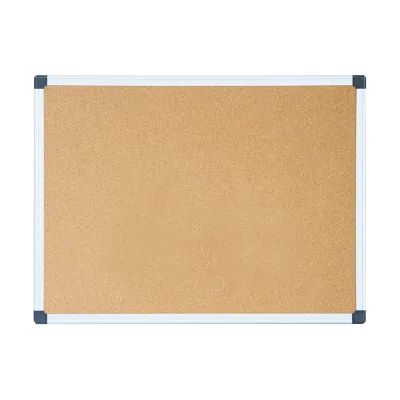
The frame material determines the board’s overall durability, weight, and aesthetic integration with the study room. Wooden frames offer a classic, warm look that fits traditional home decor, but they can be heavy and require robust wall mounting. Aluminum frames are lightweight, highly durable, and offer a sleek, modern appearance that appeals to older students. Plastic frames are often the most budget-friendly and lightweight option, making them easy to hang, though they may warp over time if exposed to temperature fluctuations or high humidity. Select a frame material that balances structural integrity with the mounting limitations of your walls.
Safety features must be prioritized, particularly for primary school students who are still developing spatial awareness and coordination. Look for frames with rounded plastic corner caps rather than sharp, mitered edges. Ensure that any wooden frames are smoothly sanded and finished with non-toxic, low-emission sealants to prevent splinters and chemical off-gassing. Additionally, examine the mounting hardware included with the board. Secure, flush-mount brackets are far safer than simple hanging strings, which can cause the board to swing, tilt, or fall off the wall when pins are pressed in firmly.
Finally, inspect the backing material of the board. The backing provides the structural rigidity necessary to keep the board flat and prevent push pins from piercing through the rear. A high-density fiberboard (HDF) or medium-density fiberboard (MDF) backing is ideal, as it resists warping and provides a solid stop for pins. Cheap corrugated cardboard backings are highly susceptible to moisture absorption, which leads to warping in humid climates. A warped board not only looks unappealing but also pulls away from the wall, compromising the stability of the mounting system.
Recommended Size and Feature Profiles by Grade Level
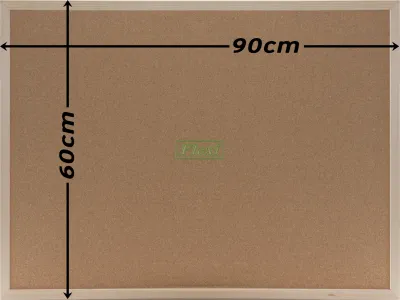
For primary school students, physical accessibility is the key to engagement. A board that is too large or mounted too high will simply go unused. The ideal dimensions for this age group are approximately 45 cm by 60 cm. This size is large enough to hold a standard weekly timetable, a couple of school notices, and a few pieces of artwork without overwhelming a small bedroom wall. When mounting the board, position it so the center of the board aligns with the child’s seated eye level—typically between 90 cm and 110 cm from the floor. This ensures they can safely insert and remove pins without stretching or standing on chairs.
Secondary school students require a much more expansive surface to accommodate their heavy academic workload. A minimum size of 60 cm by 90 cm is recommended, though a 90 cm by 120 cm board is ideal if wall space permits. This larger area allows students to dedicate specific zones of the board to different subjects or timeframes, such as a permanent monthly calendar alongside a rotating weekly task list. For teenagers, modular options are highly beneficial. Combining a traditional cork board with a magnetic whiteboard section allows them to write quick formulas or reminders with dry-erase markers while pinning reference sheets to the cork side.
To help you compare the options, the table below outlines the recommended specifications for each educational stage, helping you select a board that aligns with your child’s current needs.
Table: Recommended Cork Board Profiles by School Level
| School Level | Recommended Dimensions | Frame Type | Primary Use Case | Key Safety & Functional Feature |
|---|---|---|---|---|
| Primary School (Primary 1 to 6) | 45 cm x 60 cm | Rounded plastic or smooth wood | Displaying artwork, spelling lists, reward charts | Rounded corners, soft-density cork for easy pinning |
| Secondary School (Secondary 1 to 5) | 60 cm x 90 cm to 90 cm x 120 cm | Aluminum or sturdy wood | Exam schedules, mind maps, project planning | High-density self-healing cork, rigid MDF backing |
| Modular / Shared Spaces | 60 cm x 90 cm (split surface) | Aluminum or slim-profile plastic | Dual-purpose writing and pinning | Magnetic whiteboard and cork combination |
Safe Installation and Maintenance for Student Rooms
Proper installation is critical to ensure the cork board remains securely on the wall, especially when subjected to the daily pressure of pinning and unpinning. In many local apartments, bedroom walls are constructed of solid concrete or brick. Mounting a framed board on these surfaces requires a masonry drill bit, plastic wall plugs, and sturdy screws. Avoid relying on simple adhesive strips or double-sided tape for framed boards; the weight of the frame, combined with the physical force applied when inserting pins, will eventually cause the adhesive to fail, risking damage to the wall paint and potential injury to the student. For lightweight drywall partitions, use specialized hollow-wall anchors or toggle bolts to distribute the weight safely.
Maintaining a cork board in a humid climate requires regular attention to prevent mold growth and material degradation. Natural cork is a porous organic material that can absorb moisture from the air. To keep the board in optimal condition, establish a simple maintenance routine. Dust the board regularly using a soft brush attachment on a vacuum cleaner or a dry microfiber cloth. If the cork surface becomes soiled, wipe it gently with a slightly damp cloth wrung out with plain water, and allow it to air dry completely in a well-ventilated room. Never use harsh chemical cleaners or saturate the cork, as this can dissolve the binding glues and cause the material to crumble.
Safety checks should be performed periodically to protect your child from accidental injuries. Inspect the board every few months for loose, bent, or rusty push pins, and replace them immediately. Check the frame corners and mounting brackets to ensure they remain tight and flush against the wall. If you observe significant crumbling of the cork, deep cracks, or warping of the backing material, it is time to replace the board. For very large or heavy installations, such as mounting a heavy wooden-framed board larger than 120 cm, consider seeking professional installation assistance to ensure the board is anchored safely into the wall structure.
Frequently Asked Questions (FAQ)
Can I use a cork board in an air-conditioned room without it drying out?
Yes, you can use a cork board in an air-conditioned room, but you should monitor the material for signs of drying. Continuous air conditioning lowers the humidity in a room, which can extract moisture from natural cork over time. When cork becomes excessively dry, it loses its elasticity, making it brittle and prone to crumbling when pins are inserted. You can identify this drying effect if the cork feels unusually stiff or if push pins begin to slip out easily without holding their grip.
To preserve the integrity of the cork in an air-conditioned environment, wipe the surface gently with a slightly damp microfiber cloth once a month. This simple, reversible care step introduces a small amount of moisture back into the fibers without soaking the backing material. Additionally, try to mount the board away from the direct path of the air conditioner’s cold air draft, which accelerates the drying process.
Are self-adhesive cork tiles a safe alternative to traditional framed boards?
Self-adhesive cork tiles can be a viable alternative, but they have distinct structural limitations compared to traditional framed boards. Most adhesive cork tiles are relatively thin, often measuring only 4 mm to 6 mm in thickness. Because standard push pins have metal shafts that are longer than this thickness, inserting a pin fully will cause it to strike the wall behind the tile. This can damage the underlying plaster or paint and prevent the pin from holding securely.
Adhesive tiles are suitable for light student use, such as holding single sheets of paper or lightweight photos using short map tacks. Before applying them, verify that your wall surface is smooth, clean, and compatible with strong adhesives. Keep in mind that removing self-adhesive tiles in the future can peel off wall paint or leave a stubborn residue. For heavy academic use, a framed board with a rigid backing remains the safer and more durable choice.
Community discussion
Share your experience or ask a question. Comments are reviewed before publication.