
Selecting the ideal 3M whiteboard for classroom magnetic letter activities requires balancing surface durability, magnetic receptivity, and physical dimensions. Because 3M offers various dry erase solutions—ranging from adhesive wall films to portable easel boards and mounted glass panels—educators must verify specific product specifications to ensure magnetic letters adhere securely and the surface withstands frequent manipulation. This guide outlines the essential criteria for matching 3M whiteboard formats to your classroom layout, student age group, and instructional needs.
By focusing on the underlying material properties and physical installation requirements, school administrators and teachers can make informed procurement decisions. Choosing the correct board prevents common classroom frustrations, such as sliding letters, surface scratching, and premature ghosting. Let us explore how to evaluate these dry erase options to create an engaging, highly functional literacy workstation.
Understanding 3M Whiteboard Formats for Classrooms
To select the right whiteboard, you must first understand that dry erase surfaces and magnetic surfaces are two entirely different functional layers. A whiteboard’s outer layer is engineered for writing and erasing, while its inner core or backing determines whether magnets will stick to it. When browsing 3M’s product catalog, you will encounter three primary formats: flexible adhesive dry erase films, portable easel boards, and traditional framed wall-mounted boards. Each format serves a distinct pedagogical purpose and interacts differently with magnetic teaching aids.
Products mentioned in this guide
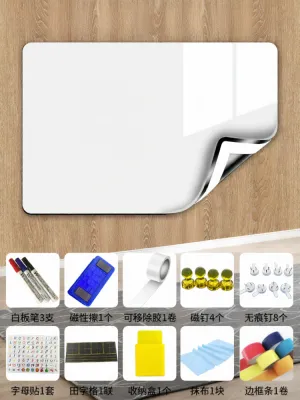
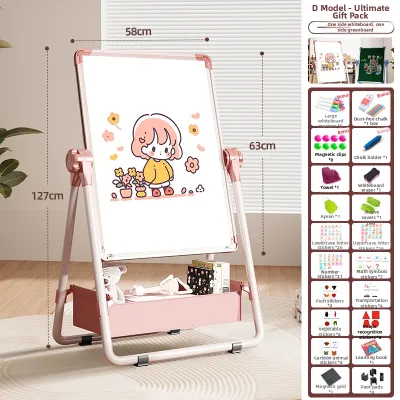
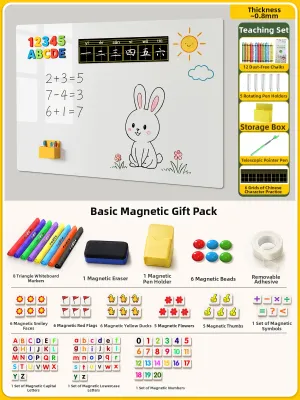
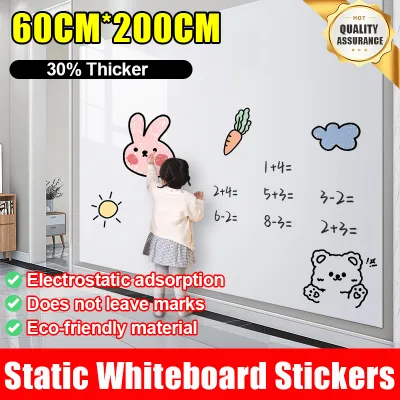
Prices are valid at publication and may change. Please refer to the product page for the latest price.
Flexible dry erase films, such as the 3M Post-it Super Sticky Dry Erase Surface, are incredibly popular for transforming old blackboards, worn-out whiteboards, or bare walls into clean writing spaces. However, standard dry erase films are thin, non-magnetic plastic sheets. If you apply a standard film directly to a painted concrete wall or drywall partition, magnetic letters will not stick to it because there is no ferrous metal behind the film. To use magnetic letters on an adhesive film, you must either apply the film over an existing steel-backed whiteboard or purchase a specialized 3M film that explicitly features a built-in magnetic-receptive layer.
Portable easel boards and tabletop presentation boards offer a self-contained solution for small-group instruction. These boards typically feature a rigid core sandwiched between two functional surfaces. Many of these portable options are designed with a steel backing beneath the dry erase coating, making them inherently magnetic. They are highly versatile for rotating literacy centers, but their limited surface area means they are best suited for short word-building exercises rather than full-sentence construction.
Traditional framed wall-mounted boards and glass panels represent the most permanent option. Framed steel whiteboards provide excellent magnetic pull because the dry erase paint or porcelain layer is baked directly onto a heavy-gauge steel sheet. Glass dry erase boards, while highly durable and modern, present a unique challenge for standard classroom magnets. The thickness of the tempered glass creates a physical barrier between the magnet and the steel backing behind the glass. Consequently, standard plastic magnetic letters often slide down glass surfaces; they require exceptionally strong rare-earth magnets to stay in place, which are rarely found on standard classroom letter sets.
Before finalizing any purchase, always consult the product’s technical data sheet or specification label. Look for explicit terms such as “magnetic-receptive,” “ferrous-backed,” or “compatible with magnets.” Avoid assuming that a product is magnetic simply because it is labeled as a whiteboard or dry erase surface. Verifying these specifications beforehand ensures that your school’s procurement budget is spent on equipment that fully supports your hands-on phonics curriculum.
Key Selection Criteria for Magnetic Letter Activities
When evaluating a 3M whiteboard specifically for magnetic letter manipulation, you must look beyond basic aesthetics. Phonics and spelling activities place unique physical demands on a board that standard writing tasks do not. To ensure long-term usability, you must assess three critical dimensions: physical size and aspect ratio, surface durability against friction, and magnetic pull strength.

First, consider the physical dimensions of the board relative to your instructional goals. A standard spelling lesson involving word families, prefix/suffix manipulation, or sentence building requires significant horizontal space. If a board is too narrow, teachers and students will constantly run out of room, forcing them to crowd the letters together and compromise visual clarity. For whole-class instruction, a board measuring at least 1.2 meters by 1.8 meters is recommended. For small-group interventions or guided reading tables, a smaller portable board of approximately 60 centimeters by 90 centimeters provides sufficient space for individual word construction without overwhelming the desk area.
Second, evaluate the surface’s resistance to scratching and ghosting. During magnetic letter activities, plastic or foam letters are constantly slid, dragged, and rotated across the board. This continuous friction can easily scratch low-quality dry erase coatings. Once a surface is scratched, marker pigment settles into the microscopic grooves, leading to permanent staining known as ghosting. 3M whiteboards are engineered with high-performance topcoats designed to resist this abrasive wear. To verify durability, look for surfaces rated for high-frequency use and check if they are compatible with standard whiteboard cleaners and isopropyl alcohol solutions.
Third, the magnetic pull strength is paramount for keeping letters upright and organized. Standard classroom magnetic letters are typically made of lightweight plastic or foam with a small ceramic magnet glued to the back. If the whiteboard’s magnetic-receptive layer is too thin or placed too far behind the writing surface, the magnetic force will be insufficient to overcome gravity. The letters will slide down, rotate upside down, or fall off entirely when the board is tapped.
To verify magnetic compatibility before full deployment, perform a simple physical test. Place a standard plastic magnetic letter on the vertical board surface. If the letter slides downward even slightly, or if it easily spins when gently nudged, the magnetic attraction is too weak. A high-quality magnetic-receptive board should hold the letter firmly in place, even when the board is subjected to the minor vibrations typical of an active classroom environment.
Matching Board Features to Student Age Groups
Classroom dynamics change dramatically depending on the age of the students, and your choice of 3M whiteboard should reflect these developmental differences. From early childhood centers to upper primary classrooms, the physical height of the students, their fine motor skills, and the size of the teaching materials all dictate the ideal whiteboard configuration.
In early childhood and kindergarten classrooms (ages 3 to 6), learning is highly tactile and visual. Children at this stage are still developing their fine motor skills and typically use large, chunky magnetic letters that are easy to grasp. These larger letters are heavier than standard sets, requiring a board with robust magnetic pull. For this age group, wall-mounted boards should be installed at a much lower height—ideally with the bottom of the frame sitting no more than 40 to 50 centimeters from the floor. Alternatively, utilizing lightweight, portable 3M dry erase boards flat on the floor or on low activity tables allows children to work comfortably without straining their shoulders or wrists.
In primary school classrooms (ages 7 to 12), the focus shifts toward collaborative group work, sentence structure, and paragraph building. Students at this level use smaller, standard-sized magnetic letters and frequently combine letter manipulation with handwriting. For these classrooms, large-format wall-mounted boards or extensive wall-applied 3M dry erase films are ideal. These expansive surfaces allow multiple students to stand side-by-side, working on separate sections of the board simultaneously. The height of the board should be adjusted so that the middle of the writing surface aligns with the average chest height of the students, facilitating comfortable writing and letter movement.
For older students and secondary school environments, magnetic letters are used less frequently, but magnetic whiteboards remain highly valuable for displaying graphic organizers, project milestones, and printed learning aids. At this stage, prioritize premium dry erase surfaces that support rapid, detailed handwriting and frequent erasing. High-contrast, gloss-finished 3M surfaces ensure that complex diagrams and small text are easily readable from the back of the classroom, while the magnetic backing allows teachers to quickly pin up reference sheets, rubrics, or student work using high-strength magnets.
Installation, Safety, and Maintenance Checks
Proper installation and regular maintenance are essential to ensure your 3M whiteboard remains safe, functional, and clean throughout the school year. Because magnetic-receptive boards contain metal layers, they are significantly heavier than standard non-magnetic whiteboards. This added weight requires careful structural planning during installation.
Before mounting a heavy steel-backed board or a large glass panel, verify the structural integrity of your classroom wall. In many modern school buildings, interior walls are constructed from drywall or hollow plasterboard rather than solid concrete. Mounting a heavy board directly to drywall using standard plastic anchors is a safety hazard, as the constant pulling force from students manipulating magnets can loosen the screws over time. Always secure mounting brackets directly into the wall’s wooden or metal studs. If studs are not positioned where you need them, use heavy-duty toggle bolts or consult your school’s facilities management team to ensure a secure installation.
If you are applying 3M adhesive dry erase films to existing classroom walls, meticulous surface preparation is the key to preventing peeling. The wall must be completely clean, dry, and free of dust, grease, or loose paint. Clean the target area with a mild soap and water solution, followed by a wipe-down with isopropyl alcohol. Allow the wall to dry completely before application. Keep in mind that local environmental conditions, such as high indoor humidity, can affect how the adhesive cures. Avoid applying adhesive films to freshly painted walls; allow the paint to cure for at least 30 days before installing the film.
Maintaining the whiteboard surface is crucial for preserving its dry erase properties and ensuring magnetic letters slide smoothly without leaving marks. Over time, dust, finger oils, and marker residue can accumulate on the board, creating a sticky film that makes letters difficult to move. Establish a weekly cleaning routine using a soft microfiber cloth and a dedicated whiteboard cleaning spray. Avoid using paper towels, as their abrasive fibers can cause micro-scratches over time.
Never use harsh household chemical cleaners, abrasive scrubbing pads, or industrial solvents on your 3M whiteboard. These aggressive products will permanently strip the proprietary dry erase topcoat, leaving the board porous and highly susceptible to permanent staining. If a student accidentally uses a permanent marker on the board, do not scrub it. Instead, trace over the permanent ink with a fresh dry erase marker, let it sit for a few seconds, and then gently wipe it away with a microfiber cloth. The solvents in the dry erase ink will naturally dissolve the permanent pigment without damaging the underlying surface.
Frequently Asked Questions (FAQ)
Can I use magnetic letters on 3M dry erase wall films?
Standard 3M dry erase wall films are thin, flexible plastic sheets designed solely for writing and do not contain metal. Consequently, they are not inherently magnetic, and magnetic letters will not stick to them if they are applied to standard drywall or concrete. To use magnetic letters, you must apply the film over an existing steel-backed whiteboard, or specifically purchase a 3M dry erase film product that is manufactured with an integrated ferrous, magnetic-receptive backing. Always check the product’s technical specifications to confirm magnetic compatibility before installation.
How do I remove adhesive residue left by magnetic letters?
Some magnetic letters, particularly cheaper foam varieties, can leave behind a sticky adhesive residue or dark rubber marks on the whiteboard surface over time. To remove this residue safely without damaging the dry erase coating, apply a small amount of isopropyl alcohol or a manufacturer-approved whiteboard cleaner to a soft, clean microfiber cloth. Gently wipe the affected area in a circular motion until the residue dissolves. Avoid using plastic scrapers, razor blades, or abrasive kitchen sponges, as these will permanently scratch the protective topcoat of your board.
What is the best way to store magnetic letters when not in use?
To prevent classroom clutter and protect your whiteboard surface from accidental scratches, store magnetic letters in dedicated plastic sorting bins or shallow trays. Avoid leaving unused letters clustered in the corners of the main whiteboard, as dragging them around during storage can cause unnecessary surface wear. For easy access, you can mount a separate, inexpensive steel utility strip low on the wall or inside a cabinet door specifically for letter storage, keeping your main 3M whiteboard completely clear for active teaching and writing.
Community discussion
Share your experience or ask a question. Comments are reviewed before publication.