
Selecting your first watercolor set is a milestone in your artistic journey. Winsor & Newton, a brand with a long-standing history in art supplies, offers options that can easily overwhelm a beginner. The ideal starter set depends on your budget, painting style, and workspace. For most beginners, the student-grade Cotman series provides an excellent balance of affordability and performance, while the Professional range is suited for those who want to work with maximum pigment concentration from the start.
To make the right choice, you must evaluate how the physical format, pigment quality, and color selection align with your learning goals. This guide breaks down the essential differences between the brand’s product lines, formats, and configurations to help you select the perfect setup for your creative space.
Quick Guide: Matching Winsor & Newton Lines to Your Goals
When entering the world of watercolors, your immediate goals and budget should dictate your choice of paint line. Winsor & Newton divides its watercolor offerings into two primary categories: the student-grade Cotman Watercolours and the Professional Watercolour range. Understanding how these lines align with your learning path prevents unnecessary expenses while ensuring your materials do not hinder your progress.
Products mentioned in this guide
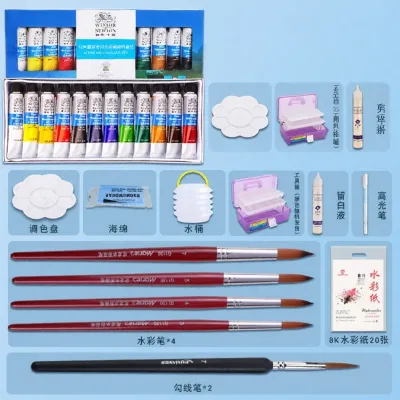
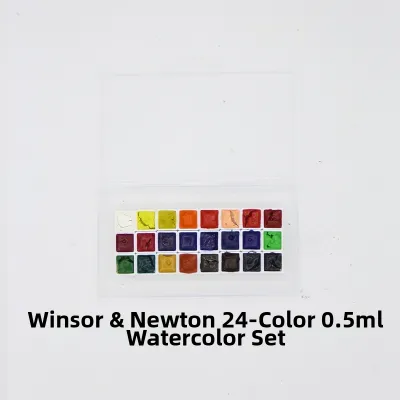
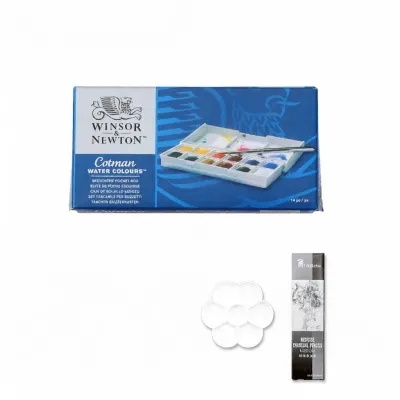
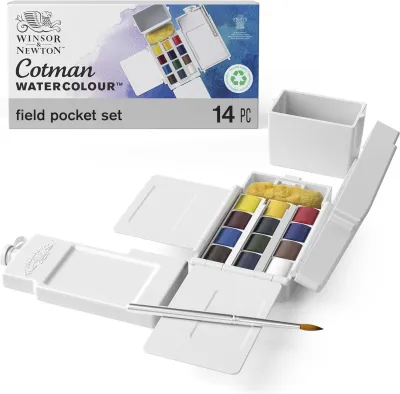
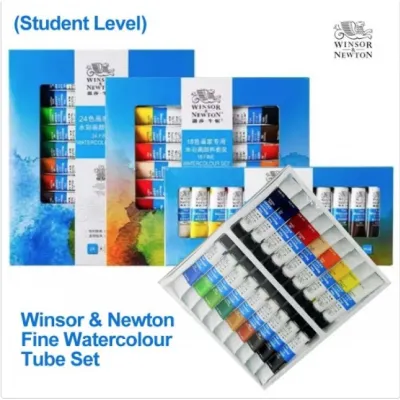
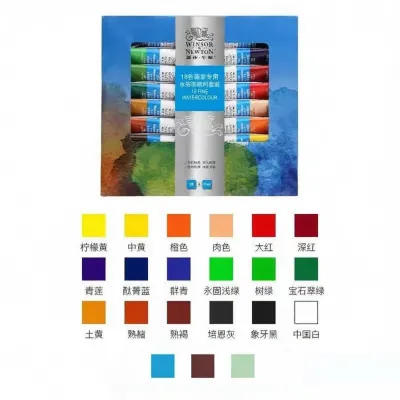
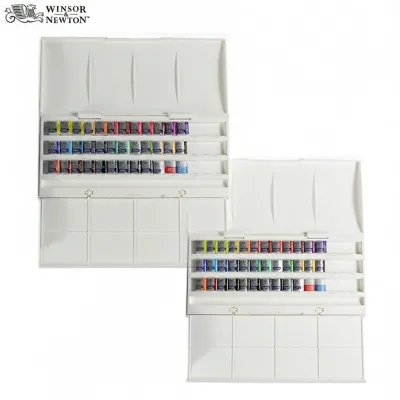
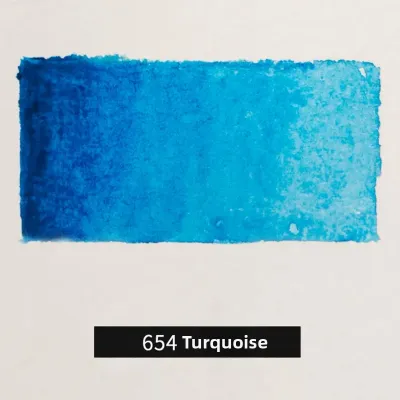
Prices are valid at publication and may change. Please refer to the product page for the latest price.
For absolute beginners who want to focus on learning water control, color mixing, and basic brush techniques, the Cotman line is highly practical. It offers a forgiving learning curve at an accessible price point, allowing you to practice extensively without worrying about the cost of wasted paint. The formulations are designed to behave predictably, making them excellent for early exercises and sketchbooks.
If your goals involve creating archival artwork, mastering advanced glazing techniques, or working with highly granulating pigments, investing in a small Professional set is a viable alternative. While the initial cost is higher, the intense pigment load allows you to experience the full depth and mixing capability of artist-grade paints. Your choice should also consider your workspace; a compact pocket set is ideal for small desks and painting on the go, while larger studio boxes require dedicated table space.
Decoding Student vs. Professional Grades
To choose the right set, you must understand what happens beneath the surface of the paint. The fundamental difference between student-grade and professional-grade watercolors lies in the pigment-to-binder ratio and the sourcing of the pigments themselves. These factors directly influence how the paint flows, mixes, and lasts over time.

Student-grade Cotman watercolors utilize synthetic alternatives and organic pigments to replace rare, expensive minerals. In these formulations, a portion of the pigment is replaced with fillers, which lowers the production cost while maintaining a consistent, manageable flow. This makes Cotman paints highly uniform across different colors, which is incredibly helpful for beginners who are still learning how much water to add to their brush.
Professional-grade watercolors, by contrast, feature a much higher concentration of pure pigments suspended in a high-quality gum arabic binder. Because they contain fewer fillers, these paints offer exceptional vibrancy, transparency, and tinting strength. A tiny dab of professional paint can cover a significantly larger area than the same amount of student-grade paint. However, because different natural pigments have unique physical properties, professional paints behave differently from tube to tube; some are naturally granulating, while others are highly staining.
To verify the product tier and understand what you are purchasing, always inspect the packaging and labels:
- Product Name: Look for "Cotman" to identify the student-grade line, or "Professional" (formerly known as Artists' Water Colour) for the premium line.
- Pigment Codes: Professional tubes and pans list the specific pigment codes (such as PB29 for Ultramarine or PY150 for Nickel Azo Yellow) on the label. Student-grade packaging may use the word "Hue" (e.g., "Cadmium Red Hue") to indicate that a safe or more affordable blend of pigments has been used to mimic a traditional, toxic, or expensive color.
- Series Numbers: Professional watercolors are grouped into Series 1 to 4 (or higher), indicating the rarity and cost of the raw pigment. Cotman watercolors generally have a uniform pricing structure across the entire range.
- Lightfastness Ratings: Both lines feature lightfastness ratings, typically marked as AA (extremely permanent) or A (permanent). Checking these ratings ensures your work will resist fading when exposed to light over time.
Core Criteria for Choosing Your First Set
Once you have decided on the grade of paint, you must evaluate the specific configuration of the set. It is easy to assume that a larger set with dozens of colors is better, but a smaller, well-curated palette is often far more beneficial for a beginner’s development.
Color Selection and Palette Size
Starting with a limited palette of 6 to 12 colors is highly recommended for beginners. A smaller selection forces you to learn color theory and mixing firsthand. By mixing your own greens, purples, and oranges, you develop a deep understanding of color temperature and harmony. Look for sets that offer a “split-primary” system, which includes both a warm and a cool version of each primary color (red, yellow, and blue). This system allows you to mix clean, vibrant secondary colors without creating muddy mixtures.
Budget Constraints
When evaluating your budget, consider the cost-per-color rather than just the total price of the set. In Singapore, a basic Cotman pocket set can range from S$20 to S$40, making it a highly economical entry point. Professional starter sets are a larger investment, often starting around S$60 for a minimal palette and scaling upward quickly. Avoid purchasing massive sets with 36 or 48 colors initially; many of these colors can easily be mixed yourself, and the high upfront cost is better spent on high-quality paper.
Workspace and Storage Footprint
Consider where you will actually paint. If you work at a small desk, a dining table that must be cleared daily, or outdoors, a compact plastic pocket set with built-in mixing wells is incredibly convenient. These sets fold down to the size of a smartphone and can be tucked away in a drawer. Larger metal or wooden studio boxes offer more mixing space and larger paint pans, but they require a dedicated, stable workspace where they can remain undisturbed.
Comparing Pan and Tube Configurations
Winsor & Newton watercolors are available in two distinct physical formats: dry pans and wet tubes. Each format caters to different painting styles, techniques, and setups. Understanding these trade-offs will help you choose the format that matches your preferred workflow.
Pocket and Sketcher Sets (Half-Pans)
Pans are small, molded blocks of dry watercolor paint that are activated by adding water with a wet brush. Half-pans (measuring approximately 1.5cm x 2cm) are the standard size found in most travel and pocket sets. They are exceptionally portable, clean, and easy to manage. Because the paint is dry, there is no risk of messy spills in your bag. They are ideal for quick sketches, journaling, and small-scale illustrations.
Standard Pan Boxes (Full-Pans)
Full-pans are twice the size of half-pans, offering a larger surface area. This format is highly suited for studio work and larger painting sessions. The larger size allows you to use bigger brushes without damaging the bristles on the edges of the plastic pan. Full-pans are excellent for laying down broad washes of color, though they are less common in compact travel sets.
Tube Sets
Tubes contain moist, paste-like watercolor paint. This format is ideal if you prefer to paint on a larger scale or need to mix significant volumes of color quickly. It is much easier to squeeze a large amount of paint from a tube onto a mixing palette than it is to repeatedly scrub a dry pan with a wet brush. Tubes also allow you to achieve rich, highly concentrated color mixtures with minimal water. However, they require a separate palette, take longer to set up and clean, and can dry out or become difficult to open if paint accumulates in the screw threads.
Format Comparison Table
| Format | Portability | Mixing Volume | Best Use Case | Key Trade-Off |
|---|---|---|---|---|
| Half-Pans | Excellent (Pocket-sized) | Low to Medium | Travel, sketching, small illustrations | Can wear down large brushes; harder to mix big washes |
| Full-Pans | Moderate (Studio/Desk) | Medium | Medium-scale paintings, studio work | Larger footprint; less common in travel-friendly cases |
| Tubes (5ml / 8ml) | Low to Moderate | High | Large washes, vibrant applications, custom palettes | Requires separate mixing palette; risk of caps sticking |
Essential Paper and Brush Pairings
Your watercolor paint is only one part of the equation. Beginner frustration often stems not from the paint itself, but from using incompatible paper and brushes. To see the true performance of Winsor & Newton watercolors, you must pair them with appropriate tools.
Paper Weight and Texture
Watercolor paper must be able to absorb water without warping, buckling, or pilling. Always look for paper with a weight of at least 300 gsm (140 lb). Thinner papers will warp immediately when water is applied, causing the paint to pool in the valleys and dry unevenly.
For beginners, a cold-pressed texture is highly recommended. It has a slight surface texture (tooth) that holds water and pigment beautifully, allowing for both detailed work and smooth washes. While 100% cotton paper offers the best performance for blending and lifting color, high-quality wood pulp (cellulose) paper is a practical, budget-friendly option for early practice.
Brush Selection
You do not need a large collection of brushes to start. A single, high-quality round synthetic brush (such as a Size 6 or Size 8) is incredibly versatile. Synthetic brushes designed for watercolor have excellent spring and shape retention, allowing you to paint broad washes with the belly of the brush and fine lines with the pointed tip. Ensure your brushes are designed specifically for watercolor; acrylic or oil brushes are often too stiff and will scratch the paper surface, disrupting the paint application.
Where to Buy and How to Verify Your Set
To ensure you are purchasing authentic Winsor & Newton products, buy from established art supply retailers, official brand storefronts, or reputable online marketplaces. Avoid purchasing from unverified third-party sellers on general ecommerce platforms, as counterfeit art supplies can suffer from poor pigment quality, toxic fillers, or dried-out formulations.
When your set arrives, perform a quick inspection to verify its condition before you begin painting:
- Inspect Pans: Check that the dry pans are securely seated in their slots. While minor surface cracking is normal due to the drying process during manufacturing, the paint should not be crumbling out of the plastic cup as loose powder.
- Inspect Tubes: Gently squeeze the tubes to ensure they feel soft and pliable. If a tube feels rock-hard, the paint inside has cured and will be difficult to extract. Check the caps to ensure they are sealed tightly and have not leaked during transit.
- Verify Contents: Cross-reference the color names on the packaging with the items inside the box to ensure no duplicates or incorrect colors were packed.
If you discover any leaking tubes, severely damaged packaging, or missing components, contact the retailer immediately. Most reputable art supply stores offer straightforward return or replacement policies for defective materials, provided the product remains unused.
Frequently Asked Questions (FAQ)
How do I reactivate dried-out watercolor pans?
To reactivate dry watercolor pans, lightly mist the surface of the paint with clean water using a small spray bottle, or place a few drops of water directly onto each pan using a clean brush. Let the water sit for two to three minutes to soften the gum arabic binder. Once the paint has softened, gently stir the surface with your brush to lift the pigment. Avoid using excessive force or scrubbing, which can damage your brush bristles. Always use clean water to prevent cross-contamination between different colors in your set.
Can I mix student-grade and professional-grade watercolors?
Yes, you can safely mix student-grade (Cotman) and professional-grade watercolors on the same palette and within the same painting. Both lines utilize a compatible gum arabic binder, allowing them to blend smoothly. However, keep in mind that mixing them will alter the overall pigment concentration. If you mix a highly concentrated professional color with a student-grade color, the student-grade paint may appear less vibrant or be easily overpowered. Always test your mixtures on a scrap piece of watercolor paper first to observe how the transparency, granulation, and tinting strength behave together.
Community discussion
Share your experience or ask a question. Comments are reviewed before publication.