
Selecting the right small whiteboard for magnetic letter activities involves balancing magnetic receptivity, surface durability, and child safety. For parents and educators in Singapore, finding a board that fits compact study areas while holding letters securely is essential for effective phonics and spelling practice. A high-quality board ensures that magnetic letters remain firmly in place without sliding down, while providing a smooth surface that erases cleanly without leaving ghosted ink stains. By focusing on the underlying materials and structural design, you can choose a versatile learning tool that supports daily educational activities for years.
Key Features to Look for in a Small Magnetic Whiteboard
When evaluating a small whiteboard for magnetic letter activities, the underlying construction determines how well it performs. Many buyers assume all whiteboards are inherently magnetic, but only boards with a steel or iron backing can attract magnets. Glass whiteboards, while modern, often require exceptionally strong rare-earth magnets and are generally unsuitable for standard plastic or foam educational letters. For children’s activities, a painted steel or porcelain-on-steel surface is the standard choice, as these materials provide a strong, reliable hold for lightweight magnetic letters.
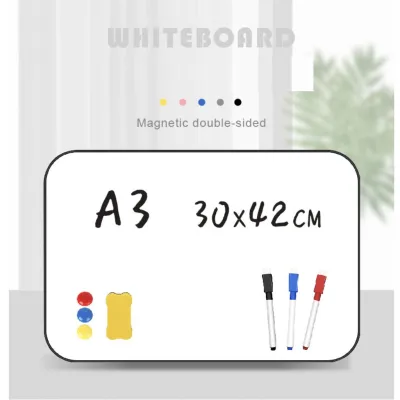
Size and weight are critical factors when the board is intended for children. A board that is too large or heavy can be difficult for a child to manage independently, increasing the risk of accidental drops. For individual desk work or lap use, dimensions around A4 size (approximately 21 by 30 centimetres) or A3 size (approximately 30 by 42 centimetres) offer an ideal balance. These sizes provide ample space for spelling short words or sentences while remaining light enough for a young child to carry, store, and position without adult assistance.
Products mentioned in this guide
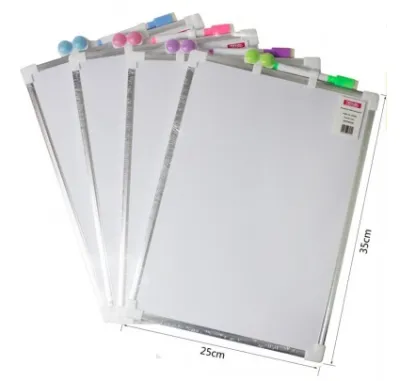
![[Ready Stock] A4 Compact Whiteboard White Board | Ultra Slim 1mm|Marker Erasable|Washable|Writing Board | Childrens Day](https://img.lazcdn.com/g/p/1b120a4258f810a5521ad4de86b022dd.jpg_400x400q80.jpg_.webp)
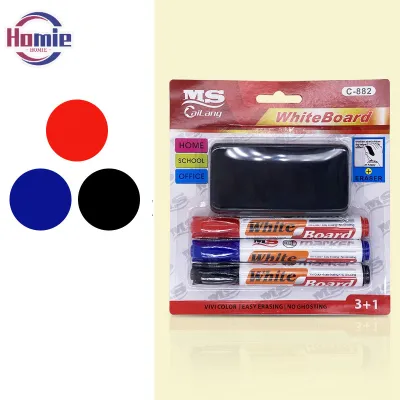
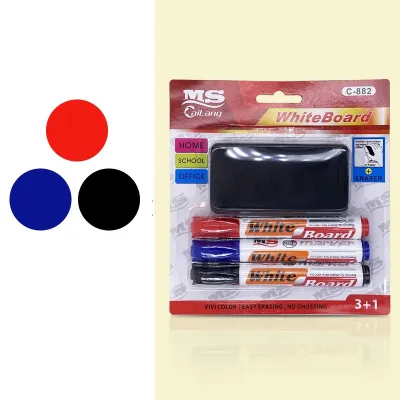
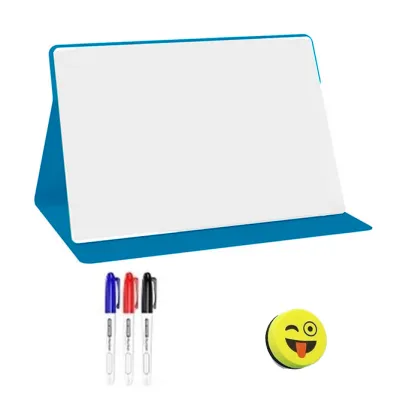
Prices are valid at publication and may change. Please refer to the product page for the latest price.
Physical safety should guide your choice of frame and edge design. Standard office whiteboards often feature sharp aluminum frames with pointed corners, which pose a safety hazard in a child’s hands. Look for boards designed specifically for educational use, which typically feature rounded plastic corners or smooth wooden frames. The frame should be securely bonded to the board surface to prevent any peeling or sharp edges from exposing the metal backing underneath. Additionally, check that the overall construction is robust enough to withstand being dropped on hard tiled floors, which are common in Singapore homes.
Matching Whiteboard Types to Educational Scenarios
The ideal whiteboard format depends heavily on where and how the learning activities take place. In Singapore’s compact residential spaces, maximizing utility while minimizing clutter is a primary consideration for home learning setups.

Desktop and Lap Boards for Individual Practice
Portable lap boards and small desktop easels are highly effective for focused, one-on-one learning sessions. These compact boards allow a child to work comfortably at a study desk, on the living room floor, or even during car rides. Double-sided boards are particularly useful in this category, as they allow a child to arrange magnetic letters on one side while writing corresponding words or sentences on the reverse side.
To ensure a stable writing and letter-arranging experience, look for lap boards with non-slip rubber feet or a textured backing. If space is limited, choose a board that can be stored flat in a drawer or tucked vertically between books on a shelf. Some desktop models feature a folding A-frame design, which allows the board to stand independently during use and fold completely flat for storage when the lesson is complete.
Wall-Mounted or Easel Boards for Group Activities
For classrooms, home-schooling environments, or shared play areas, a larger wall-mounted board or a sturdy floor easel is more appropriate. These setups allow multiple children to view the board simultaneously, making them ideal for group spelling games, interactive storytelling, and teacher-led demonstrations. When installing a wall-mounted board, it is crucial to mount it at the children’s eye level to ensure they can comfortably reach all areas of the surface without straining.
Safety is the paramount concern for wall-mounted and easel setups. If you choose to mount a board on the wall, use secure mounting hardware rather than temporary adhesive strips, as the repeated pulling force of removing magnetic letters can loosen weak adhesives over time. For floor easels, select a model with a wide, stable base and locking mechanisms to prevent the frame from collapsing or tipping over during active play. The height should be adjustable so the board can grow alongside the children using it.
How to Verify Magnetic Strength and Surface Quality
Before committing to a specific whiteboard, it is important to understand how to verify its magnetic strength and surface quality, as these factors directly impact the usability of educational letters. A simple way to test magnetic receptivity is to place a standard plastic magnetic letter on the board and observe its behavior. The letter should snap firmly to the surface and remain in place without sliding, tilting, or rotating. If the letter slides downward even slightly, the steel backing inside the board may be too thin, or the surface coating may be too thick, reducing the magnetic pull.
Surface quality determines how easily dry-erase marker ink can be applied and removed. High-quality boards feature a smooth, non-porous coating that allows markers to glide effortlessly without skipping. To test erasability, write a few words on the board, let the ink dry completely for a few minutes, and then wipe it away with a standard felt eraser. The ink should disappear completely with minimal pressure, leaving no dark smudges or faint outlines of the letters, a phenomenon known as “ghosting.”
The durability of the surface coating varies significantly across different materials. Melamine boards are budget-friendly but tend to wear down quickly, absorbing ink oils and ghosting over time if used frequently. Painted steel surfaces offer a much higher resistance to staining and are highly magnetic, making them the practical sweet spot for home education. For heavy classroom use, porcelain or ceramic-on-steel surfaces provide the ultimate durability, resisting scratches, stains, and chemical damage, though they come at a higher price point.
Essential Accessories and Maintenance Tips
To keep your small whiteboard in optimal condition and ensure a safe learning environment, selecting the right accessories and maintaining a regular cleaning routine is essential. When choosing dry-erase markers for children, prioritize low-odor, non-toxic formulas that are safe for prolonged indoor use. Fine-tip markers are highly recommended for small boards, as they allow children to write clearly within limited spaces and match the scale of small magnetic letters.
Maintaining the board’s surface requires gentle care to avoid stripping the protective dry-erase coating. For daily cleaning, a dry microfiber cloth or a clean felt eraser is usually sufficient to remove fresh marker ink. If stubborn stains or accidental permanent marker marks occur, avoid using abrasive scrubbing pads or harsh household chemicals like bleach or acetone, which can permanently ruin the surface. Instead, use a specialized whiteboard cleaning spray or a soft cloth dampened with water and a tiny drop of mild dish soap, wiping the surface completely dry afterward.
Proper storage is particularly important in Singapore’s warm and humid climate, which can affect certain whiteboard materials over time. High humidity can cause cheap cardboard-core boards to warp or bow, which compromises both the flat writing surface and the magnetic contact. Store your whiteboards in a dry, well-ventilated area away from direct sunlight and air conditioning vents, which can cause rapid temperature fluctuations. Keeping the boards stored flat or supported vertically in a dedicated rack will help maintain their structural integrity for years.
Building Your Shortlist: What to Check Before Buying
When browsing online marketplaces or local stationery shops in Singapore, a structured checklist will help you make an informed purchase. First, carefully read the product specifications to confirm that the board is explicitly described as “magnetic” or “magnetic receptive.” Some product listings use confusing terminology, so verifying that the board contains a steel core is crucial to ensure your magnetic letters will actually stick.
Next, look closely at user reviews and feedback, focusing on comments regarding magnet holding power and overall durability. Pay attention to reviews from parents or teachers who mention using the board with specific types of educational letters, as this provides practical insight into how the board performs in real-world scenarios. Check for any mentions of the frame coming loose or the surface scratching easily, which are common indicators of lower-quality construction.
Finally, double-check the physical dimensions and weight of the board to ensure it fits your designated learning space, whether that is a specific study desk, a shelf, or a wall section. If purchasing online, verify the seller’s return and exchange policies in case the board arrives damaged or does not meet your expectations for magnetic strength. Taking these verification steps ensures that your investment provides a safe, reliable, and engaging platform for your child’s literacy development.
Frequently Asked Questions (FAQ)
Can I use standard fridge magnets on a small whiteboard?
While standard fridge magnets will stick to a magnetic whiteboard, they are not always ideal for educational activities. Many household fridge magnets are heavy, bulky, or feature exposed ceramic magnets on the back, which can easily scratch the delicate dry-erase coating of the board when slid across the surface. For children’s activities, it is safer to use lightweight plastic or foam magnetic letters designed specifically for educational boards, as these typically feature flat, fully enclosed, or recessed magnets that minimize the risk of surface damage.
How do I remove permanent marker stains from a magnetic whiteboard?
If a permanent marker is accidentally used on your whiteboard, you can often remove the stain using a simple dry-erase marker technique. Carefully scribble directly over the permanent marker lines with a fresh dry-erase marker, ensuring the wet ink completely covers the permanent stain. The solvents present in the dry-erase ink will naturally dissolve the permanent ink binders; after letting it sit for a few seconds, wipe the entire area away firmly with a clean cloth. For any remaining residue, a small amount of isopropyl alcohol on a soft microfiber cloth can be used to gently clean the spot, followed immediately by a damp water wipe to remove any chemical residue.

Community discussion
Share your experience or ask a question. Comments are reviewed before publication.