
Teaching children phonics and spelling with magnetic letters is a highly effective, tactile learning method. However, finding a small whiteboard that performs reliably in Singapore homes requires looking beyond basic aesthetics. A successful setup depends on a board that offers strong magnetic hold, a smooth writing surface that resists the staining effects of local humidity, and a physical design that is safe for young hands.
When selecting a board, you must ensure it features a true ferromagnetic steel backing rather than a simple painted cardboard core. Many lightweight boards sold online fail to hold even basic plastic letters, leading to frustration during lessons. By focusing on material specifications, frame safety, and the specific layout of your study space, you can select a tool that supports years of interactive learning.
Key Features to Evaluate for Magnetic Letter Compatibility
To ensure your magnetic letters stay exactly where your child places them, you must understand the underlying construction of the whiteboard. The term “magnetic whiteboard” is slightly misleading; the board itself is not a magnet, but rather a sheet of metal coated with a dry-erase surface.
Products mentioned in this guide
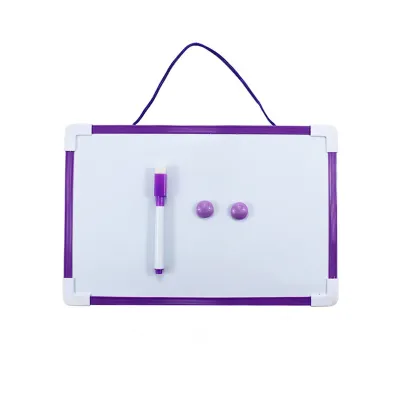
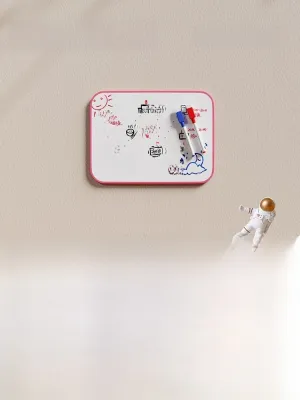
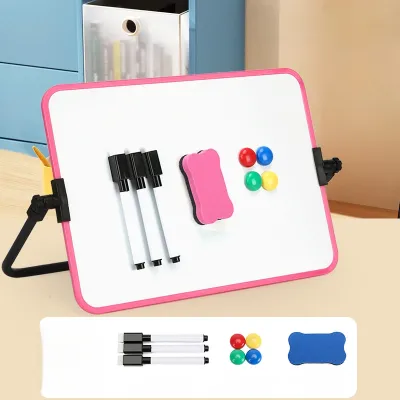
Prices are valid at publication and may change. Please refer to the product page for the latest price.
The strength of the magnetic hold depends entirely on the thickness and quality of the steel layer beneath the writing surface. Budget-friendly boards often use a very thin foil backing or a composite material mixed with iron dust. These surfaces struggle to hold heavier magnetic letters, causing them to slide down or spin upside down during a lesson. For a reliable hold, look for boards specified as “lacquered steel” or “magnetic steel,” which provide a robust ferromagnetic base.
The quality of the dry-erase coating is another critical factor, especially in Singapore’s humid climate. High relative humidity can cause dry-erase ink to dry differently, sometimes bonding with the board surface and leaving permanent shadows, a phenomenon known as ghosting. Melamine surfaces are highly porous and prone to this type of staining over time. Painted steel surfaces offer a smoother glide and better resistance to ghosting, while porcelain-on-steel surfaces provide the ultimate durability and are virtually impervious to staining, though they are heavier and carry a higher price tag.
Board thickness and frame rigidity also play a vital role in long-term usability. Thin, unsupported boards are highly susceptible to warping when exposed to humidity fluctuations or the physical pressure of a child pressing down with markers and letters. A sturdy backing material, such as medium-density fiberboard (MDF) or a rigid plastic honeycomb structure, ensures the board remains perfectly flat and stable during active use.
Essential Safety and Durability Checks for Children
When introducing any educational tool into a child’s environment, safety must be your primary consideration. Standard office whiteboards are often designed with sharp aluminum frames and pointed plastic corners that can easily scratch delicate skin or snag clothing during active play.

For home and classroom use with children, prioritize boards featuring rounded, impact-resistant plastic corners or smooth, well-sanded wooden frames. These designs minimize the risk of injury if the board is dropped or accidentally bumped during a lesson. Additionally, check that the frame is securely bonded to the board core so that no sharp metal edges are exposed over time.
The magnetic letters themselves require careful inspection before use. Many inexpensive letter sets feature small, exposed black disc magnets glued to the back of the plastic shapes. Over time, the adhesive can fail, allowing these small magnets to fall off and present a severe choking and ingestion hazard for young children. Opt for high-quality letter sets where the magnets are fully encased within the plastic mold or securely fused into the structure of the letter.
Finally, always verify the product labels for non-toxic material certifications. Dry-erase markers often contain solvents that emit strong odors, which can be irritating in enclosed, air-conditioned rooms common in Singapore apartments. Look for markers labeled as low-odor and certified non-toxic, such as those compliant with EN71 standards. Ensure that the board itself does not emit any strong chemical off-gassing when first unpacked.
Matching the White Board to Your Teaching Scenario
Every home learning environment is unique, and the physical format of the whiteboard should match your specific teaching style and space constraints. In Singapore, where study areas are often integrated into multi-purpose rooms or dining spaces, choosing a board that is easy to store and set up is essential for maintaining an organized home.
Lap-Sized Boards for One-on-One Practice
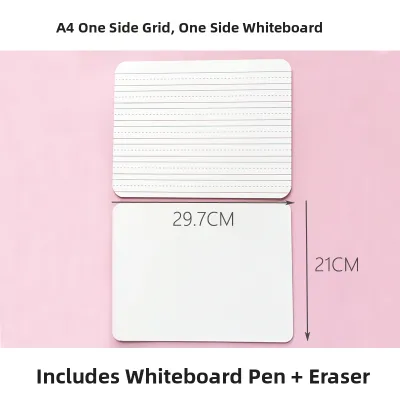
Lap-sized boards are the most versatile option for individual tutoring, quiet study time, or focused spelling practice. These boards typically range in size from A4 (approximately 21 by 30 centimeters) to A3 (approximately 30 by 42 centimeters), making them small enough to fit comfortably on a child’s lap or a compact study desk.
Weight is a crucial factor for handheld boards, as young children need to be able to lift, turn, and carry the board without assistance. A board weighing under 500 grams is ideal, allowing for easy handling during interactive games where the child writes an answer and holds the board up to show you.
Double-sided designs offer significant educational advantages for one-on-one practice. Many double-sided boards feature a plain white surface on one side for magnetic letter placement and a lined surface on the reverse side. This layout allows you to transition seamlessly from spelling a word with magnetic letters to practicing handwriting with a dry-erase marker, reinforcing both reading and writing skills in a single session.
Easel or Stand-Up Boards for Group Activities
If you are teaching multiple children or prefer a more structured, classroom-like setup, an easel or stand-up whiteboard is an excellent choice. These boards feature an integrated stand that allows them to sit upright on a table or desk, making the letters and writing visible to several children at once.
When evaluating a stand-up board, pay close attention to the stability of the easel frame and the locking mechanism of the hinges. The board must remain steady and resist tipping over when a child applies pressure to place or move magnetic letters. Non-slip rubber feet on the base of the stand are highly recommended to prevent the board from sliding across smooth wooden or laminate table surfaces.
The viewing angle is also important for comfortable learning. Look for easels that position the board at an angle of 60 to 75 degrees, which reduces glare from overhead lighting and provides an ergonomic surface for writing. Many tabletop easels also include a built-in storage tray or trough at the base, which keeps markers, erasers, and active letters organized and within easy reach during the lesson.
Foldable or Multi-Panel Boards for Extended Learning
For advanced spelling lessons, sentence-building exercises, or sorting activities, a foldable or multi-panel whiteboard offers an expandable canvas. These boards feature two or three hinged panels that can be opened up to provide a wide working surface and folded closed for compact storage.
The durability of the hinges is the most critical component of a foldable board. The hinges must be robust enough to withstand repeated opening and closing without loosening or breaking. When fully opened, the panels should lay as flat as possible, minimizing the center ridge so that children can slide magnetic letters smoothly across the entire surface.
Foldable designs are particularly beneficial for space-conscious Singapore households, as they offer a large working area when in use but fold down to a fraction of their size. This allows you to easily slide the board into a bookshelf, drawer, or narrow gap between furniture when the lesson is over.
When using magnetic letters on a multi-panel board, be mindful of the gaps between the panels. Standard magnetic letters may lose their grip if placed directly over a hinge seam, so encourage your child to place letters fully within the boundaries of a single panel to ensure they remain securely attached.
How to Test and Verify Your White Board at Home
Once you have purchased a small whiteboard, conducting a few simple, observable tests at home will help you verify its performance and safety before integrating it into your daily teaching routine. These tests ensure the materials meet your expectations and will withstand active use by children.
First, perform a slide test to evaluate the magnetic receptivity of the board. Place the whiteboard in a completely vertical position and place your heaviest magnetic letters onto the surface. If the letters slide down, spin, or fall off, the steel backing is too thin or the magnets in the letters are too weak. A high-quality board should hold the letters firmly in place without any downward movement.
Next, conduct a 24-hour marker dry test to evaluate the quality of the dry-erase coating. Write a few words or draw a simple shape on the board using a standard dry-erase marker, and leave the ink on the surface for a full 24 hours. Afterward, attempt to erase the ink using a standard dry whiteboard eraser or a clean microfiber cloth. If the ink erases cleanly without leaving any faint gray or colored shadows, the surface is highly resistant to ghosting and will be easy to maintain.
Finally, perform a thorough physical inspection of the frame and writing surface. Run your fingers carefully along all edges, corners, and joints to check for any sharp plastic flashing, loose metal staples, or rough wooden splinters. Inspect the writing surface under a bright light to ensure there are no bubbles, scratches, or uneven patches in the coating, as these defects can trap marker ink and make the board difficult to clean over time.
Frequently Asked Questions (FAQ)
Can I use standard fridge magnets on a small white board?
While some lightweight fridge magnets will stick to a magnetic whiteboard, many decorative household magnets are too heavy for the thin steel backing used in standard whiteboards. Fridge magnets often rely on the thick, heavy-gauge steel of a refrigerator door to create a strong hold. For a small whiteboard, it is best to use lightweight educational magnets or plastic magnetic letters specifically designed for whiteboard use to ensure they do not slide off or scratch the surface.
How do I remove stubborn marker stains from the board surface?
To remove stubborn stains, ghosting, or accidental permanent marker lines, dampen a clean microfiber cloth with a small amount of isopropyl alcohol or a dedicated whiteboard cleaning spray. Gently wipe the stained area in a circular motion until the ink dissolves, then dry the surface with a clean cloth. Avoid using abrasive scrubbing pads, harsh household chemical cleaners, or acetone, as these substances will permanently strip away the protective dry-erase coating, making the board highly susceptible to future staining.
Are magnetic letters safe for toddlers?
Magnetic letters are generally not recommended for children under the age of three due to the risk of choking on small parts. If you are using magnetic letters with toddlers, you must provide constant, direct supervision and ensure the letters are large enough to pass a standard choke-tube test. Regularly inspect each letter to confirm that the magnets are securely embedded and show no signs of loosening, and store the letters safely out of reach when not in use.

Community discussion
Share your experience or ask a question. Comments are reviewed before publication.