
Selecting the best easel board for your child in Singapore involves looking beyond brand names to evaluate physical stability, surface quality, and certified safety standards. Because children interact closely with these boards through drawing, painting, and writing, a reliable easel must withstand daily use while fitting comfortably within your home layout. By focusing on observable construction details, material safety, and functional versatility, you can identify a high-quality easel that supports your child’s developmental milestones for years to come.
While many brands market their products as premium or professional-grade, the true value of an easel board lies in its physical specifications and safety certifications. Parents in Singapore can find excellent options across various price points, from budget-friendly models under S$60 to premium adjustable wooden units exceeding S$150. The key to making a smart investment is knowing how to assess these products systematically before purchasing.
Core Selection Criteria for Kids' Easel Boards
Evaluating the physical structure of an easel board is the first step in ensuring a safe and productive art environment. A child’s art session can become highly energetic, meaning the easel must remain firmly anchored to the floor. Look for an A-frame design with a wide, stable base that prevents the unit from tipping forward or backward when a child applies downward pressure with markers or chalk.
Products mentioned in this guide
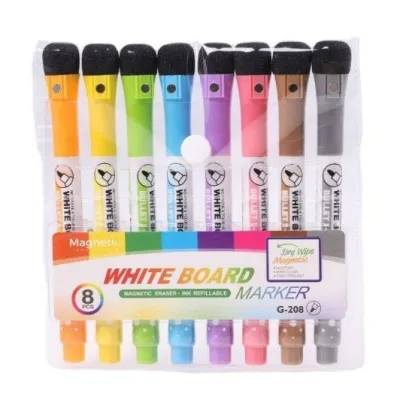
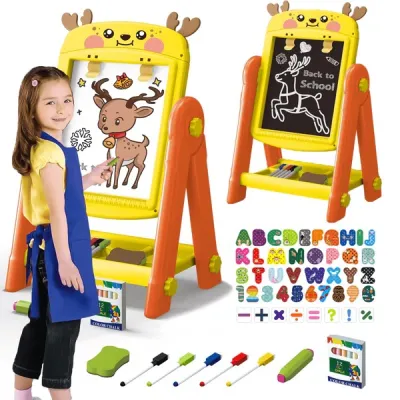
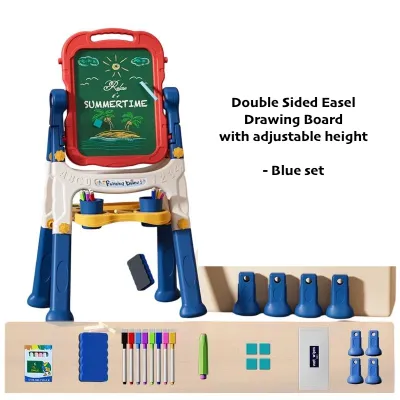
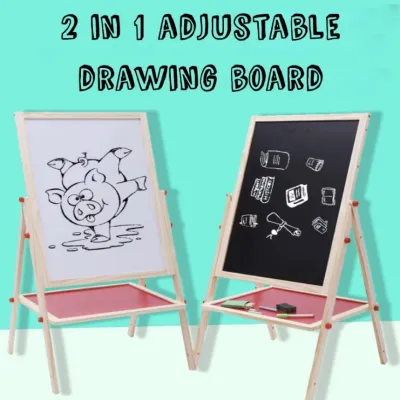
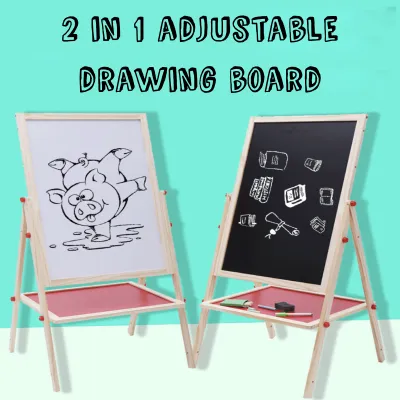
![[MQLITTLESHOP] 2 In 1 Wooden Blackboard Whiteboard Double Sided Adjustable Magnetic Drawing Writing Board Easel for Kids Drawing Board](https://img.lazcdn.com/g/p/a79792646981ac696b98ec817c4e7139.jpg_400x400q80.jpg_.webp)
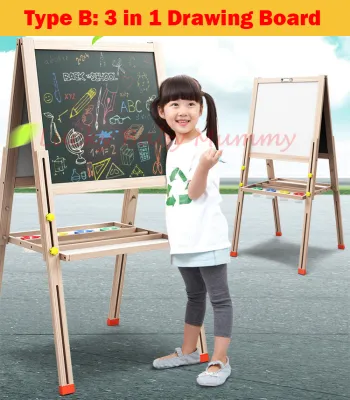
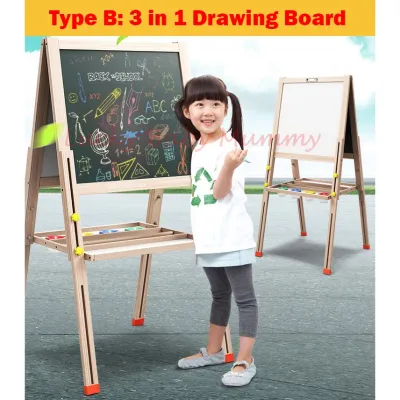
Prices are valid at publication and may change. Please refer to the product page for the latest price.
To prevent sliding on common Singaporean flooring materials like polished tiles, vinyl, or engineered wood, check the feet of the easel. High-quality models feature non-slip rubber or silicone caps on the legs. These caps provide essential traction and protect your home flooring from scratches during active play.
Surface material compatibility is another critical factor for long-term usability. Most children’s easels are double-sided, featuring a magnetic whiteboard on one side and a traditional chalkboard on the other. Verify that the whiteboard surface is made of coated steel or porcelain rather than cheap melamine, as melamine is highly prone to permanent staining and ghosting after repeated use.
For the chalkboard side, look for a smooth, non-porous finish that accepts standard chalk smoothly without scratching. Some modern chalkboards are compatible with liquid chalk markers, but you must verify this in the manufacturer’s specifications. Using liquid chalk on an incompatible, porous painted surface can ruin the board permanently.
Height adjustability ensures the easel grows alongside your child, extending the product’s lifespan from toddlerhood through primary school. Look for models with a generous height range, typically adjusting from 90 cm to over 120 cm. The adjustment mechanism should feature secure, hand-tightened knobs or locking pins rather than simple friction-based clamps, which can slip under pressure and cause sudden collapses.
Evaluating Brand Reliability and Safety Standards
When assessing different brands, prioritize manufacturers that provide transparent safety documentation over those making vague marketing claims. Because children have prolonged physical contact with easel surfaces and art supplies, verifying chemical and structural safety is paramount.

Look for recognized international toy safety certifications printed directly on the packaging or detailed in the product manual. The European standard EN71 and the American ASTM F963 or ASTM D-4236 certifications are reliable indicators that the product has undergone rigorous testing for physical hazards, flammability, and chemical toxicity.
Inspect the manufacturer’s material specifications to ensure all wood, plastic, and paint finishes are non-toxic. Wooden easels should be crafted from sustainably sourced, solid hardwoods like pine or beechwood, finished with water-based, lead-free lacquers. For plastic components and trays, confirm they are certified free from bisphenol A (BPA), phthalates, and heavy metals.
Brand reliability is also reflected in the availability of customer support and replacement parts. Over years of creative play, small components like plastic paper-roll clips, utility trays, or locking pins can become lost or damaged. Reputable brands often sell these accessories separately, allowing you to repair and maintain the easel rather than replacing the entire unit.
Before purchasing, research the manufacturer’s warranty terms. A reliable brand typically offers at least a one-year warranty against structural defects, which provides peace of mind regarding the durability of the hinges, joints, and frame materials.
Matching Easel Types to Your Child's Age and Space
Singaporean homes, such as HDB flats and condominiums, often require smart space management. Choosing the right easel configuration depends heavily on your available floor space and your child’s specific developmental stage.
Classic A-frame floor easels offer the most traditional art experience, providing a dedicated creative station. However, they require a permanent floor footprint of approximately 60 cm by 60 cm. If you have a dedicated playroom or a spacious living area, a sturdy floor easel is an excellent choice that encourages standing play, which helps develop gross motor skills.
For smaller living spaces, a tabletop easel is a highly practical alternative. These compact units can be placed on a dining table or study desk during art time and easily folded flat to store in a closet or under a bed afterward. While highly portable, they do require a stable, flat surface at the correct height for your child to work comfortably.
Wall-mounted easel boards are another space-saving option, completely eliminating floor clutter. They provide a permanent, stable drawing surface but lack portability and require drilling into your walls. This option is best suited for older children who have a dedicated study or play corner.
Consider whether a single-sided or double-sided board fits your family’s needs. Double-sided easels are ideal for households with multiple children, as they allow two siblings to draw simultaneously without sharing the same physical space. If you have an only child, a single-sided folding easel may be preferable, as it is lighter, easier to move, and folds into a slimmer profile.
Integrated storage features can greatly enhance the usability of the easel. Look for models that include a spacious utility tray beneath the drawing boards to keep markers, chalk, erasers, and paint cups organized. Some advanced models also feature a built-in paper roll dispenser at the top, allowing children to pull down fresh paper for painting projects easily.
Pre-Purchase Checklist and In-Store Verification
If you are shopping at a physical retail store or specialty stationery shop in Singapore, performing a hands-on inspection of a display model can save you from future frustration. Use this practical checklist to verify the quality of the easel before making your purchase.
First, test the smoothness of both drawing surfaces. Run your hand across the whiteboard and chalkboard to check for any bubbles, uneven coatings, or rough edges. If a demonstration unit is available, write on the whiteboard with a dry-erase marker, wait two minutes, and attempt to erase it to check for immediate staining.
Next, inspect the hardware and joints. Gently shake the assembled easel to evaluate its structural rigidity. The hinges should operate smoothly without sticking, and there should be no visible gaps in the joints. Look for plastic safety spacers around the folding hinges to ensure your child’s fingers cannot get pinched when the unit is collapsed.
Examine all wooden surfaces for splinters, rough grain, or sharp corners. Run your fingers along the edges of the utility tray and the legs. High-quality wooden easels feature rounded corners and thoroughly sanded edges to prevent minor cuts and splinters during active play.
Finally, clarify exactly what is included in the box. Some brands package the easel frame alone, requiring you to purchase paper rolls, markers, chalk, and magnetic letters separately. Factor these additional costs into your budget, and verify that standard, locally available paper rolls and dry-erase markers will fit the easel’s dimensions.
Frequently Asked Questions (FAQ)
How do I clean and maintain a double-sided magnetic easel?
To clean the whiteboard side, use a soft microfiber cloth to wipe away dry-erase marker ink. Avoid using abrasive sponges or harsh chemical cleaners, as these can strip the protective glossy coating and lead to permanent ghosting. For stubborn stains, wipe the surface with a cloth dampened with mild soapy water or a specialized whiteboard cleaner, then dry it immediately. Clean the chalkboard side with a damp felt eraser or a clean, damp cloth. Avoid soaking wooden frames in water, as moisture can seep into the joints and cause the wood to warp or swell.
What should I do if the easel becomes wobbly over time?
If your easel begins to wobble after months of active use, perform a quick structural check. Locate all the screws, bolts, and joint connectors on the frame and use the appropriate screwdriver or hex key to tighten them gently. Do not overtighten wooden joints, as this can strip the internal threads of the wood. If you notice structural cracks in the wooden legs, broken locking hinges, or stripped joints that can no longer be tightened securely, discontinue use immediately. Using a structurally compromised easel poses a tipping hazard and could lead to minor injuries.
Community discussion
Share your experience or ask a question. Comments are reviewed before publication.