
Selecting the right double sided whiteboard for home tutoring in Singapore requires balancing space constraints, the age of your students, and your specific teaching methods. In a home-learning environment, a whiteboard serves as the central hub for explaining complex concepts, displaying visual aids, and engaging in interactive exercises. Choosing a model with dual writing surfaces doubles your active workspace without increasing the floor or wall footprint, making it an exceptionally efficient tool for modern home education.
To find the ideal board, you must look beyond basic dimensions and evaluate the physical properties of the writing surface, the strength of the magnetic backing, and the structural integrity of the frame. This guide details the essential specifications to verify, the various design formats available, and practical maintenance tips to keep your board in pristine condition for years of academic instruction.
Key Features to Evaluate Before Buying
Surface Material and Erasability
The whiteboard surface material directly determines how smoothly markers write, how easily they erase, and how long the board resists staining. Melamine is the most budget-friendly option, consisting of a plastic-coated resin over a wood composite core. While lightweight, melamine is porous and prone to “ghosting”—where faint outlines of old ink remain visible after erasing. It is best suited for light, occasional use, and requires regular deep cleaning to maintain its white surface.
Products mentioned in this guide
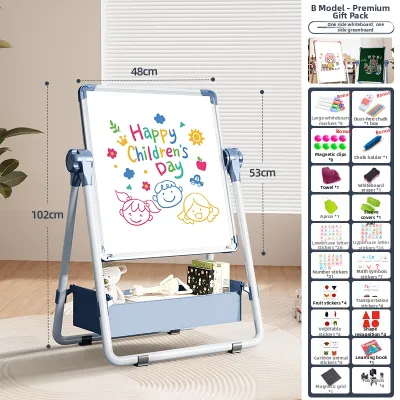
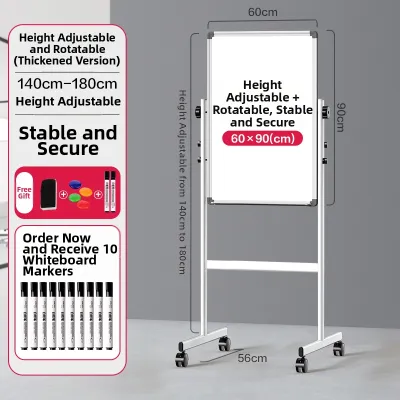
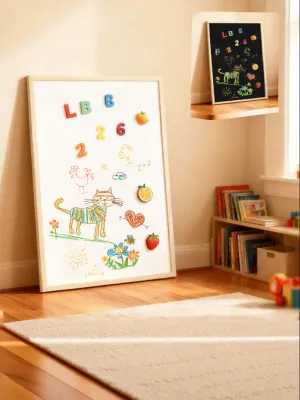
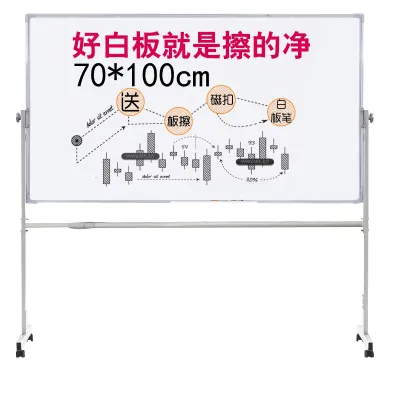
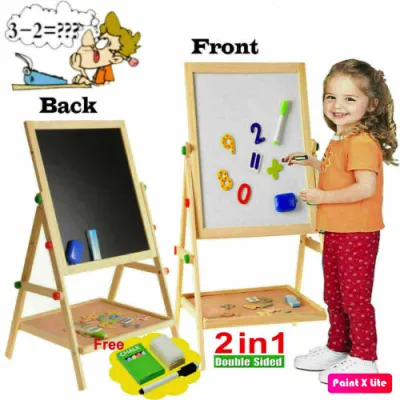
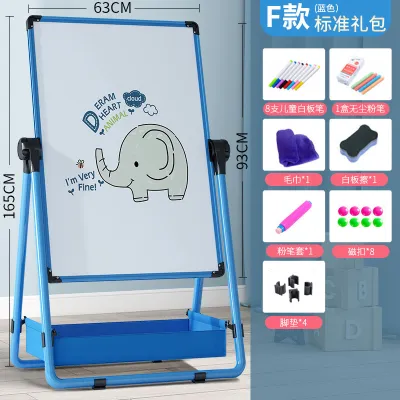
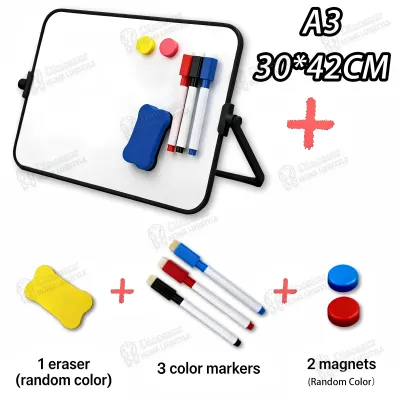
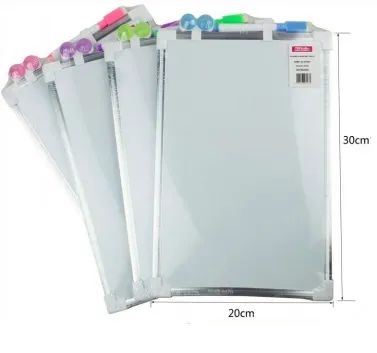
Prices are valid at publication and may change. Please refer to the product page for the latest price.
Painted steel boards offer a significant upgrade in both durability and functionality. These surfaces feature a layer of lacquer or paint baked onto a steel sheet, creating a smoother, less porous finish that resists ghosting far better than melamine. Because of the steel core, these boards are also magnetic, allowing you to use interactive teaching aids. For high-frequency tutoring, porcelain or enamel surfaces represent the premium standard. Created by fusing ceramic glass onto a steel backing at extremely high temperatures, porcelain is completely non-porous, highly scratch-resistant, and virtually immune to ghosting, making it the most durable choice for daily, intensive writing.
To verify a surface’s erasability before committing to a purchase, perform a simple trial if you are shopping in a physical store. Draw a few lines with a standard dry-erase marker in an inconspicuous corner of the board, wait approximately 24 hours to let the ink fully cure, and then attempt to wipe it away with a standard dry-erase felt eraser. A high-quality surface will allow the dry ink to lift off cleanly in dry flakes without leaving a dark smudge or shadow behind.
Magnetic Compatibility
Not all magnetic whiteboards are created equal, as the strength of the magnetic hold depends entirely on the thickness of the steel backing beneath the writing surface. Cheap boards often use incredibly thin metal sheets, which provide insufficient magnetic pull. When selecting a board, verify whether the steel backing can securely support educational manipulatives, such as heavy magnetic letters, geometric shapes, or flashcard holders.
If you plan to use thick plastic magnetic letters or heavy visual aids, test the board’s magnetic strength by placing a standard refrigerator magnet or a magnetic clip holding three sheets of paper onto the surface. If the magnet slides down or fails to hold the paper, the steel backing is too thin for interactive teaching accessories. Ensure the manufacturer specifies a solid steel core or backing rather than a simple metallic paint coating.
Frame and Build Quality
The frame provides structural rigidity and protects the edges of the whiteboard from impact. Aluminum frames are the industry standard for freestanding and wall-mounted models because they offer an excellent strength-to-weight ratio. They resist warping under humid conditions, which is particularly important in Singapore’s tropical climate where high indoor humidity can cause wood-based frames to swell or bend over time.
Plastic frames are lighter and often found on smaller desktop models, but they can become brittle if exposed to direct sunlight near windows. Regardless of the frame material, pay close attention to the corner joints. Look for rounded plastic corner caps rather than sharp, mitered metal edges. These protective caps prevent accidental scrapes and cuts, which is a vital safety consideration when tutoring younger children who may move active hands near the board’s borders.
Reversible Mechanism
For a double sided whiteboard to be truly functional, the mechanism that allows you to flip between the two sides must be smooth, secure, and user-friendly. High-quality reversible boards feature a central pivot point with heavy-duty steel pins. The rotation should require minimal physical effort, allowing you to transition from one side to the other in a single, fluid motion during a lesson.
Equally important is the locking mechanism that holds the board in place once flipped. Look for spring-loaded pull pins or secure hand-dial locks located on the side support bars. When locked, the board must remain perfectly rigid; any wobbling or shifting while you write will cause your handwriting to become messy and can disrupt the flow of your explanation. Avoid models that rely solely on friction tension dials, as these tend to loosen over time and require frequent manual tightening.
Types of Double-Sided Whiteboards for Home Use
Double-sided whiteboards are available in three primary physical configurations, each catering to different spatial arrangements and teaching styles. Choosing the right design depends on the size of your tutoring area, whether you have a dedicated study room, and how often you need to pack away your teaching materials. The physical format you select will directly influence how you interact with your student and how much floor space remains free when the lesson is over.

In typical Singapore apartments, where space optimization is highly valued, selecting a board that matches your home’s layout is crucial. A board that is too bulky can make a study room feel cramped, while a board that is too small may limit your ability to explain multi-step academic problems clearly. Evaluating these three main categories will help you identify the most practical design for your household.
Freestanding Easel Boards
Freestanding easel boards are floor-standing units mounted on a wheeled metal frame, making them highly versatile for dynamic teaching environments. The primary advantage of these boards is their mobility, enabled by lockable castor wheels. This allows you to roll the whiteboard from a bedroom to the living room for a tutoring session, and then slide it out of sight into a utility closet or bomb shelter once the lesson concludes.
Many freestanding models also offer height adjustability, allowing you to lower the board for younger children sitting on small chairs or raise it to eye level for secondary school students who are standing. When choosing a freestanding easel, always measure the base footprint to ensure it fits comfortably within your designated teaching area. Additionally, inspect the quality of the castor wheels; soft polyurethane or rubber-coated wheels are highly recommended to prevent scratching or scuffing delicate home flooring, such as vinyl, laminate, or polished parquet.
Desktop and Tabletop Models
Desktop and tabletop double-sided whiteboards are compact, lightweight units designed to sit directly on a desk or dining table. These models are ideal for homes with limited floor space, one-on-one tutoring sessions, or focused, individual student tasks. They typically feature a built-in folding stand or a small aluminum frame that allows the board to stand upright at an angle, making it easy for both the tutor and student to view the content while seated.
Because they sit directly on the working surface, tabletop models encourage close-up, interactive learning. They are perfect for teaching phonics, conducting spelling drills, or working through individual math equations step-by-step. The base of a high-quality tabletop board should feature non-slip rubber feet to prevent it from sliding around on polished wooden or glass tables. When the tutoring session is finished, these boards can be folded completely flat and stored on a bookshelf or inside a desk drawer.
Wall-Mounted Reversible Boards
Wall-mounted reversible whiteboards offer the ultimate space-saving solution by utilizing vertical wall space, leaving your floor completely unobstructed. Unlike standard single-sided wall boards, these specialty models are mounted on a wall-bracket system that allows the board to pivot horizontally or vertically away from the wall, giving you full access to both writing surfaces. This provides a highly stable, non-wobbling writing experience that feels incredibly secure.
Installing a wall-mounted reversible board requires careful planning and structural verification. You must ensure that the mounting brackets are anchored securely into the wall studs or, in the case of solid concrete walls common in Singapore HDB flats, installed using heavy-duty masonry wall plugs. Because the board must swing outward to flip, you must also ensure there is sufficient clearance around the mounting area so the board does not strike nearby furniture, light fixtures, or doors during rotation.
Matching the Board to Your Tutoring Needs
Early Childhood and Language Learning
For preschool and early primary school tutoring, the whiteboard serves primarily as an interactive play space rather than a lecture board. At this developmental stage, children learn best through tactile manipulation. Therefore, a double sided whiteboard for early learners must feature a highly magnetic surface to support magnetic letters, phonics tiles, and colorful visual aids. The board should be positioned at the child’s eye level, making height-adjustable easel boards or tabletop models the most effective choices.
Using magnetic letters allows children to physically move vowels and consonants to form words, which greatly aids in reading and spelling comprehension. When conducting these hands-on activities, a double-sided surface is incredibly useful: you can display a reference list of words or spelling patterns on one side, and have the child construct the words using magnetic letters on the reverse side. This keeps the learning environment organized and prevents the child from becoming overwhelmed by too much visual information on a single surface.
Primary and Secondary School Tutoring
As students progress to higher academic levels, the nature of tutoring shifts toward complex problem-solving, detailed mind mapping, and structured essay planning. For these tasks, surface area is the most critical factor. Secondary school mathematics, chemistry, and physics often require long, multi-step equations that cannot fit on a small desktop board. A larger freestanding easel board (minimum size of 90cm by 120cm) provides the canvas necessary to display an entire problem from start to finish without having to erase intermediate steps.
For humanities subjects like English, History, or Social Studies, a large double-sided board allows you to teach structured writing techniques effectively. You can use one side of the board to brainstorm ideas, create detailed spider diagrams, and outline paragraph structures. Once the plan is finalized, you can flip the board to the clean side to write out the model paragraphs or analyze sample texts, keeping the original brainstorming notes perfectly preserved on the back for easy reference.
Dual-Student or Group Tutoring
If you tutor siblings or conduct small group classes at home, managing multiple students simultaneously requires careful spatial organization. A double-sided whiteboard acts as an excellent tool for collaborative or parallel learning. For instance, you can position a freestanding easel board in the center of the room, allowing two students to work on opposite sides of the board at the exact same time. This setup prevents students from copying each other’s work and encourages independent problem-solving.
When teaching a small group, you can also use one side of the board to deliver a direct lesson to one student, while the other side holds independent practice questions or a quiet reading task for a second student. To accommodate two students working simultaneously without crowding, ensure the board is at least 120cm wide. This width provides comfortable elbow room and allows both students to write naturally without interfering with each other’s workspace.
Accessory Integration
To maximize the utility of your double-sided whiteboard, consider how well it integrates with essential teaching accessories. A high-quality board should feature a deep, sturdy marker tray that remains securely attached regardless of which side of the board is facing forward. On reversible easel models, the marker tray is typically mounted on the lower horizontal bar of the stand, ensuring that markers, erasers, and magnetic pointers remain easily accessible during rotation.
Additionally, look for boards that come with, or can accommodate, magnetic clip holders and marker organizers. Keeping your dry-erase markers stored horizontally in a magnetic holder on the board itself ensures that the ink remains evenly distributed to the felt tips, preventing premature drying. Organizing your tools directly on the board’s surface also keeps your tutoring desk clean and free of clutter, allowing you to focus entirely on the lesson.
Maintenance and Care for Long-Lasting Use
Routine Cleaning
Daily maintenance is key to preventing ink pigment from embedding into the whiteboard surface. Always use high-quality whiteboard erasers made of dense felt or microfiber. Avoid using rough paper towels or abrasive cloths, as these can create microscopic scratches on the board’s surface over time, making it increasingly difficult to erase ink in the future. For daily clean-up, wipe the board immediately after each tutoring session; leaving dry-erase ink on the board for weeks can lead to stubborn staining.
If you find that a standard felt eraser is leaving behind a faint grey haze, switch to a clean microfiber cloth. Microfiber is exceptionally effective at trapping fine dry-erase dust particles rather than merely smearing them across the board. For best results, wash your microfiber cloths regularly in warm water without fabric softener, as softeners can leave a greasy residue that transfers onto the whiteboard, ruining its dry-erase properties.
Removing Ghosting and Stains
Over time, even high-quality boards can develop ghosting or accidental permanent marker stains. To safely restore the surface, use a specialized whiteboard cleaning spray or a solution of 70% isopropyl alcohol. Dampen a soft microfiber cloth with the alcohol and gently wipe the stained areas in a circular motion. This will dissolve the bound ink pigments without damaging the protective topcoat of the board.
Never use harsh household chemicals, glass cleaners, multi-purpose sprays, or abrasive scrubbing sponges on a whiteboard. These products contain strong solvents and physical abrasives that will strip away the delicate silicone or lacquer coating that makes the board dry-erasable. Once this protective layer is damaged, the board will absorb ink like paper, rendering it permanently stained and unusable.
Marker Selection
In an enclosed home environment, particularly in air-conditioned study rooms common in Singapore, selecting the right markers is crucial for health and comfort. Always choose low-odor, non-toxic dry-erase markers. Standard dry-erase markers often contain solvents like methyl isobutyl ketone, which emit strong, unpleasant fumes that can cause headaches or respiratory irritation during prolonged tutoring sessions.
Before using a new brand of marker on your board, perform a quick compatibility test. Draw a small line in a corner of the board, let it dry completely for five minutes, and then wipe it away. The ink should erase effortlessly without leaving a greasy smear. Additionally, store your markers horizontally when not in use; storing them vertically can cause the ink to pool at the bottom, resulting in either a dry, faint line or an overly wet, messy flow that is difficult to erase.
Caring for Magnetic Accessories
Magnetic letters, numbers, and flashcard holders are excellent interactive tools, but they can inadvertently damage your whiteboard if not properly maintained. The backs of flexible magnetic sheets and hard plastic magnets can easily collect fine household dust, grit, and dry-erase powder. When these dirty magnets are slid across the whiteboard surface during a lesson, the trapped grit acts like sandpaper, leaving fine scratches on the board.
To prevent this, establish a routine of cleaning your magnetic accessories. Periodically wipe the magnetic backing of each piece with a damp microfiber cloth to remove accumulated dust and oil from hands. Ensure the accessories are completely dry before placing them back on the board. Additionally, teach students to lift and place the magnets rather than dragging them roughly across the writing surface.
Where to Source Whiteboards in Singapore
Local Stationery and Office Supply Stores
Visiting a physical stationery or office supply store in Singapore is highly recommended if you want to assess the physical quality of a whiteboard before buying. Physical retail outlets allow you to personally inspect the sturdiness of the aluminum frames, test the smoothness of the flipping mechanism, and feel the weight of the board. You can also bring a small magnet with you to test the magnetic hold strength directly on the display models.
Many established local stationery shops carry a reliable range of educational and office-grade whiteboards. Staff at these locations can often provide valuable advice on which board sizes are most popular for home use and can recommend compatible high-quality dry-erase markers and erasers that suit your chosen surface material.
Online Marketplaces and E-commerce Platforms
For convenience and a broader selection of sizes, online marketplaces and e-commerce platforms are excellent sourcing options. These platforms allow you to easily compare technical specifications, read detailed customer reviews regarding long-term durability, and compare prices across different sellers. Look for listings that include detailed photos of the locking pins, frame corners, and wheel assemblies.
When purchasing online, pay close attention to user reviews that mention packaging quality and shipping experiences. Because large whiteboards are fragile and prone to denting or warping during transit, choose reputable sellers who use protective corner foam and sturdy cardboard packaging. Additionally, check the seller’s return policy in case the board arrives damaged or missing essential assembly hardware.
Specialized Educational Retailers
Specialized educational supply stores, which cater primarily to schools, preschools, and tuition centers in Singapore, are excellent sources for high-durability boards. These retailers stock classroom-grade double-sided whiteboards designed to withstand heavy, daily use by teachers and students. Their products often feature enhanced child-safe designs, such as extra-thick rounded plastic corners and highly stable, heavy-duty wheeled frames.
While these educational-grade boards may carry a slightly higher price tag than standard consumer models, their superior build quality and scratch-resistant surfaces offer excellent long-term value for dedicated home tutors. These stores also carry a wide array of specialized magnetic teaching aids, such as lined spelling grids, grid lines for mathematics, and music staff magnets, which can greatly enhance your tutoring sessions.
Delivery and Assembly Considerations
Double-sided whiteboards, especially freestanding easel models, are bulky and heavy items that present unique delivery challenges. Before placing an order, verify if the seller provides direct delivery to your specific housing type, whether it is an HDB flat, a private condominium, or a landed property. Ensure that the dimensions of the packaged board will fit inside your building’s passenger lift; otherwise, you may incur additional staircase delivery fees.
Furthermore, check whether the purchase price includes professional on-site assembly, or if the unit is delivered flat-packed for self-assembly. Freestanding easel boards require careful alignment of the steel frame, castor wheels, and the central pivoting mechanism. If you are not comfortable using basic hand tools, paying a small additional fee for professional assembly ensures that the board is put together safely, with all locking pins and wheels correctly aligned to prevent tipping hazards.
Frequently Asked Questions (FAQ)
Can I use regular permanent markers on a whiteboard if I make a mistake?
No, you should never intentionally use permanent markers on a whiteboard, as the ink contains solvents that can permanently stain the surface. However, if an accidental permanent mark occurs, you can often remove it using a safe, reversible technique. Draw directly over the permanent ink with a fresh, wet dry-erase marker, wait a few seconds for the solvents in the dry-erase ink to dissolve the permanent pigment, and then wipe both marks away immediately with a clean microfiber cloth. This emergency method should only be used occasionally, as frequent use can degrade the board’s protective coating.
How do I safely mount a reversible whiteboard on an HDB wall?
To safely mount a reversible whiteboard on an HDB wall, you must first consult the product manual to verify the unit’s exact weight and hardware requirements. Because HDB walls can vary significantly—ranging from solid structural concrete to hollow drywall partition walls—you must use the appropriate wall plugs. Solid concrete walls require heavy-duty plastic or metal masonry anchors, while partition walls require specialized toggle bolts. If you are unsure of your wall’s material, or if you doubt your ability to secure the heavy brackets required to support the dynamic weight of a flipping board, stop immediately and hire a qualified local contractor to complete the installation.
Are magnetic letters safe for young children during tutoring?
Magnetic letters are highly effective educational tools, but they can pose safety risks if not managed carefully. Small plastic letters with exposed, glued-on magnets present a severe choking and ingestion hazard for young children who tend to put objects in their mouths. To ensure a safe learning environment, always purchase larger, age-appropriate magnetic letters where the magnet is fully encased within the plastic mold. Regularly inspect each letter before your tutoring sessions to check for cracks, loose parts, or peeling magnetic backing, and discard any damaged items immediately.
Community discussion
Share your experience or ask a question. Comments are reviewed before publication.