
Selecting the right unicorn-themed school supplies for primary school students in Singapore requires balancing a child’s personal interests with the functional, developmental, and regulatory demands of each grade level. While a whimsical design can spark joy and make the transition to school more exciting, the practical realities of the classroom must take precedence. As children progress from Primary 1 through Primary 6, their academic needs, motor skills, and school regulations change significantly, meaning a stationery item that is highly suitable for a lower primary student may not meet the requirements of an upper primary student.
To make successful purchases, parents must evaluate how themed items perform under daily classroom conditions. The ideal approach is to look for products where the unicorn theme is integrated into a highly functional design rather than choosing items based on visual appeal alone. By focusing on usability, durability, and school compliance, you can support your child’s learning journey while still allowing them to express their personality.
Core Criteria for Classroom-Approved Unicorn Stationery
Before purchasing any themed stationery, parents must evaluate the physical dimensions and weight of each item. Standard primary school desks and lockers in Singapore have limited space, meaning oversized pencil cases or bulky organizers can quickly clutter a student’s workspace. A heavy pencil box or an excessively large backpack adds unnecessary physical burden to a child’s daily commute, so selecting lightweight, compact designs is essential for comfort and mobility.
Products mentioned in this guide
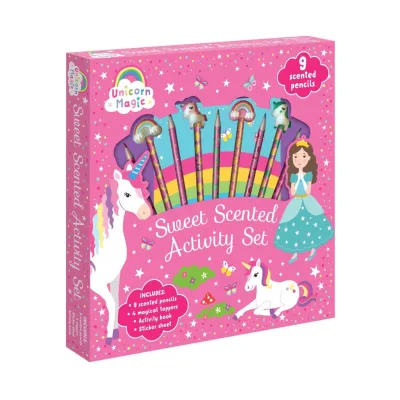
![[SG Stock] Unicorn Rainbow Paint Goodie Bag Gift Kit | DIY Interactive Kids Toddler Arts Crafts Door Gift | Sensory Play Children Birthday Art Party Favour](https://img.lazcdn.com/g/ff/kf/Sc4aeff8e4adf4fd39cdb599763959a60G.jpg_400x400q80.jpg_.webp)
Prices are valid at publication and may change. Please refer to the product page for the latest price.
Classroom focus is another critical factor when choosing school supplies. Many schools discourage or restrict stationery that features highly interactive elements, such as built-in toys, flashing LED lights, or sound-making buttons. These features can easily distract the user and neighboring classmates during lessons. To maintain a productive study environment, prioritize flat prints, pastel color schemes, or small, subtle decorative accents over highly interactive novelty designs.
Daily school activities expose stationery to constant wear, ink leaks, and occasional spills. Materials such as water-resistant polyester, nylon, or wipeable polyurethane are highly practical choices for pencil cases and bag linings because they can be cleaned easily with a damp cloth. Sturdy stitching, reinforced edges, and robust zippers are necessary to prevent seams from splitting when items are packed tightly with school books and tools.
Lower Primary (P1–P2): Building Basic Organization Skills
For Primary 1 and Primary 2 students, developing fine motor skills and basic organization habits is a primary developmental goal. Pencil cases with wide, single-compartment openings and smooth, chunky zippers are highly suitable for this age group. These designs allow young children to see all their writing tools at a glance, reducing the time spent searching for items during class. Avoid complex multi-layered cases with tight elastic loops, as younger students often struggle to slide pencils back into individual slots, which can lead to loose items cluttering their school bags.

Lower primary students frequently receive loose worksheets, spelling lists, and administrative forms that must be brought home for parents. Simple, single-pocket button folders or L-shaped plastic sleeves are excellent for keeping these papers flat and organized. Choosing folders with distinct visual cues, such as a prominent unicorn illustration on one side or color-coded borders, helps children quickly identify which folder is dedicated to homework and which is for parent signatures.
Writing stamina is still developing at this stage, making the choice of writing tools highly important. Triangular-grip pencils or ergonomic pencil grips help young children establish the correct tripod grasp. Look for writing tools that feature subtle unicorn motifs on the barrel while maintaining a comfortable, non-slip holding area. The grip section itself should remain free of raised decorative elements or dangling charms, which can interfere with finger placement and cause hand fatigue during spelling practice.
Middle Primary (P3–P4): Managing Heavier Workloads
As students enter Primary 3, the curriculum expands to include science, and the volume of daily stationery increases. Students must carry blue and red pens, highlighters, correction tape, and basic geometry tools like rulers and protractors. A double-layer pencil case or a multi-compartment pouch allows students to separate their daily writing tools from specialized equipment, preventing clutter and protecting delicate items like plastic rulers from snapping under pressure.
With more subjects to manage, a single document folder is no longer sufficient for daily organization. Expandable accordion files or multi-pocket organizers with tab dividers are highly effective for keeping English, Mathematics, Science, and Mother Tongue worksheets separate. Unicorn-themed index tabs or labels can make the organization process engaging, helping students transition smoothly between different subject periods without losing track of their materials.
Middle primary is also the stage where students transition from pencils to ink pens for many written assignments. Smoothness, bleed resistance, and drying speed depend on the exact combination of pen ink and paper material. Because school exercise books use specific paper weights, parents should conduct an observable trial: have the child write on a sample sheet of school paper to verify that the ink dries quickly enough to prevent smudging and does not bleed through to the reverse side. Opt for pens with widely available refills to ensure the casing can be reused throughout the school year.
Upper Primary (P5–P6): Supporting Exam Prep and Independence
As students prepare for major school assessments and national examinations, strict rules govern what can be brought into the examination hall. Most schools require stationery to be kept in completely transparent plastic or mesh pouches to prevent unauthorized materials from being brought inside. To satisfy both exam regulations and a love for the theme, look for clear PVC pouches that feature a minimalist, single-color unicorn outline or a small themed zipper pull, ensuring the contents remain fully visible to invigilators.
The academic load in upper primary requires carrying thick textbooks, assessment books, and files, making an ergonomic backpack essential. Look for bags with wide, padded shoulder straps, a chest strap, and a structured back panel that supports the natural curve of the spine to distribute weight evenly. Subtle, mature unicorn branding—such as an embossed logo, a small metal badge, or a patterned inner lining—allows older students to express their style without feeling that the design is too childish for their age.
Mathematics and science lessons in upper primary require precise measurements and drawing. High-quality plastic or metal rulers, compasses, and protractors are necessary. Ensure these tools have clear, easy-to-read metric markings that do not rub off easily with daily use. A sturdy, compact tin or plastic case featuring a simple unicorn design can keep these precision instruments safe from damage and prevent sharp compass points from puncturing other items in the school bag.
How to Inspect Quality and Safety Before Purchasing
Before finalizing any purchase, parents should physically test the mechanical parts of the stationery to ensure durability. Run zippers back and forth several times to ensure they glide smoothly without catching on the fabric lining. Check the stitching along the seams of pencil cases and bags; loose threads or uneven stitches are early signs of potential tearing. If an item features attached decorative charms or rubber prints, gently tug on them to verify they are securely fastened and will not easily detach under daily wear.
Since school supplies undergo prolonged contact with a child’s hands, verifying material safety is crucial. Look for product tags indicating that the materials are non-toxic, lead-free, and phthalate-free. Avoid items with strong chemical odors, which often indicate the use of low-quality plastics or adhesives. For younger children, ensure there are no small, detachable parts that could pose a choking hazard or sharp metal edges on decorative elements.
It is highly practical to measure the dimensions of larger items, such as backpacks, lunchboxes, and multi-subject organizers, before buying. Compare these measurements against the standard dimensions of your child’s school locker or desk cubby. A beautifully designed unicorn organizer is of little use if it is too wide to fit into a standard school bag or too tall to stand upright on a classroom shelf.
Frequently Asked Questions (FAQ)
Are 3D or plush unicorn pencil cases allowed in primary schools?
School policies regarding novelty stationery vary across Singapore, but many primary schools discourage or restrict the use of highly decorative, 3D, or plush pencil cases. These items tend to be bulky, taking up valuable desk space that is needed for worksheets and textbooks. Additionally, plush materials can easily collect dust and dirt in a classroom environment, making them difficult to sanitize. Parents should consult the specific school handbook or check with the form teacher before purchasing highly decorative items to ensure they comply with classroom guidelines.
How can I balance my child's love for unicorns with a distraction-free study environment?
Achieving this balance involves setting clear boundaries between school-approved gear and home-use items. Highly decorative, interactive, or plush unicorn toys and stationery can be reserved for the child’s home study desk or weekend activities, where they can be enjoyed without distracting others. For school, guide your child toward items where the unicorn theme is integrated subtly, such as a pastel color palette, a small embroidered patch, or a patterned interior lining. This allows the child to carry their favorite theme to school while maintaining a focused, professional attitude toward their daily learning.
Community discussion
Share your experience or ask a question. Comments are reviewed before publication.